Key Takeaways
-
Clear aligners require at least 22 hours of daily wear to be effective; skipping wear time delays treatment and may require additional refinement trays, making consistency the most critical factor for success.
-
A proper orthodontic diagnosis and 3D digital treatment planning are essential before starting—cosmetic simulation apps cannot determine if you're a good candidate, as some bite issues respond better to traditional braces than aligners.
-
Clear aligner accuracy varies significantly by tooth movement type, ranging from 55-82% overall, with deep bite correction showing only 33-48% accuracy; complex rotations and underbites often require braces or combined approaches.
-
Retainers are mandatory after treatment completion because teeth naturally shift back over time, making long-term retention essential to prevent relapse and the need to restart orthodontic treatment.
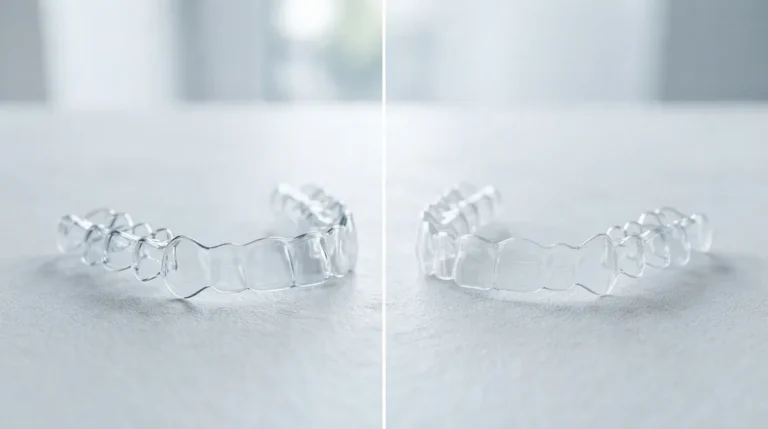
Ever wonder how a set of clear, almost invisible trays can actually move your teeth? You’re not alone. Parents, busy professionals, and soon-to-be brides and grooms all ask the same question before starting treatment. The good news is that the science behind clear aligners is simple to understand once you break it down. And once you get it, you’ll feel a lot more confident about wearing them every single day.
At Segovia Orthodontics at Lakewood Ranch, Dr. Flor Segovia has helped patients of all ages understand exactly what happens behind the scenes with their aligner trays. Whether you’re a mom checking out options for your teenager, or an adult ready to fix that relapse from years ago, this guide breaks down how do clear aligners work in eight clear, friendly steps. Let’s get into it.
1. It Starts With a Real Orthodontic Diagnosis
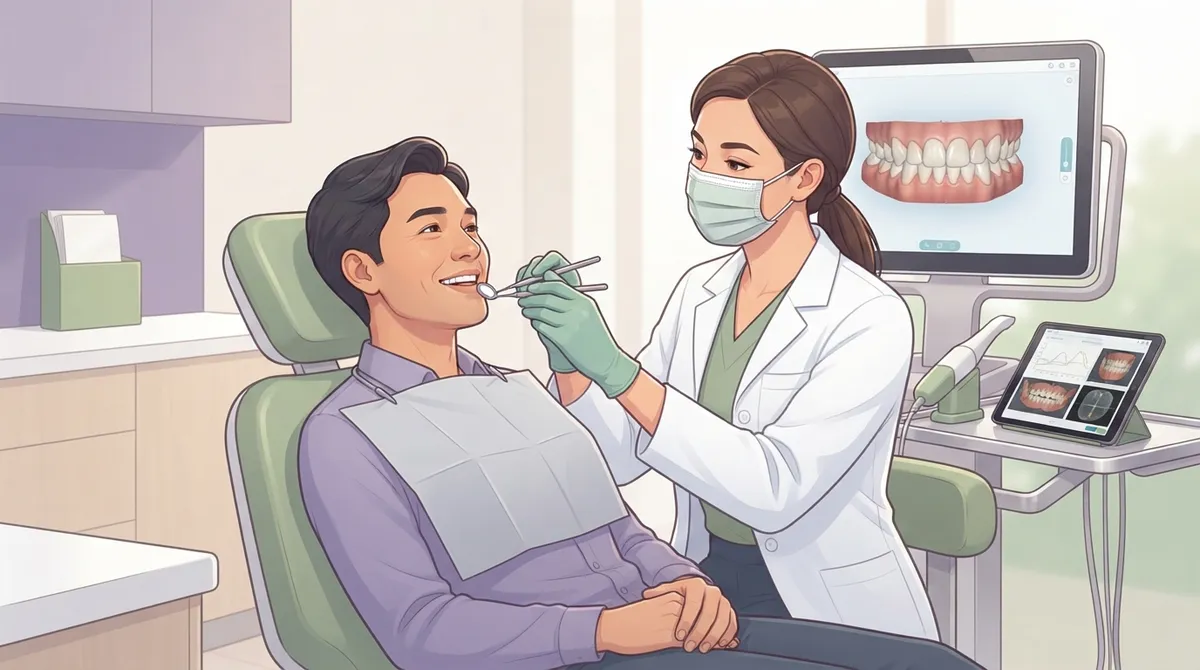
Clear aligners don’t just show up and magically fix your smile. Everything begins with a proper exam. Dr. Segovia looks at your bite, your jaw, and how your teeth fit together before recommending any treatment.
This step often includes photos, digital scans, and sometimes X-rays if needed. These records help create a full picture of your smile’s starting point. Think of it like a roadmap before a road trip. You need to know where you’re starting from before you can plan the best route.
This is also the stage where you’ll find out if you’re a good fit for aligners. Some bites and tooth movements respond better to braces, while others do great with trays. A qualified orthodontist, not a cosmetic simulation app, should make that call.
2. Your Treatment Plan Gets Mapped Out Digitally
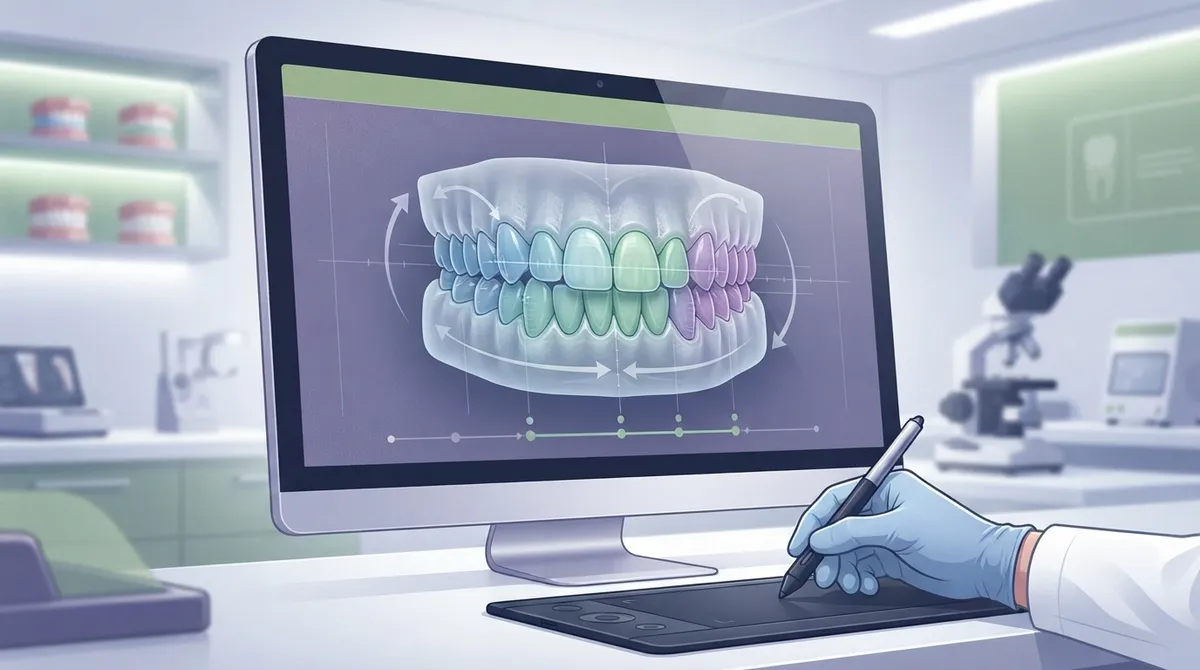
Once your diagnosis is set, the next step is digital planning. Your orthodontist uses your scans to build a 3D model of your teeth. Then they map out a step-by-step path showing how your teeth will move from where they are now to your final smile.
This digital simulation is a helpful planning tool. It’s not a guarantee of your exact final result, but it gives everyone a clear vision of the goal. It also helps your orthodontist decide how many trays you’ll need and where extra force might be required.
This planning stage is one reason advanced orthodontic technology matters so much. Better tools mean better predictions and smoother treatment.
3. Each Tray Applies Gentle, Controlled Pressure
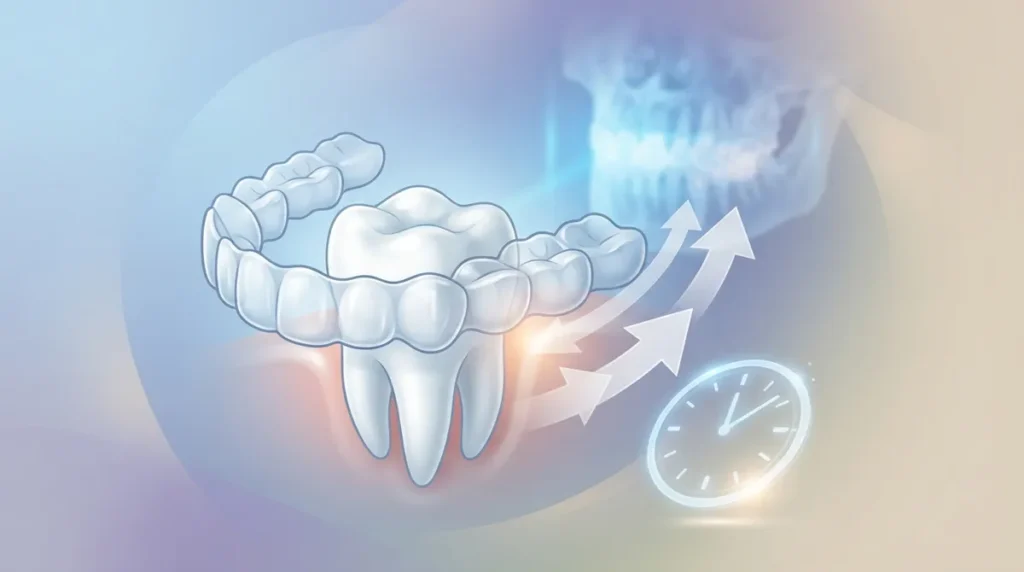
Here’s the heart of how clear aligners actually work. Every tray in your series is shaped just a little differently than the last one. Each tray nudges your teeth a tiny bit further toward their final position.
You wear one tray for about one to two weeks, though some plans use one to three weeks depending on your case, according to the American Association of Orthodontists. Then you switch to the next tray in the sequence. Small movements, added up over time, create big changes.
It’s kind of like moving a heavy piece of furniture inch by inch instead of trying to push it all at once. Slow, steady pressure works better and feels a lot more comfortable too.
4. Attachments and Elastics Help Guide Tricky Movements
Some tooth movements need extra help. That’s where small, tooth-colored attachments come in. These tiny bumps get bonded to certain teeth so the aligner tray has something to “grip” for more complex movements.
Depending on your treatment plan, you might also use elastics or other orthodontic tools alongside your aligners. This is common with bite corrections, like fixing an overbite or crossbite.
Don’t worry, these attachments are small and blend in with your teeth. Most patients barely notice them once they get used to wearing their trays.
5. Consistent Wear Time Makes or Breaks Your Results
This next part is huge, so let’s slow down here. Aligners only work while they’re actually on your teeth. The AAO recommends wearing them at least 22 hours a day. That leaves about two hours for meals and cleaning.
Here’s a simple breakdown of the daily aligner routine:
- Wear your tray for at least 22 hours every day
- Remove aligners before eating or drinking anything except water
- Take them out to brush and floss thoroughly
- Put them back in right after cleaning your teeth
- Store them safely in their case when not worn
Skipping wear time, even for a few hours a day, adds up fast. Teeth that don’t get consistent pressure won’t move on schedule. This can delay your treatment or require extra refinement trays later.
6. Your Orthodontist Tracks Progress and Makes Adjustments
Clear aligners aren’t a “set it and forget it” treatment. You’ll have regular check-ins with your orthodontist to make sure your teeth are tracking the way they should.
If something isn’t moving as planned, Dr. Segovia can adjust your treatment. This might mean new attachments, refinement trays, or a tweak to your wear schedule. Regular monitoring is what keeps your results accurate and on time.
This is also a great time to ask the right orthodontic questions at your visit. Don’t be shy. Good questions lead to better outcomes.
7. Not Every Case Moves at the Same Speed or Accuracy
It’s worth knowing that clear aligners aren’t equally effective for every type of movement. A 2024 umbrella review found clear aligner accuracy ranged from about 55% to 82% across various studies, and results often favored fixed appliances for certain tooth movements.
A 2025 systematic review looking specifically at deep-bite correction found bite opening ranged from 0.4 to 3.8 millimeters, with accuracy between 33% and 48.88%. The researchers rated this evidence as low quality, meaning more research is still needed.
Here’s a quick look at how clear aligners generally compare to traditional braces for common issues:
| Orthodontic Issue | Clear Aligner Suitability | Notes |
|---|---|---|
| Mild crowding | Good fit | Often predictable results |
| Moderate crowding | Good to fair fit | May need attachments |
| Overbite | Fair fit | Depends on severity |
| Underbite | Case-dependent | Often needs combined approach |
| Deep bite | Lower accuracy | May need braces or added tools |
| Complex rotations | Lower accuracy | Braces often more predictable |
This is exactly why an orthodontist evaluation matters so much. A cosmetic simulation online can’t tell you these details. Only a trained eye can assess your specific orthodontic problems and recommend the right path.
8. Retainers Keep Your New Smile in Place
You finished your last tray. Congratulations! But the job isn’t quite done yet. After active treatment, most patients need orthodontic retainers to hold their teeth in their new positions.
Teeth can shift after both braces and aligner treatment. It’s just how mouths work. Retainers act like a safety net, protecting all the hard work you put into your treatment.
For adults who had braces years ago and are noticing some relapse now, this step is especially important the second time around. Staying consistent with your retainer schedule helps make sure you won’t need to start all over again.
Popular Clear Aligner Options at Our Lakewood Ranch Practice
Not all clear aligners are built the same way. At our practice, we offer Angel Aligners, a modern system that uses AI-driven planning and a flexible wear schedule to help speed up treatment for many patients. Angel Aligners can also be a more budget-friendly option compared to some premium brands, while still using the same type of digital 3D planning technology.
Some patients prefer aligners for their discreet look, especially those juggling careers, dating, or upcoming life events like weddings or graduations. Others benefit more from WildSmiles Braces or LightForce Orthodontics, depending on their specific bite and lifestyle needs. Every mouth is different, so every treatment plan should be too.
Why Choose a Board-Certified Orthodontist for Your Aligner Journey
Choosing the right provider matters just as much as choosing the right treatment. Dr. Segovia is a board-certified orthodontist who stays current on the latest techniques in both braces and clear aligners. You can learn more about board certification standards through the American Board of Orthodontics, which sets rigorous standards for orthodontic specialists.
Our Lakewood Ranch families appreciate having a bilingual, board-certified provider close to home. You can check out patient experiences and updates on our Facebook page or see everyday smile transformations on our Instagram page. You can also visit us on Google — Segovia Orthodontics to read reviews from real patients right here in the Lakewood Ranch area.
Ready to Start Your Clear Aligner Journey?
Understanding how clear aligners work is the first step toward a straighter, more confident smile. From that first diagnosis to your final retainer check, every stage matters. And you don’t have to figure it all out alone.
If you’re curious whether clear aligners are right for your smile, our friendly Lakewood Ranch team is ready to help. Feel free to contact us with any questions, or go ahead and request an appointment to get started. You can also simply call us at 941-557-1333 and we’ll walk you through your options with zero pressure and lots of warmth.
FAQs
Q: How do clear aligners move teeth?
A: Clear aligners work through a series of custom trays that each apply gentle, controlled pressure to your teeth. Every tray is shaped slightly differently than the last, nudging teeth a tiny bit closer to their final position with each new set.
Q: How many hours a day do you need to wear clear aligners?
A: Most orthodontists, including guidance from the American Association of Orthodontists, recommend wearing your aligners at least 22 hours a day. That leaves just enough time to eat meals and brush your teeth.
Q: Can clear aligners fix an overbite, underbite, or crowded teeth?
A: Aligners can handle many mild to moderate cases of crowding and bite issues, but more complex problems sometimes need braces or a combined approach. Your orthodontist will assess your specific bite before recommending the best treatment.
Q: Do clear aligners hurt, and how long does discomfort last?
A: You might feel some pressure or mild soreness for the first day or two after switching to a new tray. This feeling is totally normal and usually fades quickly as your mouth adjusts.
Q: Do you need a retainer after clear aligner treatment?
A: Yes, almost everyone needs a retainer after finishing aligner treatment. Teeth naturally want to shift back over time, so a retainer helps protect all the progress you made during treatment.
Our Service Area