Key Takeaways
-
Clear aligners require consistent 22-hour daily wear to be effective; non-compliance significantly slows progress, making them less suitable for people who cannot commit to this schedule.
-
Braces are more effective than clear aligners for complex cases, particularly for tooth rotations over 15 degrees, with clear aligner accuracy ranging from 55-82% compared to fixed appliances.
-
Alternative options include other clear aligner brands, metal braces, ceramic braces (tooth-colored), and lingual braces (hidden behind teeth), each with different visibility and functionality trade-offs.
-
An orthodontist evaluation is essential before choosing treatment; professionals assess your bite, tooth position, and goals to create a personalized plan rather than relying on brand names or price alone.
-
Clear aligners allow eating regular foods and easy brushing, while braces require avoiding hard/sticky foods but work automatically without daily compliance, making them ideal for kids and busy professionals.
-
Digital precision braces like LightForce can potentially reduce treatment time by up to 45% with custom 3D-printed brackets, offering a faster alternative for career-focused adults seeking efficiency.
So you’ve been thinking about straightening your smile, and you keep hearing one name: Invisalign. It’s popular, sure. But here’s a little secret: it isn’t the only game in town. If you’re curious about invisalign alternative treatments, you’re in good company. Moms, busy professionals, and adults who had braces years ago all ask the same thing: “What else is out there, and what’s right for me?”
The good news? You have plenty of choices in 2026. Some are other clear aligner systems. Others are fixed braces, like metal, ceramic, or lingual braces. Each one has its own perks and trade-offs.
In this friendly guide, we’ll compare the two big families of options: clear aligners and braces. We’ll walk through who each one fits best, what daily life feels like, and how to choose with confidence. Think of it as a chat over coffee, minus the jargon.
What Does “Invisalign Alternative” Really Mean?
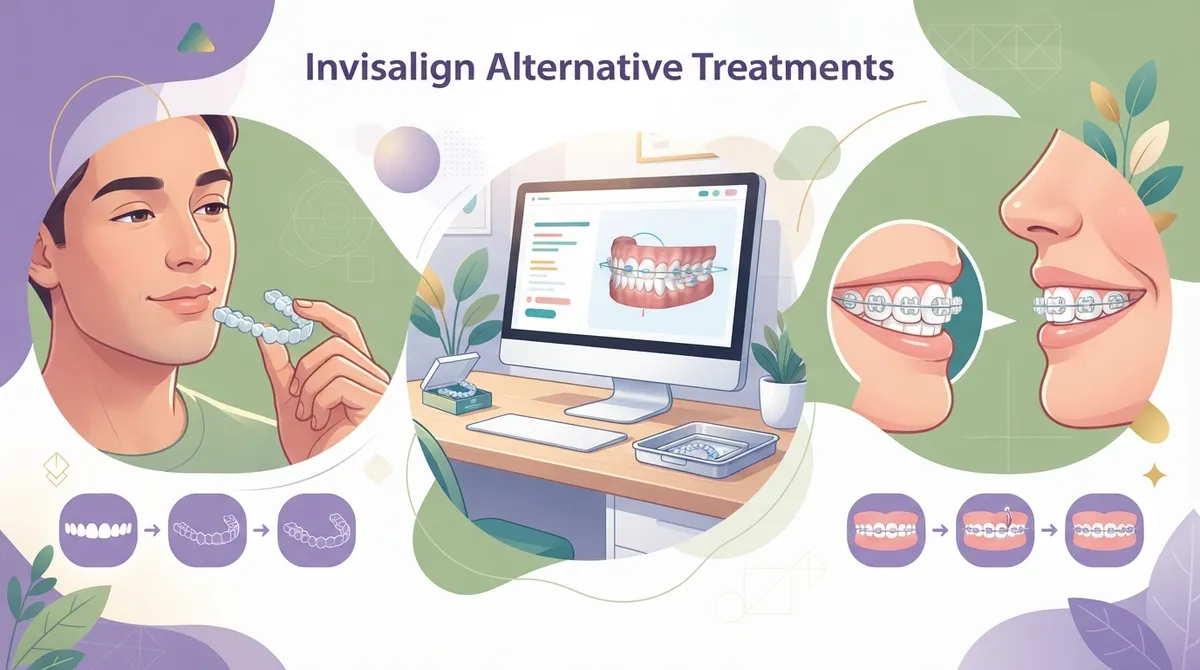
This phrase can mean two different things. First, it can mean another brand of clear aligner. These work in the same general way: a series of custom, removable trays that move your teeth step by step. Second, it can mean a totally different type of orthodontic appliance, such as braces.
Here’s the key point. The brand name matters less than the plan behind it. No matter which option you pick, an orthodontist should look at your bite, your teeth, and your goals first. That exam shapes everything that follows.
If you want a deeper look at your choices, our guide on how to choose the best Invisalign alternative for your smile is a great next read.
The Main Invisalign Alternative Treatments at a Glance
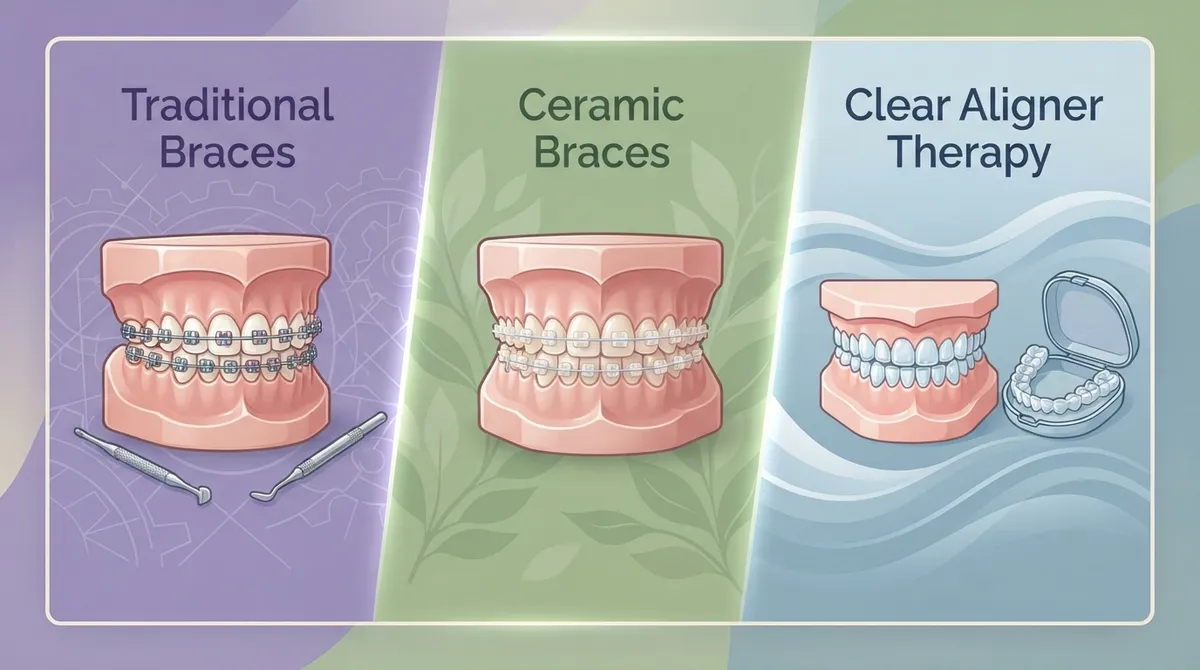
Let’s meet the lineup. Here are the most common options you can ask your orthodontist about:
- Other clear aligner systems: Removable, nearly invisible trays made for your teeth.
- Traditional metal braces: Fixed brackets and wires that handle a wide range of problems.
- Ceramic braces: Fixed braces with tooth-colored or clear brackets that blend in.
- Lingual braces: Fixed braces placed on the back of the teeth, so they’re hard to see from the front.
Now let’s see how they stack up.
| Treatment | Removable? | Visibility | Best For |
|---|---|---|---|
| Clear aligners | Yes | Very low | Mild to moderate alignment concerns |
| Metal braces | No | Noticeable | A broad range of tooth and bite issues |
| Ceramic braces | No | Low to moderate | Patients wanting a subtler fixed option |
| Lingual braces | No | Very low from the front | Patients wanting hidden fixed braces |
Clear Aligners: The Discreet Route
Clear aligners are popular for good reason. They’re comfortable, they’re subtle, and you can take them out to eat and brush. For young professionals and people with big events coming up, that discretion is a huge win.
How They Work
You wear a set of custom trays and switch to a new set on a schedule your orthodontist gives you. Each tray moves your teeth a tiny bit. The American Association of Orthodontists notes that aligners are typically worn at least 22 hours a day. You remove them only to eat, drink anything other than water, and clean your teeth.
Why People Love Them
- They’re nearly invisible in photos and meetings.
- You can eat the foods you love.
- Brushing and flossing stay simple.
What to Keep in Mind
Aligners only work if you wear them. That’s the honest truth. If the trays live in your pocket or a napkin more than your mouth, your progress slows down. Research also points out some limits. A 2024 umbrella review found clear-aligner accuracy of roughly 55% to 82% compared with fixed appliances, and aligners were less accurate for rotating teeth more than 15 degrees. Your results can differ, and your orthodontist can tell you what’s realistic for your case.
Curious about common slip-ups? Check out these 7 clear aligner mistakes that can ruin your smile results.
Angel Aligners: A Clear Aligner Option Worth Knowing
At Segovia Orthodontics, one clear aligner option we offer is Angel Aligners. They use the same basic idea as other aligners, but with a few helpful twists.
- A “7+3” wear schedule: You wear a flexible tray for seven days, then a firmer one for three, which can help guide tooth movement efficiently.
- Comfort-minded design: A frosted finish reduces shine, and flexible material can be gentler on gums and cheeks.
- Budget-friendly planning: Streamlined digital planning often keeps costs lower.
Want to learn more about the full range? Take a peek at our page on clear aligners.
Braces: Still a Powerhouse Option
Don’t count braces out. They’re fixed to your teeth, so there’s nothing to remember to pop back in. That makes them a favorite for kids, teens, and anyone who prefers a “set it and forget it” approach.
Metal Braces
Metal braces are the classic choice, and they’re still a top pick for many patients. They can address a broad range of tooth-position and bite problems. If you’d like the full story, read 7 reasons traditional metal braces are still a top choice.
Ceramic Braces
Ceramic braces work like metal braces, but the brackets are tooth-colored or clear. They blend in better, which many adults and teens appreciate. You still get the strength of a fixed appliance with a softer look.
Lingual Braces
Lingual braces sit on the back side of your teeth. From the front, they’re hard to spot. They can be a clever choice for someone who wants fixed braces without the visible hardware.
Fun Braces for Kids and Teens: WildSmiles
Here’s something moms love. Orthodontics doesn’t have to feel like a chore. WildSmiles braces come in playful bracket shapes like stars, flowers, hearts, and footballs. Kids get to show off their personality while their teeth move into place.
Better yet, the unique shape helps encourage great brushing. Kids can see whether the bracket shape is clean and clear, which makes it easy to track good habits. Learn more on our WildSmiles braces page.
LightForce Braces: Digital Precision for Busy Lives
If you’re a career-focused adult who wants efficiency, LightForce deserves a look. It’s a fully digital braces system. Each bracket is custom 3D printed to fit your tooth, and your treatment plan is built on a digital model.
- Custom-fitted brackets: Designed for your exact tooth shape.
- Faster treatment potential: Often up to 45% faster than traditional approaches.
- Subtle looks: Clear or white bracket options blend in nicely.
- Quick turnaround: Custom appliances are typically ready in under two weeks.
Explore the details on our LightForce Orthodontics page.
Braces vs. Clear Aligners: A Side-by-Side Look
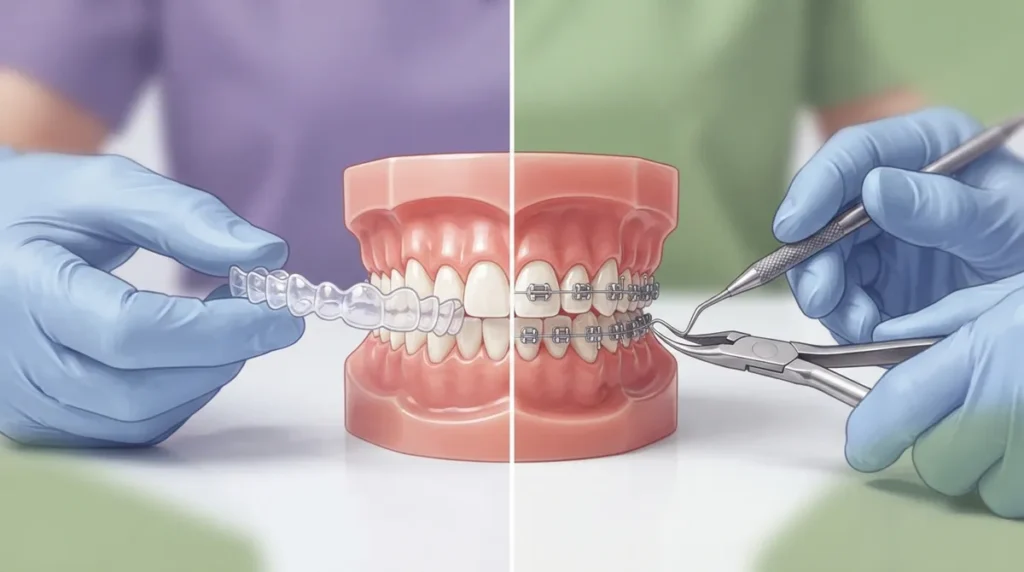
Now for the big question: which one wins? The truth is, it depends on you. Here’s how they compare in everyday life.
| Factor | Clear Aligners | Braces |
|---|---|---|
| Appearance | Nearly invisible | Visible, though ceramic and lingual are subtler |
| Eating | Remove to eat | Avoid hard, sticky, or chewy foods |
| Cleaning | Easy brushing and flossing | Needs extra care around brackets |
| Compliance | Requires about 22 hours of daily wear | Works around the clock automatically |
| Complex cases | May be less predictable for some movements | Handles a wider range of problems |
For a deeper comparison, see braces vs. clear aligners: which is right for you.
Which Option Fits Your Life?
Let’s make this personal. Here’s how different people often think about their choices.
For Concerned Moms
You want what’s best for your child, plus a schedule that actually works. Braces can be a smart pick for kids and teens since nothing can get lost in a lunchbox. Fun options like WildSmiles can also keep kids excited. Read more about teen orthodontic treatment to see what fits your family.
For Young Professionals and Career-Focused Adults
You want a look that stays polished and treatment that doesn’t hijack your calendar. Clear aligners are a strong fit if you can wear them consistently. LightForce is another great pick if you like the idea of fast, precise, digital planning. Explore our adult orthodontics options.
For Life Event Planners
Got a wedding, graduation, or big milestone coming? Share your date with your orthodontist right away. They can help you plan treatment and set honest expectations for your timeline. Nothing beats a smile you’re proud to show in photos.
For Adult Relapse Patients
If your teeth shifted after past braces, you’re far from alone. Many adults come back motivated and ready. Clear aligners are often a popular choice for minor shifting, though your orthodontist will decide what’s best. And once you finish, retainers help protect your results. Learn about orthodontic retainers so history doesn’t repeat itself.
How to Choose: A Simple Step-by-Step Plan
Feeling a little overwhelmed? Let’s break it down.
- Book an orthodontic evaluation. A proper exam looks at your bite, tooth position, jaw development, and oral health.
- Share your goals. Tell your orthodontist what matters most, whether that’s looks, speed, comfort, or budget.
- Be honest about habits. Can you wear aligners about 22 hours a day? If not, fixed braces may suit you better.
- Ask about limits and benefits. Every option has both. A good orthodontist will explain them plainly.
- Plan for retention. Retainers are generally needed after treatment to help keep your results.
Not sure what to ask? Our post on how to ask the right orthodontic questions at your visit can help.
Why an Orthodontist Matters
It’s tempting to pick a treatment based on a brand or a price tag. But the right choice starts with a diagnosis. Orthodontists complete years of specialized training focused on moving teeth and aligning bites. Dr. Flor Segovia is a board-certified orthodontist, and you can verify credentials through the American Board of Orthodontics.
At Segovia Orthodontics, we offer braces and clear aligners for children, teens, and adults, with bilingual care in English and Spanish. We use advanced orthodontic technology to build plans around your smile, not the other way around.
Planning for the Cost
Let’s talk money, because it matters. Costs vary based on your treatment type and how complex your case is. The good news is that payment help exists. Many families use flexible plans to spread out the cost. Check out orthodontic financing to see how it can work for you.
Wrapping It Up
Choosing among invisalign alternative treatments doesn’t have to feel stressful. Clear aligners offer discretion and flexibility. Braces offer reliability and the ability to tackle a wide range of bite problems. Ceramic, lingual, WildSmiles, and LightForce each add their own special touch.
The best choice is the one that fits your teeth, your goals, and your daily life. And you don’t have to figure it out alone. You can also visit us on Google — Segovia Orthodontics to see what our Lakewood Ranch patients say, or follow along on our Instagram page and our Facebook page for smile stories.
Ready to find your best fit? Request an appointment today, or call us at 941-557-1333. We can’t wait to meet you and help you smile with confidence.
FAQs
Q: What are the best alternatives to Invisalign?
A: The main options are other clear aligner systems, metal braces, ceramic braces, and lingual braces. The best one depends on your bite, your goals, and how well you can follow the treatment plan. An orthodontist can help you pick the right fit.
Q: Are braces more effective than clear aligners for complex cases?
A: Often, yes. Braces are fixed in place and can address a wider range of tooth and bite problems. Clear aligners work well for many mild to moderate cases, but some complex movements can be less predictable, so your orthodontist may recommend braces instead.
Q: How many hours a day do clear aligners need to be worn?
A: The American Association of Orthodontists says aligners are typically worn at least 22 hours a day. You take them out only to eat, drink, and clean your teeth. Your exact schedule may vary based on your treatment plan.
Q: Can adults choose braces instead of Invisalign?
A: Absolutely! Adults can pick braces, and many do. Ceramic and lingual braces offer subtler looks, while metal braces remain a dependable choice. Your orthodontist will help you weigh comfort, appearance, and results.
Q: Do I need an orthodontist to decide which treatment is right for me?
A: Yes, it really helps. An orthodontist checks your bite, teeth, and jaw development before recommending a plan. That way you get a treatment built for your smile, plus a retention plan to help keep your results.
Our Service Area