Key Takeaways
-
Clear aligners effectively treat mild to moderate crowding, spacing, and some bite issues, but require 20-22 hours daily wear to work; inconsistent use is the most common reason treatment takes longer than expected.
-
For extraction cases and severe malocclusion, traditional braces produce more predictable results than aligners according to 2025 research; aligners work best for simple tooth movements like tipping rather than complex rotations or root movement.
-
Professional orthodontic supervision is essential throughout aligner treatment to monitor bite, catch issues early, and decide if adjustments like attachments or elastics are needed—aligners are not a self-supervised product.
-
Permanent retainer use after treatment is critical since teeth naturally shift back toward their original position; skipping this step is a common reason adults experience relapse months or years after braces.
-
Clear aligners are ideal for busy professionals, adults with previous relapse, and patients preparing for milestones, but require high personal responsibility and consistent daily wear to achieve results comparable to braces.
-
Possible side effects include temporary discomfort when switching trays, minor speech changes, and rare risk of root resorption; regular checkups help detect and prevent unwanted tooth movement early in treatment.
You have probably seen those clear plastic trays all over social media. Maybe a coworker showed you their smile progress, or your teenager asked why they can’t just get “the invisible ones.” So here’s the big question: are clear aligners effective, or are they just a trendy alternative that looks nice but doesn’t quite deliver? As a mom weighing options for your kid, a professional who can’t show up to meetings with a mouth full of metal, or an adult wanting to fix teeth that shifted back after your old braces came off, you deserve a straight answer (pun intended).
The good news is that clear aligners really can straighten teeth and fix many common bite problems. But like any orthodontic tool, they work best in the right situation, with the right amount of commitment from you. Let’s walk through what the research actually says, when aligners shine, and when traditional braces might still be the smarter pick. At Segovia Orthodontics, we help patients in Lakewood Ranch weigh these options every day, so let’s break it down together.
What Clear Aligners Can Actually Fix
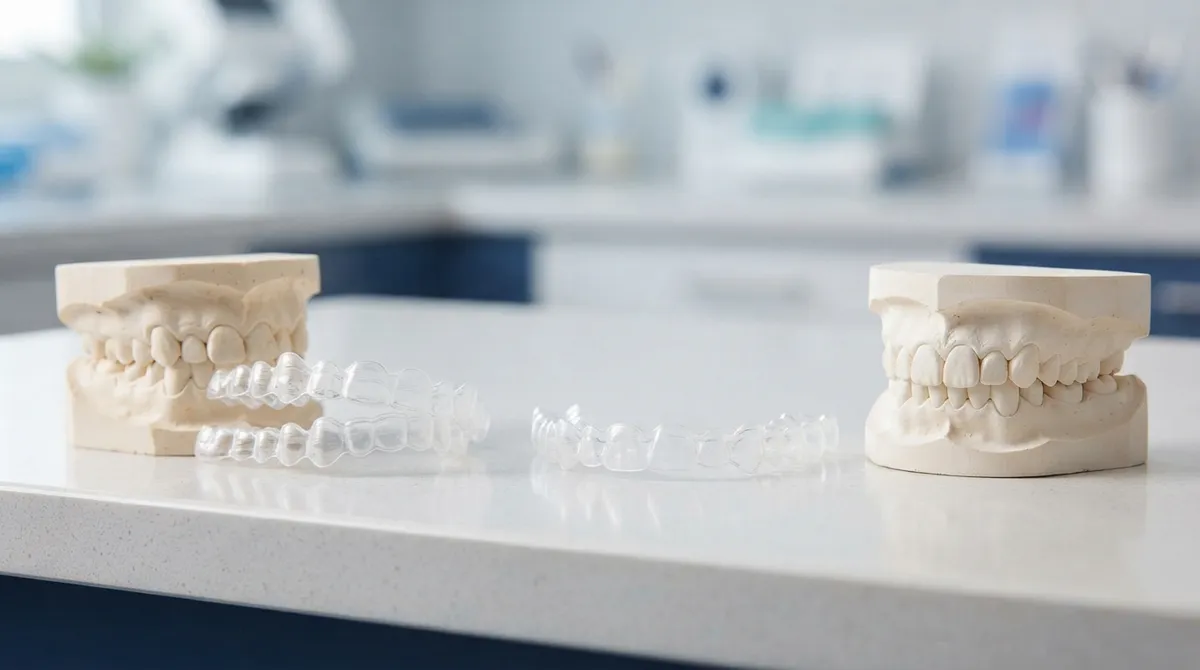
Clear aligners are a series of custom, see-through trays that gently push teeth into a new position over time. They’re a popular choice covered in detail on our Clear Aligners page, and for good reason. Research and clinical experience show they can effectively treat several common issues.
- Mild to moderate crowding, where teeth overlap or twist slightly
- Spacing issues, including gaps between teeth
- Some overbites, underbites, open bites, and crossbites
- Minor relapse after previous orthodontic treatment
Suitability always depends on your specific diagnosis. That’s why a proper evaluation matters so much before starting treatment. If you’re unsure which problems apply to you, our page on Common Orthodontic Problems is a great place to start learning the basics.
Are Clear Aligners Effective for Every Case?
Here’s the honest truth: aligners are not a one-size-fits-all solution. They tend to be more predictable for simple tooth movements, like tipping a tooth left or right. But some movements are trickier for aligners to manage well.
Movements That Can Be More Challenging
Significant tooth rotations, movements that pull a tooth up or down (extrusion), and root movement can be harder for aligners to control precisely. Severe malocclusion and some cases involving tooth extraction may also be more complex.
A 2025 systematic review published in the European Journal of Orthodontics looked at 15 clinical trials involving 1,084 patients. It found no real difference in treatment quality or timeline between aligners and fixed braces for non-extraction cases. However, for cases requiring extractions, traditional braces produced better results. Long-term stability data was still limited, so more research is ongoing.
A separate 2024 review in the Journal of Orthodontic Science reached a similar conclusion: aligners can be an effective alternative to braces, but the evidence base is still growing. Some studies even found that fixed braces offered better control over how front teeth tilt during treatment.
When Attachments and Extras Come Into Play
Don’t worry if your orthodontist mentions “attachments” or elastics with your aligner treatment. These small additions, along with tools like the ones described on our Advanced Orthodontic Technology page, help aligners tackle more complex movements. They’re not a sign that something went wrong; they’re simply part of a well-planned treatment strategy.
Clear Aligners vs. Traditional Braces: A Side-by-Side Look
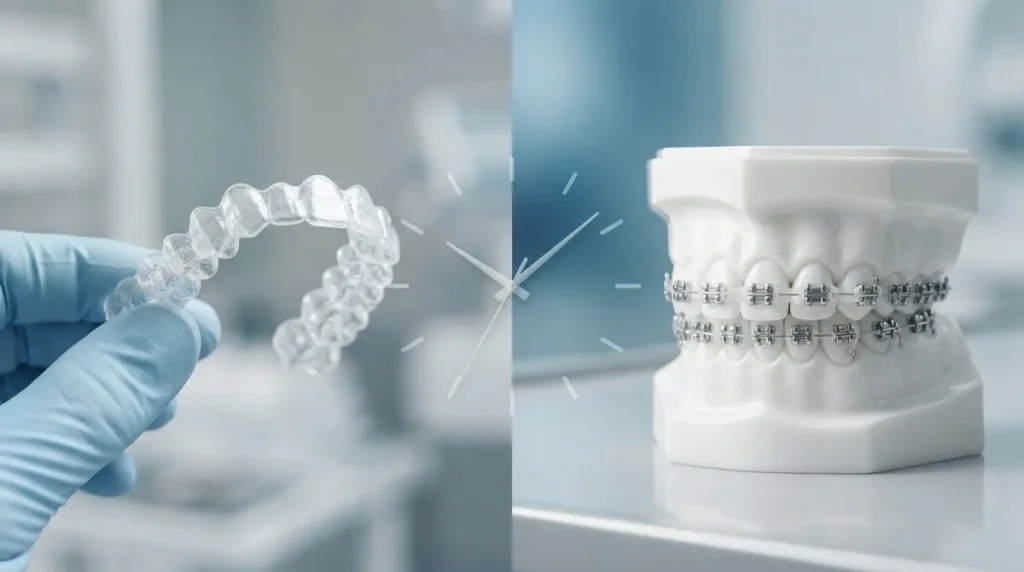
| Factor | Clear Aligners | Traditional Braces |
|---|---|---|
| Visibility | Nearly invisible | Visible, though ceramic options exist |
| Removability | Removable for eating and brushing | Fixed in place for the full treatment |
| Best for | Mild to moderate crowding, spacing, some bite issues | Complex cases, extractions, severe misalignment |
| Patient responsibility | High — requires consistent wear | Lower — always working, no removal needed |
| Extraction cases | Can be less predictable | Generally more reliable control |
| Comfort | Smooth plastic, minimal irritation | Brackets and wires may cause some irritation |
If you’re still deciding between the two, our detailed comparison on Braces vs. Clear Aligners: Which Is Right for You? can help you weigh the pros and cons for your specific smile goals.
Why Wearing Time Makes or Breaks Your Results
Here’s something we can’t stress enough: aligners only work if you actually wear them. Most orthodontists recommend 20 to 22 hours a day, removing them only to eat, drink anything besides water, and brush your teeth.
Think of it like a workout plan. Skipping days here and there won’t ruin everything, but consistent slacking will slow your progress and might mean your teeth don’t track the way your treatment plan intended. This is especially important for busy professionals and teens juggling sports, school, and social events.
- Wear your aligners for the full recommended hours every single day
- Switch to the next tray exactly when instructed, not early or late
- Keep up with regular checkups so your orthodontist can monitor progress
- Clean your aligners daily to avoid buildup and odor
- Store your aligners safely when eating so you don’t lose them
If treatment seems to be taking longer than expected, inconsistent wear is often the culprit. Refinement trays or a switch to another appliance might be needed to get things back on track, which is completely normal and nothing to feel discouraged about.
The Angel Aligners Difference
For patients wanting a discreet option with a bit of an edge, we also offer Angel Aligners, an innovative clear aligner system known for its AI-driven treatment planning and unique wear schedule. Instead of switching trays every week, patients typically wear a flexible tray for seven days followed by a firmer tray for three days. This “7+3” approach can help speed up tooth movement and may reduce how often you need to come in for office visits.
Angel Aligners also use a frosted finish that cuts down on shine, so they’re even less noticeable in photos and video calls. Some trays include built-in attachment points, which can mean fewer visits for bonding extra hardware onto your teeth. For career-focused adults who want efficient treatment without extra hassle, this can be a great fit.
Can Clear Aligners Handle Complex Bite Problems?
A 2023 systematic review looked specifically at how clear aligners perform in complex cases, including situations requiring tooth extraction. The review included six studies: three randomized controlled trials, two retrospective cohort studies, and one controlled clinical trial.
The findings varied quite a bit. Some studies found real differences between what the treatment plan predicted and what actually happened, especially in cases where premolars were extracted to make room for other teeth. This doesn’t mean aligners can’t work for these cases. It means careful planning, monitoring, and sometimes a combination approach works best.
This is exactly why a thorough evaluation matters so much before starting treatment. Learn more about what that process looks like on our First Orthodontic Visit page.
What Happens After Treatment Ends
Whether you choose aligners or braces, your teeth don’t just “stay put” forever once treatment is done. Teeth have a natural tendency to shift back toward their original position, especially in the months right after treatment.
That’s why Orthodontic Retainers are such an important final step. Retainers hold your new smile in place while your bone and gum tissue adjust to the change. Skipping this step is one of the most common reasons people see relapse, especially adults who had braces years ago and are now dealing with crowding creeping back.
Who Tends to Benefit Most from Clear Aligners
Certain patients tend to be excellent candidates for aligner treatment, based on both lifestyle and orthodontic needs.
- Adults returning for treatment after relapse from earlier braces
- Professionals who want a discreet option for job interviews or client meetings
- Teens and young adults preparing for graduation photos, weddings, or other milestones
- Busy parents who want flexible, low-maintenance care for their changing schedules
- Patients with mild to moderate spacing or crowding concerns
If any of these describe you, it might be worth scheduling a consultation to see if aligners fit your treatment goals. You can always request an appointment to get personalized answers.
Questions to Ask Before Starting Aligner Treatment
Going in prepared with the right questions can make a big difference in how confident you feel about your treatment plan. Consider asking your orthodontist the following:
- Is my specific case a good match for aligners, or would braces work better?
- How many hours a day will I need to wear my aligners?
- What happens if my teeth aren’t tracking as planned?
- Will I need attachments, elastics, or other extra tools?
- How long will my full treatment take, realistically?
- What does the retainer plan look like after treatment ends?
A good orthodontist will walk you through these details honestly, without oversimplifying. That kind of straightforward communication is something we prioritize at our Lakewood Ranch practice, and it’s part of why so many families trust our Why Choose Us approach to care.
The Role of Professional Supervision
It’s tempting to think of clear aligners as a simple, no-supervision-needed product. That’s not accurate. Even with aligners, an orthodontic professional needs to check your bite, monitor your progress, and decide if any adjustments are needed along the way.
Dr. Flor Segovia is a Board Certified Orthodontist, credentialed through the American Board of Orthodontics. That level of training means she’s equipped to catch small issues early, before they become bigger, more expensive problems. Learn more about her background on our Orthodontist Flor Segovia page.
Possible Side Effects to Expect
Like any orthodontic treatment, clear aligners aren’t entirely risk-free. Most side effects are mild and temporary, but it helps to know what’s normal.
- Temporary discomfort or pressure when switching to a new tray
- Minor speech changes for the first few days of wear
- Possible unwanted tooth movement if trays aren’t monitored properly
- Rare risk of root resorption, similar to other orthodontic treatments
Regular checkups help catch these issues early, which is another reason consistent visits matter so much throughout treatment.
Ready to Find Out If Clear Aligners Are Right for You
So, are clear aligners effective? For many patients dealing with mild to moderate alignment issues, the answer is a confident yes, especially when treatment is planned by an experienced orthodontist and worn as directed. For more complex cases, traditional braces might still offer more predictable results, and that’s okay too. The best treatment is the one that’s actually right for your smile, not just the trendiest option on social media.
Our team at Segovia Orthodontics is here to give you an honest, personalized answer after a full evaluation. Feel free to contact us with any questions, or simply request an appointment to get started. You can also call us at 941-557-1333 to speak with our friendly team directly. Curious what real patients think? Check out our Facebook page and our Instagram page for smile transformations, or visit us on Google — Segovia Orthodontics to read reviews from Lakewood Ranch families just like yours. We can’t wait to help you find your best smile.
FAQs
Q: Are clear aligners as effective as braces?
A: For mild to moderate crowding and spacing, aligners work about as well as braces in most studies. For extraction cases or severe bite problems, traditional braces often give more predictable results, so it really depends on your specific smile.
Q: How many hours a day do I need to wear clear aligners?
A: Most orthodontists recommend 20 to 22 hours daily, only removing them to eat, drink, and brush. Skipping this can slow your progress and may affect your final results, so consistency really is everything here.
Q: Can clear aligners fix an overbite, underbite, or crossbite?
A: Yes, aligners can treat some cases of these bite issues, especially when they’re mild to moderate. More severe versions may need additional tools like elastics or, in some cases, traditional braces for better control.
Q: Why might my clear aligner treatment take longer than expected?
A: The most common reason is inconsistent wear time, since aligners need daily commitment to keep teeth tracking on schedule. Sometimes refinement trays are needed too, which is a normal part of the process, not a sign of failure.
Q: Do I need to wear a retainer after finishing clear aligner treatment?
A: Absolutely, retainers are essential after any orthodontic treatment, including aligners. Teeth naturally want to shift back, so a retainer helps lock in all the hard work you put into your new smile.
Our Service Area