Key Takeaways
-
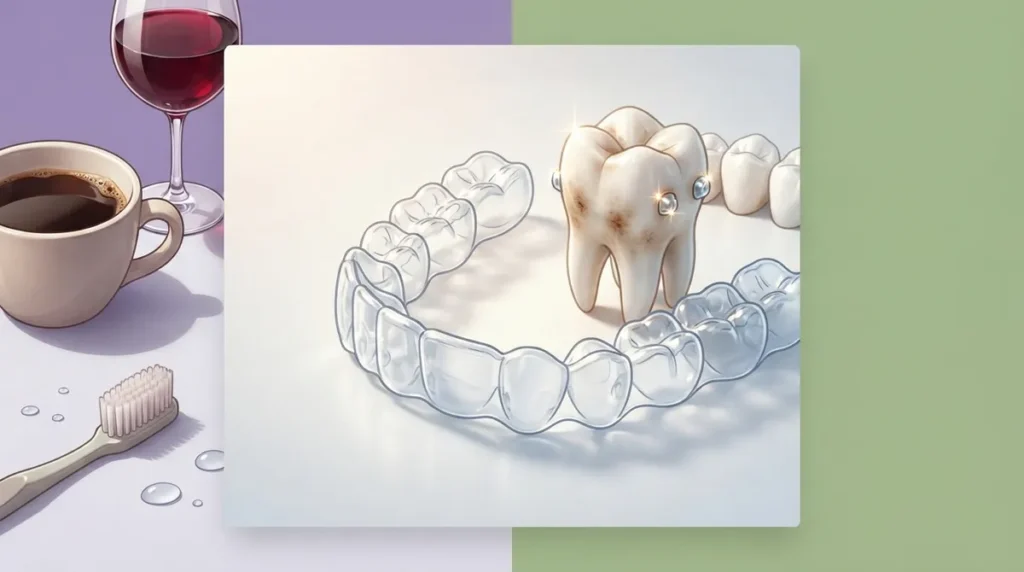
Remove aligners before consuming any beverage except water, as coffee, tea, red wine, and cola can stain both trays and trap pigments against teeth for hours.
-
Brush and floss immediately before reinserting aligners to prevent plaque buildup and trapped food particles, which are the main causes of tooth discoloration during treatment.
-
Composite attachments stain more easily than natural enamel according to research, so pay special attention to cleaning around these small tooth-colored bonded bumps.
-
Clean aligners daily with a soft-bristled toothbrush and water only—avoid hot water, denture cleaners, and harsh chemicals that can damage or warp the plastic.
-
Distinguish between surface stains (from pigments) and white-spot decalcification (from plaque and acid exposure), as white spots are harder to reverse and require orthodontist evaluation.
-
Wait until after aligner treatment ends to whiten teeth, since attachments don't respond to whitening products the same way natural enamel does, leading to uneven color.
You finally decided to straighten your smile with clear aligners. Then a worry sneaks in: what if all that time behind plastic leaves your teeth looking yellow or blotchy? It is a fair question, and plenty of patients ask it before they ever start treatment.
So, do clear aligners stain teeth? The short answer is that the aligners themselves can pick up stains, and your teeth can discolor during treatment if daily habits slip. But clear aligners do not magically turn teeth yellow on their own. The real culprits are usually pigmented drinks, trapped plaque, and skipped cleaning.
The good news is that you have a lot of control here. In this friendly guide, we will walk through what actually stains, what does not, and the simple habits that keep both your trays and your teeth looking great. Whether you are a busy professional, a parent thinking about options for your teen, or planning ahead for a wedding or big event, you will leave with a clear plan.
Do Clear Aligners Stain Teeth or Just the Trays?
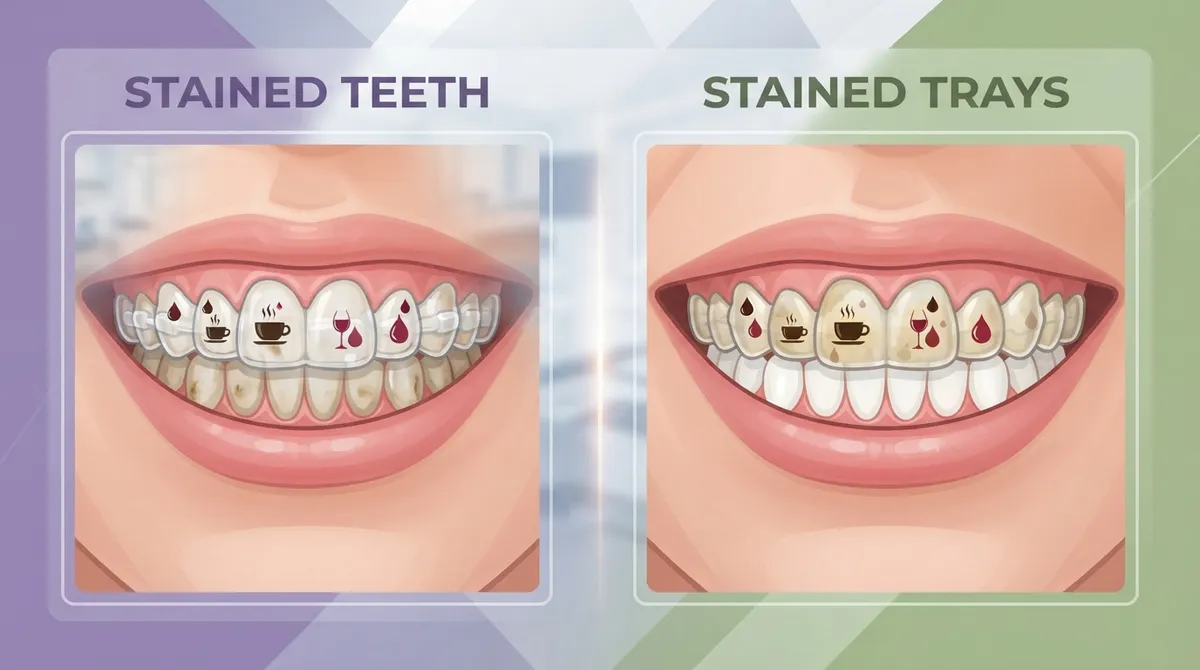
Here is the most important thing to understand: tray staining and tooth staining are two different problems. Many people mix them up, and that is where the worry often starts.
Clear aligners are made from transparent plastic. Over time, that plastic can become cloudy or take on a tint, especially when it meets strongly pigmented drinks like coffee, tea, red wine, or cola. That is discoloration of the appliance, not necessarily your enamel.
Your teeth can also discolor during treatment, but usually for different reasons. Dietary pigments, tobacco, plaque buildup, and weak oral hygiene are the main drivers. In other words, the aligner is not painting your teeth. It can, however, hold stain-causing stuff against your teeth if you wear it at the wrong time.
Quick Comparison: Tray Stains vs. Tooth Stains
| Issue | What It Affects | Common Causes | Best Prevention |
|---|---|---|---|
| Tray staining or cloudiness | The clear plastic aligner | Coffee, tea, red wine, cola, poor cleaning | Remove trays for drinks (except water); clean daily |
| Tooth staining | Enamel and visible tooth surfaces | Dietary pigments, tobacco, plaque, skipped brushing | Brush and floss before putting trays back in |
| Attachment staining | Small tooth-colored bumps bonded to teeth | Pigmented foods and drinks, plaque | Careful brushing around attachments |
| White spots (decalcification) | Enamel mineral content | Plaque and acid exposure under trays | Good hygiene; limit sugary or acidic items with trays in |
What Does the Research Say?
Researchers have looked at this topic in laboratory settings, and the results are interesting. It helps to keep in mind that lab studies do not perfectly predict what happens in a real mouth. Still, they point to useful patterns.
- Coffee is a top offender for trays. A 2025 laboratory study comparing beverages found coffee caused the most discoloration of clear-aligner materials, followed by tea and cola.
- Attachments may stain more than enamel. A 2026 laboratory study using extracted premolars found clinically noticeable discoloration after exposure to staining agents in every group. Composite attachments alone showed the greatest color change, while aligners alone showed the lowest.
- Red wine hits hard. In that same study, red wine caused the greatest change, while tea and coffee produced similar changes.
- Results vary by material and exposure. A 2024 study measured tooth and aligner color after 15 days of full-time wear and saw changes, but its findings are specific to the materials tested. They do not prove that aligners routinely stain patients’ teeth.
It is also worth being honest about what we do not know. No strong population-level statistic exists on how often clear aligners stain teeth. Most direct evidence comes from lab testing, so real-life results depend on your habits, your cleaning routine, and your trays.
Why Teeth and Attachments Can Look Discolored During Treatment
If you notice a change in color while wearing aligners, a few common causes are usually behind it.
Trapped Pigments and Sugars
When you sip anything other than water with your aligners in, the liquid can get trapped between the tray and your teeth. That traps pigments, sugars, and acids right against your enamel. It is like putting a cup of coffee in a sealed sleeve on your teeth for hours.
Composite Attachments
Many aligner plans use small tooth-colored attachments bonded to your teeth. These help the trays grip and move teeth more precisely. The material they are made from can absorb stains more easily than natural enamel, so they may look darker than the surrounding tooth.
Plaque and Poor Hygiene
Plaque loves to hide under trays. If you skip brushing and flossing before reinserting your aligners, plaque can build up and dull your smile. Over time, this can lead to discoloration and other problems.
Tobacco and Dark Foods
Smoking, vaping with flavored products, and heavy use of dark sauces or berries can all add color to teeth. These habits are not caused by aligners, but aligners can make the effects more noticeable around attachments.
Stains vs. White Spots: Know the Difference
Staining and white-spot decalcification are not the same thing. Stains come from pigment. White spots come from mineral loss in the enamel, linked to plaque and acid exposure.
Aligner manufacturers warn that poor brushing and flossing, or having sugary or acidic foods and drinks with aligners in place, can contribute to these problems. White spots often look chalky and can be harder to reverse than a simple surface stain. That is one more reason to take hygiene seriously.
If you spot chalky patches or persistent discoloration, do not try to scrub them away or bleach them on your own. Reach out to your orthodontist first. If you are in the Lakewood Ranch area, you can contact us and our team will take a look.
How to Prevent Stains: A Simple Daily Routine
Preventing stains is far easier than fixing them. Here is a friendly, step-by-step routine you can follow every day.
- Take your aligners out before eating or drinking. Water is the only thing that is generally safe to sip with trays in. Everything else, including coffee, tea, juice, soda, and wine, should happen with the trays out.
- Brush and floss before putting them back in. This keeps food and plaque from getting trapped against your teeth. A quick brush after meals goes a long way.
- Rinse if you cannot brush. If you are out and about, swish water around your mouth and rinse your trays before reinserting them.
- Clean your aligners daily. Use a soft-bristled toothbrush, water, and a tiny amount of toothpaste, then rinse well.
- Store trays in their case. Never wrap them in a napkin. That is how aligners get lost or thrown away.
What Not to Do to Your Aligners
- Do not use hot water, since heat can warp the plastic.
- Do not soak trays in denture cleaners or mouthwash, which can damage the surface.
- Do not use harsh chemicals or abrasive scrubs that are not approved by your orthodontist.
- Do not try to whiten trays or teeth with bleach during treatment.
Can You Drink Coffee or Tea With Aligners In?
This is one of the most common questions we hear, especially from busy professionals who live on their morning cup. The honest answer is no, not with your aligners in.
Coffee, tea, and red wine are some of the strongest staining drinks. If you sip them while wearing trays, the pigment settles against both your teeth and your aligners. Remove your trays, enjoy your drink, then brush or rinse before putting them back.
A few easy tricks can help:
- Keep a travel toothbrush and small case in your bag or desk.
- Finish your drink in one sitting instead of sipping all morning.
- Use a straw for cold drinks when your aligners are out, which helps limit contact with your front teeth.
- Rinse with water right after you finish.
How to Clean Stained or Cloudy Aligners
If your trays already look a little dull, do not panic. Start with gentle care.
- Rinse the aligners in cool or lukewarm water.
- Brush them softly with a soft-bristled toothbrush and a small dab of toothpaste.
- Rinse thoroughly so no toothpaste residue remains.
- Let them dry and place them back in their case.
Always follow the cleaning method recommended by your orthodontist or the aligner maker. If a stain will not budge, or your trays stay cloudy, ask your orthodontist whether it is time to switch to your next set. Learn more about daily care in our guide on aligners maintenance and care.
Can You Whiten Your Teeth During Aligner Treatment?
Many patients want a brighter smile along with straighter teeth, especially those preparing for a wedding, graduation, or big event. The tricky part is that attachments do not respond to whitening the way natural enamel does, so you could end up with uneven color.
For that reason, the safest move is to talk with your orthodontist before using any whitening product. Many patients wait until attachments come off and treatment wraps up. You can read more in our post on teeth whitening vs. orthodontics to see how timing can work.
Who Should Pay Extra Attention to Staining?
Staining concerns come up for different people for different reasons. Here is how it may look for you.
- Busy professionals: Coffee on the go and client lunches can tempt you to leave trays in. Plan breaks to remove and clean them.
- Parents of teens: Teens often snack and sip all day. A simple routine and a portable cleaning kit can help them stay on track. See our guide to teen orthodontic treatment.
- Adults returning to treatment: If you wore braces years ago and your teeth shifted, you are likely motivated and consistent. Good habits will protect your results. Explore adult orthodontics.
- Event planners: If you are racing toward a big date, avoid shortcuts. Consistent wear and clean trays give you the best chance at a bright, even smile.
When Should You Call Your Orthodontist?
Reach out if you notice any of the following:
- Persistent discoloration on teeth or attachments that does not improve with brushing
- Chalky white spots on your enamel
- Trays that stay cloudy or stained after proper cleaning
- Bad odor that does not go away with regular cleaning
- Gum irritation or sensitivity
Catching small issues early keeps your treatment on schedule. If you ever have a sudden problem, our page on orthodontic emergencies can point you in the right direction.
Choosing the Right Aligner Plan for Your Lifestyle
The best way to avoid staining worries is to pick a treatment that fits how you live. At Segovia Orthodontics, Dr. Flor Segovia offers clear aligners, including Angel Aligners, along with traditional braces options for patients of all ages. If you are weighing your choices, our comparison of braces vs. clear aligners can help you decide.
Dr. Segovia is a board-certified orthodontist, and you can learn more about what that means through the American Board of Orthodontics. You can also meet Orthodontist Flor Segovia and see how we focus on comfort, clear guidance, and a supportive environment for every patient.
Want to see what other patients say? You can visit us on Google — Segovia Orthodontics to read reviews. You can also follow our day-to-day smiles on our Instagram page and stay in touch through our Facebook page.
The Bottom Line
So, do clear aligners stain teeth? Not by themselves. The trays can become stained or cloudy from pigmented drinks, and your teeth or attachments can discolor if plaque builds up or if you wear trays while sipping anything besides water. With a few simple habits, you can keep both looking fresh.
Remove your aligners for meals and drinks, brush and floss before putting them back, clean your trays gently each day, and check in with your orthodontist if anything looks off. A little daily care protects the smile you are working so hard to build.
Ready to start your own clear aligner journey or have questions about your current treatment? Request an appointment with our friendly team, or call us at 941-557-1333. We would love to help you smile with confidence.
FAQs
Q: Do clear aligners stain your teeth or just the trays?
A: Mostly the trays. The clear plastic can turn cloudy or tinted from coffee, tea, and red wine. Your teeth can discolor too, but that usually comes from trapped pigments, plaque, or skipped brushing rather than the aligners themselves.
Q: Can I drink coffee or tea while wearing clear aligners?
A: It is best not to. Take your trays out, enjoy your drink, then brush or rinse before popping them back in. Water is the only drink that is generally safe with aligners in.
Q: Can clear aligners cause white spots on teeth?
A: They can contribute if plaque and acids get trapped against your enamel. Good brushing and flossing, plus limiting sugary or acidic items while trays are in, helps lower the risk. If you notice chalky spots, let your orthodontist know.
Q: How should I clean stained clear aligners?
A: Gently brush them with a soft toothbrush, water, and a tiny bit of toothpaste, then rinse well. Skip hot water, denture cleaners, and mouthwash soaks, since they can harm the plastic. If stains will not budge, ask your orthodontist.
Q: Can I whiten my teeth while wearing clear aligners?
A: It is smart to check with your orthodontist first. Attachments do not whiten like natural enamel, so color can end up uneven. Many patients wait until treatment is finished to whiten.
Our Service Area