Key Takeaways
-
Clear aligner treatment typically takes 6-18 months, but timeline varies based on case complexity, with minor corrections taking as few as 14 weeks and complex bite issues requiring 18-24 months or longer.
-
Wearing aligners 20-22 hours daily is critical to staying on schedule; skipping wear time is the number one reason treatment extends beyond planned timelines.
-
Treatment duration depends on individual factors including case complexity, how your teeth respond to pressure, age, oral health, and whether refinement trays are needed after initial treatment.
-
For mild-to-moderate crowding, clear aligners and traditional braces typically take similar treatment times according to recent research, though neither guarantees faster results.
-
Six-month treatment timelines are possible only for minor corrections like small gaps; most patients need a year or more for final results, so discuss realistic timelines honestly with your orthodontist.
-
A personalized orthodontic evaluation is essential since online estimates and friends' experiences won't predict your timeline; digital treatment planning provides more accurate estimates than ever before.
You’ve probably seen those before-and-after smile photos online and wondered, “How long did that actually take?” It’s one of the most common questions we hear at our Lakewood Ranch office. Whether you’re a busy mom scheduling around soccer practice, a young professional prepping for a big presentation, or someone gearing up for a wedding, the timeline matters. You want a straighter smile, but you also want to know what to expect before you commit.
The honest answer is that clear aligner treatment usually takes about 6 to 18 months. But that’s a wide range, and your actual timeline depends on a lot of personal factors. In this guide, we’ll break down what affects treatment length, what daily wear really looks like, and how to keep your plan on track. If you’ve been curious about clear aligners as an option for your smile, this article will give you a clear, realistic picture.
The Typical Clear Aligner Timeline
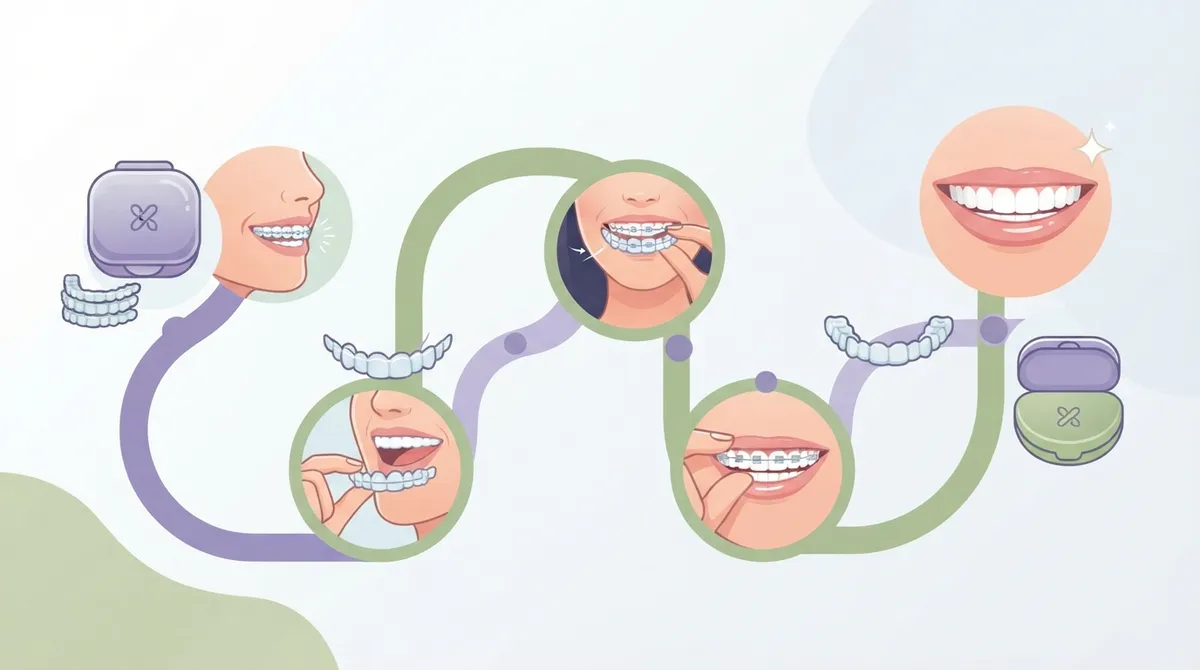
Most people finish clear aligner treatment somewhere between 6 and 18 months. Minor corrections, like slightly crowded front teeth, might wrap up in just a few months. More complex cases involving bite issues or significant crowding can take 18 to 24 months or longer.
There’s no single number that applies to everyone. An orthodontist has to look at your teeth, your bite, and your goals before giving you a real estimate. The number of aligner trays in your box doesn’t tell the whole story either. Two people with the same number of trays might finish at very different times, depending on how their teeth respond.
According to Orthodontics Australia’s clear-aligner guide, a typical course involves 20 to 30 aligners, with an average treatment time of around 12 to 18 months. Very minor cases can sometimes finish in as little as 14 weeks. These numbers are helpful for general planning, but they’re not a promise for your specific smile.
Why There’s No One-Size-Fits-All Answer
Think of it like a road trip. Two people driving to the same city might take different amounts of time depending on traffic, weather, and how many stops they make along the way. Your teeth are similar. The starting point, the distance they need to move, and how your body responds all play a role.
This is exactly why a proper evaluation matters so much. During your first orthodontic visit, Dr. Flor Segovia will examine your teeth and bite, then map out a plan with a realistic timeline based on your unique situation.
What Affects How Long Treatment Takes
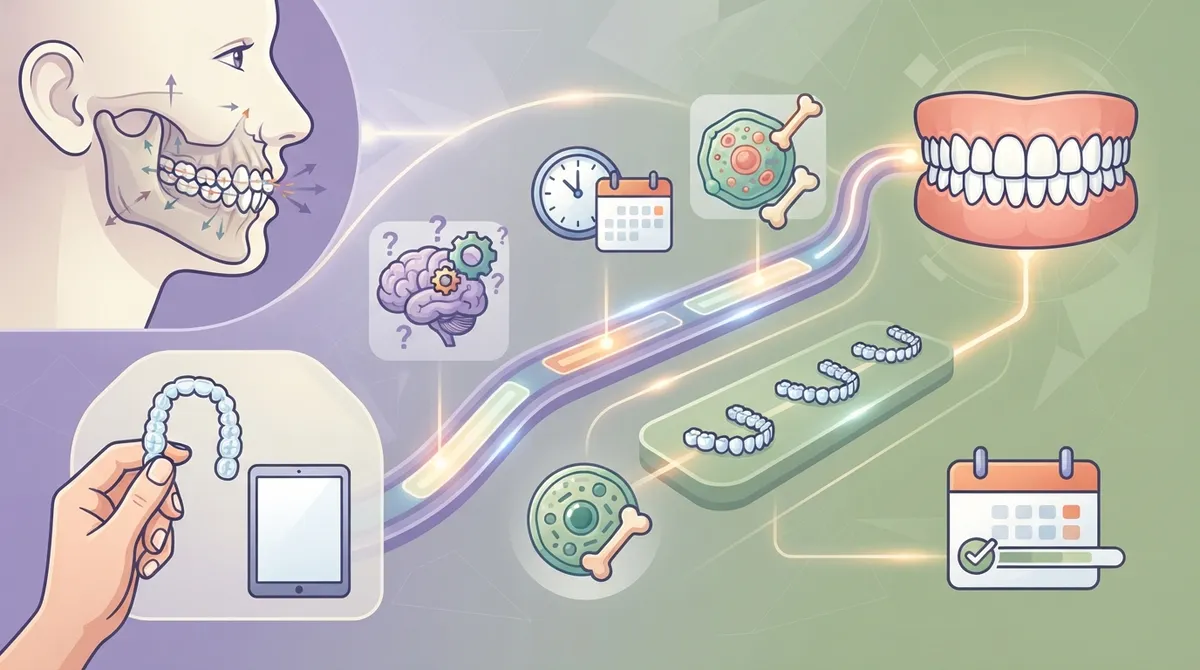
Several things influence your personal timeline. Here are the biggest factors we see in practice:
- Complexity of the case: Simple spacing issues move faster than bite corrections or severe crowding.
- Consistent wear: Aligners only work when they’re in your mouth. Skipping hours adds delays.
- How your teeth respond: Everybody’s bone and tissue respond a little differently to gentle pressure.
- Age and oral health: Healthy gums and teeth generally move more predictably.
- Need for refinements: Some patients need a second round of aligners to fine-tune results.
Falling short on wear time is one of the most common reasons treatment stretches longer than planned. If you’re not wearing your trays enough, your teeth simply don’t get the consistent pressure they need to move on schedule.
How Many Hours a Day Should You Wear Aligners?
The American Association of Orthodontists recommends wearing clear aligners for 20 to 22 hours per day. That means you take them out only for meals, snacks, and drinks other than water. The rest of the time, they should stay in.
Here’s a simple way to think about your daily aligner routine:
- Put your aligners in first thing after breakfast and brushing.
- Remove them only for meals, snacks, and drinks besides water.
- Brush your teeth before putting the aligners back in.
- Wear them through the day at work, school, or home.
- Keep them in overnight while you sleep.
- Switch to your next tray on the schedule your orthodontist gives you.
Most aligner sets are worn for one to two weeks before switching to the next tray in the series, according to the American Board of Orthodontics. Your orthodontist will tell you exactly how long to wear each set based on your treatment plan. Never switch trays early just because you’re excited to see progress. Doing so can actually work against you.
Clear Aligners vs. Braces: Does One Take Longer?
This is one of the most common questions we get from parents comparing options for their teens, and from adults weighing braces vs. clear aligners for themselves.
The research here is still developing. A 2024 systematic review published in Clinical Oral Investigations looked at 10 studies, including six randomized controlled trials. It found low-certainty evidence that treatment duration was similar between clear aligners and fixed braces for mild-to-moderate crowding. Most of these studies involved non-extraction treatment, so results may differ for more complex cases.
The bottom line? For simpler cases, aligners and braces often take about the same amount of time. For complicated bite issues, more research is still needed. Your orthodontist can help you understand which option fits your specific needs, whether that’s traditional WildSmiles braces for a fun, expressive option, precision-crafted LightForce braces, or a discreet aligner system.
| Factor | Clear Aligners | Traditional Braces |
|---|---|---|
| Average Treatment Time | 6-18 months | 18-24 months (varies by case) |
| Daily Wear Requirement | 20-22 hours | Worn full-time, no removal needed |
| Best For | Mild-to-moderate crowding, spacing | Complex bite and alignment issues |
| Visibility | Nearly invisible | Visible, though clear/white options exist |
| Patient Responsibility | High (must wear consistently) | Lower (fixed in place) |
Can Treatment Really Take Only Six Months?
For some patients, yes. If you only have minor crowding or small gaps, a shorter course of aligners might be all you need. This is great news for life event planners hoping to fix their smile before a wedding, graduation, or big job interview.
That said, six-month timelines are the exception rather than the rule. Most people need closer to a year or more to see their final results. If speed is your top priority, be upfront with your orthodontist about your event or deadline. They can tell you honestly whether your case is a good fit for a faster plan, or whether rushing might compromise your results.
Angel Aligners and Faster Treatment Options
At our Lakewood Ranch practice, we also offer Angel Aligners, which use a unique wear schedule designed to speed up tooth movement. Instead of wearing one tray for a full week or two, patients wear a flexible tray for seven days followed by a firmer tray for three days. This approach can help reduce the number of office visits needed and may shorten certain treatment plans compared to standard aligner systems.
Angel Aligners also use a frosted finish to reduce shine, which some patients find more discreet for everyday wear. If you’re a career-focused professional who wants efficient treatment without drawing attention to your smile during meetings, this could be worth discussing at your consultation.
What Happens If You Don’t Wear Your Aligners Enough
We get it. Life gets busy, and it’s tempting to skip a few hours here and there. But inconsistent wear is the number one reason treatment stretches out longer than expected.
Here’s what can happen if you fall short on wear time:
- Your teeth don’t move as planned, delaying progress
- Your next tray may not fit properly
- You might need extra time on your current tray before advancing
- In some cases, you may need additional trays to get back on track
If you ever feel like your aligners aren’t fitting right or you’ve fallen behind on wear time, don’t just guess and switch trays anyway. Reach out to your orthodontist first. It’s always better to ask a question than to risk setting your whole treatment plan back.
Refinements and Retainers: What Comes After
Some patients need a round of refinement aligners after finishing their original series. These extra trays help fine-tune tooth position or improve the bite a bit more. Not everyone needs refinements, and there’s no universal answer for how long they add to treatment. It really depends on your case.
Once your active treatment is done, retention becomes the next important step. Retainers help hold your teeth in their new position, and skipping this step can allow teeth to drift back over time. Retention is a separate phase from active aligner treatment, so ask your orthodontist to explain the schedule that fits your needs. Our orthodontic retainers page has more detail on how this works.
Getting an Accurate Timeline for Your Smile
The best way to know how long your treatment will take is to schedule an evaluation. Guessing based on friends’ experiences or online reviews won’t give you an accurate picture, since every smile is different.
During your visit, Dr. Segovia will examine your teeth, discuss your goals, and walk you through a personalized plan. She’s a board certified orthodontist who stays current on the latest techniques, including digital treatment planning that helps make estimates more accurate than ever before.
If you’re a parent wondering whether your teen might need teen orthodontic treatment, or an adult considering a second round of treatment after a past relapse, this evaluation is the right first step. We also offer orthodontic financing options to help make treatment fit comfortably into your budget.
Why Choose Segovia Orthodontics for Your Aligner Journey
At Segovia Orthodontics, we believe every patient deserves a clear, honest answer about their treatment timeline. Dr. Flor Segovia uses advanced orthodontic technology to plan treatment with precision, so you’re not left guessing about your progress.
We also know that families in Lakewood Ranch have busy schedules. That’s why we work hard to offer flexible appointment times and a warm, welcoming office atmosphere for patients of all ages. You can see what our Segovia Orthodontics patients are saying by checking our Facebook page or following along on our Instagram page for real smile transformations and helpful tips.
Curious what other Lakewood Ranch families think about their experience with us? You can also see what our Segovia Orthodontics patients say by visiting our Google Business Profile.
Ready to Start Your Smile Journey?
Now that you know roughly what to expect, the next step is getting a personalized answer for your own smile. Every mouth is different, and the only way to know your real timeline is through a professional evaluation.
If you’re ready to find out how long your clear aligner treatment might take, request an appointment with our Lakewood Ranch team today. You can also contact us with any questions, or simply call us at 941-557-1333 to get started. We’re here to help you feel confident about every step of your smile transformation.
FAQs
Q: How long do clear aligners take to straighten teeth?
A: Most people finish clear aligner treatment in about 6 to 18 months, though it really depends on your specific case. Minor corrections might take just a few months, while more complex bite issues can take 18 to 24 months or longer. The best way to know your timeline is to schedule an evaluation with an orthodontist.
Q: Can clear aligners work in just six months?
A: Yes, but this usually only applies to very minor corrections like small gaps or slight crowding. If you’re hoping for a fast timeline before a big event, be honest with your orthodontist about your goals. They can tell you whether your smile is a good fit for a shorter treatment plan.
Q: How many hours a day should I wear my clear aligners?
A: You should aim for 20 to 22 hours of wear each day, only removing your aligners for meals and drinks other than water. Consistent wear is what keeps your treatment on track, so try to make it a natural part of your daily routine, just like brushing your teeth.
Q: What happens if I don’t wear my aligners enough?
A: Skipping wear time can slow your progress and cause your next tray to fit poorly. This might mean staying on your current tray longer or even needing extra trays to catch up. If this happens, just reach out to your orthodontist instead of guessing what to do next.
Q: Do clear aligners take longer to work than traditional braces?
A: Research so far suggests aligners and braces often take a similar amount of time for mild-to-moderate crowding, based on a 2024 systematic review of clinical studies. For more complex cases, the timeline can vary quite a bit, so a personal evaluation is the best way to compare your options.
Our Service Area