Key Takeaways
-
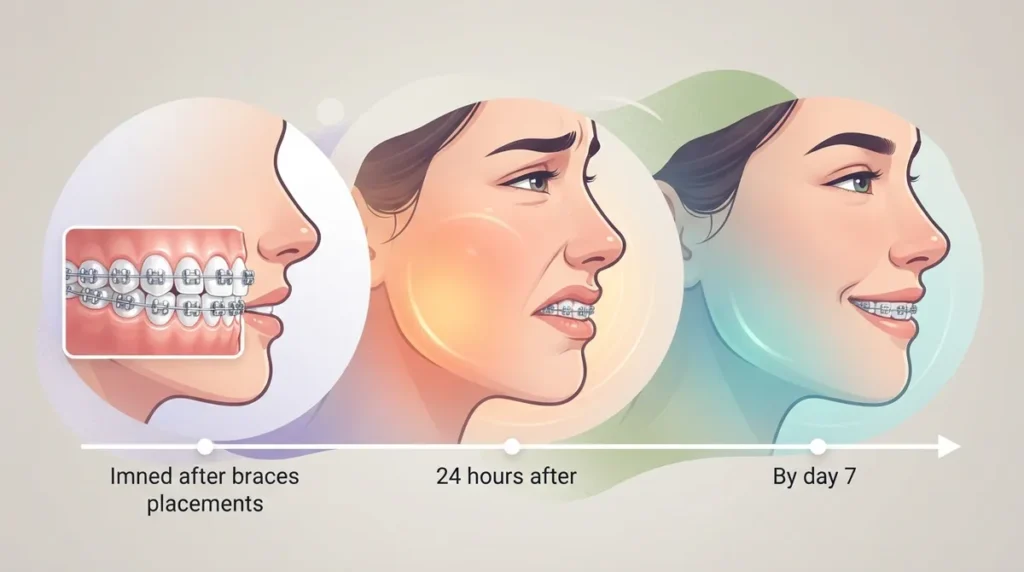
Initial braces placement is painless with soreness beginning 3-4 hours after appointment, peaking around 24 hours at mild-to-moderate levels (approximately 4 out of 10), then resolving within 7 days for most patients.
-
Braces pain feels like dull, achy pressure similar to muscle soreness, not sharp dental pain; manage it with over-the-counter pain relievers, soft foods, warm salt water rinses, and orthodontic wax for bracket irritation.
-
Adjustment appointments cause much milder discomfort lasting only 24-72 hours, with soreness becoming barely noticeable after several months as your mouth adapts to the treatment process.
-
Advanced orthodontic technology like 3D-printed custom brackets reduces gum and cheek irritation while potentially accelerating treatment by up to 45%, decreasing overall discomfort duration.
-
Contact your orthodontist immediately if you experience sharp pain, loose brackets, swelling, fever, or worsening pain after a week, as these are signs requiring professional attention rather than normal adjustment soreness.
-
Clear aligners and traditional braces cause similar discomfort levels but differ in type: braces create pressure-related soreness with occasional bracket irritation, while aligners cause consistent tightness when switching trays.
So you or your child are about to get braces, and there’s one question on everyone’s mind: how painful are braces, really? It’s the question we hear most often at our Lakewood Ranch office, and honestly, we love answering it because the truth is way less scary than what you might be imagining. Getting braces is one of the best things you can do for your smile, and knowing what to expect makes the whole journey feel a lot less intimidating.
Whether you’re a mom booking your first orthodontic visit for your kid, a busy professional considering clear aligners, or an adult ready to fix that relapse from your teenage braces, this guide breaks down exactly what braces pain feels like, how long it lasts, and how to manage it like a pro. Let’s clear up the myths and get you feeling confident about your smile journey.
Does Getting Braces Hurt? The Honest Answer
Here’s some good news right out of the gate: getting braces put on is completely painless. There are no shots, no drilling, and no needles involved. Dr. Flor Segovia and her team simply bond brackets to your teeth and thread a wire through them, a process that feels more like a dental cleaning than anything scary.
The actual discomfort doesn’t show up until later. Most patients start feeling soreness about 3 to 4 hours after their appointment, once the wire begins gently pushing teeth into their new positions. This is completely normal and actually a sign that your treatment is working.
What Braces Pain Actually Feels Like
Braces pain isn’t sharp or stabbing. Instead, most people describe it as:
- A dull, achy pressure similar to muscle soreness after a workout
- Tenderness when biting down on food
- Slight sensitivity in the gums near the brackets
- A general feeling of tightness across the teeth
This is very different from a toothache or dental pain caused by a cavity. Braces soreness comes from your teeth and bone gently adjusting, not from anything being wrong. If you’re ever unsure, our orthodontic emergency page can help you figure out what’s normal and what needs a call to our office.
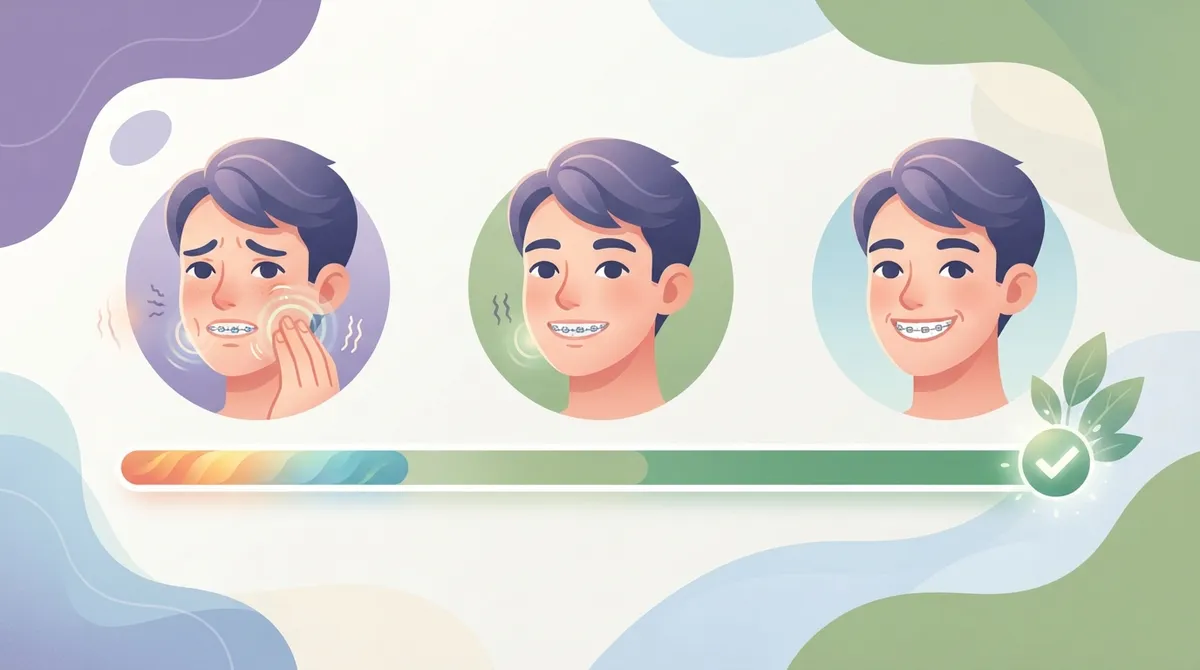
How Long Does Braces Pain Last?
This is probably the second most common question we get. Here’s a simple timeline based on what most patients experience:
- Hours 1-3: No pain at all. Your mouth feels normal right after your appointment.
- Hours 3-24: Soreness begins as the wire starts applying pressure. This is when most people first notice discomfort.
- Day 1-2: Pain typically peaks during this window, with clinical studies showing average discomfort scores around 42 out of 100 on standard pain scales. That’s mild-to-moderate, not severe.
- Day 3: Roughly half of patients report their discomfort has already started dropping off significantly.
- Day 7: Most patients say they feel little to no soreness by this point.
- Day 14: Any lingering tenderness has usually returned to baseline for nearly everyone.
So while braces pain is real, it’s also short-lived. Within a week, most patients have completely adjusted and forget they’re even wearing braces.
What About Adjustment Appointments?
Once your braces are on, you’ll come back every several weeks for adjustments where Dr. Segovia tightens wires or changes them out. Good news: these follow-up visits cause much milder discomfort than the initial placement.
Adjustment soreness typically lasts only 24 to 72 hours, and by the time you’re several months into treatment, many patients barely notice any discomfort at all after appointments. Your teeth and mouth get used to the process, making each visit easier than the last.
Braces Pain Timeline at a Glance
| Treatment Stage | Typical Discomfort Level | How Long It Lasts |
|---|---|---|
| Getting braces placed | None during procedure | 0 hours (painless) |
| First 24 hours after placement | Mild to moderate soreness | Peaks around hour 24 |
| Days 3-7 after placement | Decreasing soreness | Mostly resolved by day 7 |
| Routine adjustments | Mild soreness | 24-72 hours |
| 6+ months into treatment | Minimal to none | Barely noticeable |
Simple Ways to Manage Braces Discomfort at Home
You don’t have to just tough it out. There are plenty of tried-and-true tricks to keep you comfortable during those first few days.
- Take an over-the-counter pain reliever like Tylenol or Advil as needed
- Eat soft foods like yogurt, mashed potatoes, and smoothies for the first few days
- Rinse with warm salt water to soothe irritated gums and cheeks
- Apply orthodontic wax over brackets that rub against your cheeks or lips
- Sip on cold water or eat something cold, like ice cream, to numb soreness
- Avoid crunchy, hard, or sticky foods that put extra pressure on teeth
These simple steps make a huge difference. Most patients find that within just a couple of days, they barely need pain relievers at all.
Braces vs. Clear Aligners: Which Hurts Less?
This is a question we hear a lot, especially from young professionals and adults considering treatment. The truth is both options cause some soreness, but the type of discomfort is a bit different.
- Traditional braces cause pressure-related soreness after placement and adjustments, plus occasional cheek irritation from brackets.
- Clear aligners tend to cause a tighter, more consistent pressure feeling each time you switch to a new tray, usually lasting a day or two.
Neither option is dramatically more painful than the other. It really comes down to your lifestyle and treatment goals. If discreet treatment matters most to you, exploring clear aligners like Angel Aligners might be worth discussing at your consultation. For families wanting a fun, engaging option for kids, WildSmiles Braces combine effective treatment with playful bracket designs that make the experience more enjoyable for younger patients.
Why Comfort Technology Matters
Not all braces are created equal when it comes to comfort. At our practice, we use LightForce Orthodontics, a fully digital, 3D-printed bracket system custom-fitted to each patient’s teeth. Because these brackets are designed specifically for your smile rather than a one-size-fits-all mold, they tend to feel more comfortable and cause less irritation to gums and cheeks.
This kind of advanced orthodontic technology also means treatment can move up to 45% faster in many cases, which means less time dealing with any soreness overall. Dr. Segovia stays on top of the latest tools and techniques to keep every patient as comfortable as possible throughout their journey.
Signs Your Braces Pain Might Need Attention
While soreness is completely normal, there are a few signs that mean it’s time to reach out to us instead of waiting it out:
- Sharp, sudden pain that wasn’t there before
- A loose or broken bracket poking into your cheek
- Swelling, fever, or signs of infection
- Pain that gets worse instead of better after a week
- A wire that’s come completely out of place
If any of these happen, don’t tough it out on your own. Give us a call us at 941-557-1333 so we can get you in quickly and take care of the issue.
Braces Pain for Different Life Stages
How braces feel can vary a bit depending on your age and situation, and that’s totally normal.
For Kids and Teens
Younger patients often bounce back from soreness faster thanks to more flexible bone and tissue. Parents can help by keeping soft foods on hand and reminding kids that the ache means their teeth are moving in the right direction. Our early orthodontic treatment and teen orthodontic treatment programs are designed with this in mind, keeping appointments efficient for busy family schedules.
For Adults
Adult patients, especially those correcting a relapse from childhood braces, may notice slightly more initial soreness since bone remodeling can take a touch longer. The good news is that adult orthodontics today includes discreet, comfortable options that fit around demanding careers and busy schedules, so you don’t have to put your smile goals on hold.
For Life Event Planners
If you’re working toward a wedding, graduation, or big career milestone, timing matters. Getting a head start on treatment means less discomfort to manage closer to your big day, and our team can help map out a treatment plan that lines up with your timeline.
Why Choose Segovia Orthodontics for Your Treatment Journey
Braces pain is temporary, but choosing the right orthodontic team makes all the difference in how comfortable that journey feels. Dr. Flor Segovia is a board-certified orthodontist who provides warm, bilingual care in both English and Spanish, so every patient and family feels genuinely understood and supported.
Our Lakewood Ranch office is built around comfort, from our gentle approach to appointments to our use of cutting-edge technology that minimizes unnecessary discomfort. Curious what other patients have experienced? You can visit us on Google — Segovia Orthodontics to read real reviews from our community. We also love connecting with patients on our Facebook page and sharing smile transformations on our Instagram page.
If you’re weighing your treatment options, our types of braces guide and all about braces resource are great places to start learning more before your first visit.
Ready to Get Started?
Braces pain is real, but it’s mild, manageable, and temporary. Most patients feel completely normal within a week and forget they’re even in treatment by month six. Knowing this ahead of time takes away so much of the anxiety around starting your smile journey.
If you’ve been putting off treatment because you’re worried about discomfort, we hope this guide gave you the peace of mind you needed. Every day, patients walk into our office nervous and walk out excited about their new smile. To learn more about board-certified care backed by the American Board of Orthodontics, or to get your questions answered in person, feel free to contact us today. Ready to take the next step? Request an appointment with our Lakewood Ranch team and start your journey toward a smile you’ll love showing off.
FAQs
Q: Do braces hurt when they are first put on?
A: Nope, not at all! Getting braces attached is completely painless since there’s no drilling or shots involved. Any soreness usually doesn’t show up until 3 to 4 hours later, once the wire starts gently moving your teeth.
Q: How long does braces pain last after getting them?
A: For most people, the worst of it is over within 24 to 48 hours, and things feel much better by day 7. By the two-week mark, you’ll likely forget you’re even wearing braces most days.
Q: What is the pain level of braces on a scale of 1-10?
A: Most patients rate initial soreness around a 4 out of 10, closer to a dull ache than sharp pain. It’s very manageable, especially with soft foods and over-the-counter pain relievers on hand.
Q: How can I stop braces pain at home?
A: Try Tylenol or Advil, stick to soft foods for a few days, and rinse with warm salt water for extra relief. Orthodontic wax also works wonders if a bracket is rubbing your cheek.
Q: Is braces pain normal or a sign of a problem?
A: A little dull soreness is totally normal and just means your teeth are moving as planned. But if you feel sharp pain, swelling, or a broken wire, give our office a call so we can check things out.
Our Service Area