Key Takeaways
-
Schedule a preventive orthodontic evaluation by age 7, when children have a mix of baby and adult teeth, allowing orthodontists to spot problems early before they require more complex treatment.
-
Early two-phase treatment reduces front tooth injury risk from 30% to 19%, but doesn't improve long-term bite outcomes compared to single-phase treatment in adolescence, so discuss your child's specific situation with an orthodontist.
-
Most children evaluated at age 7 don't need immediate treatment; many only require periodic check-ins, so preventive orthodontics is about watching and waiting, not rushing into braces.
-
Watch for warning signs like crowded teeth, misaligned bites, early/late tooth loss, thumb-sucking past age 5, or jaw protrusion, and mention these at your child's orthodontic evaluation.
-
Consistency is critical in early treatment—devices like activators show 56% success rates when worn regularly, averaging 1.7 years of treatment, so family commitment directly impacts results.
-
Preventive care options range from routine monitoring to habit coaching, space maintainers, or early appliances to guide jaw growth, each tailored to your child's specific needs rather than a one-size-fits-all approach.
Picture this: your child is 6 or 7 years old, and you’re wondering if that overlapping tooth is something to worry about. You’re not alone. Most parents ask this exact question, and the good news is there’s a clear answer. Preventive orthodontics is all about watching your child’s growing smile early, so small issues don’t turn into bigger ones later.
At Segovia Orthodontics, we love helping Lakewood Ranch families understand what preventive orthodontics really means. It’s not about rushing your child into braces. It’s about keeping an eye on things at the right time, so you and your child feel confident about what comes next. Let’s walk through what this looks like, when to start, and what you can expect along the way.
What Is Preventive Orthodontics, Really?
Preventive orthodontics means watching your child’s teeth and jaws as they grow. The goal is to catch problems early, before they become harder to fix. Think of it like a checkup for your car. You don’t wait until the engine breaks down. You check things regularly so small issues get fixed before they grow.
This is sometimes called interceptive orthodontics too. The two terms often get used together, though they don’t always mean the exact same thing. Both focus on catching concerns while your child still has a mix of baby teeth and permanent teeth coming in.
During these mixed-dentition years, an orthodontist can check several things:
- How teeth are coming in and whether there’s enough room
- Whether the upper and lower teeth meet correctly
- How the jaw is growing compared to what’s expected
- Habits like thumb-sucking that might affect the bite
- Whether any teeth are missing, extra, or coming in at odd angles
Not every child needs treatment right away. In fact, many kids just need a bit of watching and a follow-up visit down the road. That’s perfectly normal, and it doesn’t mean anything is wrong.
Why Age 7 Matters So Much
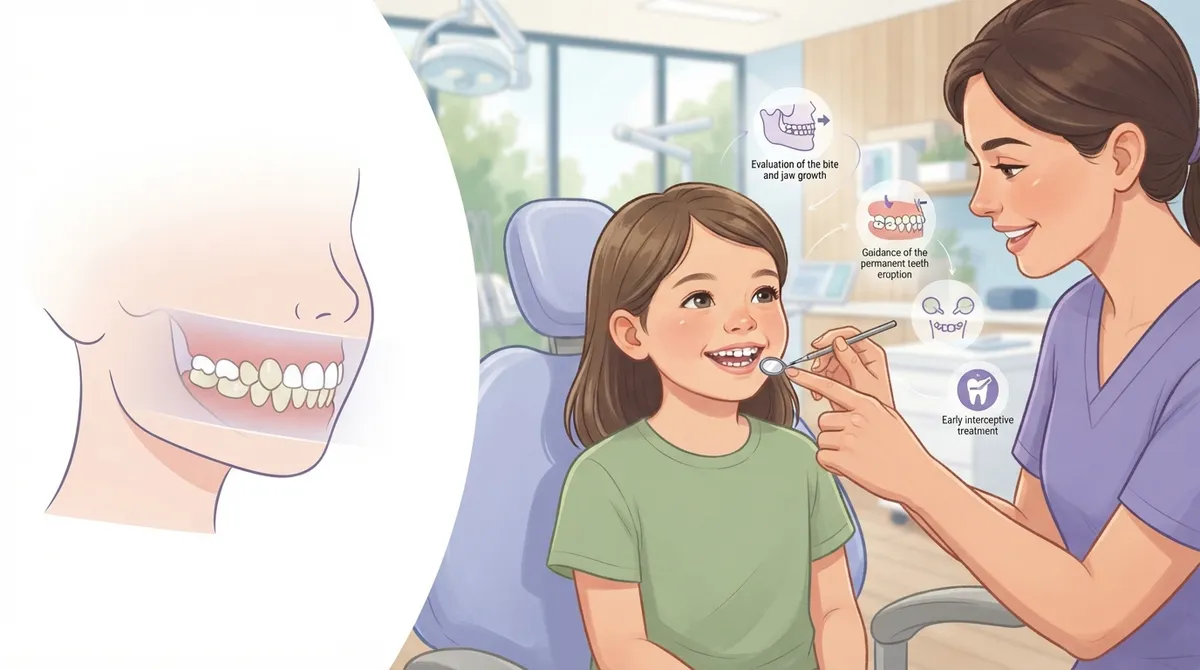
The American Board of Orthodontics and the American Association of Orthodontists both point to age 7 as the sweet spot for a first orthodontic check-up. Why 7? By this age, your child usually has a mix of baby teeth and adult teeth. This gives an orthodontist enough information to spot patterns early.
Here’s the part that surprises a lot of parents: this first visit is just an evaluation. It is not a signal that your child needs braces right now. Most kids who get checked at age 7 are simply told to come back for another look in a year or two. Only a smaller group of children actually need early treatment.
If you notice something concerning before your child turns 7, don’t wait. Trust your gut and book a first orthodontic visit sooner rather than later.
Signs Worth Watching For
Here are common things parents notice that might be worth mentioning at a checkup:
- Teeth that look very crowded or crooked as they come in
- A bite where the top and bottom teeth don’t line up well
- Losing baby teeth very early or very late compared to siblings
- Ongoing thumb-sucking or pacifier habits past age 5
- Jaws that seem to stick out too far forward or back
- Mouth breathing or trouble biting and chewing food
If any of these sound familiar, our team can walk you through common orthodontic problems and explain what steps make sense for your child.
What Happens During the Evaluation
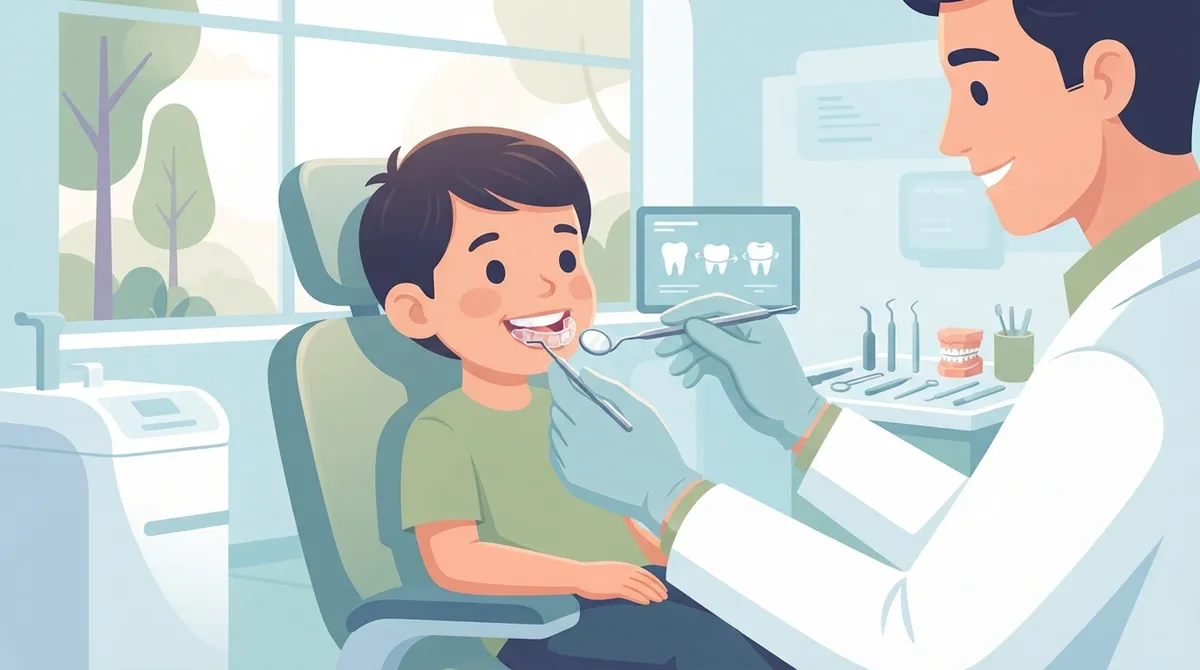
A preventive orthodontic evaluation is simple and stress-free. There’s no drilling, no discomfort, and honestly, most kids find it kind of interesting. The orthodontist will look at how the teeth and jaws are developing. Sometimes an X-ray is used, but only when it’s really needed to see something clearly.
The American Academy of Pediatric Dentistry recommends this kind of ongoing check to look at spacing, missing teeth, extra teeth, and how the bite is forming. It’s a chance to catch things early, without jumping to conclusions or unnecessary treatment.
After the visit, you’ll get one of a few outcomes. Maybe everything looks great, and you’ll just come back for another check next year. Maybe there’s a small habit to work on, like breaking a thumb-sucking pattern. Or maybe your orthodontist recommends a simple appliance to guide growth in the right direction.
Does Every Child Need Early Treatment?
Here’s an honest answer: no. Early treatment is helpful for some situations, but it’s not something every child needs. This is one of the biggest misunderstandings parents have about preventive orthodontics.
Let’s look at prominent upper front teeth, sometimes called a Class II bite. This is one of the more studied areas in early treatment. A well-known Cochrane review found that treating this early, in two separate phases, reduced the risk of front tooth injury. In fact, only 19% of kids treated early had new injuries to their front teeth, compared to 30% of kids who waited until their teen years for one round of treatment.
That said, the same review found no real difference in the final result between early two-phase treatment and waiting for one phase later. So while early treatment can protect front teeth from injury, it doesn’t always mean a shorter overall journey or better long-term outcome. This is exactly why a personal conversation with your orthodontist matters so much.
| Treatment Approach | New Front Tooth Injury Rate | Final Bite Result |
|---|---|---|
| Early Two-Phase Treatment | 19% (31 out of 161 children) | Similar to one-phase treatment |
| Single Phase in Adolescence | 30% (51 out of 171 children) | Similar to two-phase treatment |
Numbers like these help explain why early orthodontic treatment is recommended for some kids but not all. It really depends on your child’s specific situation.
What Preventive Care Can Actually Involve
Depending on what the orthodontist finds, preventive orthodontics can take a few different paths. Here’s a simple breakdown:
- Watching and waiting: Regular check-ins to track how things are developing, without any active treatment yet.
- Habit coaching: Helping your child stop habits like thumb-sucking that could affect their bite.
- Space maintainers: Small appliances that hold space open if a baby tooth is lost too early.
- Early appliances: Devices used to guide jaw growth or fix a developing bite issue before it gets more complicated.
A recent 2026 study looking at a public dental system reported nearly 22,000 interceptive treatments over five years, averaging about 4,389 each year. One common approach, called activator treatment, had a 56% success rate in that study. Most failures came down to kids not wearing the appliance as often as they should. Treatment in that group lasted about 1.7 years on average. These numbers are specific to that study, but they highlight something important: consistency really matters when your child is in early treatment.
Two-Phase Treatment: What It Means
Sometimes preventive care leads into what’s called two-phase treatment. Phase one happens early, often around age 7 to 10, to guide growth or fix a specific problem. Then there’s a break, where the orthodontist just keeps an eye on things. Phase two usually happens in the early teen years, often involving braces or clear aligners to finish aligning the teeth.
Not every child who starts phase one treatment needs phase two. And not every child needs phase one at all. This is why regular evaluations matter so much. They help your orthodontist make the right call at the right time, instead of guessing.
Fun Treatment Options for Kids
If your child does need early treatment, we want them to actually enjoy the process. That’s why we offer WildSmiles Braces, which come in fun shapes like stars, hearts, and even Mickey Mouse designs. Kids who like their braces tend to take better care of them, which means better brushing and better results overall.
We also use LightForce Orthodontics, a fully digital, custom-fit bracket system. Dr. Segovia can design each bracket specifically for your child’s teeth, which often means faster, more comfortable treatment. It’s one of the ways our advanced orthodontic technology helps make early treatment smoother for the whole family.
Why Choose Segovia Orthodontics for Your Child’s Evaluation
Dr. Flor Segovia is a board certified orthodontist who has spent years helping Lakewood Ranch families feel confident about their orthodontic decisions. She offers bilingual care in English and Spanish, and she takes time to explain things clearly so you never feel rushed or confused.
Our team knows that busy moms need flexible scheduling, and we work hard to make appointments easy to fit into your week. You can learn more about our approach on our why choose us page, or read about Dr. Flor Segovia and her background.
Want to see what other parents say? Check out our Facebook page or follow along on our Instagram page for real patient stories and smile transformations. You can also visit us on Google — Segovia Orthodontics to see reviews from families just like yours.
Planning Ahead for Financing
One question we hear a lot is about cost. Preventive visits and early evaluations are usually much simpler and more affordable than full treatment. If your child does need early intervention, we offer orthodontic financing options designed to fit real family budgets. We believe cost should never stand between your child and a healthy smile.
And speaking of planning ahead, if your family is also working on home projects this season, local favorites like Panther Pools are a great resource for Lakewood Ranch homeowners looking to upgrade their backyard while your child works on their smile.
What to Do Next
If your child is around age 7, or if you’ve noticed something that concerns you, now is a great time to schedule a check-up. Preventive orthodontics isn’t about rushing into treatment. It’s about staying informed, catching issues early, and making smart choices together with your orthodontist.
Here’s a simple summary of the steps to take:
- Watch for signs like crowding, early or late tooth loss, or ongoing habits like thumb-sucking.
- Schedule an evaluation around age 7, or earlier if something seems off.
- Ask questions during the visit so you fully understand any recommendations.
- Follow through with periodic check-ins even if no treatment is needed right away.
- Discuss financing and timing options if early treatment is recommended.
Our team is here to guide you every step of the way. Feel free to contact us with any questions, or simply request an appointment to get your child’s first evaluation on the calendar. You can also call us at 941-557-1333 and our friendly staff will help you find a time that works for your family.
Your child’s smile is worth the extra attention now. Preventive orthodontics gives you peace of mind and gives your child the best possible start toward a healthy, confident smile for years to come.
FAQs
Q: What is preventive orthodontics?
A: Preventive orthodontics means keeping an eye on your child’s developing teeth and jaws so problems can be caught early. It’s not about starting treatment right away. It’s about watching, checking, and stepping in only when it truly helps.
Q: At what age should a child first see an orthodontist?
A: The American Association of Orthodontists recommends a first check-up by age 7. This gives an orthodontist enough information about how teeth and jaws are developing, even if your child doesn’t need treatment yet.
Q: Does every child need braces or early treatment?
A: Not at all! Many kids just need a simple evaluation and a follow-up visit down the road. Only a smaller group of children actually benefit from early treatment, and your orthodontist can help you figure out which path fits your child.
Q: Can early orthodontic treatment reduce the risk of broken front teeth?
A: Yes, research shows early treatment for prominent front teeth can lower the chance of injury. Studies found about 19% of kids treated early had new injuries, compared to 30% of kids who waited until their teen years.
Q: What happens during a child’s first orthodontic evaluation?
A: It’s a relaxed, simple visit where the orthodontist checks how teeth are coming in, how the bite lines up, and whether the jaw is growing as expected. X-rays are only used when truly necessary, and most visits end with just a recommendation to check back later.
Our Service Area