Key Takeaways
-
Brush after every meal and floss daily to prevent white-spot lesions on teeth around brackets, which can become permanent if not caught early.
-
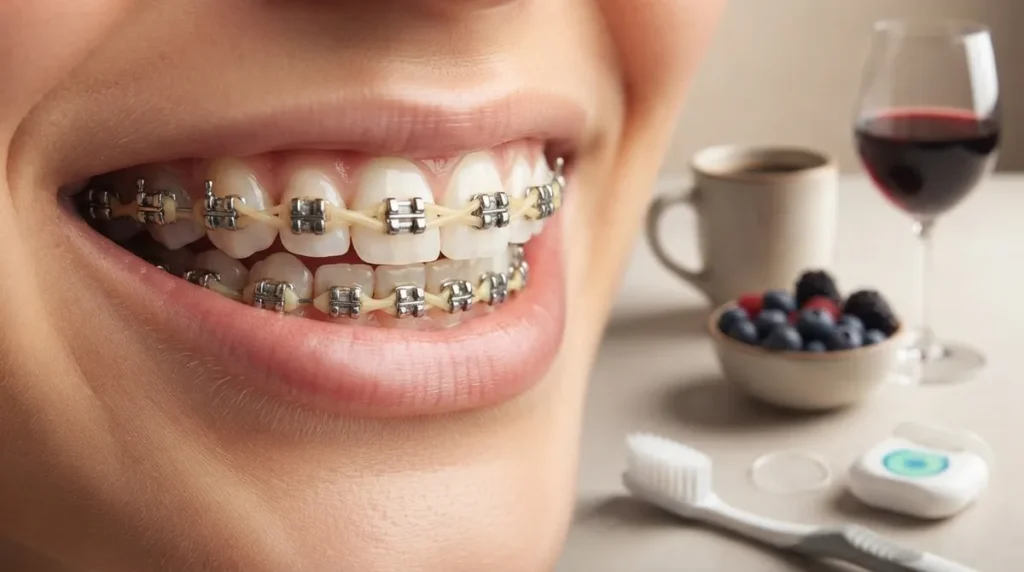
Avoid coffee, tea, red wine, dark sodas, berries, and tobacco products as they stain porous elastic ligatures; these ties are replaced every 4-6 weeks so staining is temporary and cosmetic.
-
Stained elastic ties are easily fixed at regular adjustment visits, but white chalky spots on tooth enamel require immediate attention to prevent permanent damage.
-
Ceramic brackets resist staining well, but clear or white elastic ties holding the wire are porous and absorb pigments from colored foods and drinks.
-
Wait until braces are removed before whitening teeth, as brackets cover part of each tooth and whitening during treatment creates uneven patches once braces come off.
-
Rinse with water after consuming pigmented beverages when brushing isn't immediately possible, and keep travel toothbrushes handy to maintain consistency throughout the day.
Noticing yellow spots creeping onto your teeth or brown marks on your clear ties? You’re not alone. Braces staining is one of the most common worries we hear from families and adults at our Lakewood Ranch office. The good news? It’s almost always preventable with a few simple habits. Let’s break down what’s really going on, what causes it, and how you can keep your smile bright while you work toward straighter teeth.
Whether you’re a busy parent juggling your teen’s orthodontic appointments, a professional getting clear aligners for a discreet treatment, or an adult finally getting the smile you’ve always wanted, understanding braces staining helps you protect your investment. Let’s dig into the details.
What Exactly Is Braces Staining?
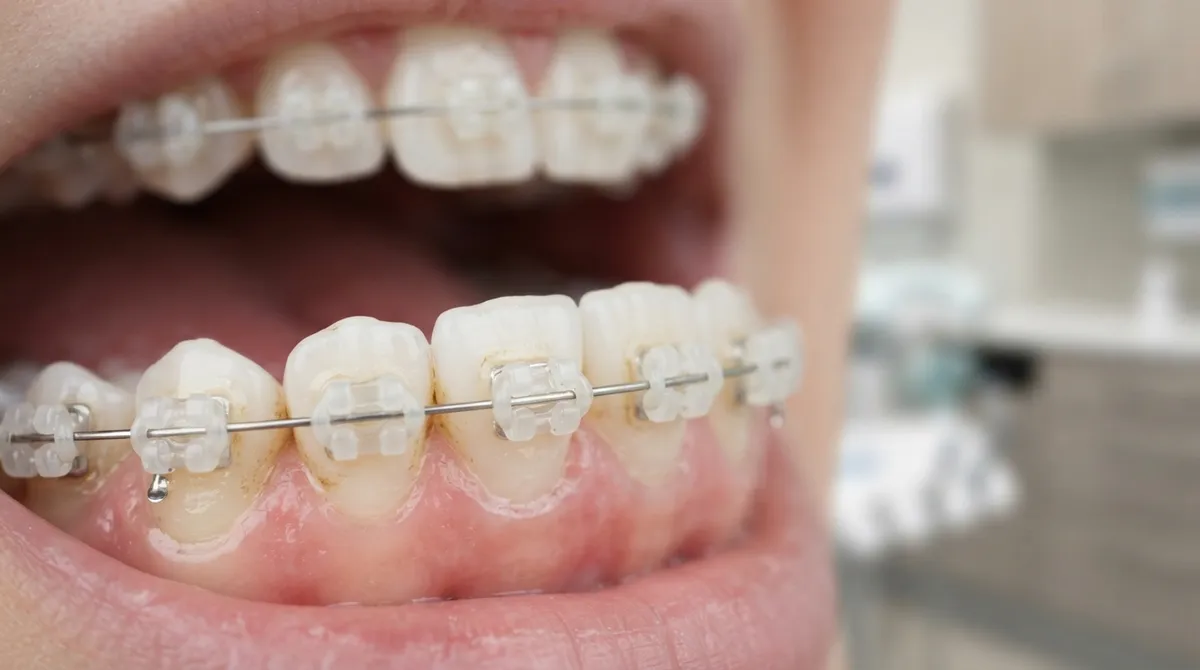
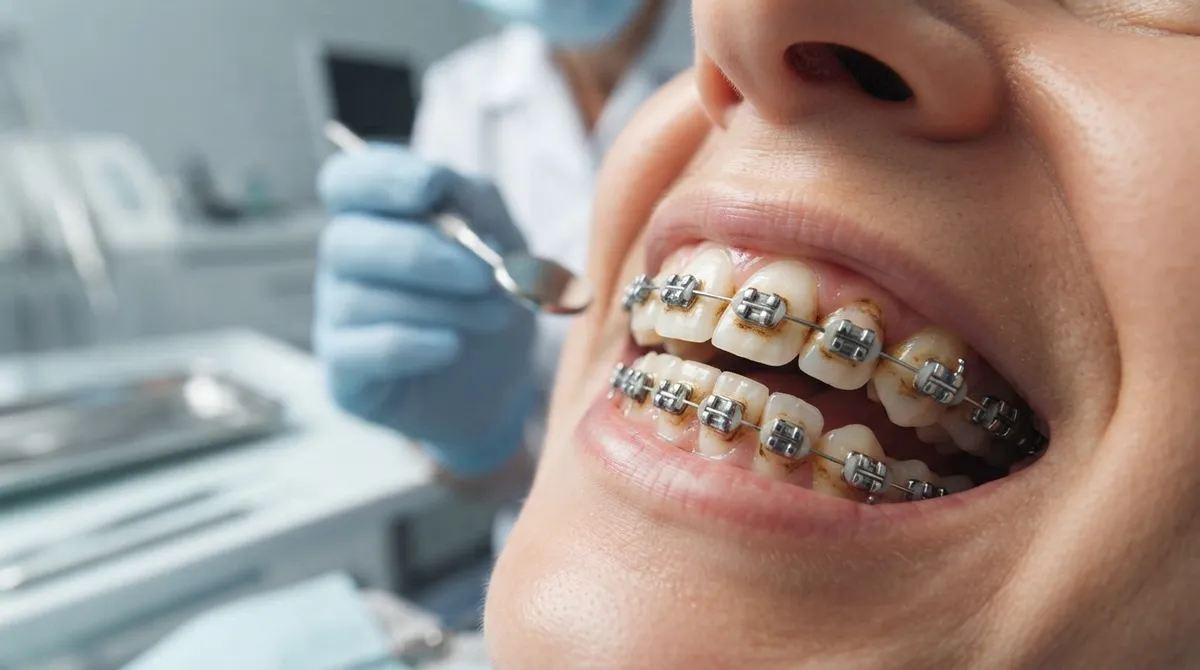
The term “braces staining” actually covers two different things. First, it can mean discoloration on the orthodontic hardware itself, especially the small elastic ties (called ligatures) that hold your archwire in place. Second, it can refer to actual stains or white spots showing up on your teeth around the brackets.
Both types are common, but they have different causes and different fixes. Knowing which one you’re dealing with makes all the difference in how you handle it.
Stained Elastic Ties on Braces
If you have traditional metal braces or ceramic brackets, you likely have small colored or clear rubber bands holding the wire in place. These are called ligatures, and they’re replaced at nearly every adjustment visit. Because they’re porous, they soak up color from whatever you eat and drink.
Coffee, tea, red wine, tomato sauce, curry, berries, and dark sodas are the biggest culprits. Tobacco use can also cause noticeable yellowing. The brackets themselves, especially ceramic ones, tend to resist staining pretty well. It’s really the elastic ties that take the hit.
Tooth Discoloration Around Brackets
The second, more serious type of staining happens on the tooth surface itself. This usually isn’t caused by the metal or ceramic bracket. It’s caused by plaque and food buildup that sits around the bracket edges for too long.
Over time, poor hygiene can lead to white, chalky spots on the enamel. These are called white-spot lesions, and they happen because of early tooth decay or mineral loss. Unlike stained elastics, these marks can be permanent once braces come off if they aren’t caught early.
What Causes Braces Staining?
Understanding the root causes helps you take control. Here are the main factors behind both types of staining.
- Pigmented foods and drinks: Coffee, tea, red wine, dark sodas, and berries can stain elastic ties fast.
- Poor plaque control: Food trapped around brackets feeds bacteria, leading to yellow or brown buildup on teeth.
- Sugary and acidic beverages: Soft drinks, sports drinks, and energy drinks weaken enamel and increase cavity risk.
- Tobacco products: Smoking or vaping can cause deep yellow staining on both teeth and ligatures.
- Infrequent brushing: Skipping brushing after meals allows pigments and plaque to settle in longer.
The American Association of Orthodontists specifically calls out coffee, tea, and red wine as beverages to limit during treatment. They also recommend cutting back on regular and diet soft drinks because the sugar and acid combination is tough on enamel, especially when you’re wearing braces.
How to Prevent Braces Staining: Step-by-Step
Here’s a simple routine that can dramatically reduce your risk of stained ligatures and stained teeth.
- Brush after every meal or snack. Use a fluoride toothpaste and take your time cleaning around each bracket and wire.
- Floss daily. Use floss threaders, orthodontic flossers, or an interdental brush to clean between teeth and under wires.
- Rinse with water when you can’t brush. This is a temporary fix, but it helps wash away food particles and pigments until you can brush properly.
- Limit staining beverages. Choose water or milk more often instead of coffee, tea, soda, or juice.
- Avoid tobacco products. These can cause stubborn stains on both teeth and elastic ties.
- Keep every orthodontic appointment. Your orthodontist can spot early staining or hygiene issues before they become bigger problems.
These steps sound simple, but consistency really is everything. If you’re raising a teen with braces, gently reminding them to brush after lunch at school can go a long way toward preventing staining.
Foods and Drinks That Stain Braces the Most
| Category | Common Culprits | Why It Stains |
|---|---|---|
| Beverages | Coffee, tea, red wine, dark soda | Deep pigments absorb into porous elastic ties |
| Sauces & Condiments | Tomato sauce, curry, soy sauce | Strong color compounds cling to ligatures |
| Fruits | Berries, grape juice, pomegranate | Natural pigments are highly concentrated |
| Tobacco | Cigarettes, vaping products | Tar and nicotine cause yellow-brown staining |
| Sugary Drinks | Soda, sports drinks, energy drinks | Sugar and acid erode enamel, encouraging plaque buildup |
Do Ceramic or Clear Braces Stain?
This is one of the most common questions we get. The ceramic brackets themselves are generally resistant to staining. They’re made from a material that doesn’t easily absorb color. However, the clear or white elastic ties holding the wire are a different story. Those little bands are porous and will pick up stains from the same foods and drinks mentioned above.
If you’re considering clear braces for a more discreet look, know that regular ligature changes at your adjustment visits will keep things looking fresh. Our team can talk you through your types of braces options if you want to compare choices before starting treatment.
Can You Whiten Teeth While Wearing Braces?
We get this question a lot, especially from young professionals and life-event planners hoping for a bright smile before a big wedding or graduation. The short answer is: it’s best to wait. Whitening treatments only work on the exposed tooth surface. Since brackets cover part of each tooth, whitening now can create an uneven, patchy look once your braces come off.
Instead, focus on prevention during treatment. Once your braces are removed, your orthodontist or dentist can guide you toward safe, effective whitening options that treat your whole smile evenly. Patients with LightForce Orthodontics, which uses custom-fitted digital brackets, often appreciate the subtle, low-profile design that already looks more discreet during treatment.
What Happens to Stained Elastic Ties?
Here’s some reassuring news: stained ligatures are a quick, easy fix. Orthodontic adjustment visits typically happen every four to six weeks, and your orthodontist will replace the elastic ties at each one. There’s no need to stress over a little yellowing between visits since it will be handled at your next appointment.
What you should never do is try to remove or bleach the ties yourself at home. This can damage the wire, loosen a bracket, or create an emergency situation. If something feels off with your braces before your scheduled visit, check out our guide on orthodontic emergencies to know what counts as urgent.
Are White Spots After Braces Permanent?
White spot lesions are the more serious form of braces staining, and they deserve real attention. These chalky white marks form when plaque sits on the enamel too long, pulling minerals out of the tooth surface. Once braces come off, these spots can remain visible, especially under bright light.
The good news is that many white spots improve over time with good oral hygiene, fluoride treatments, and sometimes professional remineralization therapy. In more stubborn cases, a dentist might recommend microabrasion or specialized whitening techniques. If you notice chalky patches forming during treatment, don’t wait. Flag it at your next visit so we can help protect your enamel before it worsens. Learn more about common orthodontic problems and how they’re managed.
Braces Staining Tips for Every Age Group
For Parents of Kids and Teens
Kids and teens are busy, and brushing after lunch can feel like a hassle. Make it easier by keeping a travel toothbrush in their backpack. Fun options like WildSmiles Braces can also make brushing more engaging, since the unique bracket shapes make it easy to check if a tooth is clean.
For Busy Professionals
If your schedule doesn’t allow for brushing after every meal, keep water handy and swish thoroughly after eating or drinking anything pigmented. Clear aligners like Angel Aligners are also worth considering since they’re removable, which means no ligatures to stain at all.
For Adults Returning to Orthodontic Care
If you’re back in treatment after years without braces, you already know the value of a healthy routine. Stick with fluoride toothpaste, floss daily, and don’t skip your adjustment appointments. Consistency pays off in the long run.
Why Choose Segovia Orthodontics for Your Treatment?
At Segovia Orthodontics in Lakewood Ranch, Dr. Flor Segovia and her team focus on more than just straightening teeth. We want every patient to leave treatment with a healthy, bright smile, free from unwanted staining or enamel damage. From traditional metal braces to advanced LightForce technology and Angel Aligners, we tailor every plan to fit your lifestyle and goals.
We also believe education is part of great care. That’s why we walk every patient through proper brushing, flossing, and diet tips at each visit. You can see what our Segovia Orthodontics patients say about their experience by checking our Facebook page or following along on our Instagram page for real smile transformations.
When to Talk to Your Orthodontist About Staining
Most staining is cosmetic and easy to manage. But certain signs mean it’s time to reach out sooner rather than later:
- White or chalky spots appearing near the gumline
- Brown or dark spots that don’t go away after brushing
- Tooth sensitivity around the brackets
- Ligatures that seem unusually discolored between visits
If you notice any of these, don’t try to fix it yourself. Your orthodontist can evaluate whether it’s simple surface staining or something that needs closer attention, like early enamel demineralization.
Final Thoughts on Keeping Your Smile Bright
Braces staining is common, but it’s also very manageable. With consistent brushing, daily flossing, smart drink choices, and regular checkups, you can avoid most staining issues altogether. And if stains do show up, remember that ligatures get replaced regularly, and your orthodontist is always there to help with anything more serious.
At Segovia Orthodontics in Lakewood Ranch, we’re committed to helping patients of every age enjoy a comfortable, supportive treatment experience. Dr. Segovia and her bilingual team are board-certified through the American Board of Orthodontics and stay current on the latest techniques to keep your smile healthy from start to finish. Curious what real patients think? You can read Segovia Orthodontics reviews and visit us on Google — Segovia Orthodontics to see for yourself.
Ready to get started or have questions about protecting your smile during treatment? We’d love to help. Feel free to request an appointment today, or call us at 941-557-1333 to speak with our friendly Lakewood Ranch team.
FAQs
Q: Why do my braces bands turn yellow or brown?
A: This happens when pigments from foods and drinks like coffee, tea, or tomato sauce soak into the porous elastic ties. It’s totally normal, and the good news is your orthodontist replaces these ties at almost every adjustment visit, so a fresh look is never far away.
Q: Which foods and drinks stain clear braces the most?
A: Coffee, tea, red wine, dark sodas, curry, and berries are the biggest offenders. If you can’t avoid them completely, try rinsing with water right after and brushing as soon as possible to limit how much pigment sticks around.
Q: Do ceramic braces stain, or is it just the elastic ties?
A: Ceramic brackets themselves resist staining pretty well since they’re made from a non-porous material. It’s really the clear or white elastic ligatures that pick up color, and those get swapped out regularly during your regular appointments.
Q: Can I whiten my teeth while wearing braces?
A: It’s best to hold off until your braces come off. Since brackets cover part of each tooth, whitening now can leave you with an uneven shade once treatment is complete. Your orthodontist can recommend safe whitening options for after treatment.
Q: Are white spots after braces permanent?
A: Not always. Many white spots improve with good oral hygiene, fluoride treatment, and time. In some cases, a dentist may recommend additional treatments like remineralization therapy. Catching them early and mentioning them at your appointments makes a big difference.
Our Service Area