Key Takeaways
-
Always use lukewarm or cool water to rinse aligners, never hot water, as heat permanently warps the plastic and compromises the fit of your trays.
-
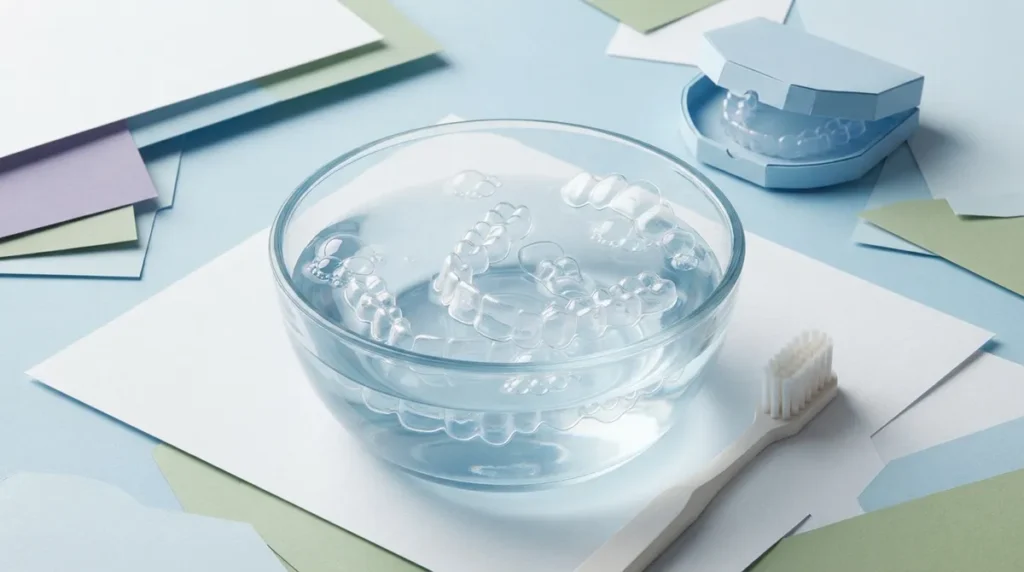
Soak your aligners for 10-30 minutes regularly using approved cleaning solutions or aligner-specific crystals, as rinsing and brushing alone don’t remove all bacteria and odor.
-
Never use regular toothpaste on aligners; instead use a soft-bristled toothbrush with clear unscented liquid soap, as toothpaste scratches the surface and creates hiding spots for bacteria.
-
Brush and floss your teeth before reinserting aligners after every meal to prevent food particles and plaque from being sealed against your teeth for extended periods.
-
Clean your aligner case regularly and store aligners in a protective case when not in use, as dirty cases undo your cleaning efforts and prevent loss or damage.
-
Rinse aligners immediately after removal before saliva and food debris dry on them, making a consistent twice-daily cleaning routine your baseline for preventing serious buildup.
So you finally got your clear aligners, and you’re loving how invisible they are. But here’s the thing nobody tells you upfront: dirty aligners can ruin your whole experience. They can trap odor, collect plaque, and even slow down your treatment if you’re not careful. The good news? Keeping your trays clean is simple once you know what to do (and what to avoid).
At Segovia Orthodontics in Lakewood Ranch, we talk to patients every day who wear clear aligners and want to know the best way to keep them fresh. Whether you’re a busy parent managing your teen’s treatment, a professional wearing aligners at work, or an adult finally fixing that relapse from years ago, these clear aligner cleaning tips will help you protect your investment and your smile. Let’s walk through the mistakes to avoid and the habits that actually work.
Why Clean Aligners Matter More Than You Think
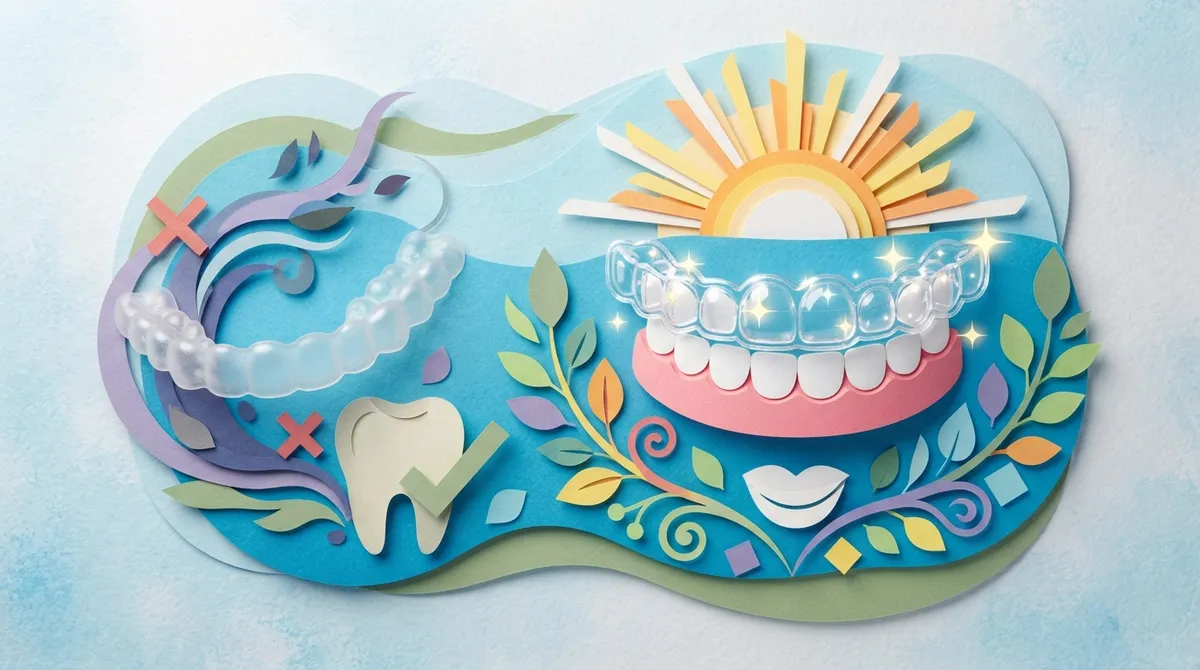
Clear aligners sit against your teeth for 20 to 22 hours a day. That’s a long time for bacteria, food particles, and saliva to build up on the plastic. Orthodontic research on clear appliance care notes that biofilm control matters because aligners are worn for extended periods and can accumulate microbial deposits without proper cleaning.
Think about it this way: your aligners are basically a second skin over your teeth. If that layer isn’t clean, you’re trapping bacteria right where it can do the most damage. This can lead to bad breath, staining, and even cavities forming under the tray.
The Real Cost of Dirty Aligners
Skipping proper cleaning doesn’t just make your trays look cloudy. It can also:
- Cause persistent bad breath that mouthwash can’t fix
- Lead to visible stains that make your “invisible” aligners obvious
- Increase your risk of cavities and gum irritation
- Create a breeding ground for bacteria that affects your overall oral health
- Potentially extend your treatment time if dental issues arise
Nobody wants that. So let’s get into the mistakes you need to steer clear of.
10 Clear Aligner Cleaning Mistakes to Avoid
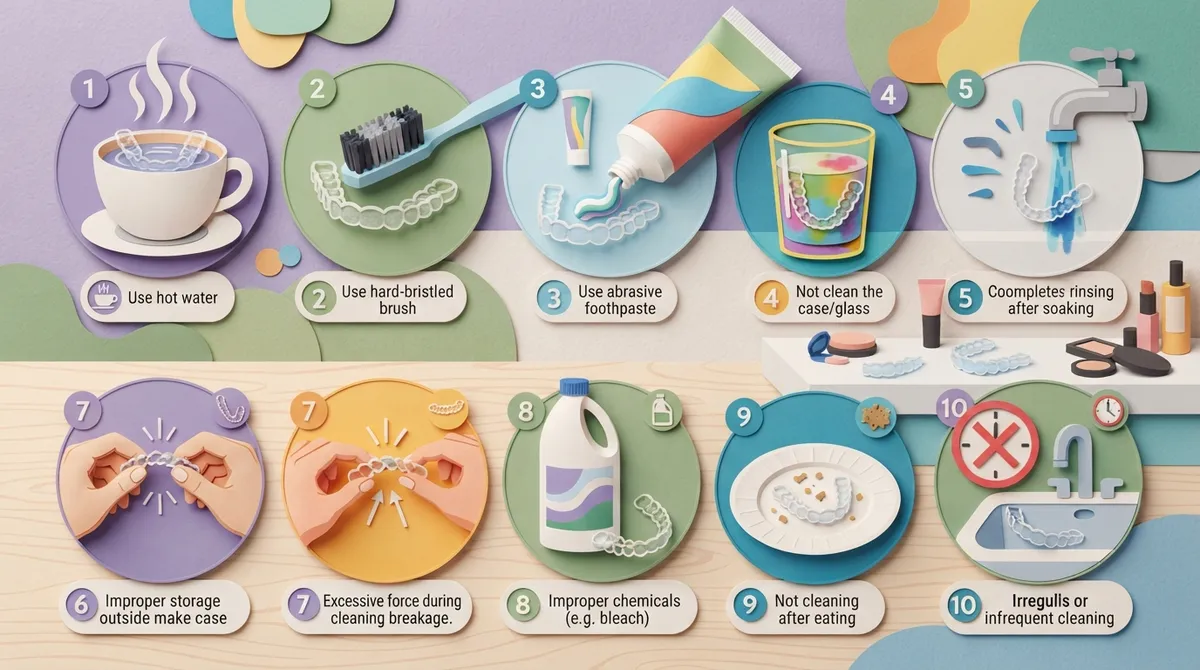
Here are the biggest slip-ups we see patients make, and exactly how to fix them.
1. Using Hot Water to Rinse Your Aligners
This is probably the most common mistake, and it’s an easy one to make. Hot water feels like it should clean better, right? Wrong. Heat can actually warp your aligners, changing their shape so they no longer fit your teeth properly. Orthodontic professionals consistently warn that hot water can permanently deform trays. Always use lukewarm or cool water instead, every single time you rinse.
2. Brushing Aligners With Your Regular Toothbrush and Toothpaste
It seems logical to just grab the toothbrush you already use. But most toothpaste contains abrasive ingredients that can scratch the surface of your aligners. Those tiny scratches create more places for bacteria to hide, and they also make your aligners more visible (not the discreet look you were going for). Instead, use a separate soft-bristled toothbrush dedicated just to your aligners, along with clear, unscented liquid soap or a designated aligner cleaner.
3. Skipping the Rinse After Every Removal
Every time you take your aligners out, whether for a meal or just a few minutes, rinse them right away. Letting saliva and food debris dry on the trays makes them much harder to clean later. This one habit alone can prevent a lot of buildup.
4. Forgetting to Brush Your Teeth Before Putting Aligners Back In
Your aligners aren’t the only thing that needs attention. If you pop your trays back on without brushing, you’re sealing in food particles and plaque against your teeth for hours. Orthodontic guidance recommends brushing and flossing before reinserting aligners to reduce the risk of decay and bad breath. Make this part of your routine after every meal, not just morning and night.
5. Never Soaking Your Aligners
Rinsing and brushing help, but they don’t remove everything. Soaking is where the real deep clean happens. Many orthodontic care guides recommend soaking aligners for about 10 to 30 minutes using an approved cleaning solution, aligner-specific crystals, or denture-cleaning tablets. Some patients soak daily; others do it a few times a week. Either way, skipping this step means missing out on serious bacteria and odor control.
6. Using Vinegar, Bleach, or Hydrogen Peroxide Without Guidance
We get it, DIY cleaning hacks are everywhere online. But soaking your aligners in vinegar, bleach, or hydrogen peroxide without professional guidance can damage the material or leave behind harsh residue. Stick to products designed specifically for orthodontic aligners, or ask your orthodontist what they recommend. It’s always better to be safe than sorry with something you wear in your mouth all day.
7. Storing Aligners Without a Case
Tossing your aligners into your bag, pocket, or a napkin is a recipe for disaster. Not only do they collect dirt and bacteria from random surfaces, but they’re also way more likely to get lost or damaged. Always store your aligners in a protective case when they’re not in your mouth. It’s a small habit that saves you a lot of hassle.
8. Never Cleaning the Aligner Case Itself
Here’s one people often forget: your case can get just as dirty as your trays. If you keep placing clean aligners into a grimy case, you’re undoing all your hard work. Rinse and wipe down your case regularly, and let it air dry completely before storing your aligners inside.
9. Cleaning Aligners Only Once a Day
Once a day isn’t enough for most people. Orthodontic practices commonly recommend cleaning aligners at least twice daily, ideally morning and night, with extra rinsing after meals or any drink besides water. This keeps buildup from accumulating between your regular cleaning sessions.
10. Ignoring Stains and Odors Instead of Addressing Them Early
If your aligners start looking cloudy or smelling a little off, don’t just ignore it and hope it goes away. Catching these issues early means you can usually fix them with a good soak and brush. Waiting too long can lead to permanent staining or a smell that’s tough to eliminate. If home cleaning isn’t cutting it, it might be time to contact us for advice.
Your Daily Clear Aligner Cleaning Routine
Now that you know what to avoid, here’s a simple step-by-step routine that works for most patients.
- Remove your aligners before eating or drinking anything besides water.
- Rinse them immediately with lukewarm or cool water.
- Brush your teeth and floss before putting the aligners back in.
- Use a separate soft-bristled toothbrush to gently clean the inside and outside of the trays.
- Once a day (or a few times a week), soak the aligners in an approved cleaning solution for 10 to 30 minutes.
- Rinse thoroughly after soaking before placing the aligners back in your mouth.
- Store your aligners in a clean, protective case whenever they’re not in use.
Following this routine consistently can make a huge difference in how fresh your aligners stay throughout treatment.
Cleaning Tips by Lifestyle: What Works Best for You
Different schedules call for different approaches. Here’s a quick breakdown to match your daily routine.
| Lifestyle | Best Cleaning Approach | Why It Works |
|---|---|---|
| Busy Parents | Keep cleaning supplies in a travel case for school runs and activities | Makes it easy to maintain routine even on hectic days |
| Working Professionals | Soak overnight and rinse quickly during work breaks | Fits cleaning into existing morning and evening routines |
| Teens | Use a simple two-step rinse-and-brush habit after meals | Easy to remember and stick with between classes |
| Adults Returning to Treatment | Set phone reminders for soaking sessions | Builds consistency for patients who may be out of practice |
Common Questions About Keeping Aligners Fresh
Let’s clear up a few more details that patients often ask about during their visits to our Lakewood Ranch office.
Can You Use Toothpaste on Clear Aligners?
It’s best to avoid regular toothpaste on your aligners. The abrasive particles in most toothpaste formulas can scratch the plastic, making it look cloudy and giving bacteria more surface area to cling to. Clear, unscented liquid soap works much better and won’t leave that gritty residue behind.
What’s the Safest Water Temperature?
Lukewarm or cool water is always the safer choice. Hot water might feel like it cleans better, but it can warp your aligners permanently, throwing off the fit and effectiveness of your treatment. When in doubt, go cooler rather than warmer.
When to Reach Out to Your Orthodontist
Sometimes home care isn’t enough, especially if you notice persistent odor, visible cracks, or a tray that no longer fits comfortably. These could be signs that something needs professional attention. Dr. Flor Segovia, a board-certified orthodontist, and her team regularly help patients troubleshoot these exact issues.
If you’re weighing your options between aligners and traditional braces, our guide on braces versus clear aligners can help you decide what fits your lifestyle. And if you’re curious about newer aligner technology, check out our page on why clear aligners are so popular right now.
Building Habits That Actually Stick
The best cleaning routine is the one you’ll actually follow every single day. Here are a few simple tricks to help make it second nature:
- Keep a small cleaning kit in your car, desk, or bag for easy access
- Set a phone alarm for your evening soak so you never forget
- Pair aligner cleaning with an existing habit, like your nightly skincare routine
- Involve the whole family if your kids are also in treatment, so everyone stays accountable
- Replace your aligner toothbrush every few weeks to keep bristles effective
Small, consistent habits add up to a much smoother treatment experience. Patients who stay on top of their aligner care often report smoother check-ins and fewer surprises during their treatment.
Why Choose Segovia Orthodontics for Your Aligner Journey
At Segovia Orthodontics, we believe getting a great smile shouldn’t feel complicated. Dr. Segovia uses advanced orthodontic technology to design treatment plans that fit real lives, not just perfect schedules. Whether you’re exploring adult orthodontics after years of wondering “what if,” or you’re a parent looking into options for your teen, our Lakewood Ranch team is here to guide you through every step, including the small stuff like cleaning your trays properly.
We’re proud to be a trusted name for families across the area, and we love connecting with our community. Feel free to check out our Facebook page for patient stories and updates, or follow along on our Instagram page for smile transformations and helpful tips. You can also visit us on Google — Segovia Orthodontics to see what our patients have to say about their experience with our team.
For general orthodontic standards and credentials, the American Board of Orthodontics is a great resource if you want to learn more about what board certification really means for your care.
Final Thoughts on Keeping Your Aligners Fresh
Clear aligner cleaning doesn’t have to be complicated, but it does need to be consistent. Avoid hot water, skip the regular toothpaste, and never forget to soak your trays regularly. Small habits like rinsing right away and storing your aligners properly can make a huge difference in your treatment experience and your final results.
If you have questions about your specific aligner routine, or if it’s time for your next check-in, we’d love to help. Request an appointment with our Lakewood Ranch team today, or feel free to call us at 941-557-1333 with any questions about your treatment. Your best smile is worth the extra care!
FAQs
Q: How often should you clean clear aligners?
A: You should clean your aligners at least twice a day, morning and night, and rinse them every time you take them out. It’s a simple habit that keeps bacteria and buildup from taking over your trays!
Q: Can you use toothpaste to clean clear aligners?
A: It’s best to skip regular toothpaste since it can scratch and dull the surface of your aligners. Instead, use clear unscented soap or an aligner-specific cleaner for a gentler, more effective clean.
Q: Can you soak clear aligners in vinegar or hydrogen peroxide?
A: We recommend sticking with products made specifically for orthodontic aligners rather than DIY solutions like vinegar or hydrogen peroxide. Your orthodontist can point you toward safe, effective options that won’t damage the material.
Q: What water temperature is safe for cleaning aligners?
A: Always use lukewarm or cool water when rinsing your aligners. Hot water can warp the plastic and mess up the fit, so it’s best to keep things on the cooler side.
Q: Should you brush your teeth every time before putting aligners back in?
A: Yes, brushing and flossing before reinserting your aligners helps prevent trapped food and plaque from sitting against your teeth all day. It’s a small step that makes a big difference for your oral health.
Our Service Area