Key Takeaways
-
Open bite affects 16-18% of children and teens worldwide; early evaluation around age seven allows orthodontists to guide jaw growth gently before permanent teeth fully develop.
-
Multiple treatment options exist including traditional braces (18-30 months), custom LightForce braces (45% faster), clear aligners (6-18 months), and jaw surgery for severe skeletal cases; your orthodontist determines the best option based on your specific bite pattern.
-
Consistent retainer wear after treatment is critical to prevent relapse, as open bites can return if contributing habits resume or growth continues unexpectedly.
-
Many mild open bites in young children can self-correct if thumb-sucking habits stop early and permanent teeth develop normally, making early monitoring and habit intervention key prevention strategies.
Ever notice a little gap between your top and bottom front teeth, even when you bite down all the way? That’s called an open bite, and if you or your child has one, you’re not alone. In fact, research shows anterior open bite affects around 16.52% of kids and teens worldwide. Here at Segovia Orthodontics, we see families every week who have questions about this exact issue, and we love helping them find real answers.
Whether you’re a mom watching your seven-year-old’s thumb-sucking habit linger a little too long, or you’re an adult whose bite has quietly shifted since your last round of braces, this guide is for you. We’re breaking down everything you need to know about open bite treatment in plain, friendly language. No confusing dental jargon, just honest facts to help you feel confident about your next step.
1. Know What an Open Bite Actually Is
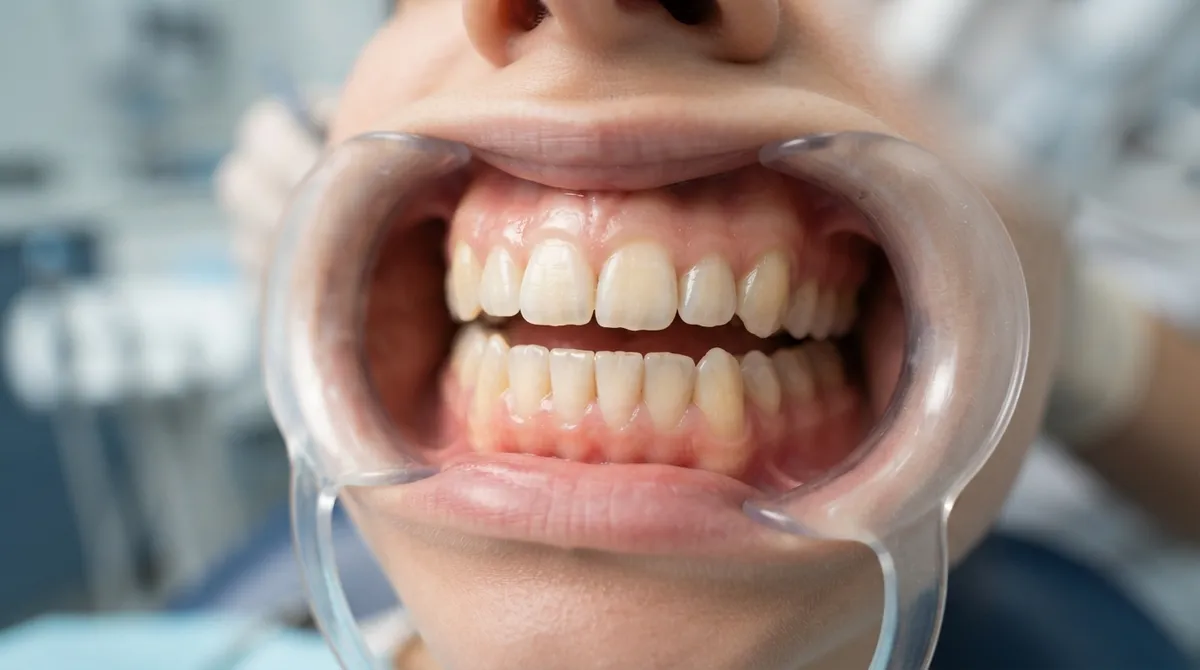
An open bite happens when your upper and lower teeth don’t touch when your jaw is fully closed. Most often, this shows up between the front teeth, called an anterior open bite. Sometimes it affects the back teeth instead, known as a posterior open bite. Either way, it’s considered a type of malocclusion, which simply means your teeth aren’t lining up the way they should. Dr. Flor Segovia and our team often explain this during a first orthodontic visit so families understand exactly what they’re dealing with.
2. Understand the Common Causes
Open bites rarely have just one cause. They’re usually a mix of several factors working together. Here are the most common culprits:
- Prolonged thumb sucking or pacifier use past toddler years
- Tongue thrust, where the tongue pushes against the front teeth during swallowing
- Certain jaw growth patterns inherited from family genetics
- Mouth breathing or airway concerns that affect tongue posture
- A combination of dental and skeletal issues together
It’s important to know that a habit alone doesn’t always cause the whole problem. Sometimes it’s simply how the jaw grew. This is one reason a thorough evaluation matters so much, and it’s something we prioritize during every orthodontic evaluation.
3. Learn Why Prevalence Numbers Matter (But Aren’t the Whole Story)
A 2021 systematic review found anterior open bite prevalence was highest in kids with primary teeth, at about 18.84%, and slightly lower in mixed dentition, around 14.26%. A newer 2025 scoping review reported a similar global estimate of 16.80%. These numbers are helpful for understanding how common open bites are, but remember, they describe populations, not your individual child. Every smile is unique, and that’s exactly why personalized care matters so much.
4. Don’t Panic If Your Child Has One
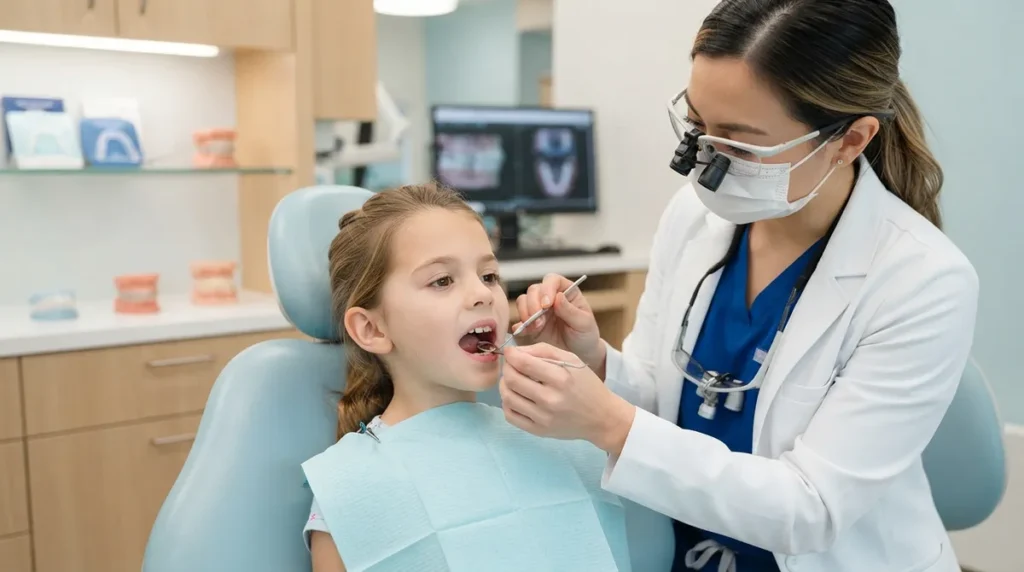
Here’s some reassuring news for concerned moms: many mild open bites in young children can improve on their own. If a habit like thumb sucking stops early, and the permanent teeth come in normally, things sometimes correct themselves. That said, monitoring is key. This is why early orthodontic treatment evaluations, often recommended around age seven, help catch issues while there’s still time to guide growth gently.
Signs Worth Watching For
- A visible gap between front teeth when your child bites down
- Difficulty biting into foods like sandwiches or apples
- A lisp or trouble pronouncing certain sounds
- Ongoing thumb, finger, or pacifier habits past age four or five
5. Know How Braces Help Close an Open Bite
For many dental open bites, braces work beautifully. They can move the front teeth into better position, gently press back teeth to intrude (or shorten) them, or combine both movements at once. Our office offers several bracket options, including Lightforce Orthodontics, which uses fully custom 3D-printed brackets designed around your unique teeth. Because each bracket is made just for you, treatment can often move up to 45% faster than traditional one-size-fits-all systems.
For younger patients, we also offer Wildsmiles Braces, which use fun shapes like stars, hearts, and even Mickey Mouse designs. Kids who enjoy their braces tend to brush more carefully and stick with treatment better, which is a genuine win for everyone.
6. Consider Clear Aligners for a More Discreet Option
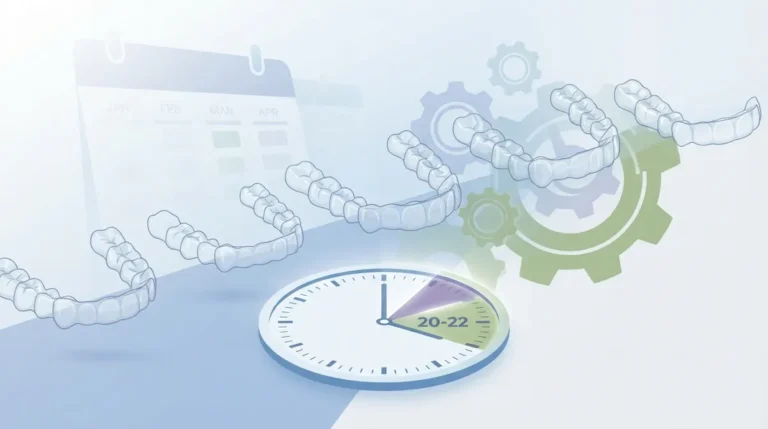
If you’re a young professional or busy adult who wants a subtle fix, clear aligners might be your answer. A 2025 review of clear-aligner evidence found measurable improvement in incisor position and back-tooth intrusion, especially when combined with small attachments. Our Clear Aligners and Angel Aligners options use AI-driven planning and a smart wear schedule to help move teeth efficiently, all while staying nearly invisible during your workday.
Keep in mind, aligners only work as planned if you wear them consistently. Digital simulations can sometimes overestimate how much movement will actually happen, so regular check-ins with your orthodontist are essential.
7. See How Elastics and Mini-Screws Add Extra Control
Sometimes braces or aligners alone aren’t quite enough. In these cases, we may add rubber bands (elastics) or small temporary anchorage devices, often called mini-screws, to provide extra leverage. These tools help pull teeth into position with more precision, especially for open bites that need a bit of extra support to close fully.
8. Understand When Jaw Surgery Might Be Needed
For adults with severe skeletal open bites, orthodontics alone may not be enough. In these situations, orthognathic jaw surgery combined with braces can correct the underlying bone structure. This isn’t the path for everyone, and it’s typically reserved for more significant cases where the jaw itself needs repositioning. Board-certified orthodontists, like those recognized by the American Board of Orthodontics, are trained to determine whether surgery is truly necessary or if non-surgical options will do the job.
9. Compare Your Treatment Options at a Glance
| Treatment Option | Best For | Visibility | Typical Timeline |
|---|---|---|---|
| Traditional Metal Braces | Children, teens, complex cases | Visible | 18-30 months |
| LightForce Custom Braces | Teens and adults wanting precision | Subtle, clear/white options | Often 45% faster |
| Clear Aligners / Angel Aligners | Adults and professionals wanting discretion | Nearly invisible | 6-18 months |
| Elastics or Mini-Screws | Added support during active treatment | Minimal added visibility | Varies by case |
| Orthodontics + Jaw Surgery | Severe skeletal open bite in adults | Temporary visible braces | 12-24 months plus recovery |
10. Ask About Myofunctional Therapy If Tongue Thrust Is a Factor
If tongue thrust or unusual swallowing patterns are contributing to your open bite, myofunctional therapy may be recommended alongside orthodontic care. This therapy helps retrain the tongue and mouth muscles into healthier habits. It’s important to know this therapy works best as a companion to orthodontic treatment, not a replacement for it. Your orthodontist will help you figure out if it’s the right addition to your plan.
11. Plan for Retention After Treatment Ends
Once your teeth are in their new position, retention becomes the name of the game. Open bites can relapse, especially if contributing habits return or growth continues in an unexpected direction. A 2024 review on open-bite relapse emphasized that consistent retainer wear plays a major role in keeping results stable long term. We offer several Orthodontic Retainers options, and we’ll help you pick the type and wear schedule that fits your lifestyle.
Simple Steps to Protect Your New Smile
- Wear your retainer exactly as prescribed, especially in the first year
- Address any lingering oral habits like thumb sucking or tongue thrust early
- Keep up with follow-up visits so we can catch any shifting quickly
- Replace worn or damaged retainers right away instead of waiting
12. Know What to Expect at Your Consultation
Every open bite is different, so your treatment plan should be too. During your visit, Dr. Segovia will examine your bite, take images as needed, and talk through your goals, whether that’s getting ready for a wedding, feeling confident at work, or simply helping your child chew and speak more comfortably. We also offer Orthodontic Financing to make treatment easier on your budget, because a great smile shouldn’t feel out of reach.
13. Choose a Team That Understands Every Age and Every Bite
Open bite treatment isn’t one-size-fits-all, and neither is our approach. From Teen Orthodontic Treatment designed around busy school and activity schedules, to Adult Orthodontics built for professionals who need discretion, our Lakewood Ranch team meets you where you are. Dr. Flor Segovia is bilingual in English and Spanish, board-certified, and genuinely passionate about helping every patient feel comfortable in our office.
Curious what other Lakewood Ranch families think? You can visit us on Google — Segovia Orthodontics to read real reviews, or check out our Facebook page and our Instagram page to see smile transformations from patients just like you.
Ready to Take the Next Step?
An open bite doesn’t have to hold you back, whether you’re worried about your child’s growing smile or you’re finally ready to fix your own bite as an adult. Our team at Segovia Orthodontics is here to guide you through every option with warmth, honesty, and genuine care. Feel free to contact us with your questions, or go ahead and request an appointment to get started. You can also simply call us at 941-557-1333 and our friendly staff will help you find a time that works. Your best smile is closer than you think, and we can’t wait to help you get there.
FAQs
Q: What causes an open bite?
A: Open bites usually come from a mix of things, like prolonged thumb sucking, tongue thrust, or how the jaw naturally grew. Sometimes airway or mouth-breathing issues play a role too. That’s why we always take a full look at your history and habits before creating a treatment plan.
Q: Can an open bite correct itself in a child?
A: Sometimes, yes! If a habit like pacifier use stops early and permanent teeth come in normally, mild open bites can improve on their own. Still, we recommend regular checkups so we can catch anything that needs a little extra help.
Q: How do braces fix an open bite?
A: Braces gently move front teeth into better alignment and can help shorten or intrude back teeth so everything meets properly. Depending on your case, we might add elastics or small anchors for extra support along the way.
Q: Does an open bite require jaw surgery?
A: Not always! Surgery is really only considered for severe skeletal cases, especially in adults whose jaw growth is complete. Most open bites can be treated successfully with braces or clear aligners alone.
Q: Can an open bite come back after treatment?
A: It’s possible, especially if old habits return or retainers aren’t worn as prescribed. That’s why we always build a solid retention plan into your treatment, because keeping that beautiful new smile in place matters just as much as achieving it.
Our Service Area