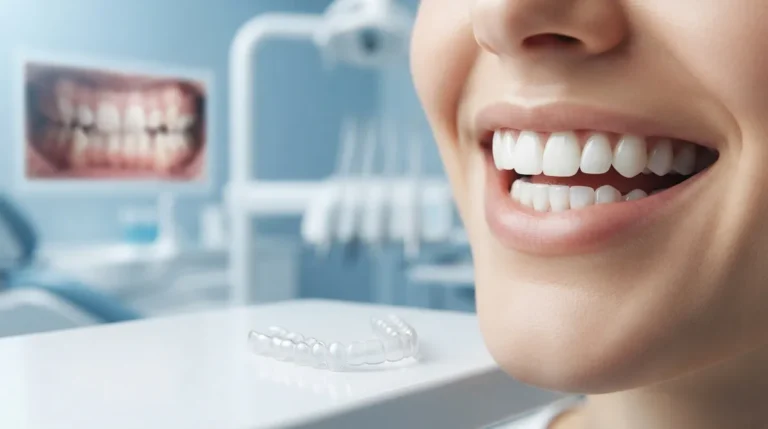
Key Takeaways
-
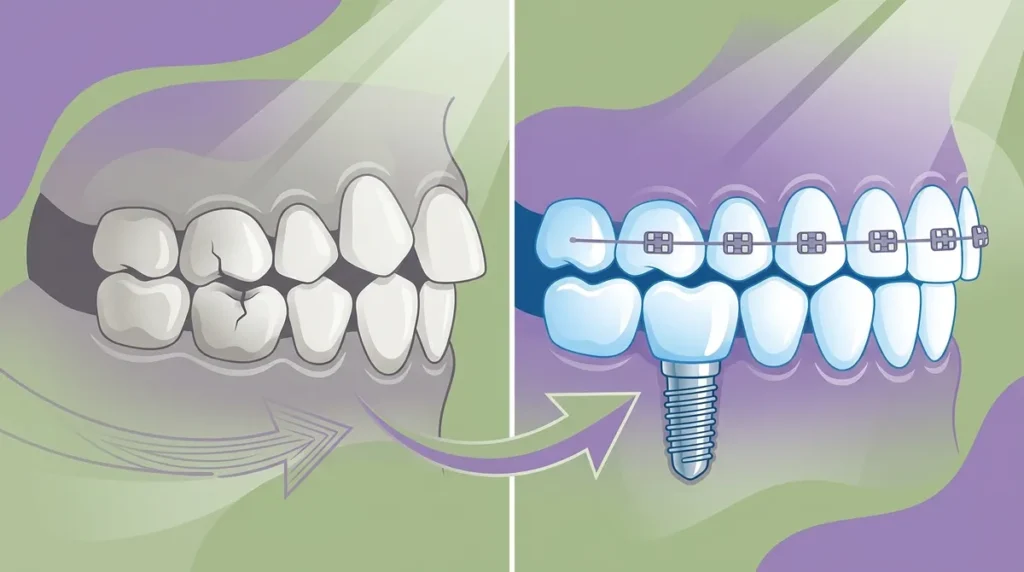
Orthodontic treatment must typically precede prosthodontic services like implants, bridges, and crowns because proper tooth alignment ensures restorations fit correctly, function better, and last significantly longer.
-
Dental implant placement requires orthodontics first to create ideal spacing, prevent neighboring tooth drift, and reduce long-term pressure on the implant, making it a critical investment in implant success.
-
Board-certified orthodontists coordinate directly with prosthodontists to plan multidisciplinary treatment, ensuring each restoration is built on a stable, well-aligned foundation that protects your investment.
-
Clear aligners are an effective, nearly invisible option for adults preparing for restorative work, offering discreet treatment while remaining removable for dental procedures and professional settings.
-
Proper tooth alignment distributes biting and chewing forces evenly, protecting crowns, bridges, implants, and veneers from premature wear—similar to how vehicle wheel alignment prevents uneven tire deterioration.
-
Insurance may partially cover orthodontic treatment when medically necessary for restorative work, and flexible payment plans can help manage the financial commitment of combined orthodontic and prosthodontic care.
Have you ever wondered how dentistry and orthodontics work together to give you a truly beautiful smile? If you’ve heard the word “prosthodontics” and weren’t sure how it connects to braces or aligners, you’re not alone! Many patients — from busy moms scheduling care for their kids to young professionals exploring discreet smile solutions — find themselves curious about how these two dental worlds overlap. Understanding how prosthodontics services relate to orthodontic treatment can actually help you make smarter, more informed decisions about your own smile journey. Whether you’re prepping for a big life event, correcting a relapse, or just exploring your options for the first time, this guide breaks it all down in a friendly, easy-to-follow way. Let’s dive into the five most important prosthodontics-related services that work hand-in-hand with orthodontic care — and how knowing about them can set you up for long-term smile success!
What Are Prosthodontics Services in the Context of Orthodontics?
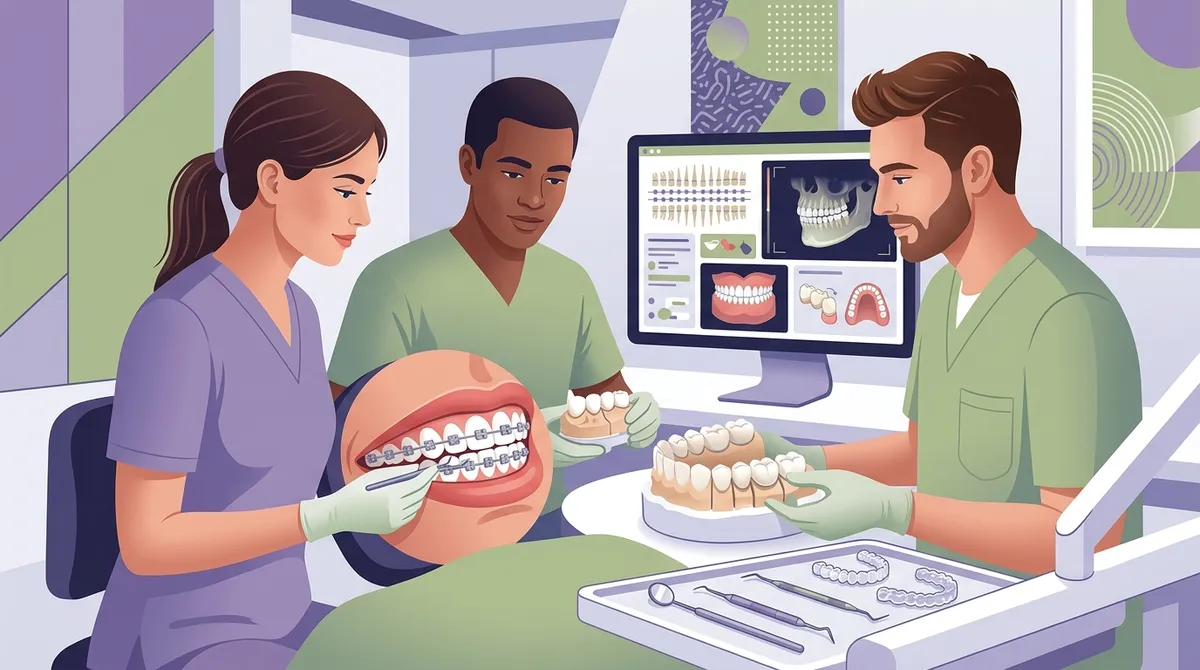
Prosthodontics is a dental specialty focused on restoring and replacing teeth. Think of it as the “rebuilding” side of dentistry. Orthodontics, on the other hand, is all about moving teeth into the right positions. These two specialties often work as a team. When a patient has missing, worn, or damaged teeth alongside alignment issues, orthodontic treatment is often the necessary first step before any restorative work can be done.
For example, if you need a dental implant or a bridge, your orthodontist may need to first create the right amount of space between your teeth. This coordination ensures that the final result — both functional and cosmetic — looks its absolute best. If you’re curious about common orthodontic problems that might require this kind of teamwork, it’s worth exploring before you start any treatment plan.
Why Orthodontics Comes First
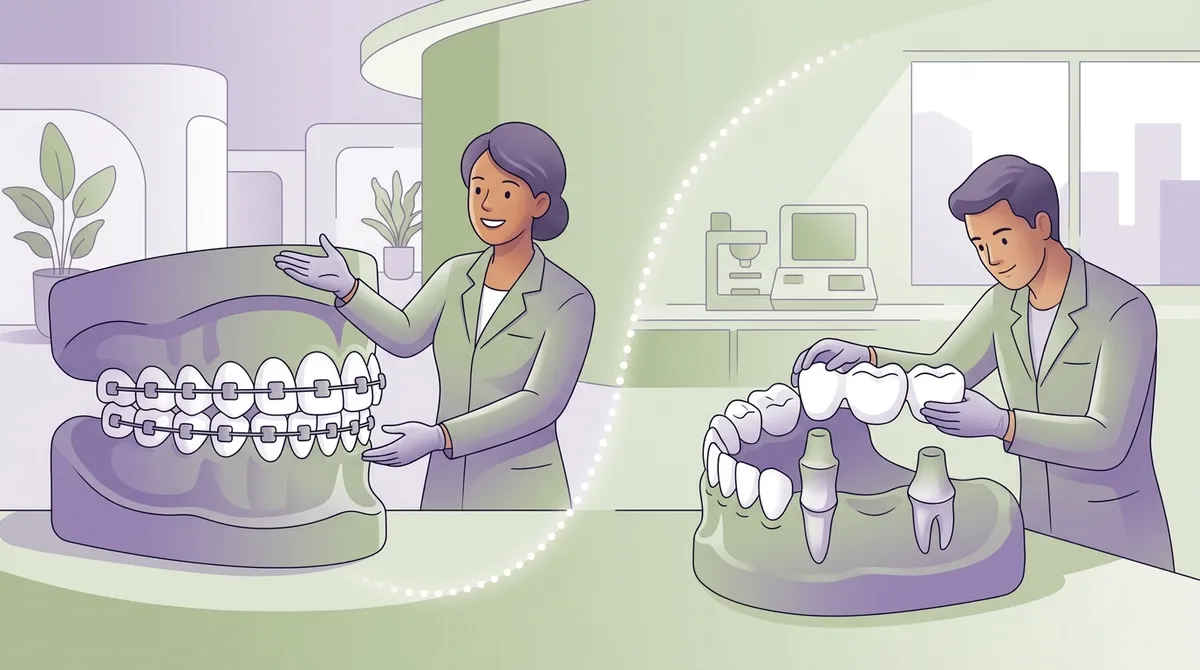
In most cases where prosthodontics services are needed, orthodontic treatment happens first. This is not a coincidence — it’s a very deliberate process. Moving teeth into proper alignment before placing crowns, implants, or bridges ensures those restorations fit correctly and last longer. Skipping orthodontic treatment first can lead to costly problems down the road.
Your orthodontist and your general dentist or prosthodontist will often communicate and plan together. This multidisciplinary approach gives you the best possible result. If you’d like to learn more about what the first steps look like, check out your first orthodontic visit to know what to expect right from the start.
5 Prosthodontics Services That Work With Orthodontic Care
1. Dental Implant Preparation
Dental implants are one of the most popular ways to replace missing teeth. But here’s the thing — you can’t just place an implant anywhere without proper planning. When teeth are missing, neighboring teeth often drift into that empty space over time. Orthodontic treatment can move those teeth back into position and create the ideal space for the implant to be placed.
This is one of the most common reasons adults seek adult orthodontics — not just for aesthetics, but as a necessary step before restorative dental work. It’s a smart investment in your long-term oral health. Many of our adult relapse patients are surprised to learn that orthodontic treatment can make their future implant procedure smoother and more successful.
- Orthodontics creates proper spacing for the implant
- Aligned bite reduces pressure on the implant over time
- Treatment ensures neighboring teeth won’t crowd the new tooth
- A well-planned orthodontic phase leads to a longer-lasting implant result
2. Bridge Placement Support
A dental bridge fills a gap left by a missing tooth by anchoring to the adjacent teeth. For a bridge to fit and function properly, the teeth on either side of the gap need to be in good alignment. If those anchor teeth are tilted or crowded, the bridge won’t sit correctly — and it may not last as long as it should.
Orthodontic treatment straightens and uprights those anchor teeth before the bridge is placed. This step is critical for both the appearance and the durability of the final restoration. If you’re wondering which treatment option might work best for your situation, our guide on types of braces can help you find a solution that fits your lifestyle and dental goals.
- Orthodontic evaluation to assess anchor tooth positions
- Treatment plan created in coordination with your prosthodontist
- Orthodontic treatment to upright and align anchor teeth
- Space management to ensure the bridge fits correctly
- Completion of orthodontic treatment before bridge placement begins
3. Crown Lengthening and Bite Correction
Sometimes patients have a “gummy smile” or wear their teeth down due to a deep overbite or clenching habits. Prosthodontists can place crowns to restore tooth structure — but bite correction through orthodontics often needs to happen first. Without correcting the bite, new crowns can wear down just as quickly as the natural teeth did.
Orthodontic treatment can open the bite, correct the overbite, and reduce harmful forces on the teeth before any crown work is done. This is especially important for adult orthodontic patients who may have years of bite problems contributing to tooth wear. Getting the bite right first protects your investment in any future dental restoration.
- Correcting overbites reduces pressure on front teeth
- Opening the bite provides room for crown placement
- Proper alignment protects crowns from premature wear
- Orthodontic retainers help maintain the corrected bite after treatment
4. Denture and Partial Denture Optimization
For patients who need full or partial dentures, orthodontic treatment can still play a role — especially when it comes to partial dentures. If you still have some natural teeth, those remaining teeth should be well-aligned so the partial denture fits snugly and comfortably. Misaligned teeth can make partial dentures feel loose, uncomfortable, or ineffective.
Orthodontic care ensures the remaining natural teeth are in the best positions to anchor and support a partial denture. This coordination between your orthodontist and prosthodontist can dramatically improve comfort and function. For adults exploring their options, clear aligners are a discreet way to align remaining teeth without the visibility of traditional braces — a great choice for career-focused adults who want low-profile treatment.
- Assess the alignment of remaining natural teeth
- Determine if orthodontic treatment can improve denture fit
- Choose a discreet treatment option that suits your lifestyle
- Complete orthodontic treatment before final denture fitting
5. Full Smile Makeover Planning
A full smile makeover often combines multiple prosthodontics services — veneers, crowns, implants, and more — with orthodontic treatment as the critical foundation. Think of orthodontics as the architect’s blueprint and prosthodontics as the finishing touches. Without a solid foundation, even the most beautiful cosmetic work won’t stand the test of time.
Life event planners — whether preparing for a wedding, graduation, or major career milestone — often pursue a coordinated smile makeover plan. Starting with orthodontics ensures every subsequent step is built on a stable, well-aligned structure. You can explore what orthodontics before and after results look like to get an idea of just how transformative this foundation can be.
- Orthodontics first aligns the foundation for all cosmetic work
- Veneers and crowns look better on properly aligned teeth
- Implants placed after orthodontics are more stable
- Coordinated planning between specialists leads to the best outcomes
- Retainers after treatment protect all restorative work
How Orthodontic Treatment Protects Your Restorative Investment
One of the biggest reasons to pair orthodontics with prosthodontics services is simple: protection. When your teeth are properly aligned, the forces of biting and chewing are distributed evenly. This means your crowns, bridges, implants, and veneers are under less stress — and they last much longer as a result.
Think of it like the tires on your car. If your alignment is off, your tires wear out faster on one side. The same principle applies to your teeth and any restorations on them. Proper alignment protects everything. You can learn more about how advanced orthodontic technology plays a role in precise, effective treatment planning at Segovia Orthodontics.
Choosing a Board-Certified Orthodontist for Coordinated Care
When your treatment involves both orthodontics and prosthodontics services, choosing the right orthodontist matters more than ever. A board-certified orthodontist has the training and experience to communicate effectively with your prosthodontist and ensure your treatment plan is coordinated from the very beginning. Certification from the American Board of Orthodontics is one of the highest indicators of quality and expertise in the field.
At Segovia Orthodontics, Dr. Flor Segovia is a board-certified orthodontist who understands the big picture of your oral health. She works with your entire dental team to make sure every step of your treatment — from the very first visit to the final retainer — is carefully planned and executed. You can visit Segovia Orthodontics on Google to read reviews from real patients who have experienced this personalized, coordinated approach to care.
Comparing Orthodontic Options for Patients Needing Restorative Work
| Treatment Option | Best For | Prosthodontic Compatibility | Treatment Visibility |
|---|---|---|---|
| Traditional Metal Braces | Complex cases, children, teens | Excellent — precise tooth movement | Visible |
| Clear Braces | Teens and adults who want subtlety | Excellent — strong and accurate | Low visibility |
| Clear Aligners | Adults, mild to moderate cases | Very good — removable for dental work | Nearly invisible |
| LightForce Custom Braces | Complex cases needing precision | Excellent — 3D printed for accuracy | Low profile |
Choosing the right orthodontic option depends on the complexity of your case and what restorative work is planned. Your orthodontist will guide you through the best fit. For a deeper look at your choices, explore our full breakdown of braces vs. clear aligners to see which direction makes the most sense for your smile goals.
Making Orthodontic Treatment Affordable When Combined With Restorative Care
Let’s be honest — combining orthodontic treatment with prosthodontics services can feel like a big financial commitment. The good news is that there are flexible options to make it manageable. Many orthodontic practices offer payment plans, and orthodontic treatment is often partially covered by dental insurance, especially when it’s medically necessary as part of a larger restorative plan.
Exploring orthodontic financing options early in the process can reduce stress and help you plan confidently. At Segovia Orthodontics, flexible financing is available to help families and individuals move forward without financial barriers. You can also follow our Instagram page for tips, patient stories, and updates about treatment options that can inspire your own smile journey.
- Ask about insurance coverage for orthodontic treatment tied to restorative work
- Inquire about flexible monthly payment plans
- Consider phased treatment to spread costs over time
- Use FSA or HSA funds to offset out-of-pocket expenses
- Request a full cost breakdown at your initial consultation
What to Expect at Your Orthodontic Consultation
If you’re considering orthodontic treatment as part of a larger dental restoration plan, your first step is a thorough consultation. During this visit, your orthodontist will evaluate your teeth, jaw, and bite using modern diagnostic tools. They’ll also review any restorative work you’re planning or have already discussed with your dentist or prosthodontist.
This is your opportunity to ask questions, share your goals, and understand exactly what’s ahead. Wondering what to bring up during that appointment? Check out how to ask the right orthodontic questions at your visit so you feel confident and prepared walking in. You can also connect with us on our Facebook page to see what other patients are saying about their experiences.
Conclusion
Prosthodontics services and orthodontic care are more connected than most people realize. Whether you’re preparing for implants, bridges, crowns, dentures, or a full smile makeover, orthodontic treatment is often the critical first step that makes everything else possible — and more successful. By starting with a solid, well-aligned foundation, you’re protecting every dental investment you make going forward. If you’re ready to start your journey toward a healthier, more beautiful smile, we’d love to help you take that first step. Request an appointment with our team today and let’s build the smile you’ve always dreamed of — together!
FAQs
Q: Do I need to see an orthodontist before getting prosthodontics services like implants or bridges?
A: In many cases, yes! Orthodontic treatment is often recommended before prosthodontics services to ensure your teeth are properly aligned and spaced. This makes implants, bridges, and other restorations fit better and last longer — giving you the most beautiful, functional smile possible!
Q: Can clear aligners be used when preparing for dental implants or other restorations?
A: Absolutely! Clear aligners are a fantastic option for adults preparing for restorative dental work because they’re removable and nearly invisible. They can effectively create the space needed for implants or align teeth before a bridge is placed, all without anyone at work noticing you’re in treatment.
Q: How long does orthodontic treatment take when it’s part of a larger restorative plan?
A: Treatment time varies based on the complexity of your case, but most adults undergoing orthodontic preparation for prosthodontics services can expect anywhere from 6 to 18 months of orthodontic care. Your orthodontist and dental team will work together to create a realistic timeline that fits your goals and schedule.
Q: Is orthodontic treatment covered by insurance when it’s needed before prosthodontic work?
A: Insurance coverage depends on your specific plan, but orthodontic treatment that is medically necessary — such as when it’s required before implant or bridge placement — may qualify for partial coverage. We always recommend checking with your insurance provider and asking our team about flexible financing options to help bridge any gaps!
Q: What happens after orthodontic treatment if I’m also getting prosthodontics services?
A: After your orthodontic treatment is complete, you’ll typically transition to a retainer to hold your new alignment while your prosthodontist completes the restorative work. Retainers are a critical part of maintaining your results and protecting any crowns, implants, or bridges that follow. Think of them as the guardian angels of your beautiful new smile!
Our Service Area