Key Takeaways
-
During active treatment, schedule orthodontist visits every 4-8 weeks for braces or 6-10 weeks for clear aligners; your orthodontist personalizes the exact interval based on your teeth, appliance type, and progress.
-
Regular visits are essential because teeth move gradually and need guided monitoring—skipping appointments can slow progress and extend overall treatment time significantly.
-
Call your orthodontist immediately if a bracket breaks, wire pops loose, or aligner cracks instead of waiting for your next routine visit; small problems fixed early are much easier to handle.
-
Clear aligner patients still require regular orthodontist supervision despite the discreet nature of treatment; visits cannot be skipped even though they may be spaced slightly farther apart than braces.
-
After treatment ends, retention visits follow a personalized schedule set by your orthodontist based on teeth stability and retainer type; there is no universal recall schedule for all patients.
-
Remote monitoring tools using photos or digital reviews can supplement in-person appointments but cannot replace professional oversight of your bite, appliance, and oral health.
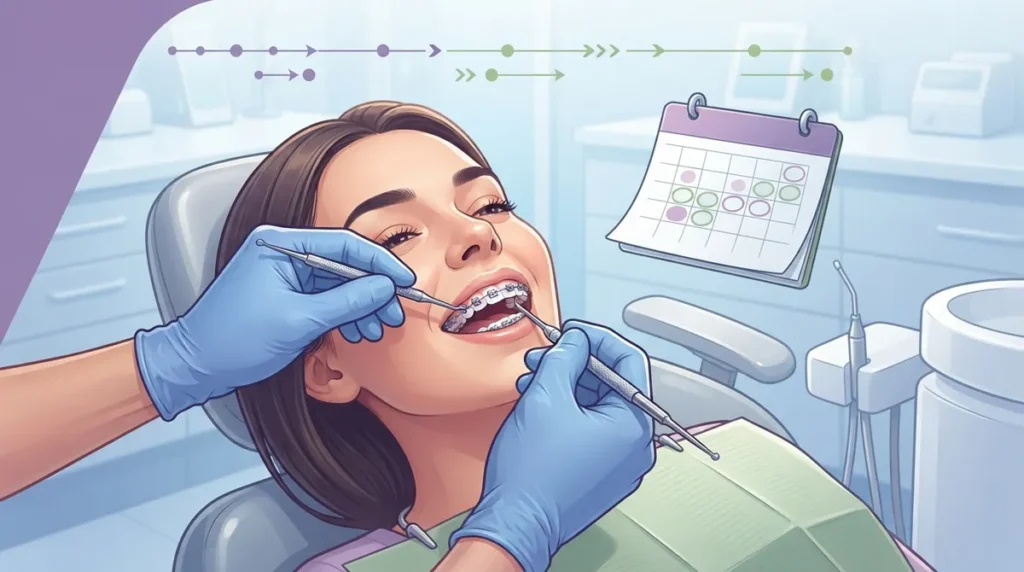
Here is a question we hear all the time at the front desk: “Wait, how often do I actually have to come in?” It is a fair question! Between school pickups, work meetings, and a calendar that never seems to slow down, nobody wants to guess about how often orthodontist visits will fill up their schedule.
The good news is that the answer is friendlier than most people expect. During active treatment, many patients are seen about every 4 to 8 weeks. Some clear aligner patients may be spaced out a bit farther, often around 6 to 10 weeks. But here is the important part: your orthodontist sets the exact schedule based on your teeth, your appliance, and how your smile is moving.
Think of each visit like a quick check-in with a coach. Your orthodontist makes sure everything is on track, fixes small things early, and keeps your treatment moving forward. In this guide, we will walk through 6 things to know about how often orthodontist visits happen, so you can plan with confidence in 2026 and beyond.

1. The Typical Schedule: Every 4 to 8 Weeks
During active orthodontic treatment, appointments are commonly scheduled about every 4 to 8 weeks. That is the range you will see most often in orthodontic practices. Some offices use intervals anywhere from roughly 4 to 10 weeks, depending on the patient.
It is worth being honest here: this is a typical range, not a one-size-fits-all rule. Research summaries note that orthodontists schedule fixed-appliance patients anywhere from every 4 to every 10 weeks, and there is no single agreed-upon ideal interval. That is why your plan is built around you.
Here is a quick look at how those timeframes usually break down:
| Treatment Type | Common Visit Interval | What Usually Happens |
|---|---|---|
| Traditional or fixed braces | About every 4–8 weeks | Wire checks and adjustments |
| Clear aligners | About every 6–10 weeks | Fit and tracking checks, new aligners |
| Retention phase | Set by your orthodontist | Retainer fit and stability checks |
Curious about the different appliance options? You can explore our guide to types of braces to see how each one works.
2. Why Orthodontists Schedule Visits Every Few Weeks
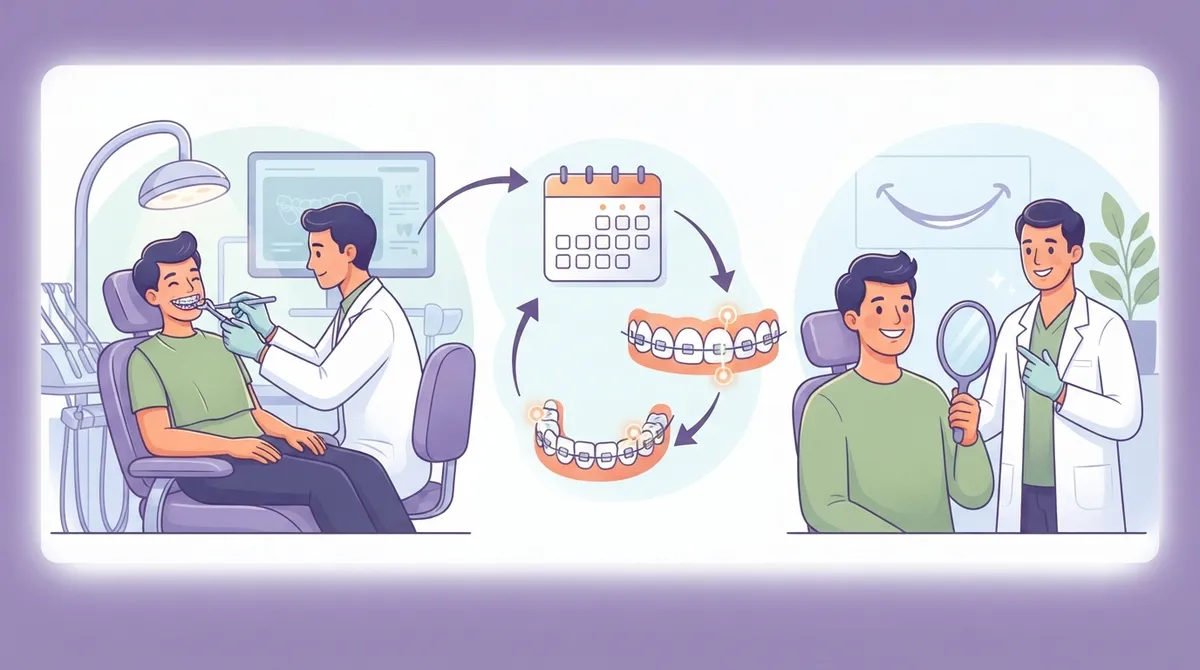
You might wonder why you cannot just “set it and forget it.” Teeth do not move on autopilot. They move gradually, and your orthodontist needs to guide that movement along the way.
Regular monitoring helps confirm that your teeth and bite are shifting as planned. It also lets your care team catch small problems before they become bigger ones. A tiny issue that gets fixed in week six is much easier than one that has been sitting for four months.
Here are the main reasons these regular visits matter:
- Progress checks: Your orthodontist confirms that teeth are moving the way the plan intended.
- Bite monitoring: The way your upper and lower teeth meet changes over time and needs watching.
- Appliance condition: Wires, brackets, and aligners are checked for wear, damage, or poor fit.
- Oral health: Your care team looks for plaque, irritation, or early signs of trouble around the gums.
- Timely fixes: Small issues get handled right away instead of slowing your progress.
Many patients tell us this part gives them real peace of mind. Each visit is a chance to ask questions and see how far you have come.
3. How Often Orthodontist Visits Work With Braces
If you have fixed braces, you will usually return for wire or appliance checks and adjustments. A common practice-based range is every 4 to 8 weeks, and your orthodontist decides the exact timing based on your treatment plan and progress.
At a typical adjustment appointment, here is what you can expect:
- Your orthodontist or team member removes the old elastics or ties.
- The wire and brackets are checked to make sure everything is secure.
- Wires may be changed or adjusted to keep your teeth moving.
- New elastics are placed, and you may get fresh instructions.
- Your next visit is scheduled based on how things look.
Most adjustment visits are quick, and many patients are surprised by how smoothly they go. If you want a deeper look, check out our article on what really happens at each braces tightening visit.
For busy parents, this is where a flexible schedule makes a big difference. Looking for appointment times that work around school and activities? At Segovia Orthodontics, we know family calendars are packed, and we do our best to make visits convenient. You can learn more about our approach on our why choose us page.
Our practice also offers LightForce braces, which use digital planning and custom-designed brackets. Because treatment is planned so precisely, your visit schedule is still set by your orthodontist, but the process is built to be efficient and comfortable.
4. How Often Orthodontist Visits Happen With Clear Aligners
Here is a common myth: “Clear aligners mean I can skip the orthodontist.” Not quite! Clear aligner patients still need regular supervision. Visits are often spaced around 6 to 10 weeks, though some practices report follow-ups around every 8 to 10 weeks. The range is wide because it truly depends on your case, your aligner plan, and whether your teeth are tracking as expected.
At an aligner check-in, your orthodontist usually does the following:
- Checks how well your aligners fit and whether teeth are tracking properly
- Reviews your bite and tooth movement
- Gives you your next set of aligners if needed
- Answers questions about wear time, cleaning, and comfort
So do clear aligners require fewer visits than braces? Sometimes, yes, because visits can be spaced a little farther apart. But fewer visits does not mean no oversight. Your orthodontist still guides the whole process.
For young professionals and busy adults who want a discreet option, aligners can fit nicely into a packed schedule. Our clear aligners page explains how treatment works, and if you are weighing your options, our comparison of braces vs. clear aligners can help.
We also offer Angel Aligners, which use a “7+3” wear schedule and AI-driven planning. Many patients like how comfortable and discreet they are. Your visit timing is still personalized, so your orthodontist will tell you what to expect.
5. When You Need to Come In Sooner Than Planned
Life happens. A bracket pops off while you are eating, a wire pokes your cheek, or an aligner goes missing. When this happens, please do not wait for your next routine visit. Call your orthodontist right away.
You may need an earlier appointment if any of these things occur:
- A bracket or wire breaks or comes loose
- An aligner is lost, cracked, or no longer fits
- You have significant or lasting discomfort
- Something feels off with your bite or your appliance
Most small problems are easy to fix, and acting quickly keeps your treatment on track. If you are ever unsure, we have a helpful guide on orthodontic emergencies. You can also read about common emergency situations with braces so you feel prepared.
Think of it this way: calling early is always better than waiting and hoping. Your care team would much rather hear from you than have a small issue turn into a long delay.
6. What Happens After Treatment: Retention Visits
When your braces come off or you finish your last aligner, you might think you are done with appointments. Almost! After active treatment, you enter retention, and you will need retainer guidance and follow-up.
Here is the honest truth: there is no single universal recall schedule after treatment. Your orthodontist decides how often to see you based on how stable your teeth are and what kind of retainer you wear. Some patients come back more often at first, then less often as things settle.
This stage is especially important for adults who had braces years ago and noticed their teeth shifting. If that sounds like you, you are in good company. Many of our adult patients return to fix relapse and stay committed to keeping their results. Learn more about orthodontic retainers and our adult orthodontics options to see what could work for you.
Can Remote Monitoring Replace In-Person Visits?
You may have heard about remote monitoring, where your orthodontist reviews your progress between visits using photos or digital tools. The American Association of Orthodontists notes that some offices offer this option, and it can reduce the number of in-person appointments.
But it does not replace professional oversight. Remote tools are a helpful supplement, not a substitute. Your orthodontist still needs to see you in person at key points to check your bite, your appliance, and your overall oral health. If this interests you, simply ask your orthodontist whether it is available for your treatment.
Tips for Making Every Visit Count
A little preparation goes a long way. Whether you are a parent juggling carpools or a professional squeezing in a lunch-hour visit, these tips can help appointments go smoothly:
- Keep every scheduled appointment. Skipping visits can slow your progress and extend your treatment time.
- Brush and floss before you arrive. A clean mouth makes checks faster and more comfortable.
- Bring your questions. Jot them down in your phone so you do not forget.
- Wear your aligners or retainers as directed. This helps your teeth track the way they should.
- Call early about problems. Do not wait for the next routine visit if something breaks.
New to all of this? Our guide on what to expect and how to prepare for your orthodontics appointment walks you through it step by step. And if you are planning for your very first visit, take a look at what happens at your first orthodontic visit.
Planning Around Big Life Events
Do you have a wedding, graduation, or big presentation coming up? Many of our patients do! The good news is that regular visits help keep your treatment on pace, so you are more likely to hit your goals. Be sure to tell your orthodontist about your date during your consultation. They can help you set realistic expectations and plan your visits around your timeline.
Staying consistent with appointments is one of the best things you can do to protect your schedule. Missed visits often mean longer treatment, and nobody wants that.
Your Smile, Your Schedule
So, how often will you see your orthodontist? For most patients in active treatment, it is about every 4 to 8 weeks with braces, and often around 6 to 10 weeks with clear aligners. After treatment, your retention visits are set by your orthodontist based on your needs. The exact schedule is always personal, and that is a good thing.
At Segovia Orthodontics, Dr. Flor Segovia is a board-certified orthodontist who offers bilingual care in English and Spanish and a warm, family-friendly environment for patients of all ages. You can also learn more about Dr. Flor Segovia and read about her credentials through the American Board of Orthodontics.
Want to see what our patients say? Visit us on Google — Segovia Orthodontics to read reviews, and follow along with smile stories on our Instagram page or our Facebook page.
Ready to find out what your visit schedule would look like? Request an appointment today, or call us at 941-557-1333. We would love to meet you and help you take the next step toward your best smile.
FAQs
Q: How often do you need to see an orthodontist with braces?
A: Most patients with fixed braces are seen about every 4 to 8 weeks for wire checks and adjustments. Your orthodontist sets the exact schedule based on your treatment plan and how your teeth are moving.
Q: How often should you visit the orthodontist with clear aligners?
A: Clear aligner check-ins are often spaced around 6 to 10 weeks, though it varies by case. Your orthodontist checks fit, tooth tracking, and gives you your next steps.
Q: Can I go longer between orthodontist appointments?
A: It is best not to stretch visits on your own, because skipped appointments can slow progress and lengthen treatment. If your schedule is tight, talk with your orthodontist, who can adjust your plan when it is safe to do so.
Q: What should I do if a bracket breaks or an aligner stops fitting?
A: Call your orthodontist right away instead of waiting for your next routine visit. Small problems are usually quick to fix, and acting early helps keep your treatment on track.
Q: How often should I see my orthodontist after braces are removed?
A: There is no single schedule for everyone. Your orthodontist sets your retention follow-ups based on how stable your teeth are and what type of retainer you wear.
Our Service Area