Key Takeaways
-
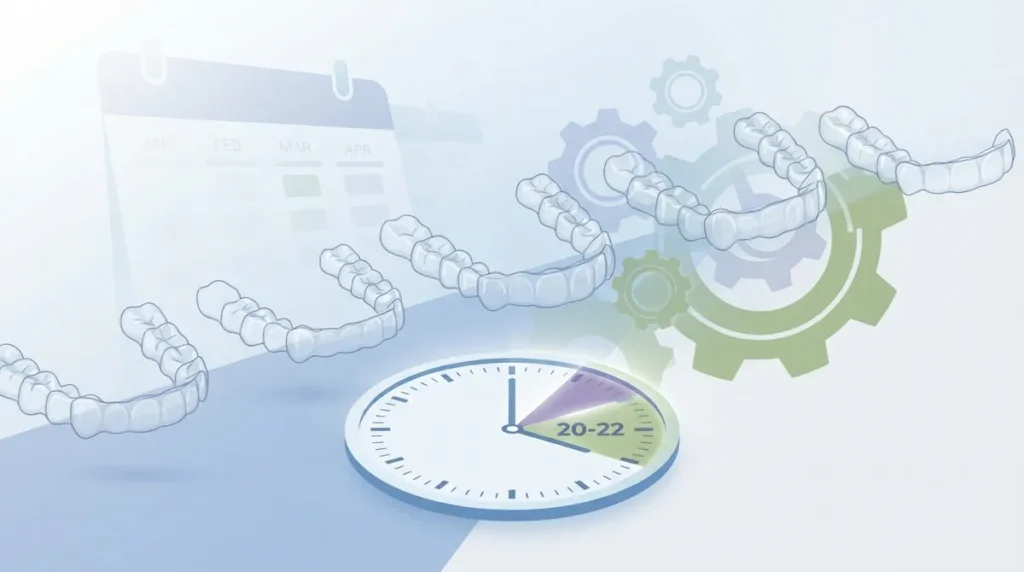
Wear time is critical: maintaining 20-22 hours daily wear is one of the biggest factors determining whether your treatment stays on schedule, and skipping hours can add weeks or months.
-
Treatment duration varies significantly by case type: mild cases take 6-9 months, moderate cases 12-18 months, and complex cases 18-24+ months, requiring a personalized evaluation to determine your specific timeline.
-
Mild cases with minor crowding or small gaps can be completed in as little as six months, making Invisalign viable for people working toward specific events like weddings or job interviews.
-
Manufacturing and delivery add weeks before treatment starts: custom aligners take several weeks to produce after scans are finalized, so mention important dates early so your orthodontist can plan backward.
-
Refinements are normal and may extend treatment: if teeth don't move exactly as planned, additional aligner series are created to fine-tune results, involving new scans and manufacturing time.
-
Retainers are a lifelong commitment: after active treatment ends, consistent retainer wear is essential to prevent teeth from shifting back and undoing months of progress.
Wondering how long you’ll be wearing those clear trays before your big smile reveal? You’re not alone. Whether you’re a busy parent juggling soccer practice, a professional eyeing a big promotion, or someone getting ready for a wedding, understanding your invisalign treatment timeline helps you plan ahead with confidence. The good news? Clear aligner treatment is often more predictable than you think, and knowing what to expect makes the whole journey feel a lot less mysterious.
At Segovia Orthodontics in Lakewood Ranch, we sit down with every patient to map out a realistic timeline before treatment even begins. No guessing games, no surprises. Just a clear roadmap from your first consultation to that final retainer check. Let’s walk through the eight facts that shape your invisalign treatment timeline, so you can plan your smile journey like a pro.

1. Your Timeline Starts With a Personalized Evaluation
No two smiles are alike, and that means no two invisalign treatment timelines look exactly the same. Your treatment length depends on your specific alignment needs, the tooth movements required, and the type of aligner product your orthodontist recommends. This is why an in-person evaluation matters so much before anyone can give you a real number.
During your first orthodontic visit, Dr. Segovia will examine your bite, take digital scans, and discuss your goals. This step is what separates a rough guess from an actual plan you can count on. If you’ve been putting off scheduling because you’re not sure where to start, our team can walk you through what happens at a orthodontic evaluation so you feel prepared.

2. Some Cases Wrap Up in as Little as Six Months
Here’s a fact that surprises a lot of people: mild cases can sometimes finish in around six months. This shorter timeline usually applies to patients with minor crowding or small gaps, not major bite issues. It’s not a guarantee for everyone, but it’s a real possibility worth asking about.
If you’re a young professional hoping to fix a small gap before a big event, or a bride-to-be wanting straighter teeth before the wedding, this shorter window might be exactly what you’re looking for. Ask your orthodontist directly whether your case fits into this faster category during your consultation.
3. Moderate to Complex Cases Take Longer
Not every smile fits into the six-month bucket, and that’s okay. More involved cases, like significant crowding, larger gaps, or bite corrections such as overbites and crossbites, typically require more time. It’s not unusual for these cases to stretch beyond a year.
This is where working with a board certified orthodontist really pays off. A specialist trained by the American Board of Orthodontics knows how to plan tooth movements efficiently, which can help avoid unnecessary delays. Complex cases aren’t a bad thing. They just need a smart, well-mapped plan.
| Case Type | Typical Timeline | Common Issues Addressed |
|---|---|---|
| Mild | 6 to 9 months | Minor crowding, small spacing |
| Moderate | 12 to 18 months | Moderate crowding, mild bite issues |
| Complex | 18 to 24+ months | Significant crowding, overbite, crossbite |
4. Wear Time Makes or Breaks Your Schedule
Here’s the part that’s actually in your hands: how many hours a day you wear your aligners. Most orthodontists recommend wearing your trays for about 20 to 22 hours daily, only removing them to eat and to brush and floss. Skipping this consistently can quietly add weeks or months to your plan.
Think of it like a workout plan. Skipping days here and there adds up over time. If you’re a busy career-focused adult juggling meetings and travel, set reminders on your phone to help you stay on track. Small daily habits add up to big results.
Quick Wear-Time Tips
- Keep a travel case in your bag or car for easy access after meals
- Set phone alarms to remind you to put trays back in
- Brush and floss right after eating to get trays back in faster
- Avoid snacking throughout the day, which cuts into wear time
5. Aligner Changes Follow a Set Schedule
Your orthodontist will prescribe how often you switch to your next tray in the series. A common pattern is one new set of aligners per week, though some plans call for changes every one to two weeks depending on how your teeth are tracking.
It’s tempting to want to switch trays early to “speed things up,” but please don’t do this without talking to your provider first. Changing too fast can cause discomfort or poor tracking, which can actually slow down your invisalign treatment timeline in the long run. Trust the plan your orthodontist built for you.
6. Manufacturing and Delivery Add Time Before You Even Start
Many patients don’t realize that there’s a behind-the-scenes waiting period before treatment technically begins. After your scans and treatment plan are finalized, it can take several weeks for your custom aligners to be manufactured and delivered to your orthodontist’s office.
This is a normal part of the process, not a delay caused by anyone dragging their feet. Knowing about this upfront helps you plan around milestones like graduations or job interviews. If you’re working toward a specific date, mention it early so your orthodontist Flor Segovia can help you plan backward from that goal.
7. Refinements Can Extend Active Treatment
Sometimes teeth don’t move exactly as planned, and that’s completely normal in orthodontic care. When this happens, your orthodontist may recommend refinements, which involve a new scan and an additional series of aligners to fine-tune your results.
Refinements aren’t a sign that something went wrong. They’re simply part of getting your smile exactly right. Here’s what typically happens during this stage:
- Your orthodontist reviews your progress at a check-in appointment
- New digital scans are taken to capture your current tooth positions
- A refined treatment plan is created to address remaining movements
- New aligners are manufactured and delivered, usually within a few weeks
- You wear the refinement trays following the same daily schedule
If you’ve experienced any unexpected issues along the way, our guide on clear aligner mistakes that can ruin your smile results is worth a read to help you avoid common pitfalls.
8. Retention Is a Lifelong Part of Your Timeline
Once your active aligner treatment wraps up, the story isn’t quite over. Retainers are essential for keeping your teeth in their new, beautiful positions. Your orthodontist will let you know how often and how long you should wear yours going forward.
Think of retention as the maintenance phase of your invisalign treatment timeline. Skipping it can allow teeth to shift back, undoing months of hard work. We offer several orthodontic retainers options to fit your lifestyle and help protect your investment for years to come.
Comparing Angel Aligners and Traditional Clear Aligners
At Segovia Orthodontics, we also offer clear aligners through Angel Aligners, a system known for its AI-driven planning and unique wear schedule. Instead of a standard weekly change, Angel Aligners often use a “7+3” pattern: seven days with a flexible tray followed by three days with a firmer one. Many patients find this helps speed up tooth movement while reducing the number of office visits needed.
- Built-in attachments reduce the need for extra bonded pieces on teeth
- A frosted finish helps minimize shine, making trays more discreet
- Flexible, self-adaptive materials can be gentler on gums and cheeks
- Streamlined manufacturing often means a friendlier price point
If you’re weighing your options between different aligner brands or wondering how they compare to traditional braces, take a look at our breakdown of braces vs. clear aligners to see which path fits your lifestyle best.
Who Tends to Benefit From Each Option
Concerned parents managing a busy household often appreciate the flexibility of clear aligners for teens, since trays are removable for sports and school photos. Career-focused adults tend to love how discreet the trays are during client meetings. And if you previously had braces as a teen and are dealing with relapse now as an adult, clear aligners offer a comfortable, low-key way to get back on track. Learn more about your options in our guide to adult orthodontics.
What Can Slow Down Your Timeline
A few common habits can add unwanted time to your invisalign treatment timeline. Here’s what to watch for:
- Not wearing aligners for the full recommended 20 to 22 hours daily
- Losing or damaging a tray and delaying its replacement
- Skipping scheduled check-in appointments
- Eating or drinking anything besides water while wearing trays
- Not cleaning aligners properly, which can affect fit over time
Staying consistent with these small habits is one of the easiest ways to keep your treatment on schedule. And if something unexpected comes up, like a cracked tray or a sudden question, don’t hesitate to reach out. Our page on orthodontic emergency care can help you know what steps to take.
Why Personalized Planning Matters So Much
We know it’s tempting to want a one-size-fits-all answer to “how long will this take?” But the truth is, your invisalign treatment timeline depends on your unique smile, your commitment to wearing trays consistently, and the expertise guiding your plan. That’s exactly why we take the time to get to know each patient at Segovia Orthodontics before mapping anything out.
We use advanced orthodontic technology to track your progress closely, catching any needed adjustments early rather than waiting until your next visit. This proactive approach helps keep surprises to a minimum and your smile on schedule.
Curious what other Lakewood Ranch families and professionals have experienced during their own treatment? You can visit us on Google — Segovia Orthodontics to read real reviews, or check out our Facebook page and our Instagram page for smile transformations and behind-the-scenes moments from our office.
Ready to Map Out Your Own Smile Journey?
Understanding your invisalign treatment timeline is the first step toward a smile you’ll love showing off. Every mouth is different, and the only way to get a truly accurate estimate is through a personalized evaluation with a trusted orthodontist. Our friendly team at Segovia Orthodontics in Lakewood Ranch is ready to walk you through every step, answer your questions, and build a plan that fits your life and your goals.
Ready to get started? Request an appointment today, or feel free to contact us with any questions. You can also call us at 941-557-1333 to speak with our team directly. We can’t wait to help you start your journey toward a smile you’re proud to share.
FAQs
Q: How long does Invisalign treatment usually take?
A: It really depends on your unique smile! Mild cases might wrap up in about six months, while more involved cases can take a year or longer. The best way to know your personal timeline is to schedule an evaluation so your orthodontist can look at your specific needs.
Q: Can Invisalign treatment really be completed in six months?
A: Yes, for some mild cases with minor crowding or small gaps, six months is possible! It’s not a guarantee for everyone, though, so it’s worth asking your orthodontist directly whether your smile fits into this shorter category.
Q: How many hours a day should I wear my aligners?
A: Most orthodontists recommend 20 to 22 hours a day, only removing your trays to eat and to brush and floss. Staying consistent with wear time is honestly one of the biggest factors in keeping your treatment on schedule.
Q: What can delay or extend my Invisalign timeline?
A: A few sneaky culprits include inconsistent wear time, lost or damaged trays, skipped appointments, and needing refinements along the way. The good news is that most of these are totally within your control with a little extra attention.
Q: Do I need to wear a retainer after my treatment finishes?
A: Absolutely, and this part is just as important as the active treatment phase! Retainers help keep your teeth in their beautiful new positions, and your orthodontist will guide you on exactly how often to wear yours going forward.
Our Service Area