Key Takeaways
-
Severe cases require in-person examination to determine if aligners are viable; severity depends on whether the problem is tooth position, jaw structure, or impacted teeth, not a single definition.
-
Research shows clear aligners have strongest support for mild-to-moderate cases; severe malocclusions with impacted teeth or major jaw differences are considered poor choices or contraindications for aligners alone.
-
Aligners struggle with certain movements like large rotations, extrusion, and root torque with only 30-36% accuracy; many severe cases requiring multiple complex movements benefit more from braces.
-
Clear aligners with attachments, elastics, interproximal reduction, and refinements can handle moderate-to-complex cases that seem severe, expanding treatment options beyond aligners alone.
-
Consistency is critical for severe cases with less margin for error; aligners require 20-22 hours daily wear and skipping doses can derail results, so patient commitment determines success.
-
Hybrid treatment plans combining braces and aligners, or traditional braces, may be better for jaw-based problems, impacted teeth, or extraction cases requiring stronger control than aligners provide.
You look in the mirror and see teeth that feel more than just a little crooked. Maybe they are badly crowded. Maybe your bite looks off, or a tooth has not come in at all. Then you start to wonder: can clear aligners fix severe cases, or will you be told you need metal braces?
Here is the honest answer. Sometimes yes, sometimes no, and it depends on what makes your case “severe.” The word means different things for different smiles. Some severe cases are really about tooth position. Others come down to the jaw bones, and that changes the plan a lot.
In this friendly guide, we walk you through nine truths about clear aligners and tougher orthodontic problems. Whether you are a parent checking on your teen, a busy professional who wants something discreet, or an adult who had braces years ago and needs a fix, you will know what to ask at your visit. At Segovia Orthodontics, we believe an informed patient is a happy patient.
1. “Severe” Is Not One Single Thing
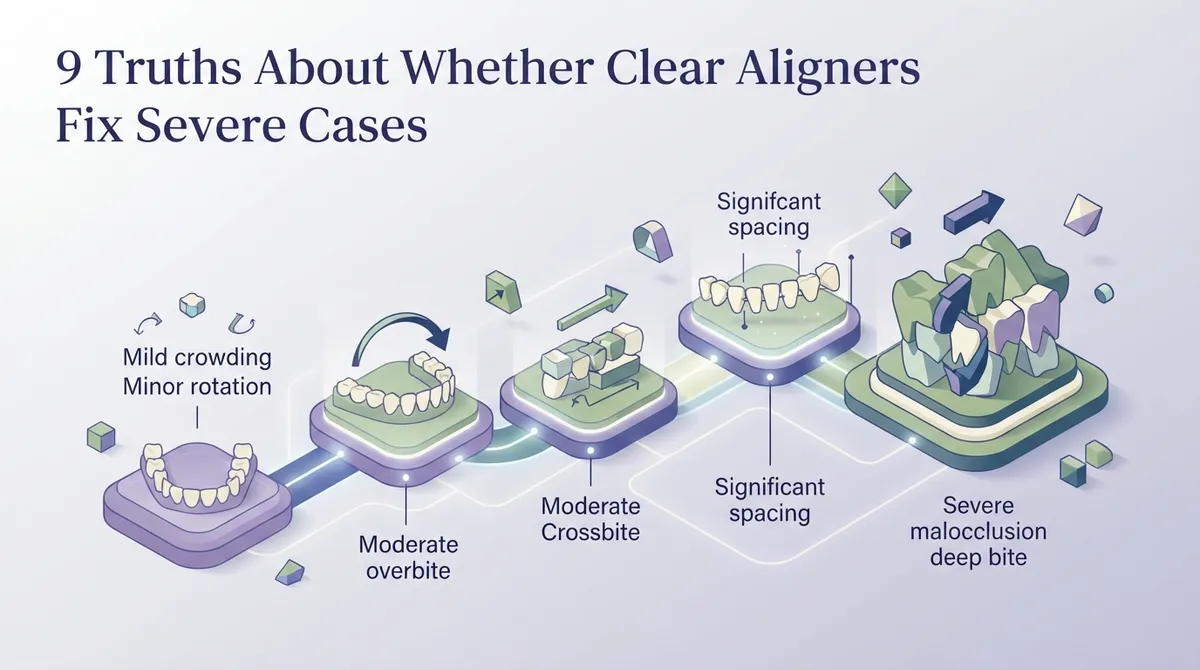
When people say “severe,” they usually mean one of a few different problems. Each one has a different answer when it comes to aligners.
- Tooth-position problems: heavy crowding, big gaps, or rotated teeth.
- Bite problems: a deep overbite, an underbite, a crossbite, or an open bite.
- Jaw problems: the upper and lower jaws do not line up well.
- Eruption problems: impacted teeth that are stuck under the gums.
Aligners are often a good fit for tooth-position problems. Jaw and impaction problems are harder. That is why a “severe” label alone does not tell us which treatment will work. You can read more about the usual issues on our page about common orthodontic problems.
2. The Research Favors Mild to Moderate Cases
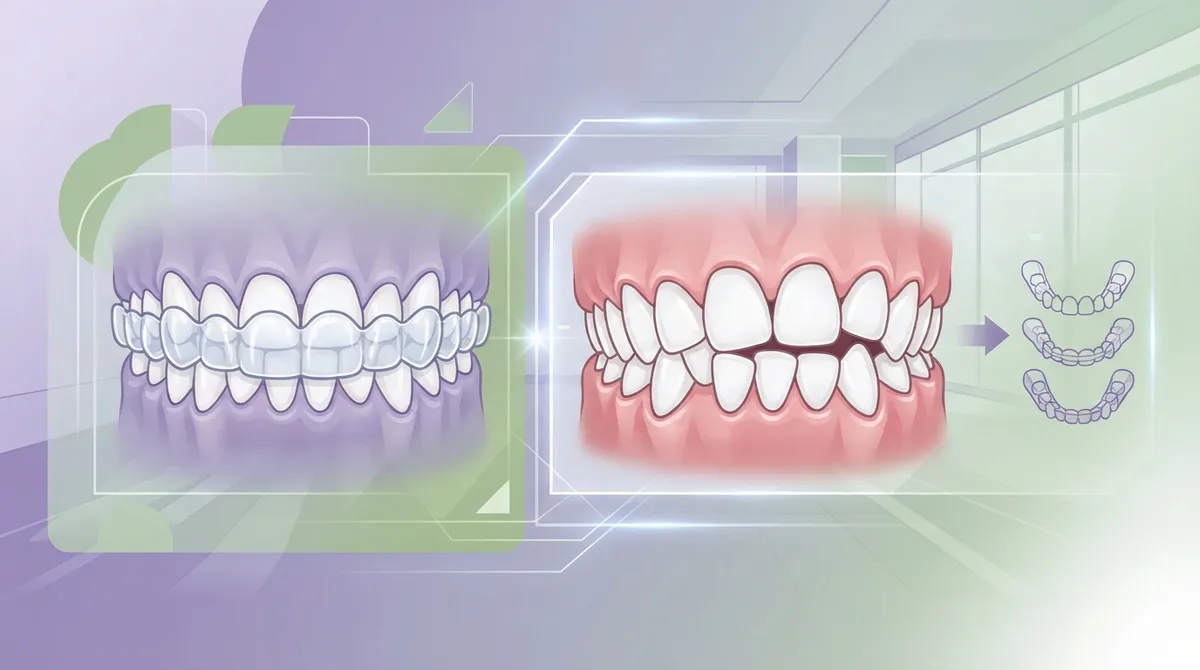
It helps to know what the science says. Reviews of clear aligner studies tend to show the strongest support for mild-to-moderate cases. A 2023 systematic review and meta-analysis found aligners were best supported for those cases and noted there was not enough evidence to prove they work across more complex ones.
A 2025 systematic review of indications went a step further. It found that severe malocclusions with impacted teeth or major jaw-bone differences were treated as poor choices, or even contraindications, for aligners used alone. It did not set one exact number that defines “too severe,” so each case still needs a personal look.
So can clear aligners fix severe cases? The research says to be careful. Aligners can do a lot, but they are not a magic fix for every complex problem.
3. Some Movements Are Harder for Aligners
Aligners push teeth in a gentle, planned way. But some tooth movements are simply harder to control with a plastic tray. One systematic review of tooth-movement control reported average accuracy of about 30% for extrusion (pulling a tooth down or up) and about 36% for canine rotation. The authors noted that study quality limits how sure we can be, but the message is clear: these moves are tricky.
Here are the movements that tend to be less predictable with aligners alone:
- Big rotations, especially on canines and premolars
- Extrusion, which means bringing a tooth farther out of the gum
- Root torque, which means tilting the root of a tooth
- Uprighting leaning back teeth
- Closing large spaces after tooth extractions
Many severe cases need several of these moves at once. That is where planning matters most.
4. Accuracy Varies, and That Is Normal
You may see numbers online that sound confusing. A 2024 umbrella review reported that clear aligner accuracy ranged from about 55% to 82% when compared with fixed braces. That does not mean aligners work only 55% of the time. It means that, for certain tooth movements, the final position can differ from the digital plan by some amount.
This is also not a success rate for severe cases. Results change depending on the type of movement, the study, and the patient. The takeaway is simple: aligners can be very good, yet the final result may need small fixes along the way. A skilled orthodontist plans for that from day one.
5. Your Orthodontist Needs to Examine You in Person
A phone app or a digital smile preview cannot tell you if your case is right for aligners. A smooth 3D simulation looks great, but it cannot prove the result is truly doable. An in-person exam is the key.
During a visit, your orthodontist checks:
- How your upper and lower teeth fit together when you bite
- The position of each tooth and its root
- How your upper and lower jaws relate to each other
- The health of your gums and the bone that holds your teeth
- Your goals, your schedule, and your comfort with different options
If you are curious how this feels, our guide on what happens during an orthodontic evaluation walks through the visit step by step. Dr. Flor Segovia, a board-certified orthodontist, uses advanced orthodontic technology to build a clear picture of your teeth before suggesting a plan.
6. Aligners Plus Extras Can Handle More Than You Think
Here is some good news. Aligners are not always “alone.” Many complex cases use helpers that boost what the trays can do. These may include:
- Attachments: small tooth-colored bumps that give the aligner something to grip.
- Elastics: tiny rubber bands that guide the bite.
- Interproximal reduction: a light polishing between teeth to create space.
- Refinements: extra sets of aligners made after the first set is done.
With these tools, some cases that sound severe can still be treated with aligners. Our office offers clear aligners, including Angel Aligners, which use a 7+3 wear schedule and a frosted finish for comfort and a discreet look. Your orthodontist will tell you honestly if aligners can reach your goals or if another path is wiser.
7. Braces, Hybrid Plans, or Surgery May Be the Better Call
Sometimes the best answer is not aligners at all. When the main problem is the jaw bone instead of the teeth, braces or even jaw surgery may give a better, safer result. Impacted teeth and certain extraction cases also often do better with fixed braces.
Some people land in the middle with a hybrid plan, which uses braces for part of treatment and aligners for the rest. Our practice offers LightForce braces, a digital system with custom 3D-printed brackets, and WildSmiles braces, which make treatment more fun for kids and teens. Learn about your options in our guide to types of braces.
Here is a quick look at how each path compares for complex cases:
| Treatment Path | Best For | Things to Know |
|---|---|---|
| Clear aligners alone | Mild to moderate crowding, spacing, and some bite issues | Less predictable for big rotations and extrusion |
| Aligners with extras | Moderate to some complex tooth-position cases | May need attachments, elastics, or refinements |
| Hybrid (braces plus aligners) | Cases needing strong control early, then easy finishing | Combines fixed and removable steps |
| Traditional or custom braces | Complex bites, impactions, extraction cases | Works full time and does not rely on wear habits |
| Braces plus jaw surgery | Major skeletal jaw differences | Planned with an oral surgeon |
8. Your Habits Decide a Lot of the Result
Even a great plan only works if the aligners stay in your mouth. Most treatments call for about 20 to 22 hours of wear each day. For a severe case, there is less room for error. If trays are left out too often, teeth may not move as planned.
Here are habits that help your treatment stay on track:
- Wear your aligners as prescribed, every day
- Switch to each new set on schedule
- Keep your monitoring visits
- Brush before putting trays back in
- Carry your case so trays never end up in a napkin
Busy professionals and parents of teens often worry about this part. The good news is that small routines make it easy. For common slip-ups to avoid, see 7 clear aligner mistakes that can ruin your smile results.
9. A Backup Plan Is Part of Good Care
What if your teeth do not track the way the plan said they would? Do not panic. This happens, and a good orthodontist expects it. The fix is usually one of these steps:
- Take a new scan of your teeth
- Make refinement aligners to fine-tune the result
- Adjust the plan or add attachments and elastics
- Switch to braces for the harder parts of treatment
Knowing there is a plan B should make you feel calm. It means you are not stuck if something shifts. A caring team will talk through every change with you. If you are comparing paths, our post on braces vs. clear aligners can help you think it through.
Who Is Most Likely to Succeed With Aligners for a Tough Case?
Every smile is different, yet some patients tend to do well when their case is more than mild. They often share a few traits:
- The main issue is tooth position, not the jaw bones
- There are no impacted teeth that need to be pulled into place
- They are ready to wear trays nearly all day
- They stay open to extras like elastics or a short stretch of braces
Adults who had braces as teens and now see their teeth shifting back often fit this profile well. Our page on adult orthodontics explains how we help with relapse. Parents of teens should also look at our teen orthodontic treatment options, because growing jaws can open up different choices.
Getting Ready for Your Visit
You do not need to have all the answers when you walk in. A few simple steps can help you feel ready:
- Write down what bothers you most about your smile
- Note any jaw pain, clicking, or trouble chewing
- Bring a list of past dental or orthodontic work
- Think about big events coming up, like a wedding or graduation
- Prepare questions about time, cost, and options
Not sure what to ask? This guide on how to ask the right orthodontic questions is a great start. Our team also speaks English and Spanish, so every family feels at home. You can learn more about our approach on our why choose us page, and flexible plans are explained on our orthodontic financing page.
To trust the credentials behind any specialist, you can look up board status through the American Board of Orthodontics. And if you like seeing real smiles, follow us on our Instagram page or stop by our Facebook page. You can also visit Segovia Orthodontics on Google to see what neighbors in Lakewood Ranch say about their care.
The Bottom Line
So, can clear aligners fix severe cases? Sometimes, yes. When the problem is mostly about tooth position and you stay committed, aligners with the right extras can do a lot. When the problem is jaw-based, involves impacted teeth, or needs complex movements, braces or a mixed plan may be the smarter choice. The best result comes from an honest exam, not a guess.
You deserve a plan built around your smile, your schedule, and your goals. Do not let the word “severe” scare you off from taking the first step. Whether you are a parent helping a teen, a professional who wants something discreet, or an adult fixing relapse, we are here to help. Request an appointment today, or call us at 941-557-1333 to talk with our friendly team. Let us look at your smile together and find the path that fits you best.
FAQs
Q: Can clear aligners fix severe crowding?
A: Often they can, especially when the crowding is about tooth position and not the jaw. Your orthodontist may add attachments, light polishing between teeth, or refinements to help. If the crowding is very heavy or needs extractions, braces may work better.
Q: Can clear aligners correct a severe overbite or underbite?
A: Some overbites and underbites can be improved with aligners and elastics, particularly when the cause is the teeth. If the cause is a jaw-bone difference, braces or even surgery may be needed. An in-person exam tells us which one fits you.
Q: Can clear aligners treat an impacted tooth?
A: Impacted teeth are usually a poor fit for aligners alone, since the tooth must be guided down from under the gum. Braces are often the safer choice, sometimes with help from an oral surgeon. Your orthodontist will map out the best path.
Q: What happens if my aligners do not move my teeth as planned?
A: Do not worry, because this is common and fixable. Your orthodontist may take a new scan, make refinement aligners, adjust the plan, or switch you to braces for part of treatment. Staying on schedule with your visits helps catch this early.
Q: Are braces better than clear aligners for complex cases?
A: For many complex cases, yes, because braces work full time and give more control over tricky movements. That said, some complex cases still do well with aligners plus extras. The right choice depends on what is causing your severe case.
Our Service Area