
Key Takeaways
-
There is no upper age limit for orthodontic treatment; teeth respond to gentle pressure regardless of age, and gum and bone health matter more than chronological age.
-
Nearly 1 in 4 orthodontic patients in the U.S. are adults, with over 4 million Americans wearing braces, making senior orthodontics increasingly common and normalized.
-
Clear aligners and ceramic braces offer discreet treatment options for seniors who want to avoid the appearance of traditional metal braces.
-
Active gum disease must be treated before starting braces, but bone loss alone does not disqualify seniors; orthodontists create customized, gentler treatment plans to protect remaining bone.
-
Average cost for adult braces is around $5,500, with many practices offering financing options to make treatment affordable for retirees on fixed incomes.
-
Straighter teeth provide health benefits beyond appearance, including easier cleaning, reduced jaw strain, improved bite alignment, and better long-term gum health.
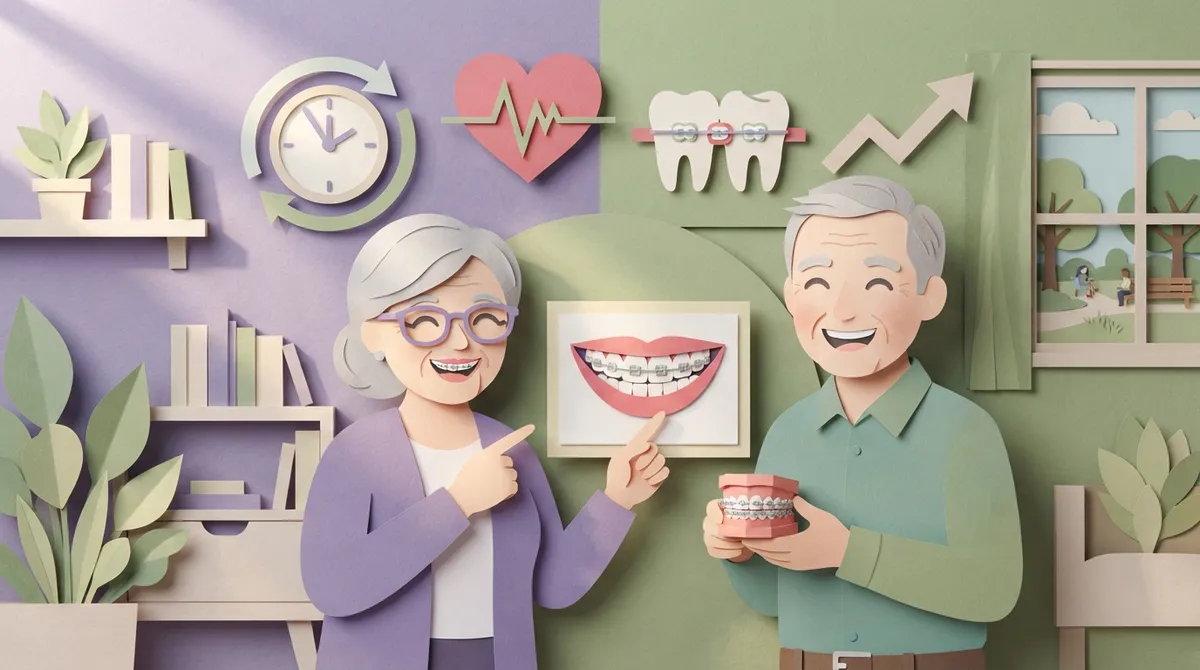
Grandma with braces? Grandpa straightening his smile before retirement? You bet. More seniors are walking into orthodontic offices every year, and they are not just accompanying grandkids. They are getting braces for seniors themselves. If you have been quietly wondering whether your teeth are too “set in their ways” to move, we have good news. Teeth do not know how old you are. They just respond to gentle, steady pressure, no matter if you are 16 or 76.
At Segovia Orthodontics at Lakewood Ranch, we love helping patients of every age feel confident about their smiles. Dr. Flor Segovia has worked with plenty of adults who thought their chance for a straighter smile had passed. Spoiler alert: it had not. Let’s talk about why braces for seniors are more common than ever, what your options look like, and how to know if you are a good candidate.
Why More Seniors Are Choosing Braces Today
People are living longer, healthier lives, and they want their smiles to keep up. Many seniors are retired, financially settled, and finally have the time to focus on things they put off for decades. Straightening their teeth is often at the top of that list.
According to the American Board of Orthodontics, adults now make up a huge share of orthodontic patients nationwide. In fact, nearly 1 in 4 orthodontic patients in the United States is an adult. More than 4 million Americans wear braces right now, and about 25% of them are grown-ups, not teenagers.
Here are some common reasons seniors decide it is finally time:
- Teeth have shifted or become crowded over the years
- An old retainer no longer fits, and teeth have relapsed
- Bite problems are causing jaw pain or uneven wear
- Gaps have opened up between teeth with age
- They want to feel more confident in photos, at work, or on dates
- Straighter teeth are simply easier to clean and maintain
Is There Really No Age Limit for Braces?
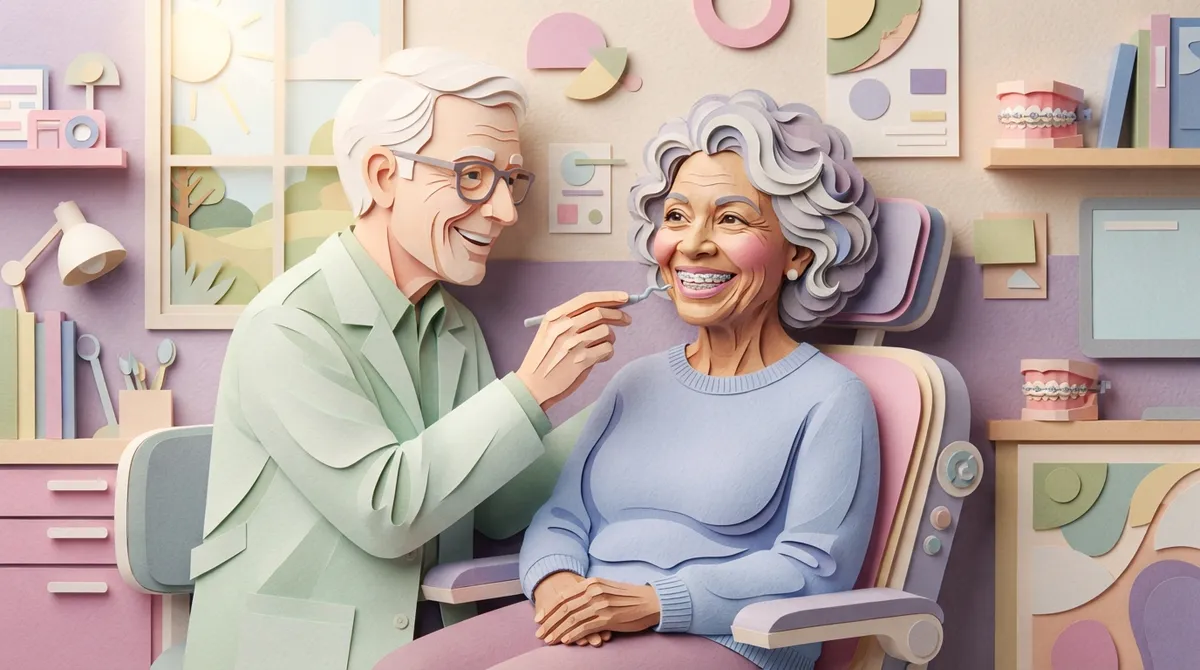
This is the question we hear most, and the answer is refreshingly simple. There is no upper age limit for orthodontic treatment. The American Association of Orthodontists has stated clearly that age is rarely the deciding factor in whether someone can get braces.
What actually matters is the health of your teeth, gums, and jawbone. Orthodontic tooth movement works the same way in seniors as it does in teenagers. Steady pressure over time moves teeth into better positions. The main difference is that adult bone is denser and no longer growing, so treatment can take a bit longer.
For mild misalignment, treatment might take about 8 to 12 months. More complex cases can take a few years, similar to timelines for younger patients. Your orthodontist will give you a realistic estimate after checking your specific situation. You can learn more about what influences timelines on our All About Braces page.
What Matters More Than Age When Considering Braces
Instead of asking “Am I too old?” a better question is “Are my gums and bone healthy enough?” That is really what determines candidacy for braces for seniors.
Gum Health Comes First
Active gum disease, also called periodontal disease, is the biggest concern for older patients. If bacteria and inflammation are damaging the gum tissue and bone that support your teeth, adding braces on top of that can make things worse. Your orthodontist will want to make sure any gum disease is treated and under control before starting treatment.
Bone Support Matters Too
Years of gum disease or untreated dental issues can lead to bone loss around the teeth. This does not automatically rule you out, but it does mean your treatment plan needs careful customization. Lighter forces and a slower pace are often used to protect the bone that remains.
Oral Hygiene Habits
Good brushing and flossing habits are essential during treatment. Braces create more nooks and crannies where food can hide, so seniors need to commit to thorough daily cleaning. This keeps both teeth and gums healthy throughout the process.
Common Questions About Dental Work and Braces for Seniors
Many seniors have crowns, bridges, implants, or a few missing teeth by the time they consider braces. The good news is that none of these automatically disqualify you.
- Crowns and Braces: Brackets can usually be bonded to crowns, though your orthodontist may use special adhesives.
- Missing Teeth and Braces: Gaps from missing teeth can often be closed or managed as part of your treatment plan.
- Dental Implants and Braces: Implants do not move like natural teeth, so your orthodontist will plan around them carefully.
- Bridges and Braces: Bridges may need extra planning since they connect multiple teeth together.
The key is a thorough evaluation before treatment begins. This helps your orthodontist design a plan that works with your unique dental history instead of against it. Our First Orthodontic Visit page walks through exactly what that evaluation looks like.
Best Types of Braces for Older Adults
Nobody wants to feel like a teenager again, especially when it comes to a mouth full of metal. Thankfully, today’s options give seniors plenty of ways to straighten their smile without feeling self-conscious.
| Treatment Option | Best For | Visibility |
|---|---|---|
| Traditional Metal Braces | Complex bite issues, severe crowding | Most visible |
| Ceramic (Clear) Braces | Moderate alignment issues, wanting a subtle look | Less visible, tooth-colored |
| Clear Aligners | Mild to moderate crowding or spacing | Nearly invisible |
| LightForce Custom Braces | Precision treatment with faster results | Discreet clear or white brackets |
Traditional Metal Braces
Metal braces remain the most reliable option for complex bite corrections. They are strong, effective, and often the fastest route for significant misalignment. Some seniors appreciate that metal braces do not require the same discipline as removable aligners since they cannot be misplaced or forgotten.
Ceramic Braces
Ceramic braces work just like metal braces but use tooth-colored or clear brackets. They blend in much better, which many adult patients love. If you want effective treatment without the obvious metallic look, this could be a great middle ground.
Clear Aligners
Many seniors gravitate toward clear aligners because they are removable and nearly invisible. You can take them out to eat, brush, and floss normally. At our practice, we offer Clear Aligners as well as Angel Aligners, which use a smart “7+3” wear schedule to help speed up tooth movement while keeping costs more manageable than some premium brands.
LightForce Braces
For seniors who want precision and speed, LightForce Orthodontics offers a fully digital, 3D-printed bracket system. Each bracket is custom-fitted to your individual tooth shape, which can reduce treatment time by up to 45% compared to traditional methods. The brackets also come in clear or white, so your treatment stays subtle.
How Much Do Braces for Seniors Cost?
Cost is often top of mind, especially for retirees on a fixed income. According to a 2020 American Dental Association survey, the average cost of braces and aligners for adults was around $5,500. Your actual cost will depend on the complexity of your case, the type of treatment you choose, and your location.
Here are a few factors that influence your final price:
- Severity of crowding, spacing, or bite issues
- Type of braces or aligners selected
- Length of treatment needed
- Whether additional dental work is required first
- Your insurance coverage, if any
Many practices, including ours, offer Orthodontic Financing options to help spread out payments. Do not let sticker shock stop you from at least asking about your options. A consultation costs you nothing but a little time.
Benefits of Straightening Your Smile Later in Life
Getting braces for seniors is not just about looks, although a confident smile is a wonderful bonus. There are real health benefits too.
- Easier Cleaning: Straight teeth are much easier to brush and floss thoroughly, reducing plaque buildup.
- Reduced Wear and Tear: Correcting your bite can prevent uneven pressure that wears down teeth unevenly.
- Less Jaw Strain: Fixing bite problems can ease jaw discomfort and reduce headaches related to misalignment.
- Better Gum Health: Well-aligned teeth create fewer hiding spots for bacteria, supporting healthier gums long term.
- Boosted Confidence: A smile you feel good about can improve how you show up in daily life, from family gatherings to job interviews.
Many of our patients tell us they wish they had started sooner. There is no rewind button, but there is absolutely a way forward. If you are curious about how orthodontic treatment fits into overall adult dental care, check out our Adult Orthodontics page for more details.
What to Expect During Your Orthodontic Journey
Starting treatment as a senior looks a little different than it does for a teenager. Here is a simple breakdown of what typically happens.
- Initial Consultation: Your orthodontist examines your teeth, gums, and bite, often using digital scans or X-rays.
- Health Check: Any active gum disease or dental issues are addressed before braces or aligners begin.
- Treatment Planning: A custom plan is created based on your goals, whether that is metal braces, ceramic braces, or clear aligners.
- Regular Adjustments: You will visit periodically for adjustments or new aligner trays, depending on your treatment type.
- Retention Phase: Once treatment is complete, a custom retainer helps keep your new smile in place.
Retainers are especially important for seniors, since teeth can shift again if you skip this step. Our Orthodontic Retainers page explains why this final phase matters just as much as the braces themselves.
Tips for a Smooth Experience with Braces as a Senior
A little preparation goes a long way. Here are some friendly tips to help your treatment go as smoothly as possible.
- Keep up with regular dental cleanings throughout treatment
- Ask your orthodontist about tools like water flossers to make cleaning easier
- Communicate any joint pain or sensitivity right away
- Stick to your aligner wear schedule if you choose clear aligners
- Attend every adjustment appointment, even if things feel like they are going well
- Be patient. Adult treatment sometimes takes a bit longer than it did for your teenage grandkids
If you ever have questions between visits, do not hesitate to contact us. We would rather answer a quick question than have you worry unnecessarily.
Why Choose Segovia Orthodontics for Senior Care
Dr. Flor Segovia is a Board Certified Orthodontist who genuinely enjoys working with patients of every age, including seniors who are finally ready for their dream smile. Our office uses Advanced Orthodontic Technology to make treatment as comfortable and efficient as possible, no matter your starting point.
We also offer bilingual care in English and Spanish, so communication never gets in the way of your comfort. Curious what our patients have to say? You can visit us on Google — Segovia Orthodontics to read real reviews from families and adults across Lakewood Ranch. You can also follow along on our Facebook page or our Instagram page for smile transformations and helpful tips.
Your Smile Deserves Attention at Any Age
Braces for seniors are not a trend. They are proof that it is never too late to invest in your health and confidence. Whether you are dealing with shifting teeth, an old bite problem, or years of putting your smile on the back burner, there is a treatment path designed for you.
Ready to see what is possible for your smile? Request an appointment with our friendly team today, or call us at 941-557-1333 to ask any questions you have. Your best smile is not behind you. It might just be getting started.
FAQs
Q: Are seniors too old for braces?
A: Not at all! There is no upper age limit for orthodontic treatment. As long as your gums and bone are healthy, your teeth can move and shift into better alignment no matter your age.
Q: What is the best type of braces for older adults?
A: It really depends on your goals and how visible you want treatment to be. Many seniors love ceramic braces or clear aligners for their subtle look, while metal or LightForce braces work great for more complex bite corrections.
Q: Can you get braces if you have gum disease or bone loss?
A: Active gum disease usually needs to be treated first, but bone loss alone does not automatically rule you out. Your orthodontist will create a customized, gentler treatment plan to protect your gums and remaining bone.
Q: How much do braces for seniors cost?
A: The average cost for adult braces and aligners was around $5,500 in a recent national survey, though your price depends on your specific case. Flexible financing options can help make treatment more manageable.
Q: Can seniors get braces with crowns, implants, or missing teeth?
A: Yes, in most cases! Crowns can usually have brackets bonded to them, and orthodontists can plan carefully around implants and missing teeth. A thorough evaluation helps determine the best approach for your unique smile.
Our Service Area