Key Takeaways
-
Clear braces cost $1,000-$2,000 more than metal braces ($4,000-$8,000 vs $3,000-$7,000), but offer a discreet appearance that blends with tooth color, making them ideal for professionals and adults concerned about visibility.
-
Metal braces are more durable and less prone to chipping, making them better for contact sports players or those with rough habits, while ceramic braces require careful avoidance of hard, sticky, and crunchy foods.
-
Elastic ties on clear braces can stain from coffee, tea, and tomato-based foods, whereas metal brackets resist staining; however, ties are replaced at every appointment, making staining temporary and reversible.
-
Both options treat mild-to-moderate cases equally well and take similar treatment times (metal averages 20 months; ceramic ranges 12-36 months), so your choice should prioritize your priorities: appearance, budget, durability, or complexity of your bite.
Standing in front of the bathroom mirror, imagining metal brackets on your teeth for the next two years, can feel like a big decision. Maybe you’re a mom trying to figure out what’s best for your teenager. Maybe you’re an adult getting ready for a big wedding and want a smile fix that won’t scream “braces” in every photo. Whatever brought you here, you’re in the right place. Let’s talk through clear braces vs metal braces so you can walk into your orthodontist’s office feeling confident, not confused.
Here’s a quick heads-up before we dive in: when we say “clear braces,” we mean ceramic or tooth-colored fixed braces, not the removable clear aligner trays you may have heard about elsewhere. Both clear and metal braces use the same basic setup of brackets and wires, but they look and behave a little differently. We’ll break down the real differences in cost, comfort, durability, and results so you can make a choice that fits your life. And if you want a second option beyond fixed braces, our clear aligners page is worth a peek too.
What Are Clear Braces and Metal Braces, Really?
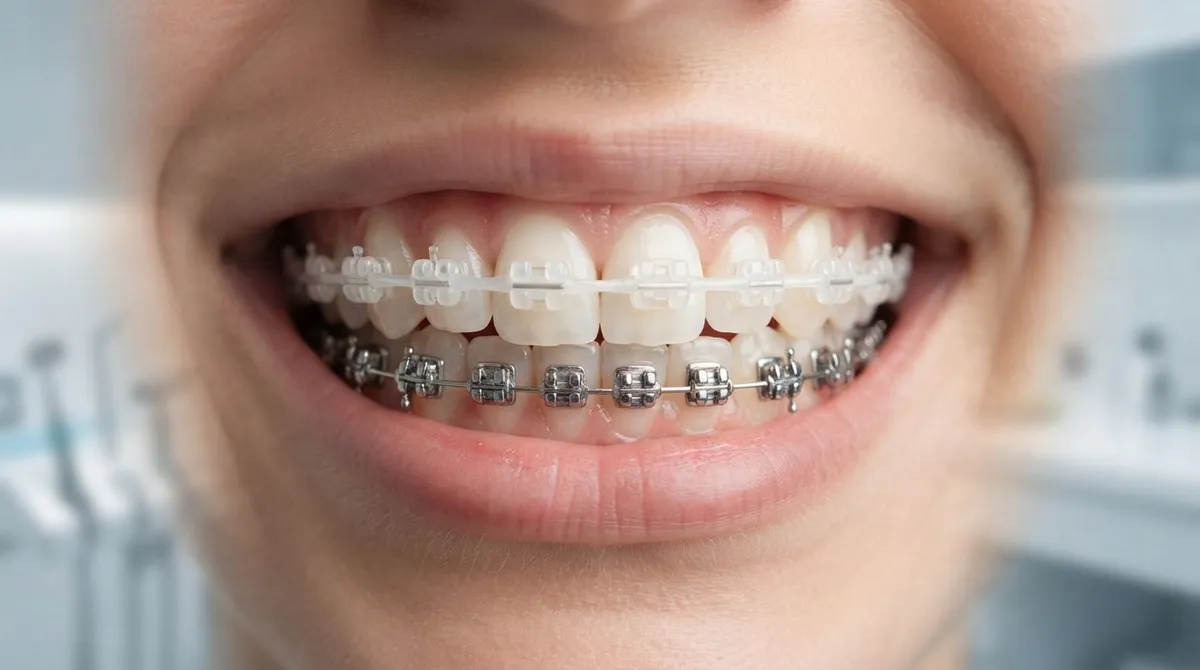
Metal braces are the classic option most people picture when they think of orthodontic treatment. They use stainless-steel brackets attached to each tooth, connected by a metal archwire that gently guides teeth into place over time.
Clear braces work the exact same way mechanically. The difference is the bracket material. Instead of shiny metal, clear braces use ceramic or porcelain brackets that are tooth-colored or nearly transparent. From a few feet away, they blend in much better than metal ever could.
Both systems can treat crowding, spacing, overbites, underbites, and crossbites. The right choice depends more on your specific bite issues and your orthodontist’s evaluation than on which bracket looks nicer. Learning more about the types of braces available can help you understand where each option shines.
Clear Braces vs Metal Braces: Side-by-Side Comparison
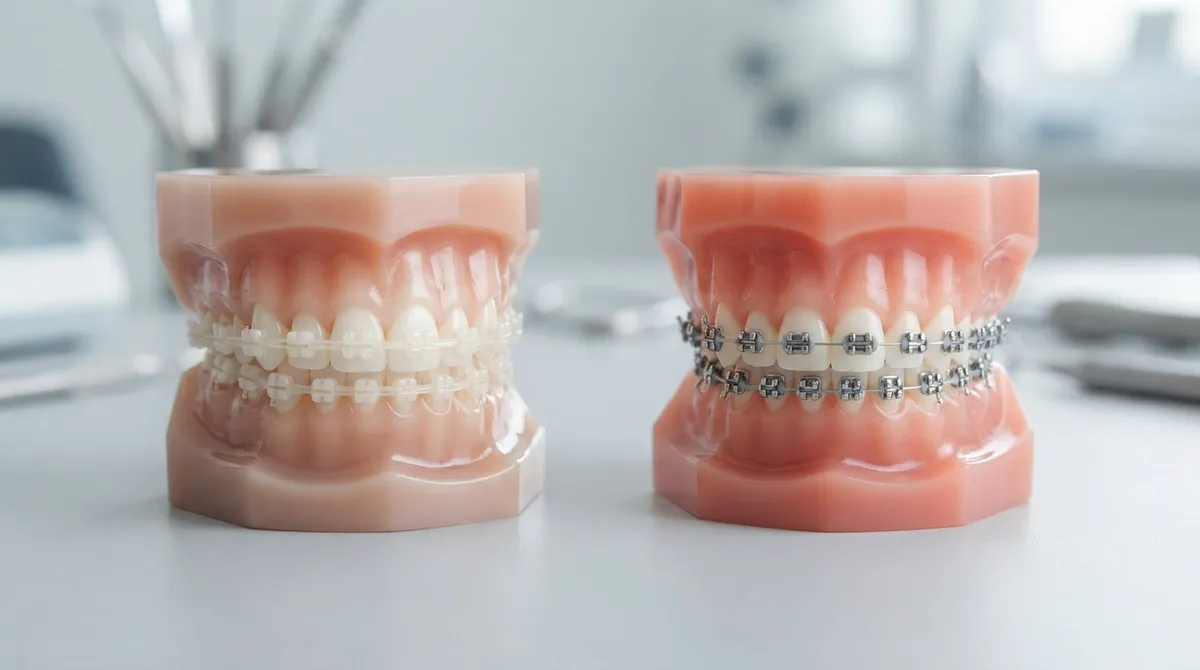
Sometimes seeing the facts laid out side by side makes everything click. Here’s a simple breakdown of how these two options compare.
| Feature | Metal Braces | Clear (Ceramic) Braces |
|---|---|---|
| Visibility | Noticeable, shiny brackets | Tooth-colored, much less noticeable |
| Average Cost (US) | $3,000-$7,000 | $4,000-$8,000 |
| Durability | Very strong, rarely chips | More brittle, can chip or crack |
| Treatment Time | About 20 months average | 12-36 months, sometimes slightly longer |
| Staining Risk | None (metal doesn’t stain) | Elastic ties can discolor from food and drink |
| Best For | Complex cases, budget-conscious patients | Moderate cases, image-conscious patients |
These numbers are typical estimates, not guarantees. Your actual cost and timeline depend on your bite, your treatment goals, and your orthodontist’s plan. That’s why a personal consultation always beats guessing from a chart.
How to Decide Which Braces Fit Your Life
Let’s walk through this step by step, like we’re chatting over coffee.
Step 1: Think About What Bothers You Most
Ask yourself honestly: does the appearance of braces worry you more than the price tag? Or is saving money your top priority? Your answer here often points you in the right direction before you even sit down with an orthodontist.
Step 2: Consider Your Daily Habits
Do you drink a lot of coffee, tea, or red wine? Are you someone who snacks on curry or tomato sauce a few times a week? These foods can stain the elastic ties on clear braces. If that sounds like your lifestyle, metal braces might save you some frustration down the road.
Step 3: Think About Durability Needs
If you or your child play contact sports, or if you know you’re rough on dental work, metal brackets hold up better against chips and breaks. Ceramic brackets are more delicate and may need extra care with crunchy or sticky foods.
Step 4: Factor in Treatment Complexity
Severe crowding or major bite issues sometimes call for the extra strength and flexibility of metal braces. Milder to moderate cases often work beautifully with either option. This is exactly the kind of thing Dr. Flor Segovia evaluates during your first orthodontic visit.
Step 5: Talk Budget and Insurance
Ceramic braces commonly cost about $1,000 to $2,000 more than metal braces. Check with your insurance provider, and ask our team about orthodontic financing options that can make either choice more manageable.
Why Some Patients Love Clear Braces
Clear braces have become a favorite among young professionals and adults getting ready for milestone events like weddings or graduations. Here’s why:
- They blend in with your natural tooth color, making them far less noticeable in photos and video calls
- They work just as well as metal braces for many mild to moderate alignment issues
- They give adults a way to fix their smile without feeling self-conscious in professional settings
- They’re a great middle ground between visible metal braces and higher-cost clear aligners
If you had braces as a teen and your teeth have shifted back, clear braces can be an appealing way to fix that relapse quietly and effectively. Many of our adult patients appreciate this discreet option, and you can read about real patient experiences on our Facebook page.
Why Metal Braces Still Win for Many Families
Don’t count metal braces out. They remain the most affordable and durable option on the market, and for good reason. Consider these benefits:
- Lower upfront cost, which matters a lot for families managing multiple kids in treatment at once
- Stronger materials that hold up through years of school lunches, sports practices, and everyday wear
- Faster average treatment time in many cases, since friction and bracket strength play a role in tooth movement
- Fun customization options, like our WildSmiles Braces, which let kids choose bracket shapes like stars, hearts, or even Mickey Mouse
For busy moms managing school schedules and after-school activities, metal braces often mean fewer emergency appointments for broken brackets. That’s one less thing to juggle during an already full week.
What About Speed and Comfort?
Career-focused adults often ask us: which option gets me results the fastest? The honest answer is that both types can move at similar speeds depending on your case. However, ceramic brackets can sometimes create slightly more friction against the wire, which may add a bit of time in select cases.
If speed matters most to you, ask about LightForce Orthodontics, our fully digital bracket system. It’s custom-designed for your teeth using 3D printing, and it can reduce treatment time by up to 45 percent compared to traditional one-size-fits-all brackets. It also offers clear and white bracket options, so you get speed and subtlety in one package.
As for comfort, both clear and metal braces feel similar day to day. Some patients report ceramic brackets feel slightly smoother against the cheeks, though this varies by design and personal sensitivity.
Caring for Your Braces the Right Way
No matter which type you choose, good habits protect your investment and your smile. Keep these tips in mind:
- Brush after every meal and floss daily to avoid plaque buildup around brackets
- Avoid hard, sticky, or crunchy foods that can chip ceramic brackets or bend metal wires
- Keep every adjustment appointment so your orthodontist can track progress and catch issues early
- Wear your retainer exactly as instructed once your braces come off, since teeth can shift back without one
Curious about what happens after treatment? Our guide on orthodontic retainers covers everything you need to know about protecting your results long term.
Getting Started at Segovia Orthodontics
At Segovia Orthodontics in Lakewood Ranch, we know choosing between clear braces vs metal braces feels personal. That’s why Dr. Flor Segovia takes time during every consultation to walk through your specific goals, budget, and lifestyle before recommending a treatment plan. Whether you’re a parent exploring options for your teen or an adult ready to finally fix that relapse, our board-certified team is here to guide you with honest, straightforward advice.
We proudly serve families throughout the Lakewood Ranch area with bilingual care in English and Spanish, flexible scheduling, and a warm, welcoming office atmosphere. You can learn more about our approach on our Why Choose Us page, or see what our Segovia Orthodontics patients say by checking out our Google Business Profile.
The Bottom Line
There’s no single “best” answer in the clear braces vs metal braces debate. It really comes down to your priorities: appearance, budget, durability, or a mix of all three. According to the American Board of Orthodontics, both options are effective treatments when properly planned and monitored by a qualified orthodontist. The real key is getting a professional evaluation before you decide anything.
Ready to find out which option fits your smile goals? Our friendly team would love to walk you through your options in person. Feel free to request an appointment today, or give us a call directly at 941-557-1333 to get your questions answered. You can also follow our smile transformations and patient stories on our Instagram page for daily inspiration. We can’t wait to help you start your journey toward a smile you’ll love showing off.
FAQs
Q: Are clear braces as effective as metal braces?
A: Yes, for most mild to moderate cases, clear braces work just as well as metal braces. The real difference comes down to appearance and durability, not effectiveness. Your orthodontist will look at your specific bite to confirm which option fits your treatment goals best.
Q: Which is faster: clear ceramic braces or metal braces?
A: Metal braces average around 20 months of treatment, while ceramic braces can take anywhere from 12 to 36 months depending on the case. Ceramic brackets sometimes create a bit more friction, which can slightly extend treatment in certain situations.
Q: How much do clear braces cost compared with metal braces?
A: Metal braces typically run $3,000 to $7,000, while clear ceramic braces usually cost $4,000 to $8,000. That’s roughly $1,000 to $2,000 more for the discreet look, though your final price depends on your treatment complexity and location.
Q: Do ceramic braces stain or turn yellow?
A: The ceramic brackets themselves resist staining pretty well, but the elastic ties holding the wire in place can pick up color from coffee, tea, and tomato-based foods. The good news is those ties get replaced at every adjustment appointment, so any staining is temporary.
Q: Can clear braces treat severe crowding, overbite, or underbite?
A: Clear braces can handle many moderate cases, but severe crowding or complex bite issues sometimes call for the added strength of metal braces. Your orthodontist will evaluate your specific situation before recommending the best path forward.
Our Service Area