Key Takeaways
-
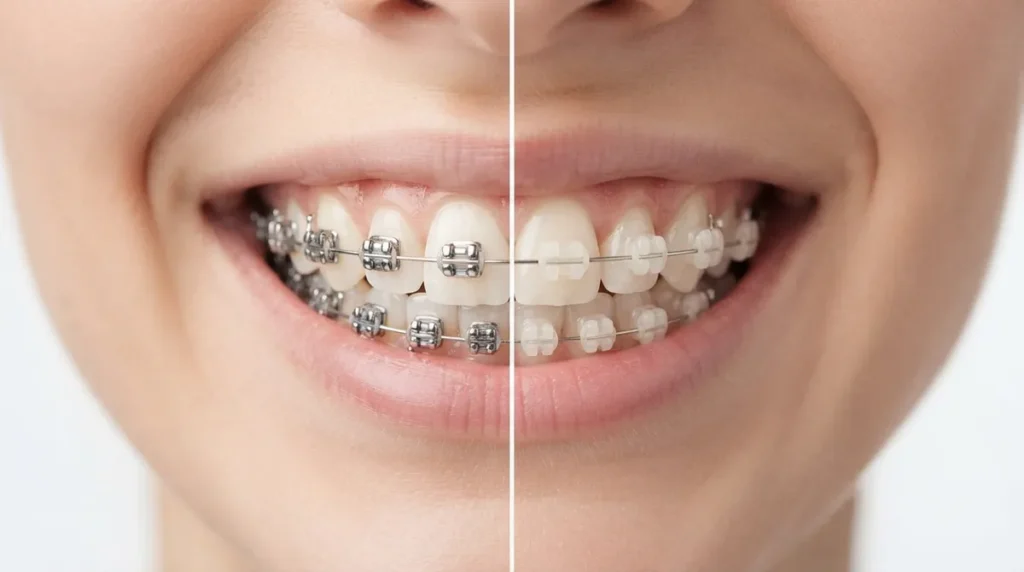
Clear braces use tooth-colored ceramic brackets that blend in with teeth, while metal braces use visible stainless steel; both are equally effective at straightening teeth but clear braces typically cost $1,000-$1,500 more.
-
Metal braces are more durable and budget-friendly, making them ideal for active kids and complex cases, while clear braces suit teens and adults prioritizing appearance but requiring extra care to prevent staining and chipping.
-
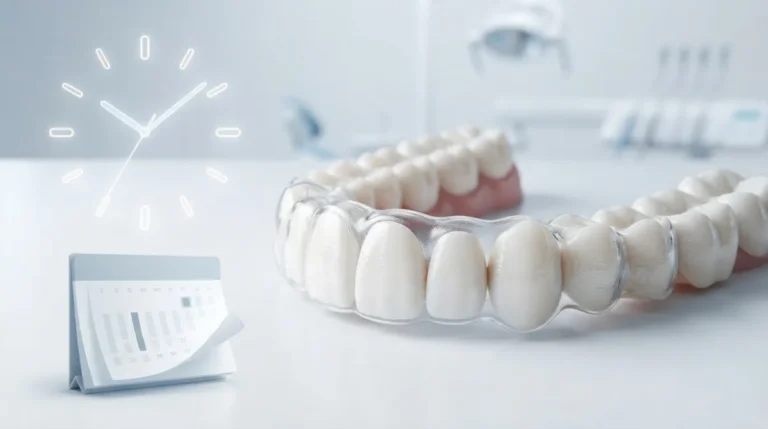
Treatment time depends on case complexity and tooth position, not bracket material; both types typically take 12-36 months, so claims that one is faster should be viewed skeptically.
-
Ceramic brackets resist staining but their elastic bands can discolor from coffee, tea, and dark foods; regular brushing and band replacement at appointments keeps clear braces looking fresh.
-
After braces are removed, consistent retainer use is essential to prevent teeth from drifting back to their original positions, protecting your investment in treatment.
-
Active lifestyle, budget constraints, appearance priorities, and your orthodontist's diagnosis of your specific bite and tooth movement needs should guide your choice between the two brace types.
Choosing braces can feel like a big decision, and honestly, that makes sense. You will wear them for many months, and they will be part of your smile every day. The good news? Both clear and metal braces can do a great job straightening teeth. The real question is which one fits you.
Maybe you are a parent helping your teen pick between options. Maybe you are a busy professional who wants a lower-profile look. Or maybe you had braces years ago and want to fix a little shifting. Whatever your story, you are in the right place.
In this guide, we will break down how clear and metal braces work, how they compare on looks, comfort, cost, and care, and how to decide. No jargon, just friendly, practical info to help you feel confident walking into your consultation.
What Are Clear and Metal Braces?
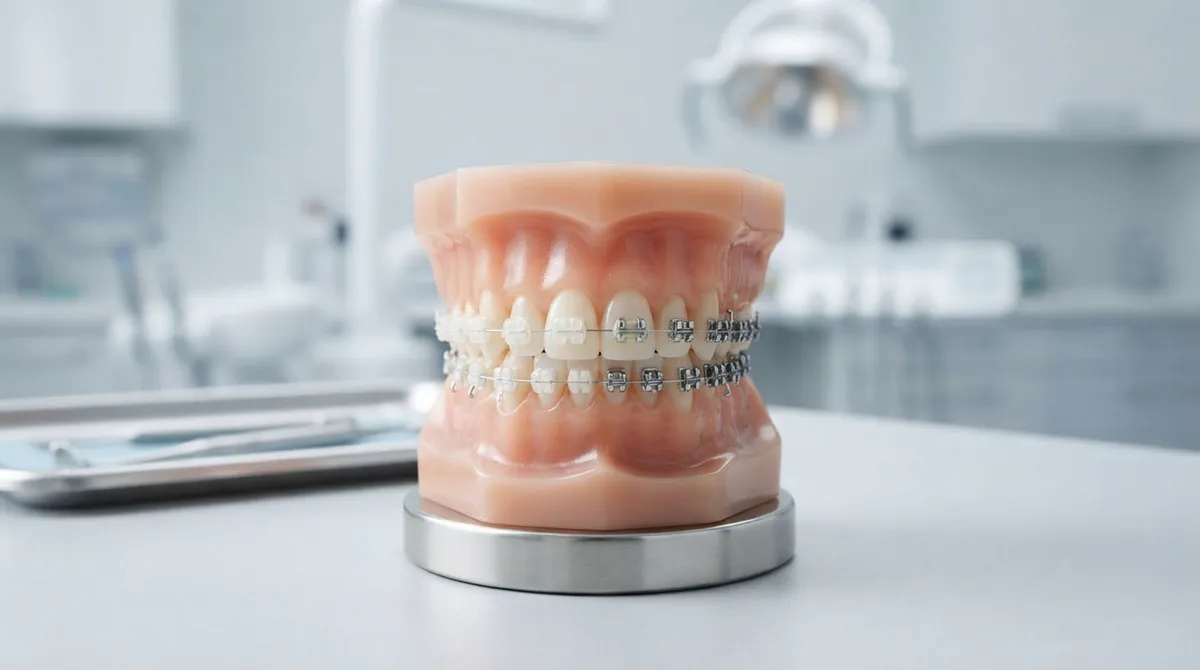
Let’s start with the basics, because the word “clear” can be confusing. When people say clear and metal braces, they are usually comparing two types of fixed braces. Both use small brackets glued to your teeth and a wire that gently guides them into place.
Metal Braces: The Tried-and-True Classic
Metal braces use stainless-steel brackets and wires. They have been helping people for decades, and they are still a top choice today. If you want to dig into why, check out these 7 reasons traditional metal braces are still a top choice.
Many people think metal braces look boring, but they do not have to! Patients can often pick colored bands to add a little personality. Kids and teens especially love this part.
Clear Braces: Tooth-Colored and Less Noticeable
Clear braces usually mean ceramic (tooth-colored) brackets. They work the same way as metal braces, with brackets and an archwire. The main difference is the bracket material. Ceramic blends in with your teeth, so they are less noticeable than shiny metal.
Here is an important point: clear braces are not the same as clear aligners. Aligners are removable plastic trays. Clear braces are fixed to your teeth, just like metal ones. You can learn more about the difference in our guide to types of braces.
Clear vs. Metal Braces: Side-by-Side Comparison
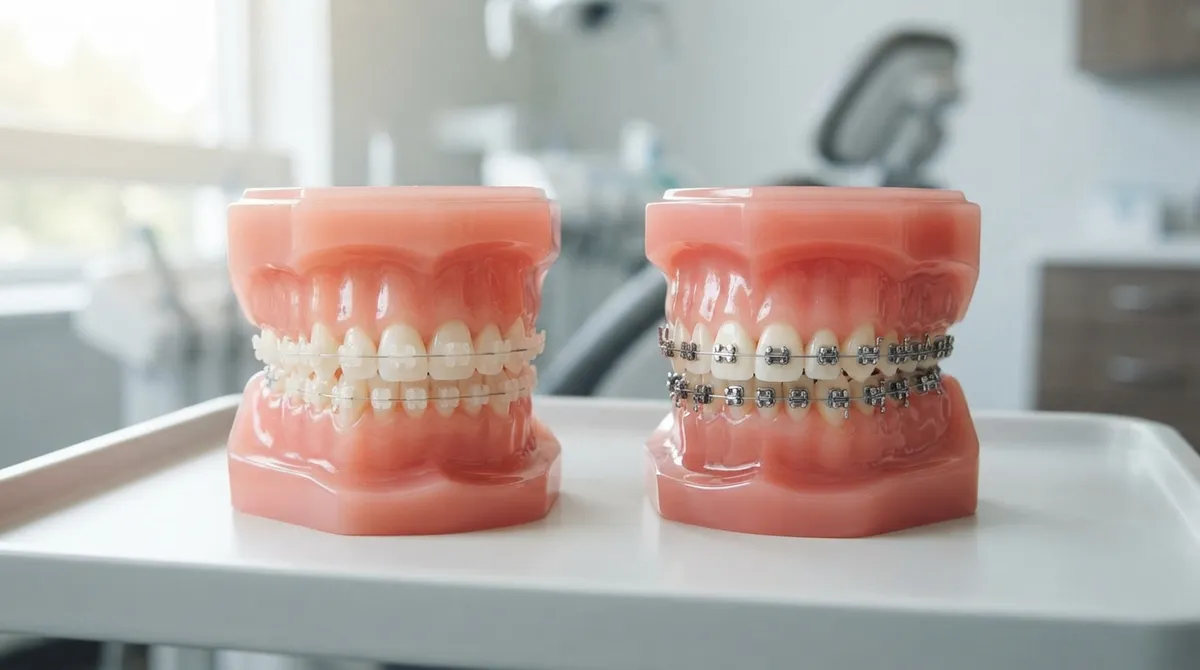
Sometimes a quick snapshot helps most. Here is how the two stack up on the things people ask about most.
| Feature | Metal Braces | Clear (Ceramic) Braces |
|---|---|---|
| Appearance | Visible stainless steel; colored bands available | Tooth-colored brackets; less noticeable, but not invisible |
| Durability | Very strong and sturdy | More brittle; may chip or break more easily |
| Typical cost range* | About $3,000–$7,000 | About $4,000–$8,500 |
| Staining risk | Minimal from brackets themselves | Bands may stain with certain foods and drinks |
| Treatment time | Depends on your case | Depends on your case |
| Best for | Active kids, teens, and complex cases | Teens and adults wanting a lower-profile look |
*Cost ranges are general U.S. estimates from consumer guides. Your actual fee depends on your location, case complexity, treatment length, and what is included. A consultation gives you a personalized number.
The Big Pros and Cons
Every option has trade-offs. Let’s look at them honestly so there are no surprises.
Why People Love Metal Braces
- Strong and reliable: Metal brackets hold up well to daily wear and tear.
- Often more budget-friendly: They generally cost less than ceramic options.
- Fun to customize: Colored bands let kids and teens show off their style.
- Great for many cases: They can treat a wide range of alignment and bite problems.
Why People Love Clear Braces
- Less noticeable: Tooth-colored brackets blend in better during photos, meetings, and big events.
- Still effective: They use the same bracket-and-wire method that straightens teeth reliably.
- A confidence boost: Many adults and teens feel more comfortable smiling right away.
Things to Keep in Mind
No option is perfect, so here is the honest side of the story.
- Metal braces are more visible. Some people feel self-conscious about that.
- Ceramic brackets can chip or break. They are more brittle than metal, so you will want to be careful with hard and crunchy foods.
- Clear braces often cost more. The material and upkeep can raise the fee.
- Clear is not invisible. They are subtle, but people can still see them up close.
Does the Type of Braces Change How Long Treatment Takes?
This is one of the most common questions we hear. The short answer: not really. Treatment time depends mostly on your teeth, not the bracket material.
Things that affect timing include how crowded or spaced your teeth are, the type of bite problem, your age, and how well you follow your care plan. Cleveland Clinic notes that clear braces treatment can range from about 12 to 36 months, depending on how severe the misalignment is. That is a wide range for a reason. Everyone’s smile is different.
So please be wary of anyone promising that one type is always faster. Your orthodontist can give you a realistic estimate after looking at your teeth, X-rays, and goals.
How to Choose: A Simple 5-Step Guide
Feeling stuck? Walk through these steps to narrow things down.
- Think about your lifestyle. Do you play contact sports or have a busy, active routine? Sturdy metal braces may be a smart fit.
- Consider how much appearance matters. If a lower-profile look is a top priority, clear braces may feel better.
- Look at your budget. Ask what the quoted fee includes, such as visits, retainers, and adjustments.
- Talk about your diagnosis. Your orthodontist may recommend one type based on your bite and tooth movement needs.
- Compare with other options. You might also want to look at clear aligners. Our post on braces vs. clear aligners can help.
Which Option Works for Which Person?
Every family and every smile is different. Here is how this often plays out for different groups.
For Parents of Kids and Teens
If you are a parent making this choice for your child, think about their daily life. Active kids often do well with metal braces because they are tough, and colored bands make treatment fun. Teens who feel shy about their smile may prefer clear brackets. Our guide on how to choose the right braces for teens goes deeper. Starting early can also help, so learn about early orthodontic treatment.
For Busy Professionals and Young Adults
Do you give presentations, meet clients, or just want a quieter look? Clear braces can feel more comfortable in work settings. They also give you a reliable option if you are not sure a removable aligner fits your habits. Take a peek at adult orthodontics for more on treatment for grown-ups.
For Big Life Events
Planning a wedding, graduation, or big milestone? Timing matters. Talk with your orthodontist early about your date so you can plan a realistic path. They can tell you what is possible and what is not.
For Adults Fixing Relapse
If you wore braces before and your teeth shifted, you are far from alone. Many adults return for a touch-up. A custom plan, often followed by a good retainer, can help protect your results. Read up on orthodontic retainers so you know what to expect.
Caring for Your Braces (Clear or Metal)
Good news: the basic care rules are the same for both. A little daily effort keeps your teeth healthy and your treatment on track.
- Brush after meals: Clean around each bracket and along the gumline.
- Floss daily: Special floss threaders or water flossers can make this easier.
- Skip the troublemakers: Hard, crunchy, and sticky foods can break brackets or bend wires. Here is a handy list of 13 foods to avoid with braces.
- Keep your appointments: Regular visits keep your treatment moving.
- See your dentist too: Routine checkups and cleanings still matter during treatment.
If something pokes you or a bracket comes loose, do not panic. It happens to lots of people. Here is what to do in an orthodontic emergency.
Do Clear Braces Stain?
Ceramic brackets themselves are fairly stain-resistant, but the small elastic bands can pick up color from things like coffee, tea, red wine, and curry. Brushing well and limiting dark drinks helps. Your orthodontist will replace the bands at your visits, which keeps things looking fresh.
What Happens After Braces?
Finishing treatment is exciting, but it is not the end of the story. Teeth like to drift back toward their old spots. That is why retainers are so important. Wearing yours as directed helps lock in your results for the long run. Think of it as the final, easy step that protects all your hard work.
Meet Your Local Orthodontic Team
At Segovia Orthodontics in Lakewood Ranch, we love helping patients of all ages find the right fit. Led by board-certified orthodontist Dr. Flor Segovia, our team offers traditional braces, clear options, and clear aligners in a warm, comfortable space. You can verify orthodontic specialist credentials through the American Board of Orthodontics, and you can read what neighbors say when you visit us on Google — Segovia Orthodontics.
Curious about our care and community? Follow along on our Instagram page or say hello on our Facebook page. We also offer flexible payment options, and you can explore orthodontic financing to see how treatment can fit your budget.
The Bottom Line
Here is the heart of it: both clear and metal braces can give you a healthy, beautiful smile. Metal braces are strong, often more affordable, and perfect for people who want a dependable option. Clear braces are a great fit if you want a lower-profile look and are comfortable with a little extra care and cost.
The best choice comes down to your goals, your lifestyle, your budget, and what your orthodontist recommends for your teeth. There is no wrong way to start. You just need the first step.
Ready to find your perfect fit? Request an appointment with our friendly team, or call us at 941-557-1333. We cannot wait to meet you and help you start smiling with confidence!
FAQs
Q: What is the difference between clear braces and metal braces?
A: Both use brackets and a wire to move your teeth. The main difference is the bracket material: clear braces use tooth-colored ceramic that blends in, while metal braces use stainless steel. Ceramic is less noticeable but usually more fragile and often costs more.
Q: Are clear braces as effective as metal braces?
A: Yes! Both types can treat many problems, like crowding, spacing, overbites, and underbites. The best choice depends on your diagnosis and treatment plan, so your orthodontist will guide you to the right fit.
Q: Do clear braces cost more than metal braces?
A: Often, yes. General U.S. estimates put metal braces around $3,000 to $7,000 and ceramic braces around $4,000 to $8,500, but your actual cost depends on your case, location, and what is included. A consultation will give you a personalized estimate.
Q: Are ceramic braces more likely to break?
A: Ceramic brackets are generally more brittle than metal, so they may chip or break more easily. Avoiding hard, crunchy, and sticky foods helps protect either type of braces.
Q: Do clear braces take longer than metal braces?
A: Not necessarily. Treatment time depends mostly on how complex your case is, not the bracket material. Your orthodontist can give you a realistic timeline after reviewing your teeth and goals.
Our Service Area