Key Takeaways
-
Most dental insurance plans cover 50% of orthodontic costs up to a lifetime maximum (typically $1,000-$1,500), so verify your specific coverage amount before starting treatment to avoid unexpected bills.
-
Orthodontic insurance is a separate benefit bucket from regular dental coverage; always confirm your orthodontist is in-network and call your insurance to ask about waiting periods, age limits, and remaining lifetime maximum.
-
Clear aligners are increasingly covered by dental insurance plans at the same rate as traditional braces, though coverage varies by plan—contact your provider to confirm before committing to treatment.
-
Adult orthodontic benefits are becoming more common as employers expand coverage beyond children, so adults should specifically ask their insurance company if adult orthodontics is included in their plan.
-
Use a pre-authorization or pre-treatment estimate from your insurance company before starting care, and combine insurance benefits with flexible in-office payment plans or FSA/HSA funds to cover remaining costs.
-
If you lack dental insurance, explore in-house discount programs, third-party financing with zero interest options, FSAs, or HSAs through your employer to make orthodontic treatment affordable.
If you’ve been thinking about braces or clear aligners, one of the first questions that pops into your head is probably: will my insurance help pay for this? You’re not alone! Navigating dental insurance for orthodontic care can feel a little overwhelming. There are terms to decode, benefits to verify, and coverage limits to track down. But here’s the good news — once you understand how dental insurance works with orthodontics, the whole process feels so much less scary. Whether you’re a busy mom looking into braces for your kid, a young professional interested in clear aligners, or an adult ready to finally fix your smile, knowing your insurance options can save you hundreds — sometimes thousands — of dollars. This guide breaks it all down in plain, simple language so you can walk into your next orthodontic appointment feeling confident and informed.

What Does “Dental Insurance Accepted” Actually Mean for Orthodontics?
When an orthodontic office says they accept dental insurance, it means they work with your insurance company directly. They can submit claims on your behalf and help you use your benefits to offset treatment costs. Not all offices work with all plans, so it’s always smart to confirm before you book.
It’s also important to understand that orthodontic benefits are often a separate part of your dental plan. Regular dental insurance covers cleanings, fillings, and X-rays. Orthodontic coverage is a different bucket of money specifically set aside for treatments like braces or aligners.
How Dental Insurance Coverage Works for Braces and Aligners
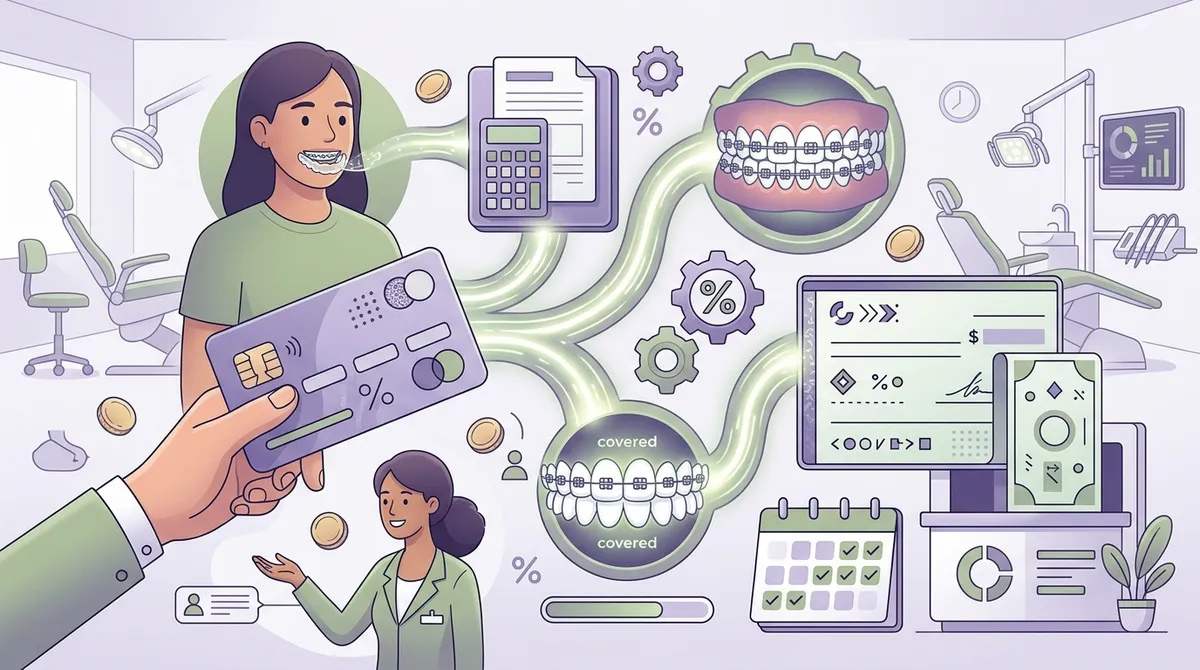
Most dental insurance plans that include orthodontic benefits work in a fairly consistent way. Here’s a simple breakdown of the key terms you’ll encounter:
- Lifetime Maximum: This is the most your plan will ever pay for orthodontic care. It’s usually a set dollar amount like $1,000 or $1,500.
- Percentage Coverage: Many plans cover 50% of orthodontic costs, up to the lifetime maximum.
- Waiting Period: Some plans make you wait 6–12 months after enrollment before orthodontic benefits kick in.
- Age Limits: Certain plans only cover orthodontics for children under 18. Some plans offer adult benefits too — always ask!
- In-Network vs. Out-of-Network: Using an in-network provider often means lower out-of-pocket costs for you.
Understanding these terms upfront helps you avoid surprises at checkout. If you’re curious about additional ways to manage costs, explore orthodontic financing options that can work alongside your insurance benefits.
Types of Insurance Plans Commonly Accepted at Orthodontic Offices
Orthodontic practices typically work with a wide range of insurance plan types. Here’s a quick look at the most common ones:
| Plan Type | How It Works | Orthodontic Coverage? |
|---|---|---|
| PPO (Preferred Provider Organization) | You choose in-network or out-of-network providers | Often yes, with a lifetime max |
| HMO (Health Maintenance Organization) | Must use network providers; referrals may be needed | Sometimes, with restrictions |
| DHMOs (Dental HMOs) | Fixed-fee dental plans through specific networks | Limited, check your plan details |
| Employer-Sponsored Plans | Coverage through your job’s benefits package | Varies widely by employer |
| Government Programs (Medicaid) | Income-based coverage, often for children | May cover pediatric orthodontics |
Not sure which type of plan you have? Check the front of your insurance card or log in to your insurance provider’s website. You can also contact us and our friendly team will help verify your benefits before your visit.
5 Steps to Using Your Dental Insurance for Orthodontic Treatment
Ready to put your benefits to work? Follow these steps to get the most out of your dental insurance when starting orthodontic care:
- Review your plan documents. Look for the orthodontic section of your summary of benefits. Note the lifetime maximum and any age restrictions.
- Call your insurance provider. Ask specifically: “Does my plan include orthodontic benefits?” and “What is my remaining lifetime orthodontic maximum?”
- Confirm the orthodontist is in-network. Ask the orthodontic office if they accept your specific plan. This can make a big difference in your costs.
- Get a pre-authorization or pre-treatment estimate. Many insurance companies will give you an estimate of what they’ll pay before treatment begins.
- Set up your payment plan for the balance. After insurance, you’ll likely still have some out-of-pocket costs. Many practices offer flexible payment options to cover the rest.
If you’re wondering what to expect at your first visit, check out our guide to what happens at your first orthodontic visit. It’s a great way to prepare before you even call your insurance company!
Does Dental Insurance Cover Braces for Adults?
This is one of the most common questions we hear from adults considering orthodontic treatment. The answer is: it depends on your plan. Historically, many dental insurance plans only covered orthodontics for children. But that’s changing.
More employers and insurance providers are now offering adult orthodontic benefits. If your plan includes adult coverage, it typically works the same way — a lifetime maximum that covers a percentage of your treatment cost. Even if the coverage is modest, every dollar helps!
Adults in Lakewood Ranch and the surrounding area are embracing orthodontic care now more than ever. Learn why adult orthodontics is such a popular and smart choice in 2026.
What Treatments Does Orthodontic Insurance Typically Cover?
Most orthodontic benefits apply to a range of treatment options. Here’s a general idea of what tends to be covered — though your specific plan details always come first:
- Traditional metal braces — Almost always covered when orthodontic benefits exist
- Ceramic (clear) braces — Often covered at the same rate as metal braces
- Clear aligners — Increasingly covered by more plans as they become mainstream
- Retainers post-treatment — Some plans contribute to retainer costs after braces
- Phase 1 early treatment — Many plans cover early orthodontics for children aged 7+
If your child is young and you’re exploring early intervention, our early orthodontic treatment page explains the benefits and what insurance typically helps cover.
What Isn’t Covered by Dental Insurance for Orthodontics?
Knowing what’s NOT covered is just as important as knowing what is. Common exclusions include:
- Treatment that starts before the waiting period ends
- Benefits for adults when the plan only covers children
- Orthodontic care deemed “cosmetic” with no functional need
- Lost or broken retainers (often a separate out-of-pocket expense)
- Treatment at an out-of-network provider (though partial benefits may still apply)
Reading the fine print sounds boring, but it’s really worth it. Even a quick 10-minute review of your plan can save you from unexpected bills down the road.
How to Maximize Your Orthodontic Insurance Benefits
Here are some smart strategies to get the most out of your dental insurance when it comes to orthodontic care:
- Start treatment before your plan year resets. If your plan year ends soon, you may be able to get your lifetime maximum applied sooner.
- Use a Flexible Spending Account (FSA) or Health Savings Account (HSA). These pre-tax accounts can cover what insurance doesn’t.
- Ask about in-house payment plans. Combine your insurance benefits with a flexible monthly payment plan for the remaining balance. Learn more about how flexible payment plans make orthodontic care affordable.
You can also explore our detailed guide on how to use orthodontics insurance to save on your smile for even more money-saving tips.
Insurance for Teen Orthodontic Treatment
Teens are the most common orthodontic patients, and the good news is that most dental insurance plans with orthodontic benefits are designed with kids and teens in mind. If your teenager needs braces or aligners, there’s a solid chance your plan will help cover a meaningful portion of the cost.
At Segovia Orthodontics at Lakewood Ranch, we make the insurance process as smooth as possible for families. Our team verifies benefits, handles paperwork, and explains exactly what your plan covers before treatment begins. Teen orthodontic treatment doesn’t have to be a financial headache — and we’re here to make sure it isn’t.
If you’d like to see why so many local families trust us with their teens’ smiles, visit us on Google — Segovia Orthodontics and read the reviews straight from real Lakewood Ranch families!
Questions to Ask Your Insurance Company Before Starting Treatment
Before you commit to orthodontic care, arm yourself with these important questions for your insurance provider:
- Does my plan include orthodontic benefits for my age group?
- What is my lifetime orthodontic maximum?
- Has any of my lifetime maximum already been used?
- Is there a waiting period before I can use my orthodontic benefits?
- Does my plan cover clear aligners, or only traditional braces?
- What percentage of treatment costs does my plan cover?
- Is my orthodontist considered in-network under my plan?
Writing down the answers to these questions makes your orthodontist consultation so much more productive. You’ll know exactly what you’re working with before you sit down with the doctor.
Comparing Insurance vs. No Insurance: What to Expect
| Scenario | Estimated Cost Without Insurance | Estimated Cost With Insurance |
|---|---|---|
| Metal Braces (Child) | $3,500 – $5,000 | $2,000 – $3,500 (after benefits) |
| Metal Braces (Adult) | $4,000 – $6,000 | $2,500 – $4,500 (after benefits) |
| Clear Aligners | $3,500 – $7,000 | $2,000 – $5,500 (after benefits) |
| Early Treatment (Phase 1) | $2,000 – $3,500 | $1,000 – $2,500 (after benefits) |
These are general estimates. Your actual costs will vary based on your specific treatment plan and insurance coverage. The American Board of Orthodontics recommends getting a thorough evaluation to understand your exact treatment needs before estimating costs.
What If You Don’t Have Dental Insurance?
No insurance? No problem! Many orthodontic offices — including family-friendly practices right here in Lakewood Ranch — offer flexible financing and payment plans to make care accessible for everyone. You might also consider:
- In-house discount programs offered by some orthodontic offices
- Third-party financing through plans with low or zero interest
- Flexible Spending Accounts (FSAs) through your employer
- Health Savings Accounts (HSAs) if you have a high-deductible health plan
For a deep dive into your options, our guide to how to afford your best smile with orthodontics financing covers everything you need to know. You can also follow us on our Instagram page where we share tips, patient stories, and updates on current promotions.
Why Choose a Practice That Makes Insurance Easy
Not all orthodontic offices handle insurance the same way. When you work with a practice that actively supports you through the insurance process, the experience is so much smoother. Look for an office that:
- Verifies your benefits before your first appointment
- Accepts a wide range of insurance plans
- Has a dedicated team member to handle insurance questions
- Offers transparent pricing and clear explanations of your costs
- Provides flexible payment plans for any remaining balance
At Segovia Orthodontics, led by Dr. Flor Segovia, the team is committed to making orthodontic care accessible and stress-free for every patient. She is a board-certified orthodontist who combines expertise with genuine warmth — and her team goes the extra mile to help you understand your financial options. You can also connect with the community on our Facebook page to see the smiles they’ve helped transform.
Ready to Use Your Dental Insurance for a Beautiful Smile?
You’ve worked hard to earn those benefits — let’s put them to work for your smile! Whether you’re looking into types of braces, exploring clear aligner options, or just starting to research your choices, the first step is always a conversation. Our team at Segovia Orthodontics is here to walk you through your insurance coverage, answer your questions, and build a treatment plan that fits your life and your budget.
Don’t wait to get the smile you deserve. Request your appointment today and let us take the guesswork out of using your dental insurance for orthodontic care. We can’t wait to meet you!
FAQs
Q: Does dental insurance cover clear aligners, or just traditional braces?
A: Great news — many dental insurance plans now cover clear aligners just like they cover traditional braces! The key is to call your insurance provider and ask specifically whether your orthodontic benefits apply to aligner treatment. Coverage has expanded a lot in recent years, so it’s always worth checking.
Q: How do I know if my orthodontist accepts my dental insurance plan?
A: The easiest way is to simply call the orthodontic office and give them your insurance information. Most offices — including Segovia Orthodontics at Lakewood Ranch — are happy to verify your benefits before your first visit so there are no surprises. It only takes a few minutes and saves you a lot of stress!
Q: What happens if my dental insurance doesn’t fully cover my orthodontic treatment?
A: That’s totally normal — most plans only cover a portion of treatment costs up to a lifetime maximum. The remaining balance can usually be covered through flexible in-office payment plans, FSA/HSA funds, or third-party financing options. Your orthodontic team can walk you through all the options available to you.
Q: Does dental insurance cover orthodontic treatment for adults?
A: It depends on your specific plan! Historically, many plans only covered kids and teens, but more adult orthodontic benefits are available today than ever before. Check your plan documents or call your insurance company to find out if adult orthodontic coverage is included in your policy.
Q: What is an orthodontic lifetime maximum, and how does it work?
A: A lifetime maximum is the total dollar amount your insurance plan will ever pay toward orthodontic treatment — for your entire life, not just per year. For example, if your lifetime maximum is $1,500 and your braces cost $5,000, insurance covers $1,500 and you pay the remaining $3,500. It’s a one-time benefit, so once it’s used, it’s gone!
Our Service Area