Key Takeaways
-
Braces are superior for complex orthodontic cases like severe crowding, significant bite problems, and require no patient compliance, while Invisalign works best for mild-to-moderate issues and demands 20-22 hours daily wear discipline.
-
Treatment duration differs significantly: Invisalign typically takes 6-18 months versus braces’ 18 months to 3 years, making clear aligners faster for simpler cases but braces more effective for complex corrections.
-
Invisalign’s removability allows unrestricted eating and easier oral hygiene, but requires strong patient discipline to maintain consistency, whereas braces are always working but restrict certain foods and complicate cleaning.
-
Cost between Invisalign and braces is comparable and depends on case complexity, not treatment type—flexible financing plans make both accessible, so cost shouldn’t be your sole decision factor.
-
Invisalign is nearly invisible making it ideal for professionals and image-conscious patients, while modern clear ceramic braces offer a discreet alternative for those needing treatment for complex cases.
-
Retainers are mandatory after either treatment to prevent tooth relapse, making post-treatment compliance equally important regardless of which orthodontic option you choose.
Choosing between Invisalign and braces is one of the biggest decisions you’ll make on your smile journey. Whether you’re a mom researching options for your child, a young professional wanting a discreet fix, or an adult ready to finally address that shifted smile — this decision matters. Both treatments straighten teeth effectively, but they work in very different ways. The right choice depends on your lifestyle, your dental needs, and your personal goals. In this friendly guide, we’ll break down everything you need to know about Invisalign vs braces so you can walk into your orthodontic consultation feeling confident and informed. Spoiler alert: there’s no universally “right” answer — but there IS a right answer for you.

What Are Braces and How Do They Work?
Traditional braces use metal brackets bonded to your teeth, connected by wires. The wire is gradually tightened over time, applying steady pressure to move teeth into their correct positions. Braces are fixed — meaning you wear them 24/7 until your treatment is complete. They are one of the most tried-and-true methods in orthodontics, with decades of proven results.
Today’s braces have come a long way from the bulky metal of the past. You can learn more about all the exciting options by visiting our types of braces page. From clear ceramic brackets to fun, personalized styles, modern braces are more comfortable and customizable than ever before.
What Is Invisalign and How Does It Work?
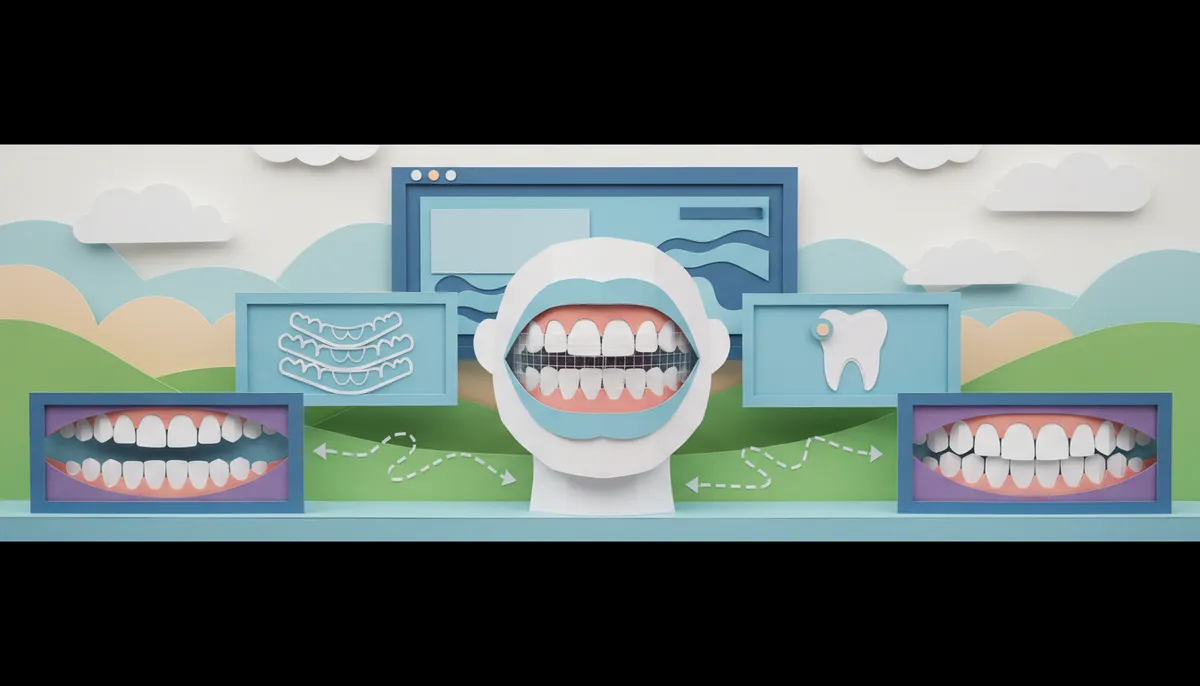
Invisalign uses a series of custom-made, clear plastic aligners to gradually shift your teeth. Each aligner is worn for about one to two weeks, then replaced with the next set in the series. The aligners are removable, which means you take them out to eat, drink, brush, and floss. You wear them for about 20 to 22 hours per day for best results.
Clear aligners like Invisalign are a popular choice for teens and adults who want a more discreet treatment option. To dive deeper into how they work, check out our clear aligners page for all the details.
Invisalign vs Braces: A Side-by-Side Comparison
Let’s make this easy. Here’s a quick comparison of the two most popular orthodontic treatments so you can see the differences at a glance.
| Feature | Braces | Invisalign / Clear Aligners |
|---|---|---|
| Visibility | Visible (metal or clear options) | Nearly invisible |
| Removability | Fixed (cannot remove) | Removable |
| Eating restrictions | Yes (avoid hard/sticky foods) | None (remove to eat) |
| Oral hygiene | More effort required | Easier (remove to brush/floss) |
| Best for complex cases | Yes | Mild to moderate cases |
| Treatment duration | 18 months – 3 years | 6 months – 18 months |
| Discipline required | Low (fixed in place) | High (must wear consistently) |
| Comfort | Mild soreness after adjustments | Generally more comfortable |
Who Is a Good Candidate for Braces?
Braces are often recommended for more complex orthodontic issues. They give your orthodontist precise control over tooth movement. Here are some situations where braces may be the better choice:
- Severe crowding or spacing issues
- Significant overbite, underbite, or crossbite
- Younger children and early treatment cases
- Patients who may struggle with aligner compliance
- Cases requiring complex rotations or vertical movements
For children starting early treatment, braces are often the go-to recommendation. You can learn more about what to expect through our early orthodontic treatment page. And for teens, our teen orthodontic treatment page covers all the age-specific options available.
Who Is a Good Candidate for Invisalign?
Invisalign works beautifully for a wide range of cases, especially mild to moderate alignment issues. It’s a favorite among adults and teens who want to straighten their teeth without drawing attention. Good candidates include:
- Adults in professional or social settings
- Teens who are responsible and disciplined
- People preparing for a big event like a wedding or graduation
- Adults correcting relapse from previous orthodontic treatment
- Anyone with mild crowding, spacing, or bite issues
If you’re an adult exploring your options, our adult orthodontics page is a great place to start. Adults make up a growing portion of orthodontic patients in 2026, and clear aligners are a huge reason why.
Key Factors to Consider When Choosing
Still not sure which treatment suits you best? Here are the top factors to weigh when deciding between Invisalign and braces:
1. Your Lifestyle and Daily Habits
Do you eat on the go frequently? Do you play contact sports? Invisalign’s removability is a lifestyle perk, but it also means you’re responsible for wearing your aligners consistently. Braces take that decision off your plate — they’re always working, even when you forget.
2. Your Treatment Goals and Complexity
Some dental issues simply respond better to braces. More complex bite problems and severe misalignment often require the precision that only fixed appliances can provide. Understanding your specific common orthodontic problems is key to making the right call.
3. Your Comfort with Visibility
If you’re a career-focused professional or a life event planner counting down to a big occasion, the look of your treatment matters. Invisalign aligners are nearly invisible, making them a top pick for image-conscious patients. That said, clear ceramic braces are also a discreet option worth exploring.
4. Budget and Financing Options
Both treatments vary in cost depending on the complexity of your case. The good news is that flexible payment plans make both options more accessible than you might think. Check out our orthodontic financing options to find a plan that fits your budget comfortably.
5. Your Child’s Age and Maturity
For younger kids, braces are usually the recommended option. Teens can do well with either, depending on their maturity level. A thorough evaluation at your first orthodontic visit will help determine the best path forward for your child.
Pros and Cons at a Glance
Here’s a quick breakdown to help you summarize the key pros and cons of each option:
Braces
- Pro: Highly effective for complex cases
- Pro: No compliance required (always in place)
- Pro: Often more affordable for complex treatments
- Con: Visible on teeth
- Con: Food restrictions apply
- Con: Harder to clean around brackets and wires
Invisalign / Clear Aligners
- Pro: Nearly invisible appearance
- Pro: Removable for eating and oral hygiene
- Pro: Comfortable with no sharp brackets
- Con: Requires strong patient discipline
- Con: May not suit very complex cases
- Con: Aligners can be lost or forgotten
What Happens After Treatment?
No matter which treatment you choose, the journey doesn’t end when your braces come off or your last aligner is complete. Retainers are a must to keep your smile looking its best. Without them, teeth can shift back over time — and nobody wants that after all the work they’ve put in!
Learn all about post-treatment care by visiting our orthodontic retainers page. Wearing your retainer as directed is one of the simplest ways to protect your investment in a beautiful smile.
Why Choose a Board-Certified Orthodontist?
Whether you go with braces or Invisalign, who you choose to perform your treatment matters enormously. A board-certified orthodontist has completed advanced training beyond dental school and passed rigorous exams set by the American Board of Orthodontics. That means you’re getting care from someone with deep expertise in moving teeth safely and effectively.
At Segovia Orthodontics, Dr. Flor Segovia is a board-certified orthodontist who combines advanced technology with a warm, personalized approach. She offers bilingual care in English and Spanish, making every patient feel right at home. Her practice uses advanced orthodontic technology to ensure the most accurate and comfortable treatment possible.
Steps to Take Before Making Your Decision
Ready to move forward? Here’s a simple step-by-step process to help you get started:
- Schedule a consultation: Book an evaluation with a qualified orthodontist to assess your specific needs.
- Review your treatment options: Ask your orthodontist to explain which treatments are suitable for your case and why.
- Ask about technology: Find out what digital tools and imaging are used to plan your treatment.
- Explore financing: Review payment plans and insurance benefits to understand what fits your budget.
- Make your decision: Choose the option that best aligns with your dental needs, lifestyle, and goals.
We also invite you to follow along with real patient stories and tips on our Facebook page and our Instagram page for behind-the-scenes looks at treatment options and smile transformations.
Ready to Start Your Smile Journey?
The Invisalign vs braces debate doesn’t have to be overwhelming. With the right guidance from a trusted orthodontist, you’ll have a clear path forward that fits your life perfectly. Whether you’re a busy mom, a young professional, or someone who’s been waiting for the right moment — now is a great time to take that first step.
At Segovia Orthodontics at Lakewood Ranch, we’d love to help you explore all your options in a friendly, judgment-free environment. Visit us on Google to read what our patients are saying, and see why so many families in Lakewood Ranch trust us with their smiles. You can also explore our why choose us page to learn more about what makes our practice special.
Your perfect smile is closer than you think. Take the next step today and schedule your consultation with our team — we can’t wait to meet you and help you shine!
FAQs
Q: Is Invisalign more expensive than braces?
A: The cost of Invisalign and braces can be quite similar, depending on your case complexity and treatment length. Many orthodontic practices offer flexible financing plans to make both options affordable — so don’t let cost alone steer your decision before you’ve had a consultation!
Q: Can teenagers use Invisalign instead of braces?
A: Absolutely! Many teens do wonderfully with Invisalign, especially those who are responsible about wearing their aligners consistently. Your orthodontist will evaluate your teen’s specific needs and maturity level to recommend the best fit.
Q: How long does Invisalign treatment take compared to braces?
A: Invisalign treatment typically ranges from 6 to 18 months, while braces can take anywhere from 18 months to 3 years depending on complexity. Your orthodontist will give you a personalized timeline after reviewing your unique case.
Q: Do braces or Invisalign work better for severe bite problems?
A: For severe bite issues like significant overbites, underbites, or crossbites, traditional braces often provide more precise control over complex tooth movements. That said, advances in clear aligner technology have made it possible to treat more complex cases than ever before — a consultation will help clarify which is right for you.
Q: What happens after I finish braces or Invisalign treatment?
A: After completing either treatment, you’ll need to wear a retainer to keep your teeth in their new positions. Retainers are a simple but essential step to protect your beautiful results long-term — think of it as the easy maintenance phase after all the hard work!
Our Service Area