Key Takeaways
-
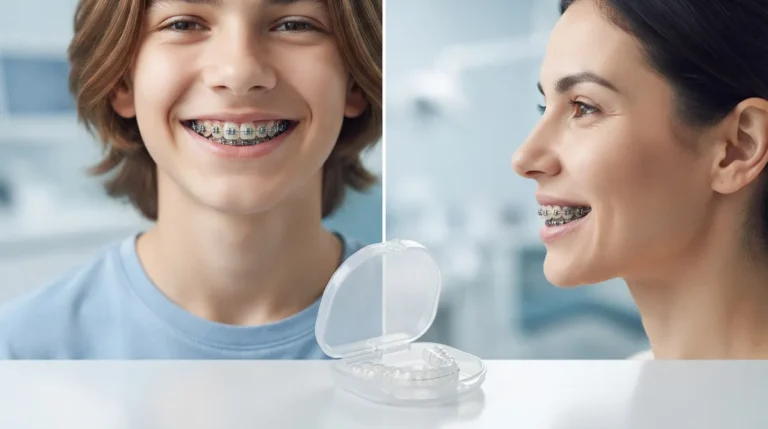
Aligners require consistent 22+ hours daily wear to be effective, making them unsuitable for patients lacking discipline, while braces work automatically once bonded and are better for complex cases like severe crowding or bite issues.
-
Clear aligners typically complete treatment in 18 months versus 24 months for traditional braces, making them ideal if you have an upcoming major event like a wedding or career milestone.
-
Braces outperform aligners for complex orthodontic problems including severe crowding, significant bite corrections, and major tooth rotations, according to research on occlusal contacts and torque control.
-
Cost ranges are similar ($2,500-$7,500 for braces, $3,000-$8,000 for aligners), but advanced options like LightForce custom braces can speed treatment by up to 45% compared to traditional brackets.
-
Clear aligners offer superior discretion and easier oral hygiene since trays are removable for eating and flossing, making them particularly popular with adults in professional settings.
-
Both treatment options require retainers after completion to prevent orthodontic relapse, making post-treatment retention essential regardless of which path you choose.
Standing in front of the mirror, wondering if you should get aligners or braces, is a moment almost every orthodontic patient shares. Maybe you’re a parent watching your child’s smile change. Maybe you’re an adult finally ready to fix that shifting front tooth before a big wedding. Whatever brought you here, you’re asking the right question, and you’re not alone in feeling a little overwhelmed by the choices.
Here’s the good news: both braces and clear aligners work incredibly well. The best choice really comes down to your specific smile, your daily habits, and your comfort level with each option. At Segovia Orthodontics, Dr. Flor Segovia and her team help patients of every age sort through this decision every single day, and we’re going to walk you through exactly how they do it.
By the end of this article, you’ll understand the real differences between aligners and braces, what the research actually says about each, and how to figure out which path fits your life best. Let’s get into it.
What’s the Real Difference Between Aligners and Braces?
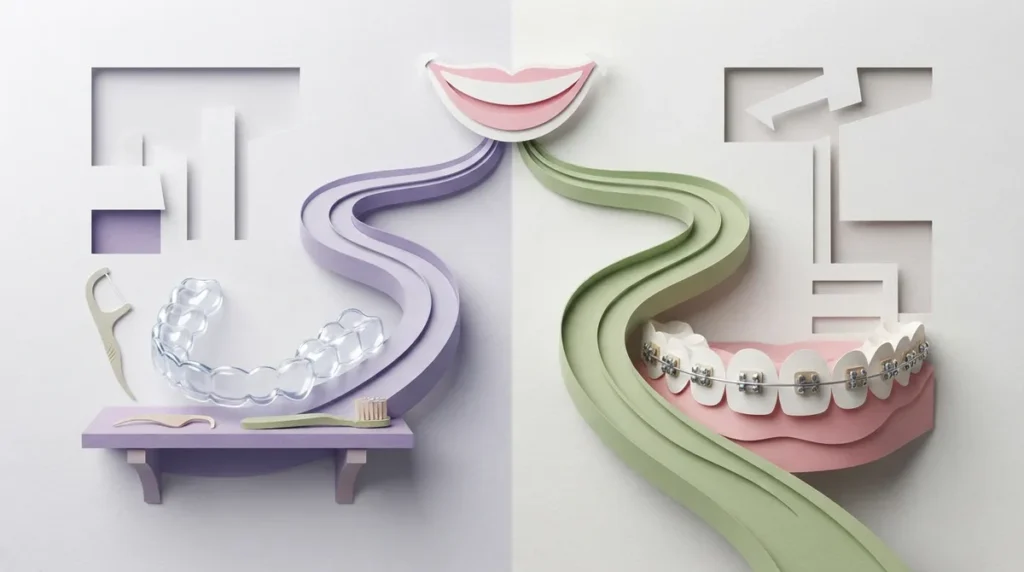
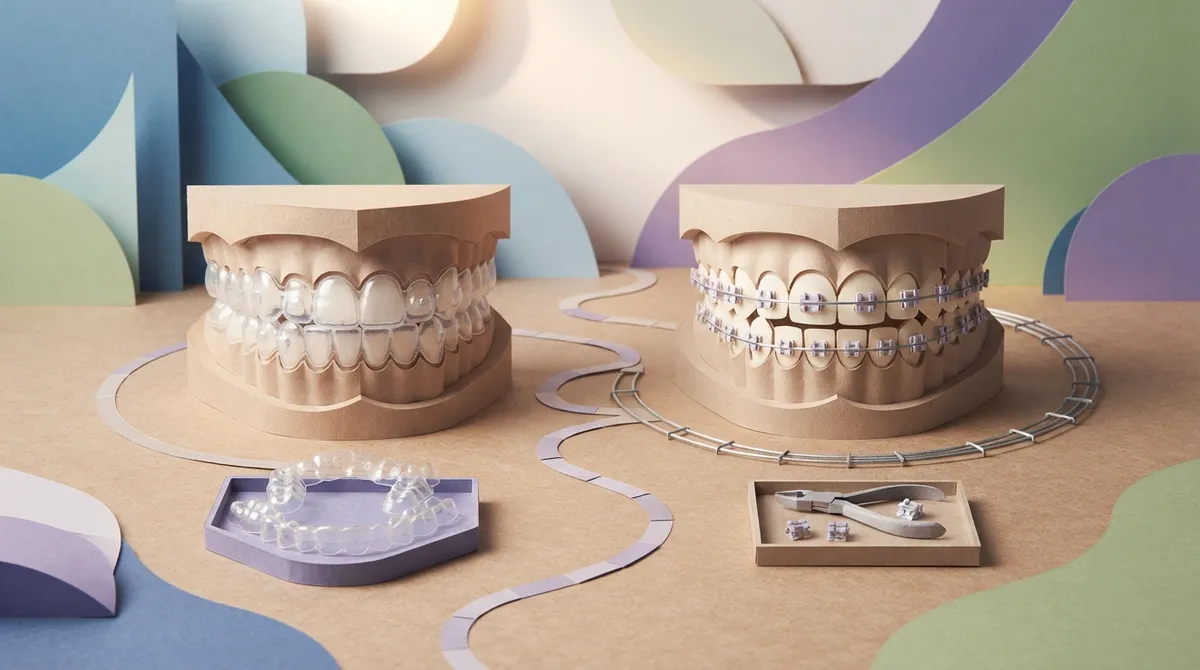
Braces are fixed appliances. Brackets get bonded to your teeth, and wires connect them to gently guide teeth into place over time. They stay on your teeth the entire treatment, working around the clock without you having to think about it.
Clear aligners are different. They’re removable, custom-made plastic trays that you swap out every one to two weeks. They’re nearly invisible and can be taken out to eat, brush, and floss. But here’s the catch: they only work if you wear them consistently.
According to the American Association of Orthodontists, clear aligners need to be worn at least 22 hours a day for the best results. That means aligners require a level of daily discipline that braces simply don’t ask of you.
A Quick Side-by-Side Comparison
| Feature | Braces | Clear Aligners |
|---|---|---|
| Visibility | Noticeable (unless clear/ceramic) | Nearly invisible |
| Removable | No | Yes |
| Best for | Complex bite and crowding issues | Mild to moderate misalignment |
| Average treatment time | About 24 months | About 18 months |
| Daily wear requirement | Always on | 22+ hours per day |
| Eating restrictions | Yes, avoid sticky/hard foods | None, just remove trays first |
| Typical cost range | $2,500–$7,500 | $3,000–$8,000 |
These numbers can shift depending on your specific case, so it’s always best to request an appointment for a personalized evaluation.
When Braces Might Be Your Better Choice
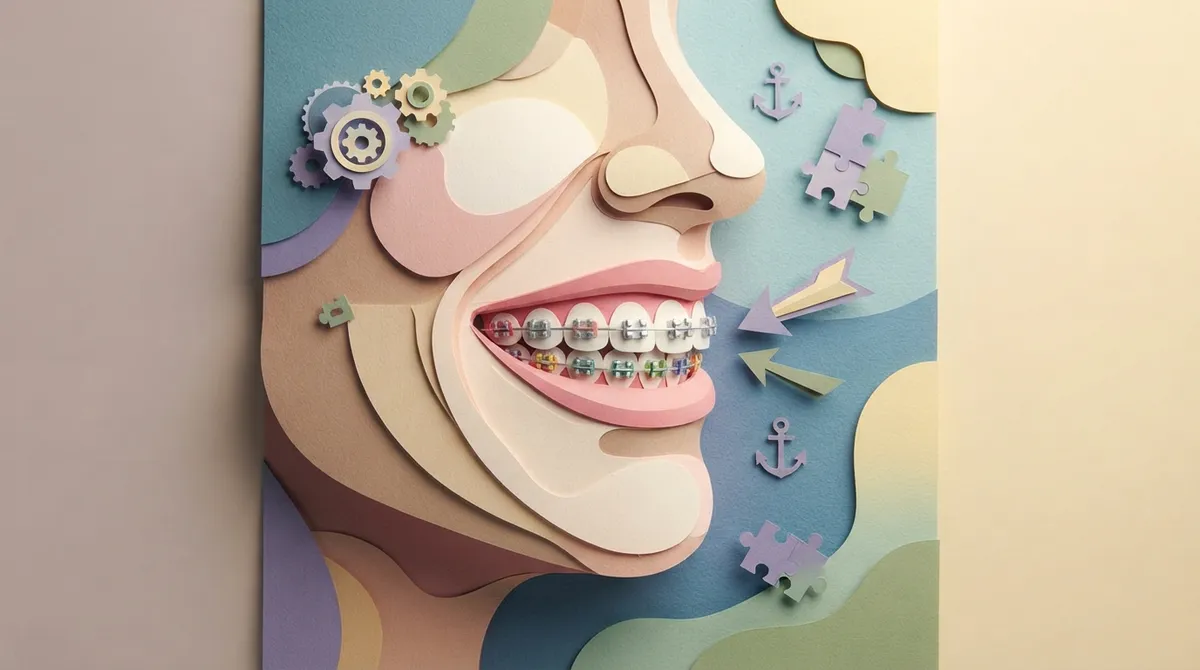
Braces are still the gold standard for complex orthodontic problems. If you or your child has severe crowding, significant bite issues, or teeth that need major rotation, braces often deliver more predictable results.
Research published in a comparative study on PMC’s orthodontic treatment review found that braces outperform aligners in areas like occlusal contacts, torque control, and retention of tooth position. In plain terms, braces are simply more powerful for tricky movements.
Braces also don’t rely on patient compliance the way aligners do. Once they’re on, they’re working. This makes them a great fit for:
- Kids and younger teens who may forget to wear removable trays
- Patients with complex bite corrections
- People who want a “set it and forget it” treatment
- Cases involving significant tooth rotation or vertical movement
- Patients on a tighter budget, since braces often start lower in price
If you’re curious about modern options, LightForce Orthodontics offers custom 3D-printed brackets that fit your teeth precisely, which can speed up treatment by up to 45% compared to traditional one-size-fits-all brackets. For kids who need some extra motivation to keep up with brushing and flossing, WildSmiles Braces turn treatment into something fun, with shapes like stars, hearts, and even Mickey Mouse brackets.
Types of Braces Worth Knowing About
- Traditional metal braces – durable, affordable, and effective for nearly every case
- Clear ceramic braces – same strength as metal, but far less noticeable
- LightForce custom braces – digitally designed brackets for faster, more precise treatment
- WildSmiles braces – fun bracket shapes designed especially for kids and teens
You can learn more about each option on our Types of Braces page.
When Clear Aligners Might Be Right for You
Clear aligners shine when it comes to mild-to-moderate crowding, spacing issues, and minor bite corrections. They’re a wonderful option if you want your treatment to stay under the radar, whether you’re heading into client meetings or walking down the aisle.
Healthline reports that aligner treatment often finishes in about 18 months compared to 24 months for traditional braces in comparable cases. That’s a meaningful difference if you’re eyeing a big event on the calendar.
Adults especially tend to love aligners. A comparative study on adult patients found clear aligners came with higher satisfaction rates and less discomfort than traditional braces. That’s a big deal if you’re juggling a demanding job and don’t want a mouth full of metal during video calls.
Our practice offers Clear Aligners including Angel Aligners, which use a smart “7+3” wear schedule (seven days with a flexible tray, then three days with a firmer one) to help speed up tooth movement. Many patients also appreciate that Angel Aligners tend to cost less than premium aligner brands while still using advanced 3D digital planning.
Aligners Might Be a Great Fit If You:
- Have mild to moderate crowding or spacing
- Want a nearly invisible treatment option
- Are motivated and disciplined about wearing trays consistently
- Prefer being able to remove your appliance for special occasions
- Want easier brushing and flossing during treatment
- Are preparing for a wedding, graduation, or big career milestone
How Do You Know Which One Is Right for You?
This is where a real orthodontic evaluation makes all the difference. No online quiz can replace a hands-on exam with X-rays, digital scans, and a conversation about your goals. Here’s a simple process to help you think it through before your visit:
- Consider how complex your case might be. Severe crowding or bite issues often lean toward braces.
- Think honestly about your discipline level. Can you commit to wearing trays 22 hours a day?
- Factor in your lifestyle. Do you have upcoming events where visibility matters?
- Review your budget and financing options, since both treatments vary in cost.
- Schedule a consultation to get a professional opinion tailored to your smile.
Dr. Flor Segovia is a board-certified orthodontist credentialed by the American Board of Orthodontics, which means she’s held to rigorous standards of training and expertise. She uses advanced orthodontic technology to map out exactly what your teeth need, then walks you through your options in plain language.
What About Cost, Insurance, and Timelines?
Cost is often the deciding factor for many families. Braces typically range from $2,500 to $7,500, while clear aligners run about $3,000 to $8,000, depending on your case complexity. Both numbers can shift based on your specific treatment plan and length.
The good news is that neither option has to break your budget. Segovia Orthodontics offers orthodontic financing to help spread out payments in a way that works for your family. It’s worth asking about flexible plans during your first visit.
Treatment Time Snapshot
- Braces: often around 24 months on average
- Clear aligners: often around 18 months on average
- LightForce custom braces: can be up to 45% faster than traditional brackets
- Angel Aligners: accelerated movement thanks to the 7+3 wear schedule
Keep in mind these are averages. Your actual timeline depends on how complex your case is and how consistently you follow your treatment plan.
Caring for Your Smile During Treatment
Good oral hygiene matters no matter which option you choose. With braces, you’ll need to brush carefully around brackets and wires, and floss with a little extra patience. With aligners, you simply remove the trays to brush and floss like normal, which many patients find refreshingly simple.
Interestingly, WildSmiles brackets are designed to make brushing easier to monitor. The unique bracket shapes stay clearly visible when brushing is done well, giving kids (and parents) a visual cue that teeth are getting properly cleaned.
Whichever you choose, don’t forget the final step: retainers. Both braces and aligner patients need orthodontic retainers afterward to prevent teeth from drifting back, a problem known as orthodontic relapse. Skipping this step is one of the most common regrets we hear from patients years later.
Why Families Trust Segovia Orthodontics With This Decision
Choosing between aligners and braces isn’t something you have to figure out alone. At Segovia Orthodontics, we’ve guided countless families and adults through this exact decision, from busy professionals prepping for a career move to teens getting ready for their first day of high school with a confident smile.
Our first orthodontic visit is designed to be relaxed and informative, not rushed or confusing. We’ll walk through your X-rays, talk about your goals, and give you an honest recommendation, not just a sales pitch. You can also check out our Why Choose Us page to see what makes our approach different.
Curious what real patients say about their experience? Feel free to visit us on Google — Segovia Orthodontics to read reviews from Lakewood Ranch families just like yours. You can also follow along with smile transformations and behind-the-scenes moments on our Facebook page and our Instagram page.
Making Your Final Decision
Here’s a simple way to sum it all up. If your case is complex, or you know you’re not disciplined about wearing something 22 hours a day, braces are likely your best bet. If your case is mild to moderate and you want something discreet that fits your lifestyle, clear aligners could be perfect for you.
Either way, you’re not choosing wrong. Both options lead to the same destination: a healthier, straighter, more confident smile. The real key is picking the path that fits your life, your goals, and your personality.
Ready to get a clear answer for your specific smile? Request an appointment with our Lakewood Ranch team today, or call us at 941-557-1333 to speak with someone who can help you take the next step with confidence.
FAQs
Q: Should I get aligners or braces for crowded teeth?
A: It really depends on how severe the crowding is! Mild to moderate crowding often responds beautifully to clear aligners, but more complex crowding usually needs the extra strength of braces. Your orthodontist can tell you exactly where your case falls after a quick evaluation.
Q: Are aligners as effective as braces for bite problems?
A: Aligners work great for many bite issues, but braces still have the edge for more complicated bite corrections. Research shows braces perform better for things like torque control and overall bite alignment. If your bite issue is more involved, your orthodontist may gently steer you toward braces.
Q: How do I know if I’m a candidate for clear aligners?
A: The best way to know for sure is through a hands-on evaluation with digital scans and X-rays. Generally, mild to moderate spacing or crowding cases are great candidates. Come in for a consultation and we’ll walk you through your specific options.
Q: Do braces work faster than aligners?
A: Actually, it’s often the opposite! Studies show aligner treatment averages around 18 months, compared to about 24 months for traditional braces in similar cases. That said, complex cases sometimes need the extra time and control that braces provide.
Q: Do I need a retainer after aligners or braces?
A: Yes, absolutely, no matter which treatment you choose! Retainers are essential to keep your teeth from shifting back to where they started. Think of it as the final, important step that protects all the hard work you just put in.
Our Service Area