
Key Takeaways
-
The American Association of Orthodontists recommends children have an orthodontic checkup by age 7 to evaluate jaw and bite development, though this is an evaluation, not a guarantee of treatment.
-
A family-centered orthodontist offers care for multiple age groups under one roof with flexible scheduling, allowing back-to-back appointments for siblings and reducing separate office visits.
-
Modern orthodontic options include traditional metal braces, clear aligners, and fun-shaped braces, with treatment choice depending on individual needs rather than age alone.
-
Ask potential orthodontists about treatment recommendations, total costs with payment plans, emergency protocols, and their ability to treat multiple family members during consultation.
-
Many adults benefit from orthodontic care for comfort, health, and confidence, with discreet options like clear aligners available for professional or personal milestones.
-
Family-focused practices prioritize clear communication in plain language, comfortable atmospheres for nervous patients, and respect for busy family schedules over rushed, generic care.
Picture this: it’s a Tuesday afternoon, you’re juggling a school pickup, a work call, and a reminder that your teenager’s retainer needs replacing. Meanwhile, you’ve been quietly wondering whether your own smile could use some help too. Sound familiar? If so, you’re exactly the kind of person who benefits from a family first orthodontist.
The phrase can mean two things. Some people are looking for a specific practice called Family First Orthodontics, which lists offices in Texas. Others simply want an orthodontist who puts families first, meaning easy scheduling, clear communication, and care for every age under one roof. This article focuses on that second meaning, because it’s a smart way to think about choosing an orthodontist.
Here’s a friendly promise: by the end, you’ll know what a family-centered practice looks like, when your child should first be seen, what to ask at a consultation, and how to pick the right fit for everyone in your household. Let’s dive in.
What Is a Family First Orthodontist, Really?
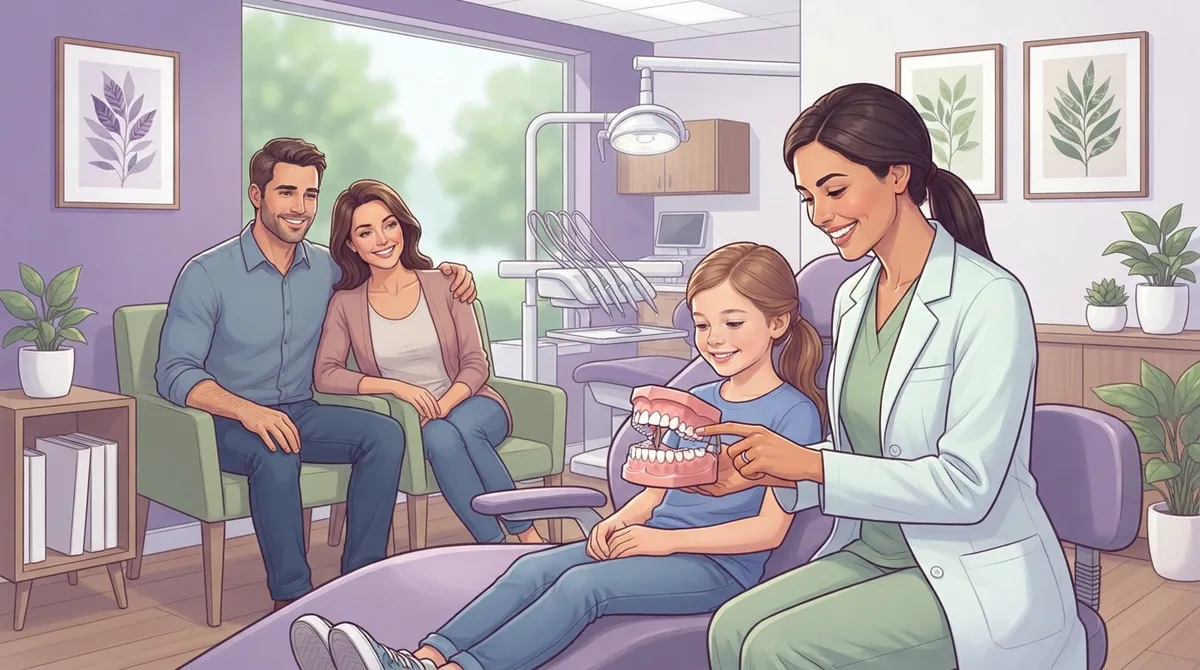
Let’s clear up a common mix-up. “Family first orthodontist” is not a separate clinical specialty or a special license. It describes an approach to care. An orthodontist is a dental specialist who focuses on straightening teeth and correcting bite problems. A family-centered orthodontist simply builds the whole practice around the needs of parents, kids, teens, and adults.
It’s also worth knowing that Family First Orthodontics is the name of a specific practice with locations in Duncanville and Midlothian, Texas. If that’s the office you’re looking for, confirm current details directly with them. If you’re searching for a family-friendly orthodontist near you, keep reading.
What a Family-Centered Practice Usually Offers
- Care for children, teens, and adults at the same office
- Appointment times that work around school and work schedules
- Clear explanations of treatment options, timelines, and costs
- A welcoming, comfortable atmosphere for nervous patients
- Help coordinating visits for siblings or parents
Keep in mind that these are service qualities, not an official standard. Every practice is different, so it’s smart to check what a specific office really offers before you commit.

Why Do Families Choose One Orthodontist for Everyone?
There’s real convenience in having one trusted team. Instead of remembering different offices, different policies, and different payment setups, you build a relationship with one practice that knows your family’s story.
For busy parents, that can mean back-to-back appointments for two kids instead of two separate trips. For working adults, it means care that respects your calendar. And for adults who had braces years ago, it means a friendly place to ask, “Can you help my teeth shift back into place?” without feeling out of place in a waiting room full of kids.
The Comfort Factor
Nobody loves feeling rushed or confused at a healthcare visit. A family-focused office tends to slow down, explain things in plain language, and welcome questions from parents and patients alike. That comfort matters, especially for kids who might be nervous about braces.
Everyone Gets Personalized Care
A good family orthodontist doesn’t hand every patient the same plan. A 9-year-old, a 15-year-old, and a 38-year-old all have different needs, goals, and lifestyles. Treatment options, timing, and suitability always depend on an individual clinical assessment.
When Should Your Child First See an Orthodontist?
This is one of the most common questions parents ask, and the answer surprises many people. The American Association of Orthodontists (AAO) recommends that children have an orthodontic checkup by age 7.
Wait, does that mean braces at 7? Not at all. This is important: an early checkup is an evaluation, not a guarantee of treatment. In fact, many kids are told to simply come back for monitoring, and some need nothing at all right away.
Why Age 7 Is a Helpful Checkpoint
Around this age, children often have a mix of baby teeth and permanent teeth. That mix gives an orthodontist a useful window into how the jaw and bite are developing. It can help spot concerns early, such as crowding, bite problems, or jaw growth patterns, and it helps the orthodontist decide whether to monitor, treat, or take no action yet. You can learn more about the benefits of early orthodontic treatment and what to expect at a first orthodontic visit.
Don’t Wait for a Birthday If You Notice a Problem
The AAO also advises that you shouldn’t wait for a particular age if a concern is obvious. If you or your dentist notice something unusual, an earlier evaluation is perfectly appropriate.
- Teeth that come in very crowded or out of position
- Difficulty chewing or biting
- Mouth breathing or thumb sucking that continues
- Teeth that meet in an unusual way, or not at all
- Early or late loss of baby teeth
Not sure whether something counts? Our guide on signs your child should see an orthodontist can help you decide.
Can Teens and Adults Get Treatment Too?
Absolutely. Orthodontic care is not just for kids. Teens often start treatment once most permanent teeth are in, and adults of all ages choose to straighten their smiles for comfort, health, and confidence.
Teens: Treatment That Fits a Busy Life
Teens juggle school, sports, activities, and social lives. The right plan should fit that reality. Options range from traditional braces to clear aligners, depending on the teen’s needs. Learn more about teen orthodontic treatment to see what may work for your family.
Adults: Discreet and Efficient Options
Many adults worry that braces will affect their professional image. The good news is that modern options are more discreet than ever. Whether you’re a young professional, preparing for a wedding or big milestone, or someone whose teeth shifted after earlier treatment, there are choices to explore. Take a look at adult orthodontics for more.
If you’ve had braces before and your teeth have moved, you’re far from alone. A follow-up evaluation can show whether treatment and a solid retainer plan could help. Our orthodontic retainers page explains how retainers help protect your results.
What Treatment Options Might a Family Practice Offer?
Every patient is different, so a good family orthodontist offers a range of choices. Here’s a quick look at common options and who they often suit.
| Treatment Option | Often Popular With | Key Feature |
|---|---|---|
| Traditional metal braces | Kids and teens | Reliable and effective for many bite issues |
| Fun-shaped braces | Younger patients | Playful bracket shapes that make treatment more exciting |
| Digitally customized braces | Teens and adults | Brackets designed to fit each tooth |
| Clear aligners | Teens and adults | Removable, discreet trays |
| Retainers | Everyone after treatment | Help keep teeth in their new positions |
To explore choices further, check out our overview of types of braces or read about clear aligners. And remember, the right pick depends on a personal evaluation, not a one-size-fits-all rule.
How Do You Choose the Right Orthodontist for Your Family?
Choosing an orthodontist is a big decision, and it’s okay to take your time. Here’s a simple step-by-step approach.
- Check qualifications. Ask about the orthodontist’s training and credentials. You can learn about board certification through the American Board of Orthodontics.
- Book a consultation. A first visit lets you meet the team, see the office, and ask questions without pressure.
- Ask about treatment options. A good orthodontist explains more than one path and why they recommend a certain one.
- Get the full cost picture. Ask about total fees, payment plans, and financing so there are no surprises.
- Look at logistics. Consider office hours, location, and how easy it is to schedule visits for multiple family members.
- Ask about emergencies. Find out what happens if a bracket breaks or a wire pokes at an inconvenient time.
Questions to Bring to Your First Consultation
- What treatment do you recommend, and why?
- How long is treatment likely to take?
- What is the total cost, and what payment options are available?
- How often will visits be needed?
- How do you handle orthodontic emergencies?
- Do you treat multiple family members?
Need more help preparing? Our tips on how to ask the right orthodontic questions make your visit smoother, and our orthodontic financing page explains ways to make care fit your budget.
Why Local, Family-Focused Care Feels Different
There’s something special about a practice where the team knows you by name. At Segovia Orthodontics in Lakewood Ranch, led by Dr. Flor Segovia, the focus is on a comfortable, supportive environment where patients of all ages can work toward their ideal smiles. The practice offers braces and clear aligners, plus bilingual care in English and Spanish, which helps many families feel truly at home.
Curious what other families think? You can see what our Segovia Orthodontics patients say on Google, and you can follow the practice on our Facebook page and our Instagram page for a peek at the fun side of orthodontic care.
What About Cost and Scheduling?
Cost and time are two of the biggest worries families have, so let’s talk about them honestly. The total cost of orthodontic care depends on the type of treatment, how long it takes, and your individual needs. That’s why asking for a clear breakdown up front is so important.
Many practices offer payment plans or financing to spread costs over time. It’s also smart to check what your dental insurance may cover. Our guide on how orthodontic payment plans work walks through the basics.
As for scheduling, a family-focused office understands that life is busy. Ask about flexible appointment times, and whether visits for siblings can be grouped together. Small conveniences like these add up over months of treatment.
A Quick Word on Statistics and Expectations
You may come across older numbers about how many kids get braces. For example, older government surveys estimated that a small share of U.S. children ages 6 to 11, and about one in ten youths ages 12 to 17, had received orthodontic treatment. These figures are decades old, so please don’t treat them as current. What matters most is your own child’s needs, not a statistic.
The same goes for the age-7 checkup. It’s a professional recommendation to help catch concerns early, not a sign that everyone needs early treatment. When in doubt, a quick evaluation can bring peace of mind.
Ready to Put Your Family’s Smiles First?
Choosing a family first orthodontist is really about finding a team that treats your whole household with care, clarity, and respect for your time. Look for a practice that welcomes every age, explains your options in plain language, and makes costs and scheduling easy to understand.
Whether your child is approaching that age-7 checkup, your teen is ready for braces, or you’re finally thinking about your own smile, the first step is simply a conversation. If you’re in the Lakewood Ranch area, we’d love to meet you. You can request an appointment online, contact us with questions, or call us at 941-557-1333. Your family’s best smiles are closer than you think.
FAQs
Q: What does a family first orthodontist do?
A: A family first orthodontist is an orthodontic practice built around families, caring for children, teens, and adults in one place. They straighten teeth, correct bite problems, and explain treatment options and costs clearly. Keep in mind this describes a service approach, not a separate clinical specialty.
Q: At what age should my child first see an orthodontist?
A: The American Association of Orthodontists recommends a first checkup by age 7. That visit is just an evaluation, so it doesn’t mean your child will need braces right away. If you notice a concern sooner, it’s fine to schedule an earlier visit.
Q: Can adults and children be treated by the same orthodontist?
A: Yes! Many orthodontists happily treat patients of all ages, which is one of the big perks of a family-focused practice. Your treatment plan is tailored to your own needs, whether you’re 8 or 48.
Q: What should I ask at a first orthodontic consultation?
A: Great questions include what treatment is recommended, how long it may take, what the total cost is, and how emergencies are handled. Also ask about payment plans and appointment flexibility so you feel confident before you begin.
Q: Is Family First Orthodontics a specific practice?
A: Yes, Family First Orthodontics is the name of a specific practice with locations listed in Duncanville and Midlothian, Texas. If that’s the office you want, please confirm current details with them directly. The general idea of a family first orthodontist, though, can describe any family-centered practice.
Our Service Area