Key Takeaways
-
Timing for orthodontics after extraction depends on individual healing, tooth type, and extraction complexity—not a universal waiting period. Always follow your orthodontist and oral surgeon's advice rather than general timelines.
-
Extraction spaces don't always close naturally; research shows only 85.3% upper jaw closure versus 48.1% lower jaw closure, making braces or aligners often necessary to finish the job properly.
-
You have two main options for extraction gaps: close the space with braces/aligners to fix crowding or bite problems, or keep it open for a future implant or bridge replacement.
-
Clear aligners have low-certainty evidence for predictable space closure after premolar extraction; fixed braces with nickel-titanium coil springs show stronger evidence for reliable gap closure.
-
Consistent retainer wear is essential long-term insurance against space reopening and tooth drift, as teeth naturally try to return to their original positions after extraction-space closure.
-
Potential risks include unwanted tooth tipping, root resorption, gum changes, and space reopening; these are managed through regular monitoring, appropriate forces, excellent hygiene, and solid retention plans.
Having a tooth pulled can feel like a big moment, especially when braces or aligners are part of your plan. Maybe you are a parent wondering what happens next for your child. Maybe you are a busy professional who wants a straighter smile without losing time. Either way, you probably have one big question: how soon can orthodontics after tooth extraction begin, and what happens to the gap?
Here is the friendly truth. There is no single waiting period that fits everyone. The right timing depends on why the tooth came out, which tooth it was, and how well your mouth is healing. In this guide, we will walk through how orthodontics after tooth extraction works, your options for the space, and how to protect your results. You will also learn what questions to bring to your orthodontist so you feel confident every step of the way.
Why Teeth Are Extracted Before or During Orthodontic Care
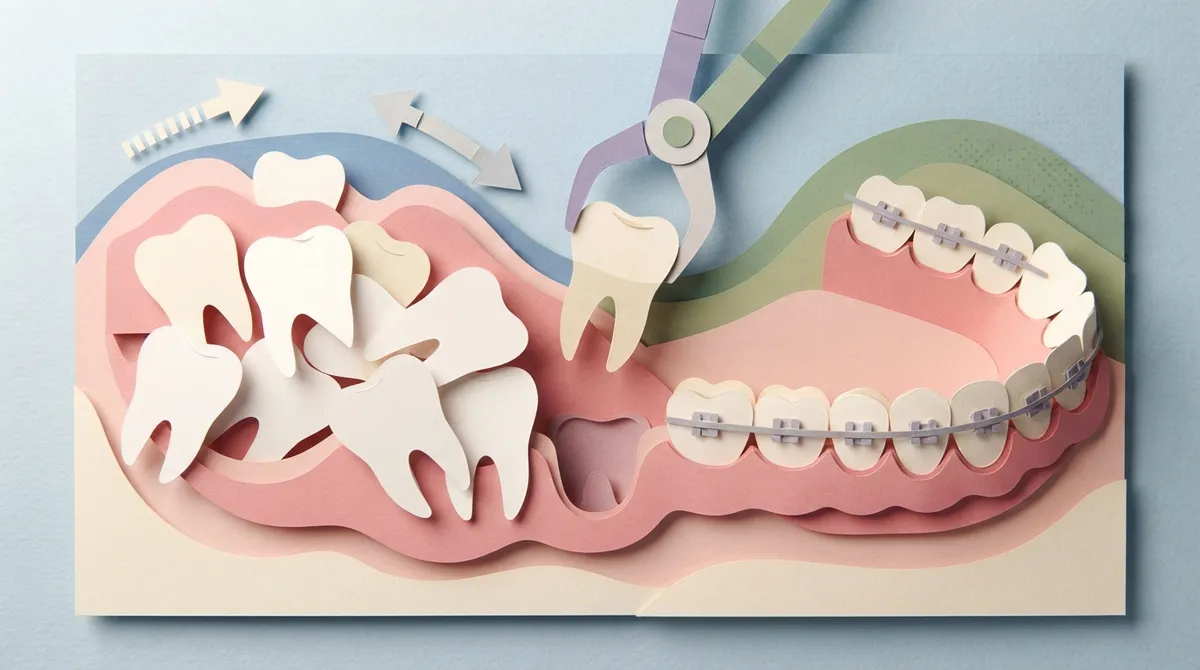
Many people are surprised to learn that tooth removal is sometimes part of a smile plan. It is not always about a problem tooth. Sometimes it is about making room.
Common reasons include:
- Severe crowding: There may not be enough space for all the teeth to line up well.
- Protruding front teeth: Space may be needed to pull the front teeth back.
- Damaged or decayed teeth: A tooth that cannot be saved may be removed first.
- Impacted or stuck teeth: Some teeth cannot come in properly.
- Bite problems: Space can help correct how the upper and lower teeth meet.
If you want to learn about the problems that often lead to this decision, our guide on common orthodontic problems is a helpful place to start.
How Soon Can Orthodontics Begin After an Extraction?
This is the question we hear most. The honest answer is that it depends. Orthodontic treatment after an extraction is planned around the reason the tooth was removed, the tooth involved, the condition of the socket and gums, your bite, your age, and your overall dental health.
After a routine extraction, your clinician may start or resume tooth movement once healing looks good. A surgical or complicated extraction, an infection, ongoing pain, or slow healing may call for more time. Because of that, please follow the advice of your treating dentist, oral surgeon, and orthodontist rather than a general timeline you read online.
What Your Care Team Looks At
- How well the gum tissue has healed
- Whether any pain, swelling, or infection remains
- The health of the bone around the area
- The position of nearby teeth
- Your age and growth stage
Good teamwork matters here. Your orthodontist and the clinician who removed the tooth should talk to each other, so your plan stays safe and smooth.
Your Two Main Options for the Extraction Space
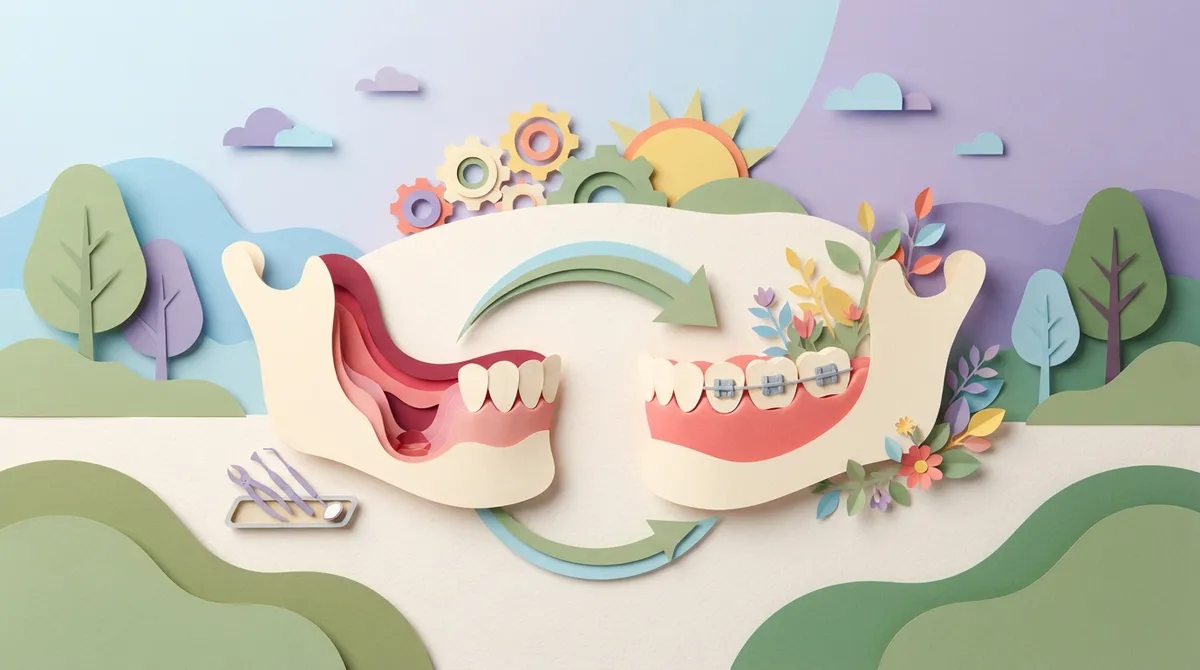
Once a tooth is gone, you have a gap. The good news is that you have choices. Your orthodontist will help you pick the best one based on your goals, tooth position, bite, bone and gum health, growth status, and personal preferences.
| Option | How It Works | Often Chosen When |
|---|---|---|
| Close the space with orthodontics | Braces or aligners slowly move nearby teeth into the gap | The space was made on purpose to fix crowding or a bite problem |
| Keep the space for a replacement | The gap is held open for a future implant or bridge | A missing tooth needs to be replaced and the neighboring teeth should stay put |
Neither choice is better for everyone. It is about what fits your mouth and your life best.
Will the Gap Close on Its Own?
It is natural to hope the space will simply shrink with time. Sometimes it does, but it is not a promise. A 2024 systematic review looked at spontaneous space closure after the removal of a permanent first molar. It found closure in about 85.3% of upper cases but only about 48.1% of lower cases. The review also found higher odds of closure in the upper jaw than in the lower jaw.
Those numbers describe groups of patients, not your individual outcome. Even when a gap does close by itself, teeth can tip, rotate, or leave small leftover spaces. That is why many people still need braces or aligners to finish the job well. Think of it like a crowd shifting to fill an empty seat. Everyone moves, but not always neatly.
How Orthodontists Close Extraction Spaces
Closing a gap is not just pulling teeth together. It takes careful control so the right teeth move the right amount. Orthodontists call this managing anchorage, which simply means keeping some teeth steady while others travel.
Fixed Braces
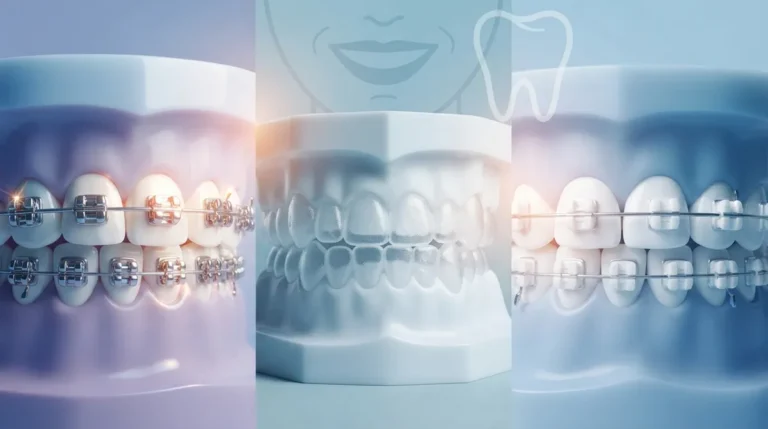
Traditional braces are a trusted way to close extraction spaces. Different force systems can be used to slide teeth along the wire. A 2022 systematic review of space closure with sliding mechanics included 13 studies. It found moderate-certainty evidence that nickel-titanium coil springs close spaces faster than active ligatures. It also found low-certainty evidence favoring them over elastomeric chains. The authors noted that overall evidence quality was limited, so the best approach still depends on your case.
If you are curious about the different bracket styles, take a look at our overview of types of braces. For families who like a fun, personal touch, WildSmiles braces offer playful bracket shapes that help kids stay excited about brushing and treatment.
Digitally Designed Braces
Precision planning can help in complex cases. LightForce orthodontics uses 3D-printed, custom-fitted brackets built from a digital treatment plan, which lets your orthodontist see and adjust the plan in real time.
Clear Aligners
Aligners can work in some extraction cases, and many adults love how discreet they are. That said, we want to be honest. A 2025 systematic review of clear-aligner space closure after premolar extraction included 14 studies and 510 participants. Ten studies were rated at high risk of bias, and the authors graded the evidence as low to very low certainty. The review also reported that aligners may not always achieve planned front-tooth retraction or bodily tooth movement as predictably as hoped.
This does not mean aligners are off the table. It means your orthodontist should look closely at your case before recommending them. You can learn more about this option on our clear aligners page, or compare choices in Braces vs. Clear Aligners: Which Is Right for You?
A Simple Step-by-Step Look at the Process
Every smile is different, but many extraction cases follow a path like this:
- Consultation and records: Your orthodontist reviews your teeth, bite, and X-rays, and talks about whether extraction is needed.
- Coordination: Your orthodontist works with your dentist or oral surgeon on timing and technique.
- Extraction and healing: The tooth is removed and the area is given time to heal as your clinician directs.
- Appliance planning: You and your orthodontist choose braces or aligners and plan how to manage the space.
- Space closure or space keeping: Teeth are moved into the gap, or the space is held for a future replacement.
- Finishing and retention: Final bite details are refined, and retainers lock in your results.
Not sure what your first visit looks like? Our guide to your first orthodontic visit walks through it.
How Long Does It Take to Close the Gap?
Many people want a clear number, and we understand that. The truth is that closing an extraction space depends on the size of the gap, which tooth was removed, your age, the appliance used, and how closely you follow your plan. Closing a gap is often one of the longer parts of treatment because teeth move slowly and carefully.
Your orthodontist can give you a personal estimate after reviewing your records. Wearing your elastics, keeping appointments, and protecting your appliances all help keep things on track.
Possible Risks and How to Lower Them
Every treatment has trade-offs, and good care means knowing them upfront. When teeth move into an extraction space, possible concerns include:
- Unwanted tipping or movement: Teeth may lean instead of moving straight.
- Root resorption: The tips of tooth roots can shorten slightly.
- Gum or bone changes: Tissue around the area may shift.
- Spaces reopening: Gaps can return after treatment if retention is skipped.
The good news is that these risks can be managed. Regular monitoring, gentle and appropriate forces, excellent oral hygiene, and a solid retention plan make a big difference. If you want tips for daily care, see our braces care tips.
Tips for Different Patients
For Parents
If your child needs an extraction, ask the orthodontist about growth and timing. Children’s mouths are still changing, and early evaluation can make planning easier. Our page on early orthodontic treatment explains when a check-up is helpful. Teens have their own needs too, which you can explore through teen orthodontic treatment.
For Adults and Busy Professionals
Adults often care about looks and schedules. Ask about discreet options, how many visits to expect, and whether a gap should be closed or kept for an implant. You can read more about adult orthodontics and see how treatment can fit a full calendar.
For Anyone Who Had Braces Before
If you wore braces years ago and teeth have drifted, or a gap has appeared, you are not alone. Relapse is common, and it is often fixable. A short chat with an orthodontist can show whether a gap needs closing or whether another approach makes more sense.
Why Retainers Matter So Much
Closing a gap is only half the story. Teeth like to drift back toward where they started, and extraction spaces can reopen if they are not held in place. Retainers are your long-term insurance. Your orthodontist will tell you how often to wear them and for how long.
Wearing your retainer as directed protects the time and effort you put in. Learn more about the choices on our orthodontic retainers page.
Questions to Ask Your Orthodontist
Bring a short list to your visit. It helps you feel prepared and heard.
- Why do I need this tooth removed, and are there other options?
- When can tooth movement start or resume?
- Will you close the space or keep it for a replacement?
- Which appliance is best for my case, and why?
- How will you protect my roots and gums?
- What retention plan do you recommend?
For more ideas, see how to ask the right orthodontic questions at your visit.
Finding Trusted Care Near You
Choosing the right team makes the whole journey feel easier. Look for an orthodontist who explains things clearly, works well with your dentist, and listens to your goals. Dr. Flor Segovia is a board-certified orthodontist who offers bilingual care in English and Spanish and a warm, family-friendly atmosphere. You can learn more about her background on the Dr. Flor Segovia page. You can also check board certification status through the American Board of Orthodontics.
If you would like to see what neighbors say, you can read feedback from our community. Visit us on Google — Segovia Orthodontics to see reviews. We also share smile stories and helpful tips on our Instagram page and our Facebook page.
Ready to Plan Your Next Step?
Orthodontics after tooth extraction does not have to feel confusing. With the right timing, a clear plan for your gap, and a caring team, you can move toward a healthy, confident smile. Remember that your plan should be built around you, not a one-size-fits-all calendar.
Segovia Orthodontics at Lakewood Ranch is here to help families, teens, and adults take that next step. When you are ready, request an appointment and we will talk through your options together. You can also call us at 941-557-1333 or contact us with any questions. We cannot wait to meet you!
FAQs
Q: How soon can I start orthodontic treatment after a tooth extraction?
A: There is no single waiting period for everyone. After a routine extraction, your clinician may start or resume tooth movement once healing looks good, while complicated cases may need more time. Always follow the advice of your orthodontist and the clinician who removed the tooth.
Q: Will the gap from an extracted tooth close on its own?
A: Sometimes, but it is not guaranteed. A 2024 review found spontaneous closure after first-molar removal was more common in the upper jaw than the lower jaw, and teeth may still tip or leave small spaces. Braces or aligners are often needed to finish the job.
Q: Can clear aligners close spaces after tooth extraction?
A: They can work in some cases, but the evidence is limited. A 2025 review found low to very low certainty and noted aligners may not always move teeth as planned. Your orthodontist can tell you if aligners fit your case.
Q: What are the risks of moving teeth into an extraction space?
A: Possible risks include unwanted tooth tipping, root shortening, gum or bone changes, and spaces reopening later. Regular check-ups, gentle forces, good brushing, and wearing your retainer help keep these risks low.
Q: Will I need a retainer after extraction-space closure?
A: Yes, retainers are important. Teeth can drift back, and closed gaps may reopen without retention. Your orthodontist will explain the best type and how long to wear it.
Our Service Area