Key Takeaways
-
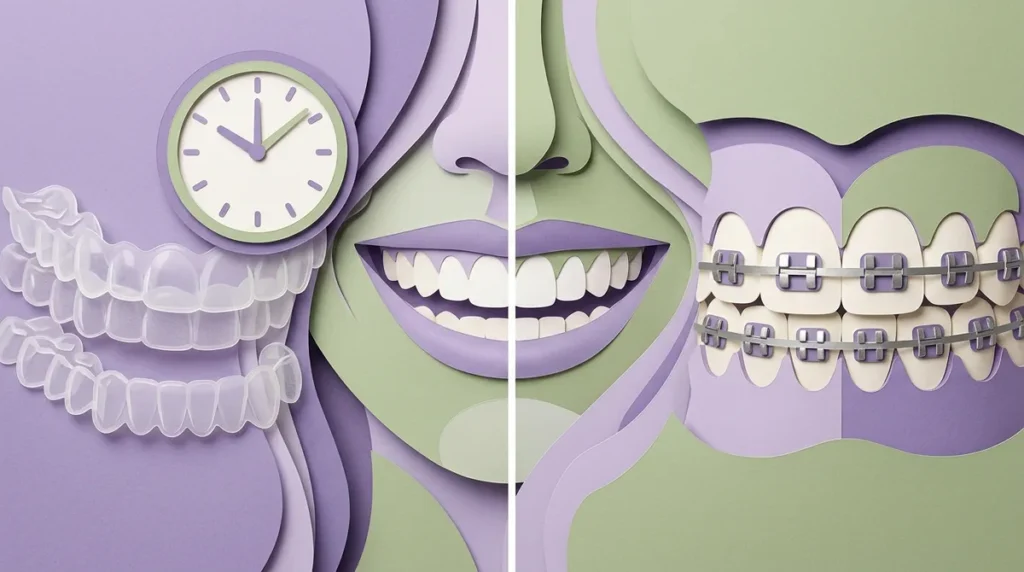
Clear aligners require 20-22 hours daily wear discipline to be effective, while braces work 24/7 without any compliance effort needed from the patient.
-
Clear aligners work best for mild to moderate alignment issues, whereas braces are superior for complex bite problems like overbites, underbites, and severe crowding requiring precise control.
-
Clear aligners are nearly invisible and removable for eating/cleaning, making them ideal for busy adults and professionals, while braces are fixed and require dietary restrictions on hard/sticky foods.
-
Both treatments typically take 12-24 months and require retainers afterward to prevent tooth relapse, with modern retainers being comfortable and easy to wear.
-
Children and teens with developing teeth and jaws often benefit more from braces, while adults and teens seeking discreet treatment respond well to clear aligners if motivated.
-
Cost varies by case complexity for both options, but orthodontic financing makes both treatments accessible—consultation with a board-certified orthodontist is essential for personalized recommendations.
Choosing between clear aligners vs braces is one of the biggest decisions you’ll face on your smile journey. And honestly? It’s a great problem to have — because both options can give you a beautiful, straight smile! But the right choice really depends on your lifestyle, your dental needs, and what matters most to you. Whether you’re a busy professional, a parent helping your teen decide, or someone getting back on track after previous treatment, this guide is here to help you sort it all out with confidence. Let’s break down everything you need to know in a friendly, no-pressure way so you can walk into your orthodontist’s office feeling totally prepared.
What Are Clear Aligners and How Do They Work?
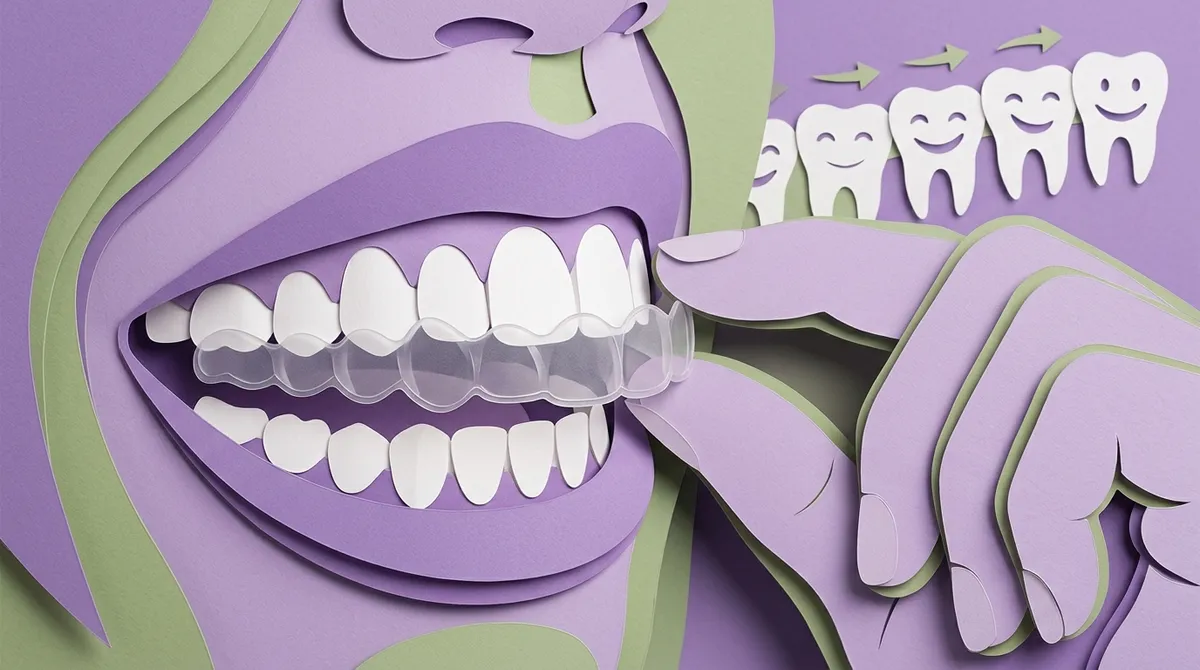
Clear aligners are a series of custom-made, removable plastic trays. You wear each set for about one to two weeks before switching to the next one. Each tray gently shifts your teeth a little bit at a time. Over several months (or longer, depending on your case), your teeth gradually move into the right position. The trays are nearly invisible, which makes them super popular with adults and teens who want a discreet option.
Clear aligners work best when you wear them 20 to 22 hours per day. You remove them only to eat, drink anything other than water, and brush your teeth. Consistency is key — the more disciplined you are about wearing them, the better your results will be. To learn more, visit our full clear aligners page.
What Are Braces and How Do They Work?
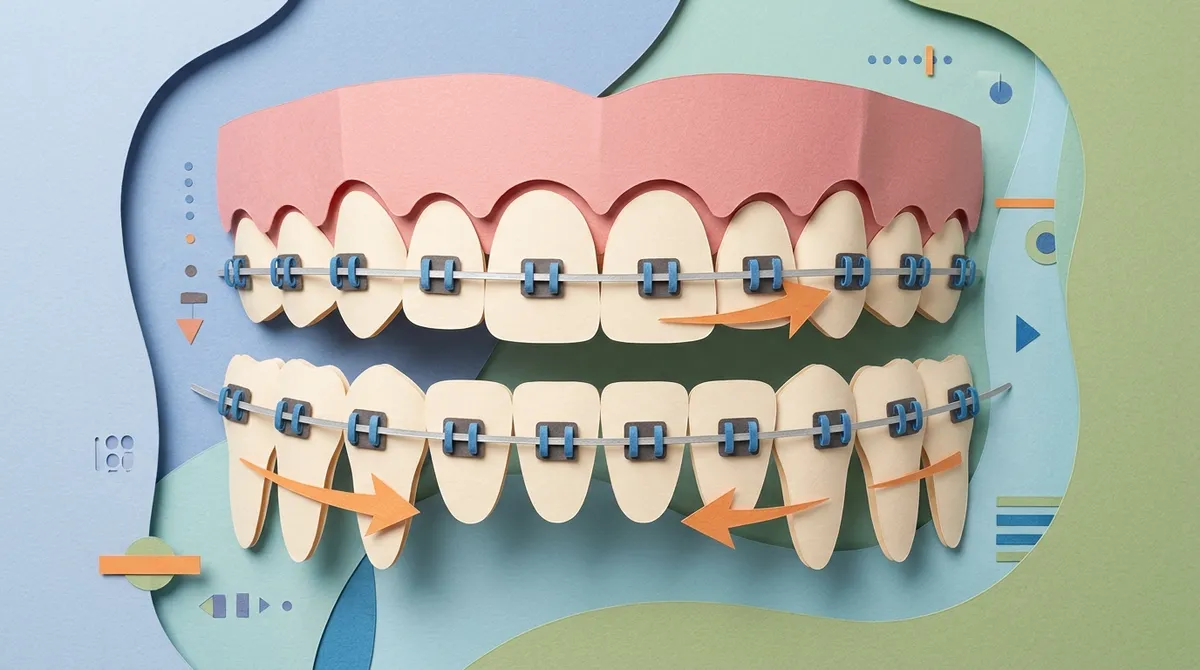
Traditional braces use metal or ceramic brackets bonded to your teeth. A wire connects the brackets and applies gentle pressure to move your teeth over time. Your orthodontist tightens or adjusts the wire at regular appointments. Braces are fixed — meaning they stay on 24/7 until your treatment is complete. If you’re curious about the types of braces available, there are some really exciting options today!
Modern braces have come a long way. You can even choose fun designs through options like WildSmiles Braces, or go high-tech with LightForce Orthodontics for a fully customized, 3D-printed bracket experience. Braces are incredibly effective for a wide range of orthodontic issues — from mild crowding to more complex bite problems.
Clear Aligners vs Braces: A Side-by-Side Comparison
Here’s a quick look at how these two options stack up. This table will help you spot the differences at a glance:
| Feature | Clear Aligners | Traditional Braces |
|---|---|---|
| Visibility | Nearly invisible | Visible (metal or clear options available) |
| Removability | Removable for eating and cleaning | Fixed in place |
| Comfort | Smooth plastic, no wires | May cause initial soreness from wires |
| Best for | Mild to moderate alignment issues | Mild to complex alignment and bite issues |
| Discipline required | High (must wear 20–22 hrs/day) | Low (always in place) |
| Diet restrictions | None (remove to eat) | Yes (avoid hard/sticky foods) |
| Cleaning ease | Easy (brush teeth normally) | Requires more careful brushing and flossing |
| Cost range | Varies by case complexity | Varies by case complexity |
As you can see, neither option is universally “better.” They each shine in different situations. That’s why a consultation with a qualified orthodontist is so valuable. You can learn more about what to expect by reading about the first orthodontic visit process.
Who Is a Good Candidate for Clear Aligners?
Clear aligners are a fantastic choice for many people, but they’re not a perfect fit for everyone. Here are the types of patients who tend to do really well with them:
- Adults and teens who want a discreet, low-profile treatment option
- Professionals who present in meetings or public settings regularly
- People with mild to moderate crowding, spacing, or bite issues
- Patients who are motivated and responsible about wearing their trays
- Adults who previously had braces and want to correct relapse
- Those preparing for a big life event, like a wedding or graduation
If you’ve had orthodontic treatment before and your teeth have shifted, adult orthodontics with clear aligners can be a smooth, comfortable path back to your best smile. Check out 7 clear aligner mistakes to avoid to set yourself up for success.
Who Is a Good Candidate for Braces?
Braces are a tried-and-true option that work for a broader range of orthodontic problems. Here’s who tends to benefit the most:
- Children and teens whose teeth and jaw are still developing
- Patients with complex bite issues like overbites, underbites, or crossbites
- People who know they might forget to wear removable trays consistently
- Kids who want something fun and personalized with colors or unique bracket shapes
- Patients with severe crowding that needs more precise control
Parents looking into options for their kids will love learning about teen orthodontic treatment and early orthodontic treatment. Starting at the right time can make a huge difference in the outcome. You can also read about common orthodontic problems that braces can address effectively.
Key Factors to Help You Choose
Still feeling a little unsure? That’s totally normal! Here are some important factors to think about when weighing clear aligners vs braces:
1. Your Lifestyle and Daily Habits
If you travel often, play wind instruments, or participate in contact sports, you might prefer the flexibility of clear aligners. Braces, however, require no daily discipline about wearing time — they’re always working for you behind the scenes.
2. The Complexity of Your Case
More complex orthodontic issues — like severe bite misalignment — often respond better to braces. Your orthodontist will assess your specific situation during a consultation. You can learn more about what happens at an orthodontic evaluation to prepare yourself.
3. Your Budget and Financing Options
Both options vary in cost depending on the length and complexity of treatment. The good news is that orthodontic financing options make both braces and aligners more accessible. Don’t let cost be the only factor — focus on finding the treatment that’s right for your smile.
4. Your Age and Stage of Dental Development
For younger children, braces are often the go-to recommendation, especially for growth-related issues. For adults, clear aligners may offer more convenience and confidence. That said, both are effective across age groups when properly prescribed.
Top Reasons People Love Each Option
Here’s a numbered breakdown of why patients fall in love with each treatment type:
Reasons People Choose Clear Aligners
- Nearly invisible — Most people won’t even notice you’re wearing them.
- Removable — Eat whatever you want and clean your teeth with ease.
- Comfortable — No brackets or wires to irritate your cheeks.
- Fewer emergency visits — No broken brackets or poking wires to worry about.
- Great for busy adults — Check-in appointments are often shorter and less frequent.
Reasons People Choose Braces
- Always working — No worrying about wear time — braces never take a day off.
- Handles complex cases — More control over precise tooth and jaw movements.
- Great for kids and teens — Fun options make treatment feel like an adventure, not a chore.
- No temptation to skip — Since they can’t be removed, compliance is built in.
- Proven track record — Braces have been perfecting smiles for decades with incredible results.
What Does Treatment Look Like at Segovia Orthodontics?
At Segovia Orthodontics in Lakewood Ranch, both clear aligners and braces are offered with the same level of warmth, expertise, and personalized care. Dr. Flor Segovia is a board-certified orthodontist who uses advanced orthodontic technology to create a treatment plan that’s just right for you or your child. She also provides bilingual care, so Spanish-speaking families feel just as welcome and supported. You can verify her credentials and professional standards through the American Board of Orthodontics.
The team at Segovia Orthodontics truly gets it — whether you’re a mom scheduling appointments around soccer practice, a young professional managing a full calendar, or a teen counting down to prom night. Every patient gets a customized experience. Visit us on Google — Segovia Orthodontics to see what our happy patients are saying about their smile transformations!
Want to see real results? Check out orthodontics before and after photos to get inspired. And feel free to follow along on our Facebook page and our Instagram page for smile tips, patient stories, and office updates!
After Treatment: Don’t Forget Your Retainer!
Regardless of whether you choose clear aligners vs braces, retainers are a must after treatment. Retainers keep your teeth in their new positions so all that hard work pays off for life. Learn more about orthodontic retainers and why they’re such an important part of your smile journey.
Skipping your retainer is one of the most common reasons teeth shift back after treatment. The good news? Modern retainers are comfortable and easy to wear. You’ve got this!
Your Next Steps Toward a Beautiful Smile
The best way to decide between clear aligners vs braces is to talk with an experienced orthodontist who can evaluate your teeth, your goals, and your lifestyle. No article — not even this one — can replace that personalized conversation. But hopefully, you feel a lot more confident and ready to take that first step!
Here’s a simple action plan to get started:
- Book a consultation — Meet with an orthodontist to get a professional assessment of your smile needs.
- Ask questions — Don’t be shy! Come prepared with your concerns and goals. Our orthodontic FAQ is a great place to start.
- Explore financing — Review your payment options so cost doesn’t stand in the way of your dream smile.
- Start your treatment — Once you’ve chosen your path, get excited — your new smile is on its way!
Ready to take the next step? We’d love to help you get started on the smile you’ve always wanted. Simply request an appointment with our team today, or call us at 941-557-1333 to speak with someone right away. Your best smile is closer than you think!
FAQs
Q: How do I know if clear aligners or braces are right for me?
A: Great question! The best way to find out is to schedule a consultation with an orthodontist who can assess your specific dental needs and lifestyle. Generally, clear aligners work well for mild to moderate issues, while braces handle a wider range of complex cases — but every smile is unique!
Q: Are clear aligners as effective as braces?
A: Yes, clear aligners can be just as effective as braces for many orthodontic cases, especially mild to moderate crowding, spacing, and bite issues. However, for more complex problems, braces may offer more precise control over tooth movement. Your orthodontist will help you understand which option gives you the best results.
Q: Can teens use clear aligners instead of braces?
A: Absolutely — many teens are excellent candidates for clear aligners! The key is that teens need to be responsible about wearing their trays for 20 to 22 hours a day. For teens who might struggle with that, braces can be a great low-maintenance alternative that works around the clock.
Q: Do clear aligners or braces hurt more?
A: Both options can cause some mild soreness, especially right after adjustments or when switching to a new aligner tray. Most patients say the discomfort is totally manageable and fades within a day or two. Clear aligners tend to be more comfortable overall since there are no brackets or wires involved.
Q: How long does treatment take with clear aligners vs braces?
A: Treatment time varies based on the complexity of your case and how consistently you follow your orthodontist’s guidance. On average, both treatments take anywhere from 12 to 24 months. Clear aligner treatment can sometimes be shorter for simple cases, while braces may take a bit longer for complex corrections — but your orthodontist will give you a personalized timeline.
Our Service Area