Key Takeaways
-
Most patients complete Angel Aligner treatment in 6-18 months, with moderate cases averaging 12-14 months, but treatment length depends primarily on case complexity and how closely you follow wear instructions.
-
You must wear aligners 20-22 hours daily for the treatment to work as designed; skipping wear time is the number one reason treatment drags on longer than expected and can add months to your timeline.
-
Mild cases take 6-9 months, moderate cases take 10-15 months, and comprehensive cases take 15-18+ months; your orthodontist will map out a personalized timeline based on your specific crowding, spacing, and bite issues.
-
Angel Aligners use AI-optimized planning and a 7+3 wear schedule (flexible tray for 7 days, firmer for 3 days) that typically reduces the number of trays needed compared to traditional aligner systems.
-
Attend check-up appointments every 6-8 weeks, change trays exactly on schedule, clean aligners daily, and wear a retainer after treatment ends to protect your results and prevent teeth from shifting back.
-
Common mistakes like forgetting aligners after meals, losing trays, skipping appointments, and chewing gum with aligners in can all delay your treatment; avoiding these keeps your plan on track.
Wondering how long do Angel Aligners take before you can flash that new smile with confidence? You’re not alone. Whether you’re a busy mom juggling carpool schedules, a young professional prepping for a big presentation, or someone getting ready for a wedding, timing matters. The good news? Angel Aligners are known for their smart, efficient approach to straightening teeth, and understanding the timeline can help you plan your journey with excitement instead of worry.
At Segovia Orthodontics, we love helping patients in Lakewood Ranch understand exactly what to expect. So let’s break down the real numbers, the factors that speed things up (or slow them down), and how you can make sure your treatment stays on track from start to finish.

How Long Do Angel Aligners Take on Average?
Most patients complete their Angel Aligner treatment somewhere between 6 and 18 months. The average moderate case lands around 12 to 14 months. That’s a pretty wide range, but don’t worry, we’ll explain exactly what determines where you’ll fall on that timeline.
Your treatment length really comes down to how much your teeth need to move and how closely you follow your orthodontist’s instructions. Here’s a quick breakdown of typical timelines by case complexity:
| Case Complexity | Estimated Treatment Time | Common Issues Treated |
|---|---|---|
| Mild | 6–9 months | Minor crowding, small gaps, slight rotations |
| Moderate | 10–15 months | Moderate crowding, spacing issues, mild bite problems |
| Comprehensive | 15–18+ months | Significant crowding, bite correction, complex spacing |
Think of it like remodeling a room versus renovating an entire house. A small touch-up takes less time than a full overhaul, and the same logic applies to your smile. Learning about common orthodontic problems can help you understand where your case might fit.
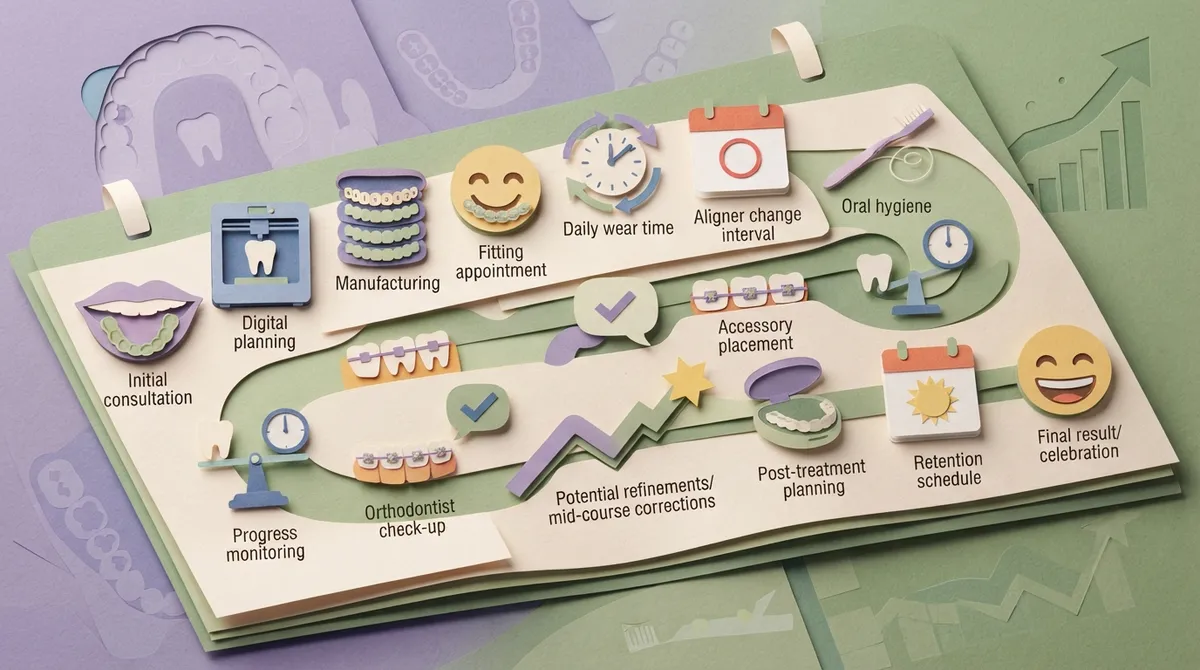
15 Key Facts That Shape Your Angel Aligner Timeline
Before you start counting down the months, here are the details that actually determine your treatment speed:
- Case severity matters most. Mild cases wrap up in 6-9 months, while comprehensive cases can take 15-18+ months.
- Each tray lasts about 2 weeks. You’ll move to a new set roughly every 14 days, gradually shifting your teeth.
- Wear time is everything. You need 20-22 hours a day in your aligners for the plan to work as designed.
- Check-ups happen every 6-8 weeks. These visits let your orthodontist track progress and hand you new trays.
- AI-driven planning speeds things up. Angel Aligner’s smart software can reduce the number of trays needed compared to older systems.
- The 7+3 wear schedule helps. Wearing a flexible tray for 7 days followed by a firmer one for 3 days can accelerate movement.
- Skipping wear time adds months. Inconsistent use is the number one reason treatment drags on longer than expected.
- Bite corrections take longer. Fixing an overbite or underbite typically extends your timeline beyond simple alignment.
- Your starting point counts. Severe crowding naturally requires more tray changes than mild spacing issues.
- Attachments can speed precision. Small tooth-colored bumps help aligners grip better, improving efficiency.
- Age isn’t usually a barrier. Teens and adults can both see efficient results with proper compliance.
- Refinements may be needed. Some patients need a few extra trays near the end for final touch-ups.
- Retainers protect your results. Once treatment ends, wearing your orthodontic retainers keeps your smile in place.
- Oral health impacts timing. Gum disease or untreated cavities can delay your treatment plan.
- Consistency beats speed. Steady, disciplined wear almost always outperforms rushing through the process.
What Affects Your Personal Timeline?
No two smiles are exactly alike, which means no two treatment plans look identical either. Several factors play a role in determining exactly how long your journey will take.
Case Complexity Comes First
Crowding, spacing, and bite alignment issues are the biggest predictors of treatment length. If you’re dealing with crooked teeth or noticeable gaps, your orthodontist will map out a plan tailored specifically to your mouth’s needs.
Your Discipline Really Matters
Here’s the honest truth: your aligners only work when you wear them. Skipping hours here and there might not seem like a big deal, but it adds up fast. Missing the recommended 20-22 hours daily can stretch a 12-month plan into something much longer.
Regular Check-Ins Keep You on Track
Every 6 to 8 weeks, you’ll visit your orthodontist to make sure everything is progressing as planned. These visits are your chance to ask questions, get new trays, and catch any issues early before they become bigger problems.
Angel Aligners vs Traditional Timelines: A Quick Comparison
Many patients wonder if Angel Aligners really move faster than other clear aligner systems. Here’s how they typically stack up:
| Feature | Angel Aligners | Traditional Aligner Systems |
|---|---|---|
| Average Treatment Time | 6-18 months | 12-24 months |
| Tray Change Frequency | Every 2 weeks | Every 1-2 weeks |
| Planning Technology | AI-optimized | Varies by brand |
| Wear Schedule Innovation | 7+3 flexible/firm system | Standard daily wear |
The AI-driven planning behind Angel Aligners often means fewer overall trays for similar complexity levels. That translates to less time in treatment and fewer trips back to the office, which is great news if you’re comparing clear aligners to other smile-straightening options.
Steps to Keep Your Treatment On Schedule
Want to hit your target timeline (or maybe even beat it)? Follow these simple steps every single day:
- Wear your aligners for at least 20-22 hours daily, removing them only to eat and clean your teeth.
- Switch to your next tray exactly on schedule, usually every 2 weeks unless told otherwise.
- Attend every scheduled check-up appointment, even if things feel like they’re going smoothly.
- Clean your aligners daily to avoid buildup that can affect fit and comfort.
- Brush and floss after every meal before putting your aligners back in.
- Communicate any discomfort or fit issues right away instead of waiting it out.
- Store spare trays properly so you always have a backup if one gets lost or damaged.
Who Benefits Most from Angel Aligners?
Angel Aligners work beautifully for a wide range of patients, but certain lifestyles make them an especially smart choice. Here’s who tends to love this treatment option:
- Busy professionals who need a discreet option that won’t interrupt client meetings or presentations
- Parents managing multiple schedules who appreciate flexible check-up timing
- Teens and young adults preparing for graduation photos, weddings, or other big milestones
- Adults returning for treatment after a relapse from earlier orthodontic work
- Anyone wanting a comfortable alternative to metal brackets and wires
- Patients who value faster, tech-driven treatment planning
If you fall into any of these categories, exploring adult orthodontics or teen orthodontic treatment options at our Lakewood Ranch office is a great place to start.
Common Mistakes That Slow Down Treatment
Even the best treatment plan can hit bumps in the road if you’re not careful. Watch out for these common missteps:
- Forgetting to wear aligners after meals, snacks, or drinks
- Losing trays and delaying your next appointment while waiting for replacements
- Skipping scheduled check-ups because things “feel fine”
- Not cleaning aligners properly, leading to bacteria buildup and discomfort
- Chewing gum or eating with aligners in, which can warp the plastic
Avoiding these simple errors keeps your treatment moving smoothly and helps you avoid unnecessary delays. For more guidance, check out our tips on adult orthodontics mistakes you should never make.
Why Choose Segovia Orthodontics for Your Angel Aligner Journey
Dr. Flor Segovia and her team bring genuine warmth and expertise to every appointment. As a board certified orthodontist, Dr. Segovia stays current with the latest advances in advanced orthodontic technology, including AI-optimized systems like Angel Aligners.
We know that families in Lakewood Ranch want convenient scheduling, honest answers, and a comfortable environment. That’s exactly what you’ll find here, whether you’re bringing in your teenager for their first consultation or exploring options for yourself. Curious what others say about their experience? Visit us on Google — Segovia Orthodontics to read real reviews from our patients.
You can also follow along with smile transformations and helpful tips on our Facebook page or catch behind-the-scenes moments on our Instagram page. For general guidance on orthodontic standards, the American Board of Orthodontics offers helpful resources too.
What Happens After Your Angel Aligner Treatment Ends?
Once you’ve completed your final tray, the real work of protecting your results begins. Retention is just as important as the active treatment phase. Here’s what typically happens next:
- Your orthodontist takes final impressions or scans to create your custom retainer.
- You’ll wear your retainer full-time for a period, usually a few months, before transitioning to nighttime wear only.
- Follow-up visits confirm your teeth are staying put in their new positions.
- Long-term retainer use, even just a few nights a week, helps prevent relapse for years to come.
Skipping retainer wear is one of the biggest reasons people see their teeth shift back over time. Don’t let months of hard work go to waste, stick with your retention plan just as diligently as you did your aligner treatment.
Ready to Start Your Angel Aligner Journey?
Now that you know how long do Angel Aligners take and what factors influence your personal timeline, you’re better equipped to make a confident decision. Every smile journey looks a little different, but with discipline, regular check-ups, and the right orthodontic team by your side, you’ll be flashing your new smile before you know it.
Ready to see what your personalized timeline could look like? Request an appointment with Segovia Orthodontics today, or feel free to contact us with any questions. You can also call us at 941-557-1333 to speak with our friendly team and get started on your journey to a brighter, straighter smile.
FAQs
Q: How long does Angel Aligner treatment take for mild cases?
A: Mild cases usually wrap up in just 6 to 9 months! If you’re dealing with minor crowding or small gaps, you could be flashing your new smile sooner than you think. Consistent wear time makes a huge difference in hitting that faster timeline.
Q: How often do you need to change Angel Aligner trays?
A: You’ll typically switch to a new tray every 2 weeks. Some patients follow the 7+3 wear schedule, using a flexible tray for 7 days followed by a firmer one for 3 days, which can help speed up tooth movement even more.
Q: How many hours a day should I wear Angel Aligners?
A: Aim for 20 to 22 hours daily, only removing your aligners to eat, drink anything besides water, brush, and floss. Sticking to this schedule is honestly the biggest factor in staying on track with your treatment timeline.
Q: Can Angel Aligners fix severe crowding or bite issues?
A: Yes, Angel Aligners can handle comprehensive cases, though these typically take 15 to 18+ months to complete. Your orthodontist will create a custom plan based on exactly what your smile needs to look and feel its best.
Q: What happens if I don’t wear my Angel Aligners for 22 hours a day?
A: Skipping wear time is the number one reason treatment takes longer than expected. Even small gaps in daily wear can slow down tooth movement, so staying consistent really is the secret to finishing on schedule.
Our Service Area