Key Takeaways
-
Clear aligners require 20-22 hours of daily wear to be effective, while braces work 24/7 without relying on patient compliance, making braces more reliable for younger patients or those who may forget.
-
Research shows aligners achieve only 55-82% accuracy for tooth movements and perform poorly for rotations over 15 degrees, deep bites, and molar movements, whereas braces are superior for complex cases and tooth extractions.
-
Young professionals and busy adults often choose aligners for discretion and easier maintenance, while aligners can move teeth faster for mild spacing issues and typically take 6-18 months versus 12-36 months for braces.
-
An in-person consultation with a board-certified orthodontist using digital scans and X-rays is essential to determine your best treatment option, as online tools and mail-order kits cannot properly evaluate bite complexity.
-
Modern options like LightForce braces use 3D printing to reduce treatment time by up to 45%, while Angel Aligners offer a flexible wear schedule and budget-friendly alternative to traditional aligner brands.
-
Both treatments require a lifelong retention plan after completion, as teeth naturally shift back over time, making post-treatment retainer use critical to protecting your investment in orthodontic care.
Standing in front of the mirror, thinking about a straighter smile, brings up one big question: braces or aligners? If you’re weighing braces vs aligners Lakewood Ranch families trust, you’re not alone. Every week, parents, busy professionals, brides-to-be, and adults ready for a smile do-over walk into orthodontic offices asking the exact same thing. The good news? There’s no wrong answer here, just the right answer for YOU.
Both options can give you a beautiful, healthy smile. But they work differently, fit different lifestyles, and solve different problems. This guide breaks it all down in plain, friendly language so you can walk into your consultation feeling confident, not confused. Whether you’re a mom juggling carpool schedules, a young professional prepping for a big presentation, or an adult whose teeth shifted after your teenage braces, we’ve got you covered.
What’s the Real Difference Between Braces and Aligners?
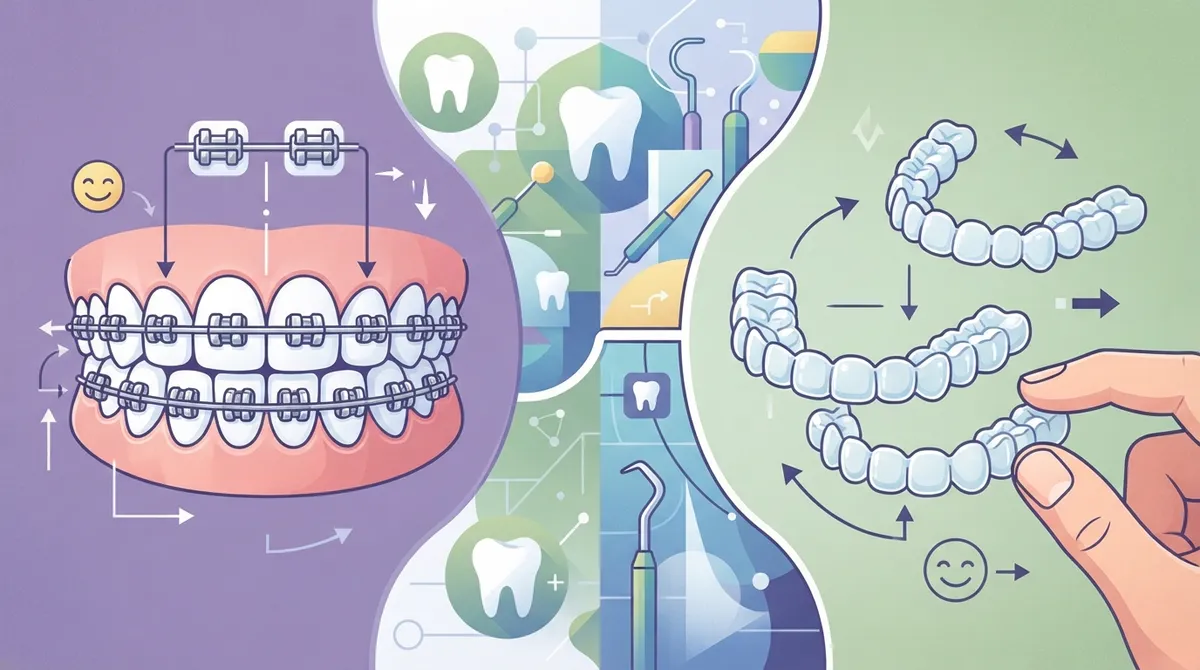
Let’s start simple. Traditional braces use metal or ceramic brackets glued to your teeth, connected by a wire. That wire applies steady pressure, gently guiding teeth into place over time. Braces stay on your teeth 24/7, so they work even on days you forget they’re there.
Clear aligners, on the other hand, are removable trays made of smooth plastic. You wear a new set every one to two weeks, and each tray nudges your teeth a little closer to their final position. Unlike braces, aligners depend heavily on you. You need to wear them 20 to 22 hours a day for them to work properly.
Here’s a quick way to think about it: braces are like a steady, hands-off coach that works whether you’re paying attention or not. Aligners are more like a personal trainer that only helps if you show up and put in the effort.
A Side-by-Side Comparison
| Feature | Traditional Braces | Clear Aligners |
|---|---|---|
| Visibility | Noticeable (unless ceramic) | Nearly invisible |
| Removable? | No, fixed in place | Yes, removable for eating |
| Best for | Complex bite issues, severe crowding | Mild to moderate crowding or spacing |
| Daily care | Careful brushing around brackets | Remove to brush and floss normally |
| Typical treatment time | 12 to 36 months | 6 to 18 months |
| Food restrictions | Avoid sticky, hard, chewy foods | None, just remove trays first |
These numbers are general estimates. Your actual treatment time depends on your specific bite, how well you follow instructions, and how your teeth respond. A consultation with Dr. Flor Segovia at Segovia Orthodontics will give you a personalized timeline.

Which Option Fits Your Life Best?
Choosing between braces and aligners isn’t just about your teeth. It’s about your daily routine, your goals, and even your upcoming life events. Let’s look at how different people in Lakewood Ranch might approach this decision.
For Busy Moms Managing the Family Calendar
If you’re a mom coordinating soccer practice, homework, and dinner every night, you know convenience matters. Kids and teens often do great with braces because there’s nothing to lose or forget. No trays to misplace in a backpack or lunchbox. For younger patients, especially those who might struggle with the discipline aligners require, braces can be the more reliable choice.
That said, older teens who are responsible and motivated might do wonderfully with aligners. It really comes down to your child’s habits. Learn more about teen orthodontic treatment options designed around real family schedules.
For Young Professionals Who Want Discretion
If you’re building your career and worried about how metal brackets might look in client meetings, clear aligners are often the go-to choice. They’re subtle, comfortable, and easy to remove for important presentations or dinners. Many young adults in Lakewood Ranch choose clear aligners for exactly this reason.
For Career-Focused Adults Who Need Speed and Efficiency
Time is everything when you’re climbing the ladder. Some adults prefer options that move quickly with fewer office visits. Both braces and aligners can be efficient, but factors like your bite complexity will determine which route gets you to your goal smile faster. Advanced systems, like LightForce Orthodontics, use digital planning and 3D-printed brackets that can reduce treatment time by up to 45 percent compared to older methods.
For Life Event Planners Prepping for a Big Day
Got a wedding, graduation, or big reunion coming up? Timing matters. Aligners can sometimes work faster for minor spacing or crowding issues, but braces may be necessary if your case is more complex. Either way, start early. The sooner you begin, the more likely you’ll have that camera-ready smile when it counts.
For Adults Correcting Old Relapse
If you had braces as a teen and your teeth have shifted back, you’re definitely not alone. This is called orthodontic relapse, and it happens more often than people realize. Adult relapse patients tend to be highly motivated and consistent, which makes them excellent candidates for aligners. Since your teeth only need mild adjustments in most relapse cases, aligners can often do the job discreetly and efficiently. Check out adult orthodontics options built for exactly this situation.
What Does the Research Actually Say?
It helps to look beyond marketing claims and see what the science shows. Here’s what recent studies reveal:
- A 2024 systematic review found both aligners and braces can be effective, though aligner accuracy varies depending on the type of tooth movement needed.
- A 2024 umbrella review reported that clear aligners achieve about 55 to 82 percent accuracy for planned tooth movements, depending on the specific movement.
- That same review found aligners are less reliable for large rotations over 15 degrees, correcting open or deep bites, and moving molars more than about 1.5 millimeters.
- A 2025 review of 21 clinical trials with 970 patients found no major difference in outcomes between braces and aligners for simple, non-extraction cases.
- The same 2025 review noted aligner patients often had less plaque buildup and better gum health during treatment, likely because trays are removable for cleaning.
- Another 2025 review of 15 trials involving over 1,000 patients found that for cases requiring tooth extraction, braces produced better quality results than aligners.
These findings from sources like the National Library of Medicine confirm what experienced orthodontists already know: both treatments work well for the right cases, but complex problems usually need the predictable force of braces.
How to Decide: A Step-by-Step Approach
Feeling overwhelmed? Here’s a simple process to help you figure out your best path forward.
- Schedule a consultation. No online quiz or mail-order kit can replace an in-person exam with digital scans and X-rays.
- Get a full bite evaluation. Your orthodontist will check for crowding, spacing, overbite, underbite, crossbite, and jaw alignment.
- Discuss your lifestyle honestly. Tell your orthodontist about your work, hobbies, and how disciplined you are about wearing removable devices.
- Review your treatment options. Ask about traditional metal braces, clear ceramic braces, and clear aligners, including newer systems.
- Consider your budget and financing. Ask about payment plans that fit your monthly budget.
- Set a timeline. If you have an event coming up, mention it so your treatment plan accounts for that date.
- Commit to the plan. Whether it’s daily aligner wear or regular braces adjustments, consistency is what gets you results.
Fun, Modern Options Worth Knowing About
Orthodontic care has come a long way, and today’s choices go beyond plain metal brackets. Here are a few standout options available at Segovia Orthodontics.
WildSmiles Braces for Kids and Teens
Let’s be honest, getting braces isn’t always exciting for kids. That’s where WildSmiles Braces come in. Instead of boring round brackets, kids can choose fun shapes like stars, hearts, footballs, and even Mickey Mouse. When kids feel excited about their braces, they’re more likely to brush well and follow care instructions. The unique shapes also make it easier to spot leftover plaque, which helps everyone keep those teeth extra clean.
LightForce Braces for Precision and Speed
For patients wanting a highly customized, tech-forward experience, LightForce braces use 3D printing to create brackets that fit each tooth perfectly. This can mean more comfort, fewer adjustments, and treatment that moves noticeably faster.
Angel Aligners for Efficient, Affordable Clear Treatment
Angel Aligners offer a smart alternative to traditional clear aligner brands. Using a flexible “7+3” wear schedule, seven days with a softer tray followed by three days with a firmer one, they can speed up tooth movement while cutting down on office visits. They’re also generally more budget-friendly, which is a big plus for patients watching their spending.
Common Mistakes to Avoid
Whether you choose braces or aligners, steer clear of these common pitfalls that can slow down your progress.
- Skipping aligner wear time because “it’s just for a few hours”
- Eating hard or sticky foods that damage brackets and wires
- Forgetting to switch aligner trays on schedule
- Missing regular checkup appointments
- Not wearing your retainer after treatment ends
- Choosing a treatment based on price alone without a proper evaluation
Remember, both braces and aligners require a retention plan afterward. Teeth naturally want to shift back over time, so a good retainer plan protects your investment for years to come.
Why Local, Personalized Care Matters
Every smile is different, and cookie-cutter treatment plans rarely give the best results. That’s why an in-person evaluation with a board-certified orthodontist beats any online screening tool. Dr. Flor Segovia brings years of training and hands-on experience to every consultation, and she’s a member in good standing with organizations like the American Board of Orthodontics, which sets rigorous standards for orthodontic expertise.
At Segovia Orthodontics, families throughout Lakewood Ranch appreciate the warm, welcoming environment paired with cutting-edge technology. Whether it’s a child’s first check-up or an adult finally addressing years of shifted teeth, the goal is always the same: a smile you’re proud to show off. You can see what real patients say by checking Visit us on Google — Segovia Orthodontics, or follow along with smile transformations on our Facebook page and our Instagram page.
Questions to Ask During Your Consultation
Walking into your appointment prepared makes a big difference. Consider asking these questions:
- Based on my bite, am I a good candidate for aligners, or do I need braces?
- How long will my treatment realistically take?
- What happens if I miss wearing my aligners for a day or two?
- Will insurance or financing help cover my treatment?
- What does the retention phase look like after treatment ends?
Being upfront about your habits and goals helps your orthodontist create a plan that actually works for your real life, not just an ideal scenario.
Ready to Get Started?
Choosing between braces and aligners doesn’t have to feel stressful. With the right guidance, you can pick a path that fits your smile goals, your schedule, and your budget. The team at Segovia Orthodontics is here to walk you through every step, answer your questions in English or Spanish, and help you feel confident about your decision.
Ready to take the next step toward your best smile? Request an appointment today, or feel free to contact us with any questions. You can also call us at 941-557-1333 to speak with our friendly team and get started on your journey to a smile you’ll love.
FAQs
Q: Are clear aligners or braces better for patients in Lakewood Ranch?
A: Honestly, it depends on your smile! Both work great for the right person. Simple crowding or spacing often does well with aligners, while more complex bites usually need the steady power of braces. The best way to know for sure is a friendly, in-person evaluation.
Q: How much do braces and clear aligners cost in Lakewood Ranch, Florida?
A: Costs vary based on your specific treatment needs and how long treatment takes. The good news is many practices, including ours, offer flexible financing plans so you can spread out payments comfortably. We’re happy to walk you through pricing details during your consultation.
Q: Which option works faster, braces or clear aligners?
A: It really depends on your case! Aligners sometimes move faster for mild issues, while braces (especially advanced systems like LightForce) can tackle complex problems efficiently too. Your orthodontist will give you a realistic timeline once they’ve seen your teeth up close.
Q: Can clear aligners fix overbites, underbites, or crossbites?
A: Sometimes, yes! Mild versions of these issues can often be treated with aligners. But more significant bite problems typically respond better to traditional braces, which provide more consistent, controlled force over time.
Q: What happens if I lose an aligner or fall behind on my wear schedule?
A: Don’t panic, this happens to plenty of people! Just reach out to your orthodontic office right away. They can help you get back on track, whether that means moving to your next tray early or ordering a replacement.
Our Service Area