Key Takeaways
-
Research shows Damon braces are not significantly faster than traditional braces; a 2024 meta-analysis found only a 2.79-month difference, with treatment speed depending more on bite complexity and patient compliance than bracket type.
-
Damon braces cost significantly more ($5,100-$7,000) compared to traditional braces (around $2,800) in the Lakewood Ranch area, so budget should be a primary consideration when choosing between the two systems.
-
Both Damon and traditional braces produce equally effective final results with no statistically significant differences in arch dimensions, bite outcomes, or overall smile quality according to multiple systematic reviews.
-
Your orthodontist's skill, diagnosis, and treatment planning matter far more than bracket brand; case complexity, patient cooperation with elastics, and oral hygiene habits have greater impact on treatment success than the system chosen.
-
Damon braces may reduce appointment visits by approximately 3.64 visits on average and save about 20 seconds per arch during procedures, but this doesn't guarantee faster overall treatment completion.
-
If discretion is your priority, Damon Clear ceramic brackets are less noticeable than metal but not truly invisible; clear aligners like Angel Aligners offer a more discreet alternative worth exploring.
Trying to pick between Damon braces and traditional braces in Lakewood Ranch? You’re not alone, and honestly, it’s totally normal to feel a little overwhelmed by all the claims out there. Some websites make it sound like one option is magic and the other is old news. The truth is much simpler and, frankly, more comforting once you understand it. Both systems can give you a beautiful, healthy smile when the right orthodontist is guiding your care.
This guide clears up the common myths floating around about self-ligating brackets versus traditional braces. We’ll walk through what the research actually shows, what it might cost, and how to figure out which choice fits your life. Whether you’re a busy mom juggling soccer practice and orthodontic appointments, or a professional prepping for a big career move, we’ve got you covered. Let’s bust these 12 myths together, one at a time.
What Are Damon Braces and Traditional Braces, Really?
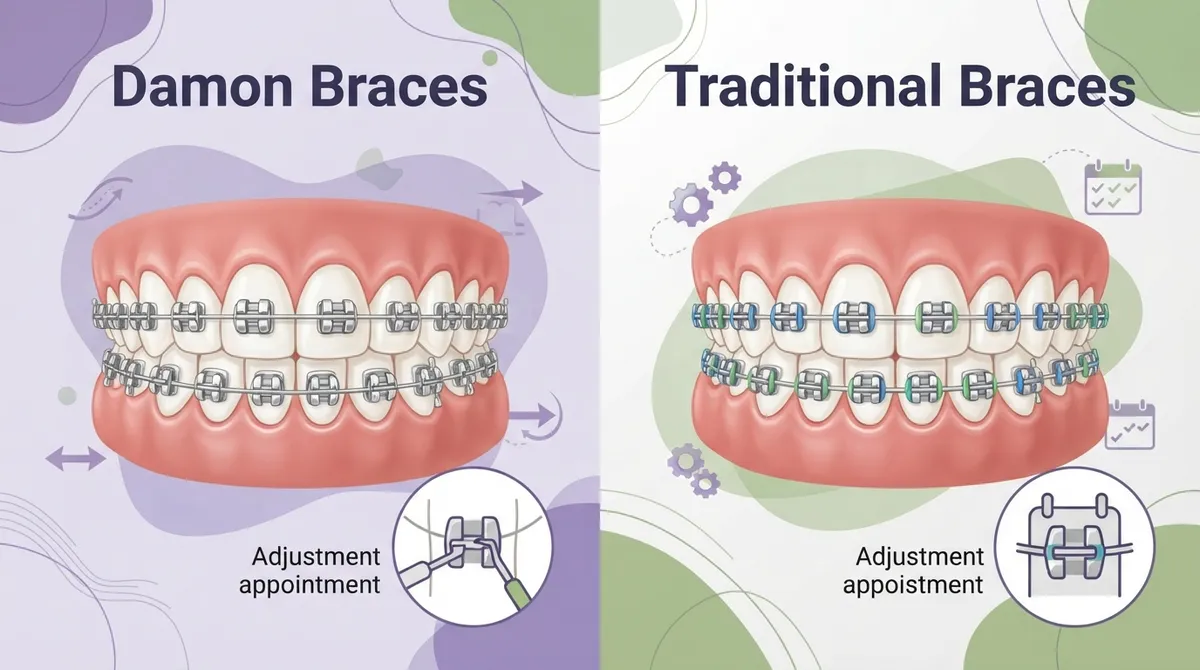
Before we bust any myths, let’s get on the same page. Damon braces are a brand of self-ligating braces. That fancy term just means the bracket has a built-in door or clip that holds the archwire in place. No rubber bands needed.
Traditional braces use tiny elastic rings or metal ties to hold the wire onto each bracket. Both systems rely on brackets and wires to gently move your teeth over time. Neither one is inherently “better” in every single case, and that’s actually good news for you.
Myth 1: Damon Braces Always Work Faster Than Traditional Braces
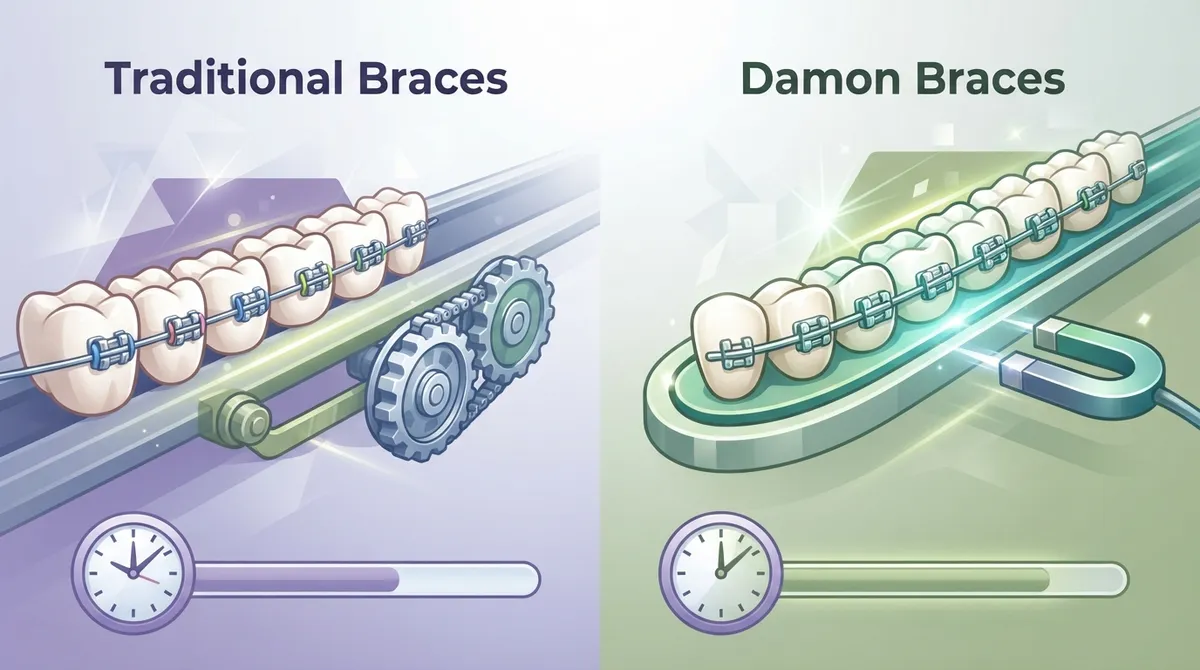
This is probably the biggest myth out there, and it makes sense why people believe it. Marketing materials often promise shorter treatment times with self-ligating systems. But here’s what the science actually says.
A 2024 systematic review and meta-analysis looked at 23 studies and found the treatment-time difference was not statistically significant, hovering around 2.79 months either way. That’s a tiny gap with a lot of uncertainty behind it. Your actual treatment time depends far more on your bite, your bone structure, and how well you follow instructions than on which bracket brand sits on your teeth.
Myth 2: You’ll Need Way Fewer Appointments With Damon
Some patients hope self-ligating braces mean skipping visits altogether. That same 2024 review estimated a reduction of about 3.64 visits on average, but the researchers noted the findings varied a lot between studies. This isn’t a guarantee for everyone.
What we do know is that self-ligating brackets can save a little time during each adjustment. One evidence summary found roughly 20 seconds saved per arch during certain procedures. That’s helpful for your orthodontist’s schedule, but it doesn’t necessarily mean your whole treatment wraps up sooner.
Myth 3: Traditional Braces Are Outdated Technology
Nope, not even close. Traditional braces remain incredibly effective and are still widely used by orthodontists everywhere, including here at Segovia Orthodontics. They’ve been refined over decades and work beautifully for crowding, spacing, and bite issues.
If you’re curious about why metal braces still hold their own, check out this piece on 7 Reasons Traditional Metal Braces Are Still a Top Choice. Modern traditional brackets are smaller, smoother, and more comfortable than older versions your parents may remember.
Myth 4: Damon Braces Are Always Less Painful
Comfort is subjective, and the research on pain differences is honestly mixed. A randomized clinical trial comparing an older Damon model with conventional brackets found no meaningful advantage in initial alignment, and discomfort results were mixed too.
Here’s the thing: soreness after adjustments happens with both systems. Your teeth are moving, and that takes a little getting used to no matter which bracket you choose. Good news is, discomfort typically fades within a few days each time.
Myth 5: Self-Ligating Braces Give Better Final Results
A 2019 systematic review published and indexed in PubMed looked at seven comparative studies. The conclusion? There wasn’t enough evidence that Damon systems create better arch expansion or tipping control compared to traditional techniques.
Another systematic review comparing self-ligating and conventional brackets found no statistically significant difference in final arch dimensions, bracket failure rates, or overall bite outcomes. In plain terms, both approaches can get you to the same great smile.
Myth 6: Damon Clear Is Basically Invisible
Damon Clear uses tooth-colored ceramic brackets, which are less noticeable than metal ones. But let’s be clear, they are not invisible. If you’re a young professional prepping for job interviews or a big presentation, this matters.
Ceramic brackets can also cost more and may behave differently than metal ones in terms of friction and durability. If discreet treatment is your top priority, you might want to explore clear aligners instead, which offer a truly low-visibility option.
Myth 7: The Bracket Brand Is the Most Important Factor
This might be the myth that trips people up the most. Diagnosis, treatment planning, and your orthodontist’s skill matter far more than the bracket name. So does your cooperation with wearing elastics, keeping appointments, and brushing well.
Case complexity, tooth movement biology, and even your growth stage all play bigger roles than bracket style. This is why finding a board certified orthodontist matters so much more than debating bracket brands.
Factors That Actually Affect Your Treatment Timeline
- How complex your bite and crowding issues are
- Whether you need extractions or expansion
- Your age and remaining jaw growth
- How consistently you wear rubber bands or aligners
- Your oral hygiene habits throughout treatment
- How often you attend scheduled adjustment visits
- Whether any teeth need special attention, like impacted teeth
Myth 8: Damon Braces Cost the Same as Traditional Braces
Pricing varies quite a bit, and it’s smart to get specifics before committing. Regional estimates in the Lakewood Ranch and Bradenton area have cited roughly $5,100 to $7,000 for specialist self-ligating treatment. Traditional braces offers sometimes start closer to $2,800.
Remember, these are marketing estimates, not fixed local averages. Your actual fee depends on your case complexity, treatment length, and what’s included like retainers or emergency visits. Learning about orthodontic financing options can help make either choice more manageable for your budget.
Sample Cost Comparison Table
| Treatment Type | Estimated Starting Price | What Affects Final Cost |
|---|---|---|
| Traditional Braces | Around $2,800+ | Case complexity, treatment length, retainers |
| Damon Self-Ligating Braces | Around $5,100 to $7,000+ | Bracket material, case complexity, follow-up care |
| Damon Clear (Ceramic) | Higher than metal Damon | Aesthetic material costs, durability needs |
Myth 9: Cleaning Is Easier With One System Over the Other
Both Damon braces and traditional braces need daily brushing and interdental cleaning. Elastic ties on traditional braces can trap plaque if you’re not careful. Meanwhile, the Damon door mechanism also needs thorough attention during brushing.
Neither system lets you skip good habits. If you want extra guidance on staying on top of hygiene during treatment, our page on all about braces walks through daily care tips step by step.
Simple Daily Hygiene Checklist for Any Braces
- Brush after every meal, or at least twice daily
- Use a proxy brush to clean around brackets and wires
- Floss daily with a floss threader or water flosser
- Rinse with an ADA-approved fluoride mouthwash
- Avoid sticky, hard, or overly chewy foods
- Keep up with regular dental cleanings alongside orthodontic visits
Myth 10: One System Is Better for Crowded Teeth or Bite Issues
Both Damon braces and traditional braces can treat crowding, overbites, underbites, and crossbites effectively. The bracket style itself isn’t the deciding factor here. What matters is your specific diagnosis and treatment plan.
If you’re dealing with crowded teeth, our article on how to fix crowded teeth in Lakewood Ranch breaks down several proven approaches. Similarly, if you’re facing bite concerns, exploring underbite correction options can help you understand what treatment path makes sense.
Myth 11: Insurance Treats Damon and Traditional Braces the Same
Dental insurance coverage can vary depending on your plan and the specific treatment recommended. It’s always smart to check your benefits before starting either option. Some plans cover a percentage of orthodontic treatment regardless of bracket type, while others have specific exclusions.
Our team can help you sort through your coverage details during your first visit. Learning more about your first orthodontic visit can help you feel prepared and ask the right questions about costs upfront.
Myth 12: A Consultation Is Just About Picking a Bracket Brand
This might be the most important myth to bust. A meaningful consultation covers so much more than bracket names. It should include photographs, digital scans or impressions, and X-rays when needed.
Your orthodontist should also discuss extraction or non-extraction options, estimated treatment duration, retainer costs, and emergency policies. Understanding the total fee matters way more than debating self-ligating versus traditional systems. Here’s a simple roadmap for what a thorough consultation should include.
What a Complete Orthodontic Consultation Should Cover
- A full review of your dental and orthodontic history
- Digital scans, photographs, or physical impressions
- X-rays to assess root position and jaw structure
- Discussion of treatment options, including braces and aligners
- An estimated treatment timeline based on your case
- A clear breakdown of total costs and financing options
- Information about retainers and post-treatment care
- An explanation of the practice’s emergency care policy
Curious what happens during this process at our office? Take a look at what happens during an orthodontic evaluation to feel fully prepared before you walk in.
Exploring Other Treatment Options at Segovia Orthodontics
Beyond traditional and self-ligating braces, our Lakewood Ranch practice offers some genuinely exciting alternatives. WildSmiles braces bring fun shapes like stars, hearts, and even Mickey Mouse designs for kids who want their treatment to feel less clinical and more like self-expression.
For patients wanting cutting-edge precision, LightForce Orthodontics uses fully digital, 3D-printed brackets custom-fitted to your teeth. This technology can potentially reduce treatment time significantly through more precise planning. If discretion is your priority, ask us about Angel Aligners, a clear aligner system known for efficient AI-driven treatment planning and budget-friendly pricing.
How to Decide What’s Right for Your Smile
Choosing between Damon braces and traditional braces really comes down to your personal priorities, budget, and lifestyle. Career-focused professionals might lean toward Damon Clear or aligners for subtlety. Parents managing busy schedules might appreciate flexible appointment times regardless of bracket choice.
Adults returning for relapse correction often value efficient, predictable treatment plans backed by real experience. Whatever your situation, the best path forward starts with an honest conversation with your orthodontist about your goals. Learn more about our approach on our why choose us page.
Quick Decision Checklist Before Your Consultation
- List your top priorities: speed, comfort, appearance, or cost
- Note any past orthodontic treatment or relapse concerns
- Think about your daily schedule and appointment flexibility needs
- Prepare questions about financing and insurance coverage
- Consider whether discreet options matter for your career or lifestyle
- Bring a list of any dental sensitivities or concerns
Dr. Flor Segovia and her team bring genuine, board-certified expertise recognized by the American Board of Orthodontics, ensuring your treatment plan reflects the latest, most reliable standards in the field. You can also learn more about her background on our Orthodontist Flor Segovia page.
Want to see real patient experiences? Check out our Facebook page or follow along on our Instagram page for smile transformations and helpful tips. You can also visit us on Google — Segovia Orthodontics to read what our Lakewood Ranch families have to say.
Ready to Get Real Answers for Your Smile?
Choosing between Damon braces and traditional braces doesn’t have to feel confusing or stressful. Both are proven, effective options, and the right choice depends on your unique needs, not marketing hype. The best next step is simply talking with a trusted expert who can look at your smile and guide you honestly.
Ready to get started? Request an appointment with our friendly Lakewood Ranch team today. You can also contact us with any questions, or simply call us at 941-557-1333 to speak with our team directly. We can’t wait to help you build a smile you’ll love for years to come.
FAQs
Q: Are Damon braces better than traditional braces for patients in Lakewood Ranch?
A: Not necessarily! Both systems work great when your orthodontist creates a solid treatment plan. The research shows no consistent proof that Damon braces produce better final results than traditional braces. Your best bet is chatting with our team about what fits your smile and lifestyle.
Q: Do Damon braces really work faster than regular braces?
A: Not always, and that’s the honest truth. A 2024 review found the treatment-time difference between Damon and traditional braces wasn’t statistically significant. Your treatment speed depends way more on your case complexity and how well you follow instructions.
Q: How much do Damon braces cost in Lakewood Ranch, Florida?
A: Regional estimates suggest Damon treatment might run around $5,100 to $7,000, while traditional braces can start closer to $2,800. These are just ballpark figures though! Your actual cost depends on your specific case, so it’s best to schedule a consultation for accurate pricing.
Q: Are Damon braces more comfortable or less painful than traditional braces?
A: Comfort really varies from person to person, and honestly, the research is mixed on this one. Some studies show no meaningful pain difference between the two systems. Both can cause some soreness after adjustments, which typically fades within a few days.
Q: Does dental insurance cover Damon braces and traditional braces in Florida?
A: It depends on your specific insurance plan! Some policies cover a percentage of orthodontic treatment no matter which bracket type you choose. We’re happy to help you review your benefits during your first visit so there are no surprises.
Our Service Area