Key Takeaways
-
An orthodontic smile requires balance across eight components including tooth proportion, gum line visibility, midline alignment, and buccal corridor space—not just straight teeth.
-
LightForce braces use custom 3D-printed brackets designed for your specific teeth, potentially speeding up treatment by up to 45% with real-time digital adjustments.
-
Angel Aligners employ a ‘7+3’ wear schedule (flexible tray for 7 days, firmer tray for 3 days) to accelerate tooth movement and reduce office visits.
-
Research confirms that orthodontic treatment improves smile esthetics regardless of starting severity, with measurable gains in incisor exposure, gum line, and smile consonance.
-
The American Dental Association recommends children receive their first orthodontic evaluation around age 7 to catch jaw growth issues before they become complex problems.
-
About 30% of orthodontic patients today are adults, many returning for treatment after relapse—proving it’s never too late to achieve a balanced smile.
Ever wonder what makes a smile look truly “finished”? It’s not just straight teeth. An orthodontic smile is a smile where everything works together, your teeth, your gums, and your bite all in harmony. If you’ve been comparing braces to clear aligners and wondering which path leads to that balanced, confident look, you’re in the right place. Grab a coffee and let’s break this down together, friend to friend.
At Segovia Orthodontics in Lakewood Ranch, we meet families and busy professionals every day who are curious about this exact question. Whether you’re a mom scheduling your kid’s first check-up, a young professional eyeing a discreet fix before a big presentation, or an adult whose old retainer just isn’t cutting it anymore, this guide is for you.

What Exactly Is an Orthodontic Smile?
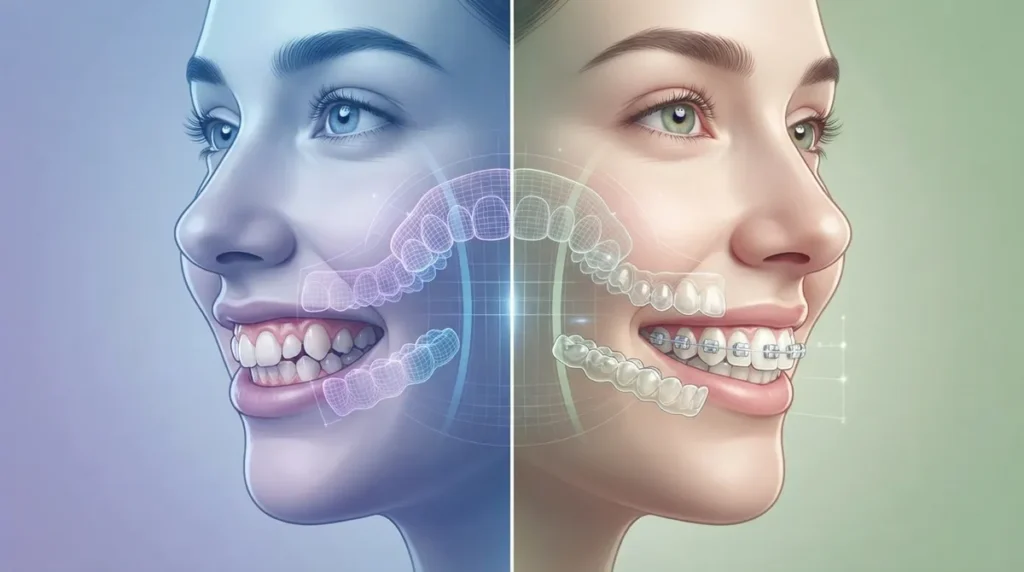
Let’s start with the basics. An orthodontic smile isn’t just about straight teeth in a row. It’s a balanced smile where your teeth and gums sit in the right spot within what experts call the “dynamic display zone,” the area that shows when you talk, laugh, or smile big. Think of it like a well-composed photo. Every part needs to line up just right.
Orthodontic treatment actually improves several measurable things beyond straightness. These include how much of your tooth shows when you smile, your gum line appearance, the width of your smile, and even the dark spaces near your back teeth called buccal corridors. That’s a lot more nuanced than just “straight teeth,” right?
The Eight Components of a Balanced Smile
Orthodontists look at several factors when planning your treatment. Here’s a simple breakdown:
- Smile width and how much it shows your back teeth
- Gum line visibility (how much gum shows when you smile)
- Tooth proportion and symmetry
- Midline alignment (are your front teeth centered?)
- Buccal corridor space (those side shadows when you smile)
- Incisor exposure at rest and during a full smile
- Smile consonance (does your smile curve follow your lower lip?)
- Overall bite function, or occlusion
This is why a good orthodontist doesn’t just look at your teeth. They look at your whole face and how it moves when you talk and smile. If you’re curious about what this process looks like, our orthodontic evaluation guide walks through it step by step.
Braces vs. Clear Aligners: Which Gets You There?
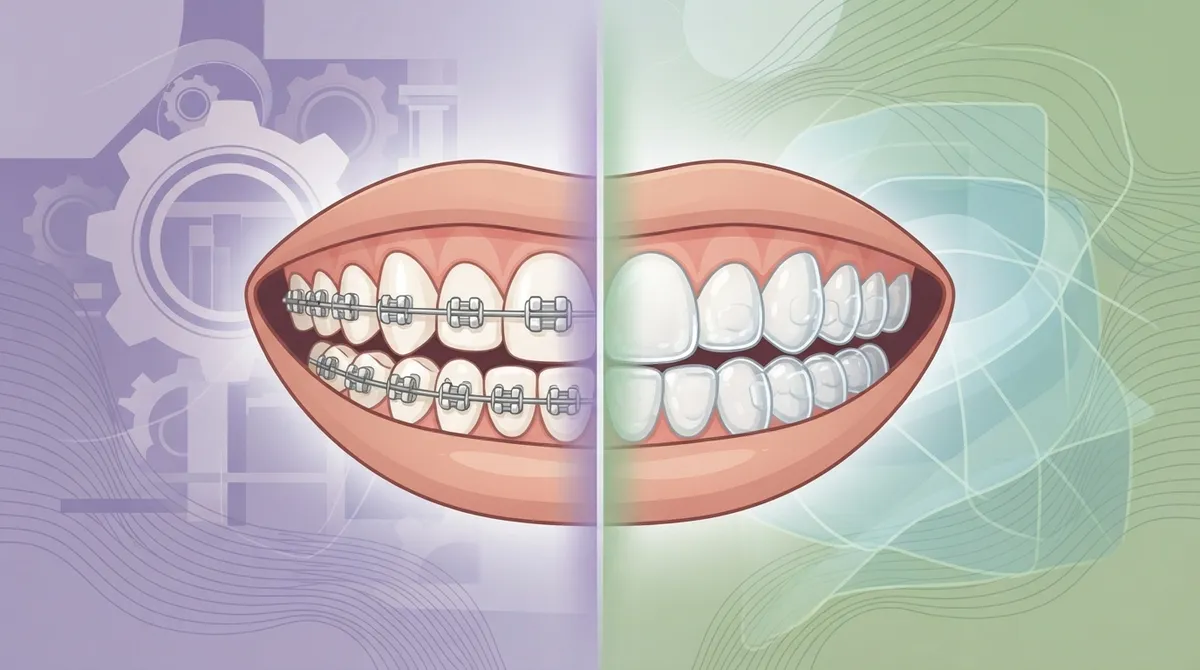
Now let’s get to the heart of the matter. Both braces and clear aligners can absolutely give you an orthodontic smile. But they take different roads to get there. Let’s compare them side by side.
| Feature | Traditional & Custom Braces | Clear Aligners |
|---|---|---|
| Best For | Complex bite issues, kids, teens, severe crowding | Mild to moderate cases, adults wanting discretion |
| Visibility | Visible, though clear/white brackets reduce this | Nearly invisible |
| Removability | Fixed, cannot remove at home | Removable for eating and brushing |
| Treatment Speed | Can be faster with digital systems like LightForce | Fast with AI-driven planning, like Angel Aligners |
| Maintenance | Requires careful brushing around brackets | Requires discipline to wear 20+ hours daily |
Both options work well, and honestly, the “best” choice depends entirely on your situation. That’s why a consultation matters so much. You can always contact us to talk through your specific goals.
Why Braces Still Shine for Complex Cases
Traditional braces remain the gold standard for tricky bite issues. At our practice, we offer two standout options that make braces way more comfortable and even fun.
LightForce Braces use fully digital, 3D-printed brackets custom-made for your teeth. This isn’t a one-size-fits-all deal. Each bracket is designed specifically for your smile, which can speed up treatment by up to 45%. Real-time digital adjustments mean Dr. Segovia can fine-tune your plan with incredible precision. Learn more about this technology on our Lightforce Orthodontics page.
WildSmiles Braces bring a playful twist for kids and teens. Instead of boring round brackets, kids can choose shapes like stars, hearts, footballs, or even Mickey Mouse. This might sound like a small thing, but it actually helps kids stay motivated. When treatment feels fun, kids brush better and stick to their care routine. Check out the fun designs on our Wildsmiles Braces page.
Why Clear Aligners Win for Discretion and Speed
If you’re a working professional who can’t imagine metal brackets during client meetings, clear aligners might be your answer. Angel Aligners, one option we offer, use AI-driven treatment planning and a unique wear schedule. You wear a flexible tray for 7 days, then a firmer one for 3 days. This “7+3” approach can speed up tooth movement and cut down on extra office visits.
Angel Aligners also use a frosted finish to reduce shine, so they’re less noticeable than some other clear aligner brands. Plus, they tend to be more budget-friendly thanks to efficient manufacturing. Explore your options on our Clear Aligners page.
Does Everyone Benefit the Same Way?
Here’s some genuinely encouraging news. Research shows that orthodontic treatment improves smile esthetics no matter how severe your starting point is. That means whether you have mild crowding or a more complex malocclusion, you’ll see real improvement in five key areas: incisor exposure, gum line, smile width, buccal corridor space, and smile consonance.
In other words, you don’t need “perfect” teeth to start. You just need the willingness to begin.
Who Should Consider Treatment? A Guide by Life Stage
Let’s talk about who actually benefits from orthodontic care, because the answer might surprise you.
- Children around age 7: The American Dental Association recommends a first orthodontic check-up around this age. Early evaluation catches jaw growth issues before they become bigger problems. Read more in our Early Orthodontic Treatment guide.
- Teens: This is the classic time for braces or aligners, often coinciding with growth spurts that make treatment more efficient. See our Teen Orthodontic Treatment page for details.
- Young adults preparing for milestones: Graduations, weddings, and new careers are huge motivators. Many patients want a straighter smile before these big moments.
- Busy professionals: If your career keeps you in the spotlight, discreet aligners let you keep working without anyone noticing your treatment.
- Adults correcting relapse: Did you have braces years ago, but your teeth shifted back? You’re not alone. About 30 percent of orthodontic patients today are adults, and many are returning for a second round of treatment.
No matter which category you fall into, our Adult Orthodontics and First Orthodontic Visit pages can help you figure out your next step.
Steps to Achieving Your Orthodontic Smile
Wondering what the process actually looks like? Here’s a simple roadmap.
- Schedule a consultation. This is where Dr. Segovia evaluates your bite, jaw, and facial structure.
- Get a personalized treatment plan. Whether it’s braces or aligners, your plan is built around your specific smile goals.
- Begin treatment. This might mean bonding brackets or starting your first set of clear trays.
- Attend regular check-ins. These appointments let your orthodontist track progress and make adjustments.
- Finish active treatment. Your teeth and bite reach their final, balanced position.
- Wear your retainer. This step is non-negotiable if you want to protect your results long term. Our Orthodontic Retainers page explains why this matters so much.
Simple, right? The hardest part is usually just picking up the phone and getting started.
Common Orthodontic Problems That Affect Your Smile
Malocclusion, which is just a fancy word for a bad bite, can affect your smile in several ways. It’s not only about crooked teeth. Misaligned jaws can change how your lips rest, how much gum shows, and even how your face looks in photos.
Some common issues we treat include:
- Overcrowding, where teeth don’t have enough room
- Gaps between teeth that affect smile symmetry
- Overbites and underbites that impact jaw function
- Crossbites that can cause uneven wear on teeth
- Open bites where front teeth don’t touch when biting down
If you’re not sure what’s going on with your own smile, our Common Orthodontic Problems page breaks it down in plain language.
Why Choose a Board-Certified Orthodontist?
Here’s something worth knowing: not every dentist is an orthodontist. Orthodontists complete additional years of specialized training focused entirely on teeth movement, jaw alignment, and facial growth patterns. Dr. Flor Segovia is board-certified, which means she’s met rigorous standards set by the American Board of Orthodontics.
This distinction matters because achieving a true orthodontic smile, one with proper function and lasting results, requires specialized expertise. You can learn more about her background on our Orthodontist Flor Segovia page, or explore what board certification means on our Board Certified Orthodontist page.
Advanced Technology Makes a Difference
Modern orthodontics isn’t your grandparents’ metal-mouth experience. Digital scanning, 3D printing, and AI-assisted planning have transformed how treatment works. These tools help orthodontists design more precise, comfortable, and efficient treatment plans. Curious how this technology works in practice? Visit our Advanced Orthodontic Technology page for a closer look.
Making Treatment Affordable
Cost is often the biggest hurdle for families and adults considering treatment. The good news? Flexible financing options exist to help spread out payments over time, so achieving your best smile doesn’t have to break the bank. Our Orthodontic Financing page walks through the details.
If you have more questions about the process, timeline, or cost, our Faq Orthodontic Treatment page covers many common concerns.
Real Families, Real Results
Nothing beats hearing from people who’ve walked this path before you. We love seeing families and adults share their journey with us. Feel free to check out our Facebook page for updates and patient stories, or follow along on our Instagram page for smile transformations and behind-the-scenes moments from our Lakewood Ranch office.
And if you want to see what real patients say about their experience, take a look at Segovia Orthodontics reviews on Google by visiting our Segovia Orthodontics location on Google.
Bringing It All Together
So, braces or aligners? Honestly, both paths can lead you to a beautiful, balanced orthodontic smile. It comes down to your specific bite, your lifestyle, and your personal preferences. Complex cases often do best with braces, especially with LightForce’s custom-fit technology. Meanwhile, adults and busy professionals often love the discretion of clear aligners like Angel Aligners.
The most important step isn’t choosing between braces and aligners right this second. It’s simply starting the conversation. Every great smile transformation begins with one small step: a consultation.
Ready to find out which path fits your smile goals? We’d love to help you get there. Feel free to request an appointment today, or if you have questions first, call us at 941-557-1333. Our Lakewood Ranch team is here, ready, and genuinely excited to help you smile with confidence.
FAQs
Q: What is the definition of an orthodontic smile?
A: An orthodontic smile is a balanced, functional smile where your teeth, gums, and bite all work together in harmony. It goes beyond straight teeth to include proper proportions, symmetry, and healthy jaw alignment.
Q: Can adults really achieve an orthodontic smile with braces or aligners?
A: Absolutely! About 30 percent of orthodontic patients today are adults, proving it’s never too late to start. Whether you choose braces or clear aligners, adults see real improvements in smile balance and confidence.
Q: What is the ideal age for a child’s first orthodontic evaluation?
A: The American Dental Association recommends kids get their first orthodontic check-up around age seven. This helps catch jaw growth or spacing issues early, making future treatment smoother and often faster.
Q: Does the severity of misalignment affect how much my smile improves?
A: Great news here: research shows smile esthetics improve with treatment regardless of how severe your starting point is. Both complex and minor cases see meaningful gains in smile width, gum line, and overall balance.
Q: How do I know if braces or clear aligners are right for me?
A: It really depends on your bite complexity, lifestyle, and personal goals. A quick consultation with our team can help you figure out which option, whether it’s custom LightForce braces or Angel Aligners, fits your smile best.
Our Service Area