Key Takeaways
-
Brush for at least 2-3 minutes after every meal using a 45-degree angle and small circular motions, never aggressive scrubbing, to prevent white spots and cavities that can persist after braces removal.
-
Use a soft-bristle or bi-level orthodontic toothbrush and clean above, directly on, and below each bracket separately, since braces create hidden plaque traps that regular brushing misses.
-
Floss daily with a floss threader or water flosser to clean between teeth under the archwire, as brushing alone cannot reach these critical areas where decay commonly develops.
-
Aim for 3-5 brushing sessions daily (after meals and before bed) and rinse with water immediately after eating if brushing isn’t possible to prevent food from hardening into plaque.
-
Choose a moderate-power electric toothbrush on gentle setting or soft-bristle manual brush with fluoride toothpaste to strengthen enamel and protect against decalcification marks.
-
Build consistency through practical strategies like keeping travel toothbrushes in your bag, setting phone reminders, and making it a family routine to establish habits that stick throughout treatment.
Getting braces is exciting. You’re on your way to a smile you’ll love showing off. But here’s something nobody tells you enough: brushing teeth with braces is a whole new ballgame. Those brackets and wires create tiny hiding spots for food and plaque, and if you brush the same way you did before, you might end up with white spots or puffy gums by the time your braces come off.
The good news? Once you learn the right technique, brushing with braces becomes second nature. Whether you’re a busy mom making sure your teen keeps up with their routine, a professional squeezing in clear aligner treatment between meetings, or an adult finally correcting that relapse from years ago, this guide will walk you through everything you need to know. At Segovia Orthodontics in Lakewood Ranch, we talk to patients about this every single day, so let’s break it down together.
Why Brushing Teeth With Braces Is Different
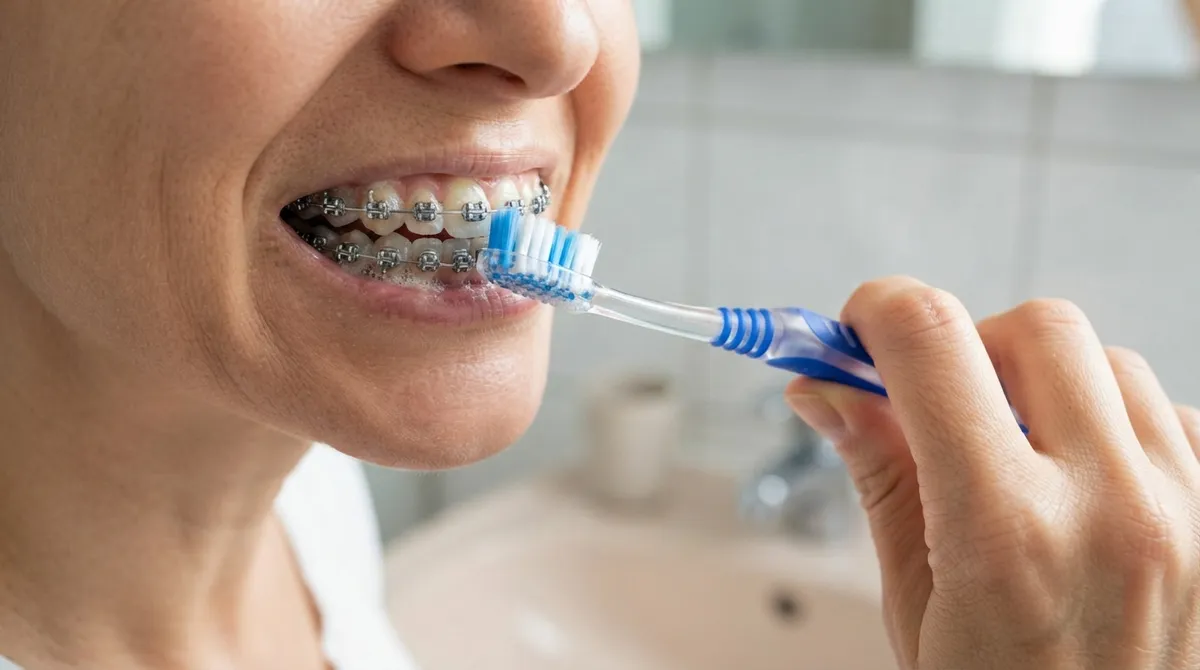
Braces give plaque a lot more places to cling to. Brackets, wires, and bands create little ledges where food particles love to hide. If you skip a spot, that plaque can harden and leave permanent marks on your enamel once your braces come off.
This is why patients with braces need to brush more often and more carefully than they did before treatment. It’s not about brushing harder. It’s about brushing smarter, covering every angle around your hardware.
What Happens If You Don’t Brush Properly
Skipping proper brushing habits can lead to some frustrating problems, including:
- White or discolored spots on your teeth (decalcification) that stay even after braces come off
- Swollen, bleeding gums from gingivitis
- Cavities forming around the brackets
- Bad breath that lingers no matter how much gum you chew
- Longer treatment times if your orthodontist has to address dental issues first
Nobody wants to finish treatment with a straight smile that’s covered in stains. That’s why good habits matter so much during this stage of your journey.
The Right Way to Brush With Braces
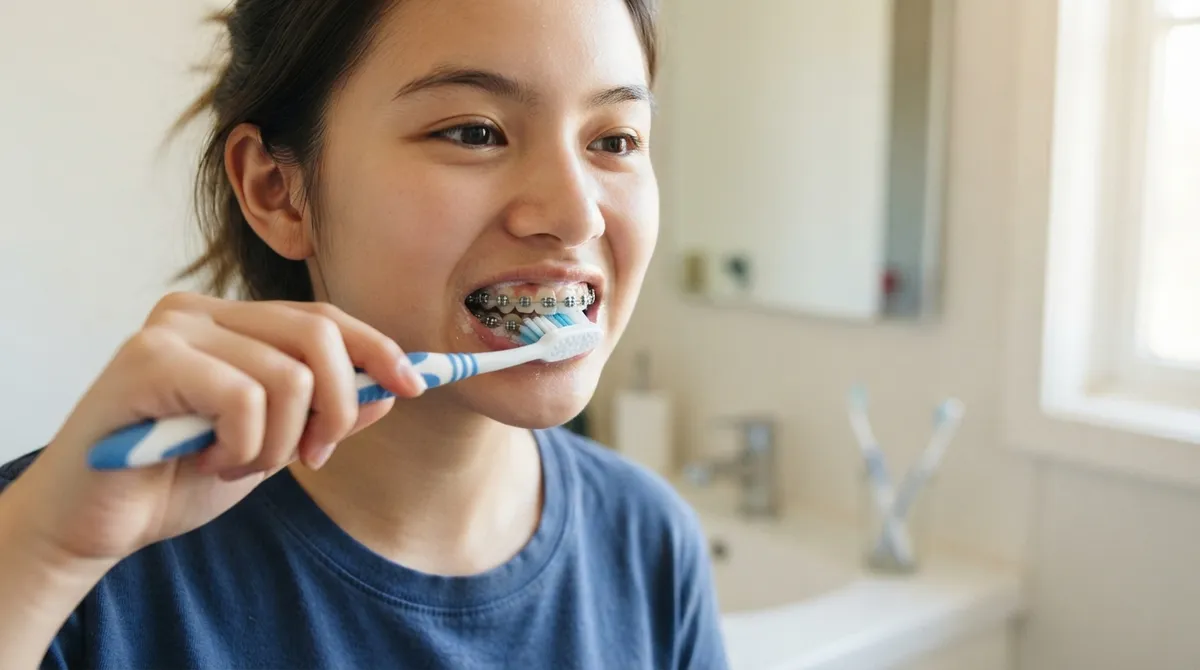
Brushing with braces takes a bit more time and a specific technique. Here’s the step-by-step approach we recommend to every patient at our practice.
Step-by-Step Brushing Technique
- Rinse first. Swish water around your mouth for about 30 seconds to loosen food stuck between your braces.
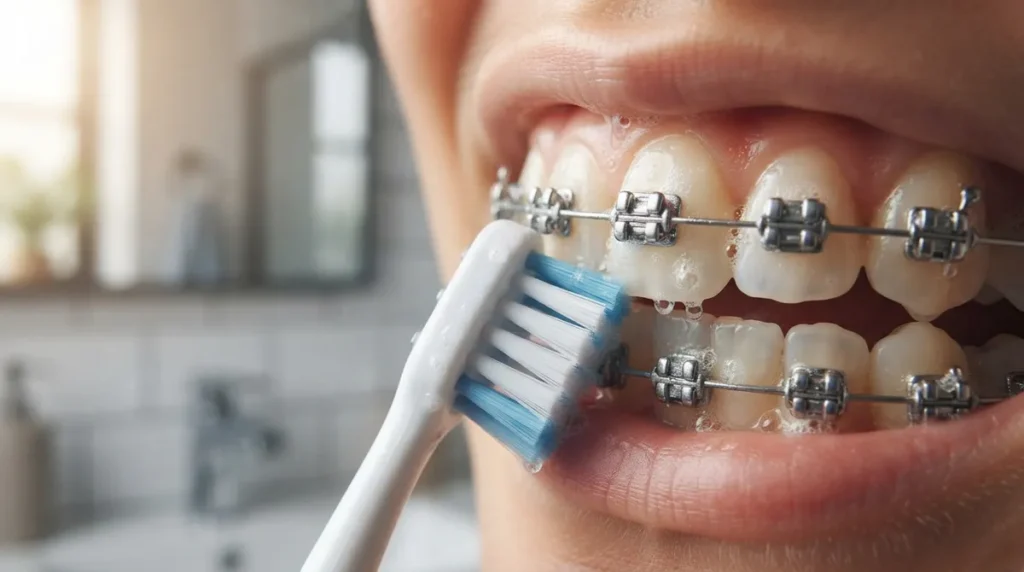
- Angle your brush at 45 degrees. Tilt the bristles up toward the gumline for your bottom teeth and down for your top teeth. This helps you clean under the wire.
- Brush above the bracket. Clean the area between the gumline and the top of each bracket using small circles.
- Brush directly on the bracket. Angle your brush straight onto the bracket to clear away any trapped food or plaque.
- Brush below the bracket. Tilt down slightly to reach the lower half of each tooth.
- Move to the chewing surfaces. Brush back and forth like normal to clean the tops of your molars.
- Finish with your tongue and the roof of your mouth. Bacteria loves to hide there too.
Take your time with this process. Most orthodontic patients need at least 2 to 3 minutes to properly clean around brackets and wires, which is longer than a typical brushing session.
Small Circular Motions Matter
Instead of scrubbing back and forth aggressively, use small, gentle circles. This lifts plaque away from the tooth surface without bending your wires or knocking a bracket loose. Aggressive brushing can actually damage your braces and slow down your treatment timeline.
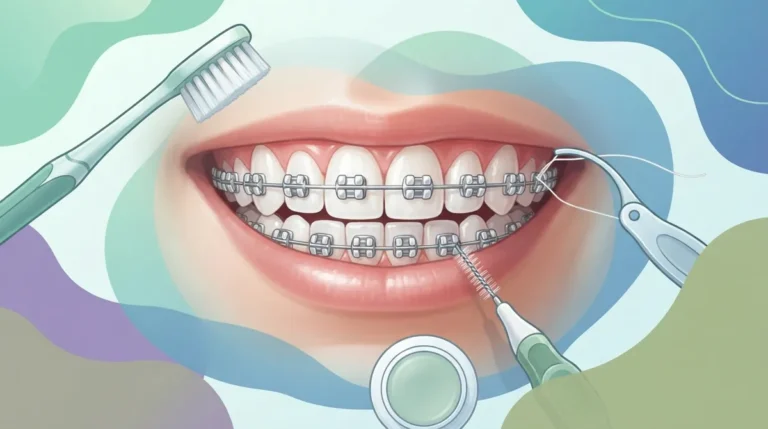
Best Tools for Brushing Teeth With Braces
Not every toothbrush is built for orthodontic care. Here’s a quick comparison of tools that can make brushing with braces easier and more effective.
| Tool | Best For | Why It Helps |
|---|---|---|
| Soft-bristle toothbrush | Everyday brushing | Gentle on gums and brackets, won’t fray quickly |
| Bi-level (orthodontic) toothbrush | Cleaning around brackets | Bristles are cut at different lengths to reach around hardware |
| Electric toothbrush (moderate power) | Thorough daily cleaning | Removes more plaque with less effort, but use a gentle setting |
| Interdental (proxy) brush | Cleaning between brackets and wires | Small brush head fits into tight spaces standard brushes miss |
| Floss threader | Flossing under the wire | Lets you guide floss between teeth without snagging on brackets |
| Water flosser | Flushing out debris | Uses water pressure to dislodge food particles quickly |
A pea-sized amount of fluoride toothpaste is all you need. Fluoride strengthens enamel and helps protect against those decalcification marks we mentioned earlier. If you’re unsure which tools fit your treatment, our team can walk you through options during your visit, or you can always contact us with questions.
How Often Should You Brush With Braces
Consistency is everything when you’re wearing braces. Here’s what we recommend for a solid daily routine:
- Brush after every meal, including breakfast, lunch, and dinner
- Brush after snacks whenever possible
- Brush once more before bed for at least 2 to 3 minutes
- Aim for 3 to 5 brushing sessions total each day
- If you can’t brush right after eating, rinse thoroughly with water instead
Some orthodontists suggest brushing five times a day for at least one minute each session. The exact number matters less than the consistency. The goal is simple: never let food sit on your braces for long.
Don’t Forget to Floss
Brushing alone can’t reach everywhere, especially between teeth. Flossing is still necessary, even though braces make it trickier. A floss threader helps you guide the floss under the wire so you can clean between each tooth properly.
How to Floss With a Threader
- Thread the floss through the loop of the threader
- Guide the threader under the archwire between two teeth
- Pull the floss through and gently move it up and down each tooth
- Repeat for every space between your teeth
- Rinse your mouth when finished
This might feel slow at first, but it gets faster with practice. Many patients find that flossing with braces becomes much easier once they build a routine around it. Water flossers are another great option if traditional flossing feels frustrating.
Brushing Tips for Different Types of Treatment
Every patient’s treatment plan looks a little different, and brushing habits can shift depending on what type of braces or aligners you’re wearing.
Traditional Metal and Ceramic Braces
These require the most attention to brackets and wires. Take extra time brushing above, on, and below every bracket. If you have WildSmiles Braces, you’re in luck. Their unique bracket shapes actually make it easier to see if you’ve brushed thoroughly, since the shapes should stay clearly visible when your teeth are clean.
LightForce Braces
Since LightForce Orthodontics brackets are custom-designed with 3D printing technology, they bond closely to your tooth surface, which can actually reduce spots where plaque builds up. Still, brush carefully around each bracket edge.
Clear Aligners
If you’re using clear aligners, brushing is a bit simpler since there are no brackets or wires. Just remember to brush after every meal before putting your aligners back in, since food particles trapped against your teeth for hours can cause decay.
Common Questions Patients Ask Us
Over the years, patients at our Lakewood Ranch practice have asked us dozens of questions about oral hygiene during treatment. Here are a few things worth knowing as you settle into your new routine.
Can You Use an Electric Toothbrush With Braces
Yes, and many patients prefer it. Just choose a gentle or sensitive mode and avoid pressing too hard against your brackets. The vibrating or rotating motion can actually help lift plaque from tricky spots more effectively than manual brushing.
What If a Bracket Feels Loose While Brushing
Stop brushing that area gently and check if the bracket has shifted. If something feels off, it’s best to reach out about a possible orthodontic emergency so we can take a look before it causes bigger issues.
Building a Routine That Sticks
Good habits are easier to keep when they fit naturally into your day. Here are some simple ways to stay consistent:
- Keep a travel toothbrush and toothpaste in your bag, car, or desk drawer
- Set phone reminders for brushing after lunch if you’re away from home
- Pack disclosing tablets that show where plaque remains after brushing
- Involve your kids by making brushing time a shared family activity
- Reward yourself or your teen for sticking with the routine for a full week
For parents managing this with children or teens, checking in occasionally can help reinforce good habits without feeling like nagging. Many families find that consistent oral hygiene during teen orthodontic treatment leads to smoother visits and fewer surprises at checkups.
Dr. Flor Segovia, a board certified orthodontist recognized by the American Board of Orthodontics, often reminds patients that a few extra minutes of brushing each day protects the investment you’re making in your smile. It really is that simple. Good habits now mean a healthier, brighter smile later.
What to Expect at Your Checkups
During regular visits, our team checks how well your oral hygiene routine is working. We look for plaque buildup, early signs of gum irritation, and any spots that need extra attention. This is also a great time to ask questions about your brushing technique or get pointers on tricky areas.
If you’re new to treatment, learning what happens at your first orthodontic visit can help you feel more prepared and less overwhelmed. We always want patients to feel confident about their care plan, not just their brushing routine.
Ready to Keep Your Smile on Track
Brushing teeth with braces doesn’t have to feel complicated once you know the right steps. A little extra time each day goes a long way toward protecting your enamel, your gums, and the results you’re working so hard for. Whether you’re managing this routine for yourself or helping a child stay on track, small consistent habits make all the difference.
If you have questions about your brushing routine, your braces, or your treatment plan, our team at Segovia Orthodontics in Lakewood Ranch is happy to help. You can request an appointment to get personalized guidance, or feel free to call us at 941-557-1333 with any quick questions. We also love connecting with our community on our Facebook page and our Instagram page, where we share more smile tips and patient stories. And if you’d like to see what other Lakewood Ranch families think of their experience with us, visit us on Google — Segovia Orthodontics. For patients also focused on overall home comfort during treatment, some of our families have mentioned good things about BluHalo for maintaining clean indoor air, which pairs nicely with a healthy at-home routine. Here’s to keeping that smile bright every step of the way!
FAQs
Q: How long should I brush my teeth with braces?
A: Plan on brushing for at least 2 to 3 minutes each time, since it takes a bit longer to clean around brackets and wires properly. Rushing through it can leave plaque behind, so think of it as a little extra self-care time built into your day!
Q: What type of toothbrush is best for brushing with braces?
A: A soft-bristle or bi-level orthodontic toothbrush works wonderfully, since the bristles are designed to reach around your hardware. A moderate-power electric toothbrush is also a great choice if you prefer a bit of extra cleaning power.
Q: Can I use an electric toothbrush with braces?
A: Absolutely, many of our patients love using one. Just stick to a gentle setting and go slow around your brackets so you don’t loosen anything while you brush.
Q: Do I need to floss if I have braces?
A: Yes, flossing is still important because brushing alone can’t reach between your teeth. A floss threader or water flosser can make this part of your routine much easier and less frustrating.
Q: What happens if I don’t brush properly with braces?
A: Skipping thorough brushing can lead to white spots, cavities, or swollen gums that stick around even after your braces come off. A little extra effort now truly protects the beautiful smile you’re working toward.
Our Service Area