Key Takeaways
-
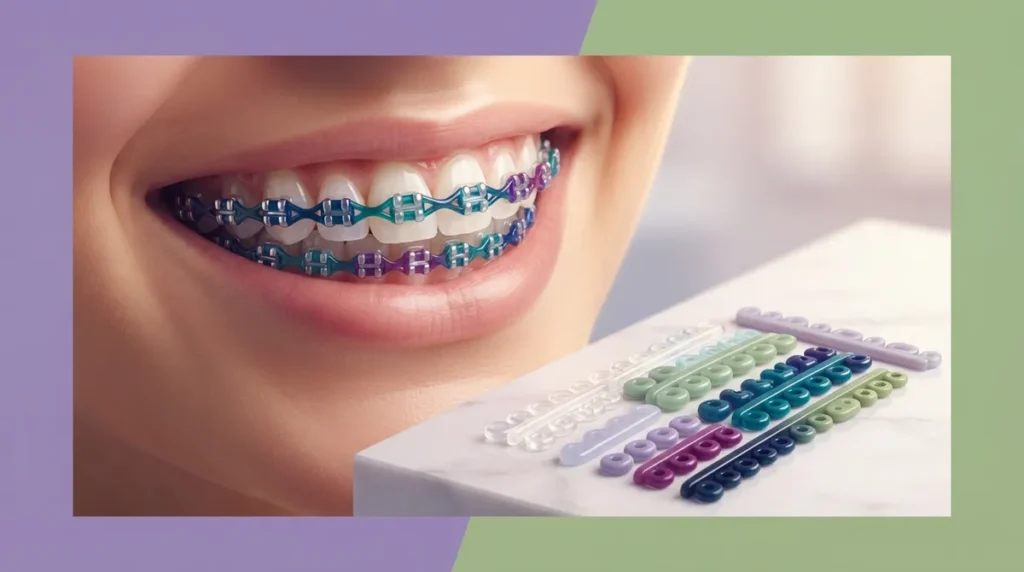
Colored bands are small elastic ties (ligatures) that hold the archwire to ceramic brackets, not the brackets themselves—they can be swapped at adjustment visits without affecting treatment.
-
Clear and white bands can yellow or stain from coffee, black tea, curry, and dark sauces within 30 days; darker colors hide discoloration better but nothing prevents staining entirely.
-
You can test different band colors at each adjustment visit with no permanent commitment, making it easy to match events, seasons, or personal style preferences.
-
Bright cool tones like blue, teal, and purple tend to make teeth look brighter, while very yellow, orange, or brown shades can make teeth appear more yellow by comparison.
-
Good daily habits—brushing after meals, using water floss, sipping drinks through straws, and rinsing after staining foods—help keep bands fresher between appointment replacements.
-
Never remove or change bands yourself; removing them affects tooth movement, but your orthodontist can replace stained or broken ties at scheduled visits or handle emergencies.
Here is a fun fact that surprises a lot of new patients: you can have ceramic braces and still show off a little personality. Many people picture ceramic braces as all-white, all-subtle, and totally plain. But the small rings that hold your wire in place can often be swapped for something more colorful, or kept clear for a quiet look.
If you are a busy parent helping a teen pick colors, a young professional who wants a discreet smile, or an adult getting ready for a big event, this guide is for you. We will walk through how ceramic braces colored bands work, which shades tend to look best, how to keep them fresh, and what to ask at your next visit.
Think of it like choosing a phone case. The phone is the same, but the case lets you make it yours. Let’s break it all down in simple steps so you can feel confident in your choice.
What Are Ceramic Braces Colored Bands?
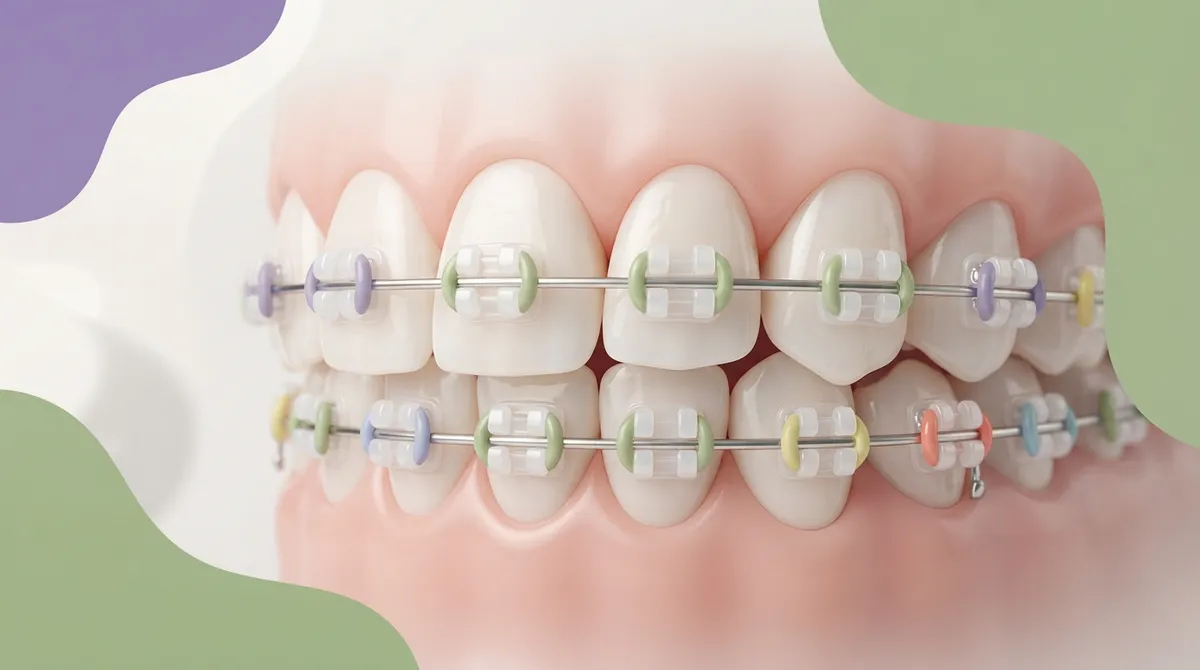
Ceramic braces use tooth-colored or clear brackets that blend in with your teeth. That is why people love them for a more subtle look. The brackets are the small squares glued to each tooth.
The “bands” are something different. They are small elastic rings, often called ligatures or ties. They wrap around each bracket and hold the archwire in place. These are the pieces that can come in color.
So when we talk about ceramic braces colored bands, we mean the elastic ties, not the ceramic brackets themselves. Ceramic brackets are generally more resistant to staining. The elastic ties are where color changes can happen.
Why the Difference Matters
Knowing this helps you set the right expectations. Your brackets stay put and blend in. The little ties are the part you can change, and your orthodontist can usually replace them at adjustment visits.
- Brackets: Ceramic, tooth-colored or clear, glued to your teeth.
- Archwire: The thin wire that guides your teeth into place.
- Bands (ligatures): Small elastic rings that hold the wire to each bracket.
If you want to learn more about how different appliances compare, our guide on types of braces is a great place to start.
Can You Get Colored Bands With Ceramic Braces?
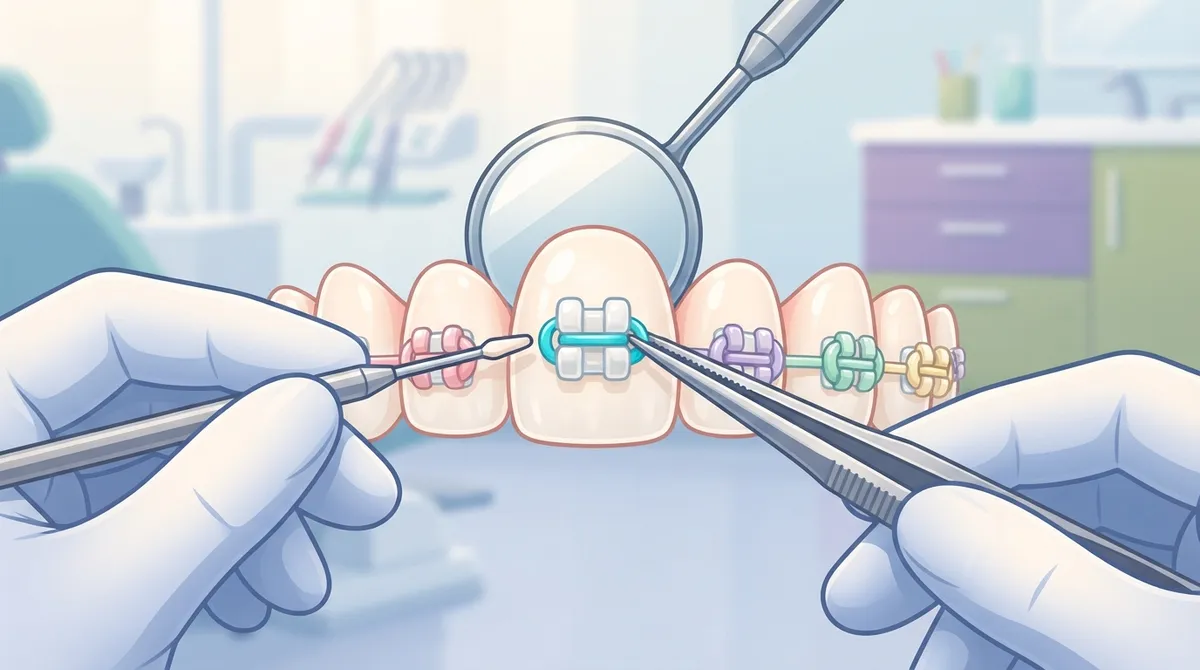
In many cases, yes. Patients can often choose from the ligature colors available at their adjustment visits. Your orthodontist decides which options fit your appliance and your treatment plan.
Some people love a bold, coordinated look. Others prefer clear or white ties for a quieter style. Both are valid choices, and neither one changes how well your braces work.
One thing to keep in mind: colored bands can make your braces more noticeable. That can be a good thing if you want to have fun with it. If your goal is to blend in, a clear or tooth-colored tie may suit you better.
Who Tends to Love Colored Bands?
- Kids and teens who like picking team colors, holiday shades, or favorite colors.
- Adults with a playful side who want their braces to feel less clinical.
- Anyone planning a milestone who wants a coordinated look for graduation or a special season.
If you want an even more playful approach for younger patients, take a look at WildSmiles braces, which turn treatment into something kids get excited about.
How to Pick the Right Band Colors: Step by Step
Choosing colors can feel like a big decision, but it is easier when you follow a simple plan. Here is a step-by-step approach you can use at your next appointment.
- Decide your goal. Do you want to blend in, stand out, or match an event? Your goal guides every other choice.
- Check what is available. Ask your orthodontist which ligature colors work with your brackets and treatment plan.
- Think about your skin tone and teeth. Some shades make teeth look brighter, while others can make them look a little dull.
- Consider your daily habits. If you love coffee, tea, or curry, lighter bands may show stains faster.
- Try a color for one visit. Bands are typically changed at adjustment visits, so you can test a shade and switch next time.
That last step is the best part. Nothing is permanent. If you do not love a color, you can usually pick something new at your next appointment.
Colors That Often Look Great
There is no single right answer, but some general ideas tend to help.
| Color Goal | Shade Ideas | What to Know |
|---|---|---|
| Subtle and discreet | Clear or white | Blends in best, but can yellow or stain over time |
| Bright and playful | Blue, teal, purple, pink | Cool tones often make teeth look brighter |
| Hides stains better | Darker or more saturated shades | Discoloration may be less obvious, but no color is guaranteed to stay unchanged |
| Event or holiday look | Team colors, red and green, school colors | Easy to switch at the next visit |
A quick tip: very yellow, orange, or brown shades can sometimes make teeth look a bit yellow by comparison. If that is a worry for you, ask your orthodontist to hold a few colors up so you can see the difference.
Do Colored Bands Stain on Ceramic Braces?
This is one of the most common questions we hear. The honest answer is that elastic ties can discolor, and how much depends on the product, your habits, and time.
Research backs this up. A 2015 laboratory study exposed clear elastic modules to six dietary substances for 72 hours. Coffee and black tea caused the strongest staining. A 2018 study in real patients found measurable color changes in all four groups of esthetic ligatures after 30 days. The clear group had a mean total color change (ΔE2000) of 3.19 ± 0.85.
It is important to know that these are specific studies. Lab results are not a perfect prediction of what will happen in your mouth. A 2009 laboratory study also found that discoloration depended on the type of elastic, the liquid, and how long the exposure lasted. It linked changes to both staining and chemical breakdown of the material.
Clear and White Bands: Will They Turn Yellow?
They can. Clear and white ties keep your look subtle, but they are more likely to show yellowing or stains from foods and drinks. That does not mean they are a bad choice. It just means you will want to be mindful and plan on fresh ties at adjustment visits.
Darker or more saturated colors may hide discoloration better. Still, no color is guaranteed to stay the same from start to finish.
Foods and Drinks That Can Stain Your Bands
You do not need to give up everything you love. A little awareness goes a long way. Studies point to a few common culprits.
- Coffee and black tea: The strongest staining in the lab studies mentioned above.
- Curry and turmeric-rich foods: Known for leaving color behind.
- Red wine: Can darken light-colored ties.
- Dark sauces and berries: Tomato sauce, soy sauce, and blueberries can add tint.
If you do enjoy these, a few habits can help. Sip through a straw when you can, rinse with water afterward, and brush carefully around your brackets. We also share more ideas in our guide to foods to avoid with braces.
How to Keep Your Bands Looking Fresh
Good oral hygiene supports your whole smile and helps keep your appliance clean. It cannot promise stain-free ties, but it makes a real difference. Here is a simple daily routine.
- Brush after meals when you can, angling your brush gently around each bracket and along the gumline.
- Clean between your teeth daily using floss threaders, interdental brushes, or a water flosser.
- Rinse with water when you cannot brush, especially after coffee, tea, or colorful foods.
- Keep your visits on schedule so worn or stained ties can be replaced.
- Ask about replacement timing so you know what to expect for your plan.
For a full walkthrough, see our tips on how to care for your braces.
Please Do Not Change Bands at Home
It might be tempting to remove or swap a stained band yourself. Please do not. Bands hold your wire in place, and removing one can affect how your teeth move. Appointment timing varies by treatment plan, but stained ties can usually be replaced at a scheduled visit.
If a band pops off or something feels wrong between visits, that is what our team is here for. Our page on orthodontic emergencies explains what to do and when to call.
How Often Are Bands Changed?
Ligatures are typically replaced during your orthodontic adjustment appointments. That means you get a fresh set of ties at those visits, and you can pick a new color if you like.
How often you come in depends on your treatment plan, so your schedule may look a little different from someone else’s. If you are curious about what happens at each stage, our article on what really happens at each braces visit walks through the process.
Are There Alternatives to Elastic Ties?
Yes, and this is worth asking about. Some bracket systems use ligation methods that do not rely on elastic ties at all. Availability and suitability depend on the bracket system and your individual treatment.
If you are worried about stained ties, or you simply prefer a cleaner look, ask your orthodontist whether another option fits your plan. For example, LightForce orthodontics uses a fully digital, custom approach with clear or white brackets that blend in naturally.
If you want to skip brackets and bands entirely, clear aligners are another path worth exploring. Your orthodontist can help you decide which is right for your bite and your goals.
Ceramic Bands vs. Other Options at a Glance
| Option | Look | Best For |
|---|---|---|
| Ceramic braces with clear ties | Very subtle | Professionals and adults who want a quiet look |
| Ceramic braces with colored ties | Customizable | Teens and adults who enjoy personalizing their smile |
| Clear aligners | Nearly invisible | Mild to moderate cases and removable convenience |
| Metal braces with colored ties | Bold and fun | Patients who want maximum personality |
Tips for Different Life Stages
Everyone’s reason for choosing colors is a little different. Here are a few ideas based on where you are right now.
- For parents of kids and teens: Let your child pick. Ownership makes brushing and visits feel less like a chore. Our guide to choosing the right braces for teens can help.
- For busy professionals: Clear or white ties can keep a polished look for meetings and presentations. Plan on regular replacements to stay fresh.
- For adults planning a milestone: Pick colors that match the season or event, then switch right after. Fresh ties before a big day can be a nice touch.
- For adults returning to treatment: A subtle ceramic setup can feel comfortable and professional. Learn more about adult orthodontics options.
Questions to Ask Your Orthodontist
Coming to your visit with a few questions makes the whole process smoother. Bring this short list along.
- Which band colors are available for my ceramic brackets?
- How often will my bands be replaced?
- Which colors tend to show stains less for someone with my habits?
- Is there a ligation option that does not use elastic ties for my case?
- What should I do if a band breaks or comes off?
Asking good questions is a skill, and our article on how to ask the right orthodontic questions shares more ideas.
Your Smile, Your Style
Ceramic braces colored bands give you a simple way to make treatment feel more like yours. Whether you go bold, subtle, or somewhere in between, the real goal is a healthy, beautiful smile at the finish line. Remember that bands are small, swappable, and replaced at adjustment visits, so you can change your mind along the way.
At Segovia Orthodontics, Dr. Flor Segovia and our team focus on a comfortable, supportive experience for patients of all ages. You can learn more about Dr. Segovia and see why families trust us. You can also follow along on our Instagram page and our Facebook page for smile stories and updates. To confirm any orthodontist’s training, you can also check the American Board of Orthodontics.
Want to see what other patients say? Visit us on Google — Segovia Orthodontics and read reviews from our Lakewood Ranch community.
Ready to talk colors, comfort, and a plan that fits your life? Request an appointment today, or call us at 941-557-1333 and we will be happy to help you take the next step toward a smile you love.
FAQs
Q: Can you get colored bands with ceramic braces?
A: In many cases, yes! The colored bands are small elastic ties that hold the wire to each bracket, and you can often pick from available colors at adjustment visits. Your orthodontist will confirm which options work with your appliance and treatment plan.
Q: Do clear or white bands turn yellow?
A: They can. Clear and white ties keep a subtle look, but they may yellow or stain from coffee, tea, curry, and other foods and drinks. The good news is that stained bands can usually be replaced at your next scheduled visit.
Q: Which band colors show stains the least?
A: Darker or more saturated colors may make discoloration less obvious. Still, no color is guaranteed to stay unchanged, so good brushing and regular visits matter more than the shade itself.
Q: Can I change or remove my braces bands at home?
A: Please do not! Bands hold your archwire in place, and removing them yourself can affect how your teeth move. Your orthodontist replaces them at adjustment appointments, and our team is here if a band pops off between visits.
Q: How often are ceramic braces bands changed?
A: Bands are typically replaced during your orthodontic adjustment appointments. The exact timing depends on your treatment plan, so ask your orthodontist what schedule to expect.
Our Service Area