Key Takeaways
-
There is no single best adult braces option in Lakewood Ranch; the right choice depends on your bite, goals, lifestyle, oral health, and budget, so an orthodontic exam comes first.
-
Metal braces are the most versatile fixed option for complex bite and alignment problems, though they are the most visible; ceramic braces offer a subtler fixed look and may cost more.
-
Clear aligners are removable and very discreet but only work if worn as directed, and they generally suit mild-to-moderate cases.
-
Lingual braces hide behind the teeth for a fixed option, but they are not offered by every practice, may take time to adjust to, and often cost more.
-
Gum disease, cavities, and existing dental work should be assessed and treated before or alongside orthodontic care to protect results.
-
Before committing, ask about training with adult patients, total fees, whether retainers and follow-up visits are included, and the retention plan after treatment.
So you’re thinking about straightening your smile as an adult. First off, good for you! You’re in great company. The American Association of Orthodontists (AAO) estimated that about 1.91 million adults were in active treatment with AAO-member orthodontists in 2024, up from roughly 1.64 million in 2022. Adults are choosing orthodontics in record numbers.
But here’s the big question: what are the best braces for adults in Lakewood Ranch? The honest answer is that there’s no single winner. The right choice depends on your bite, your goals, your work life, and your budget. A career-focused professional may want something discreet. A person fixing relapse after teen braces may want the fastest path back to a straight smile.
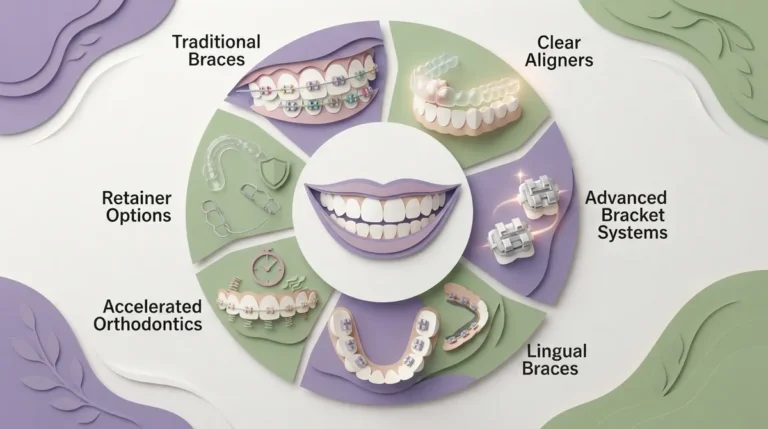
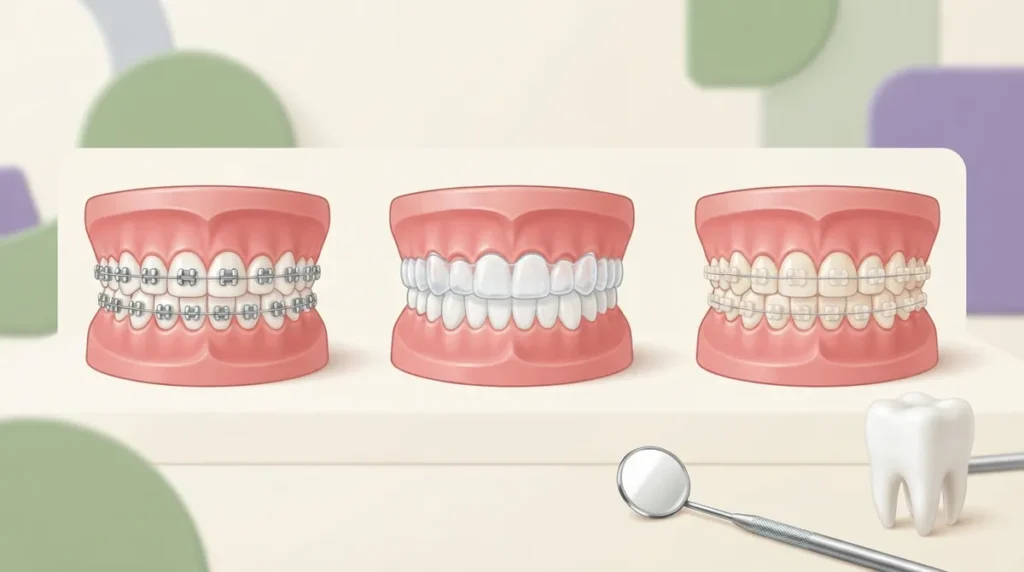
In this friendly guide, we’ll compare the main options side by side: traditional metal braces, ceramic (clear) braces, clear aligners, and lingual braces. You’ll learn how each one works, who it suits best, and what to ask at your consultation. Think of it as a chat with a knowledgeable friend, minus the waiting room magazines.
Quick Answer: Which Braces Are Best for Adults?
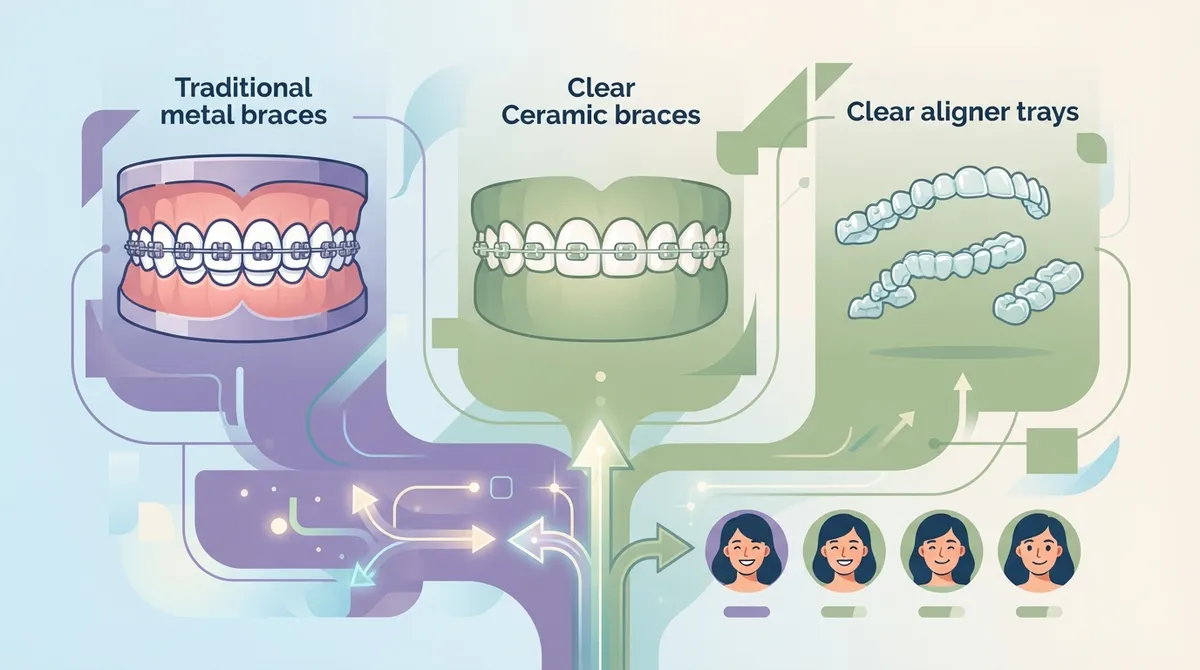
If you want a fast answer, here it is. The best braces for adults in Lakewood Ranch are the ones that fit your specific bite and lifestyle. An orthodontist needs to examine your teeth before recommending anything.
- Metal braces: A strong, versatile choice for many bite problems, including more complex cases.
- Ceramic braces: Fixed braces with tooth-colored brackets for a less noticeable look.
- Clear aligners: Removable, discreet trays that suit many mild-to-moderate cases.
- Lingual braces: Brackets placed behind the teeth, offered by only some practices.
Now let’s dig into each one so you can see where you fit.
Traditional Metal Braces: The Reliable Workhorse
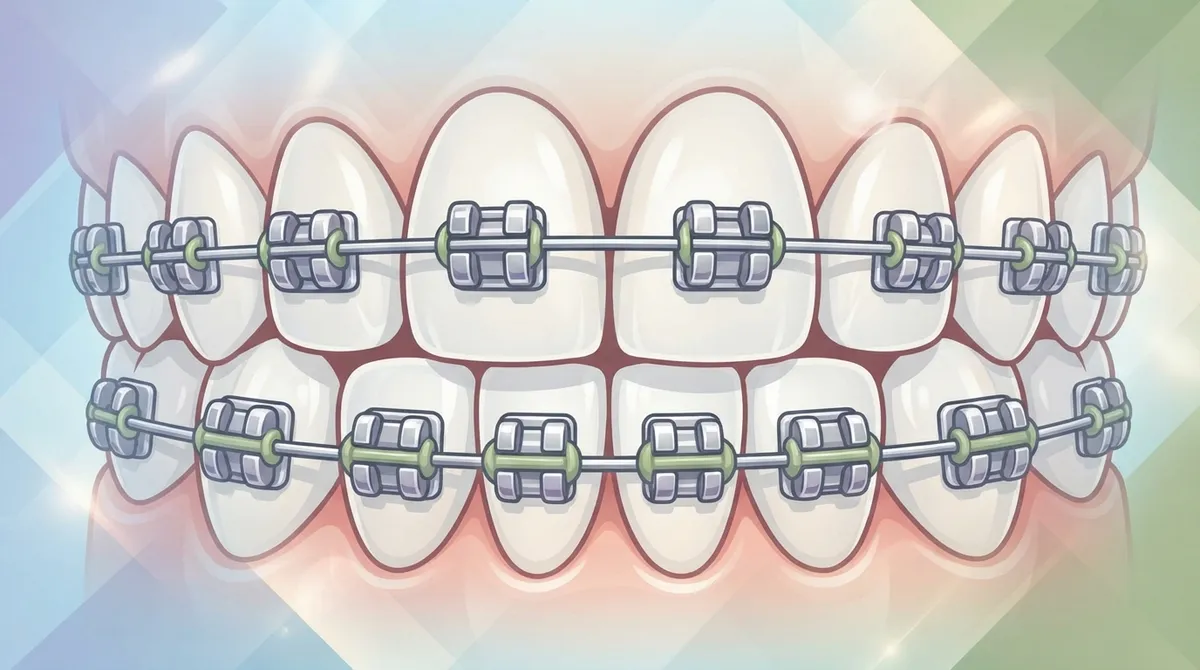
Metal braces have been straightening smiles for decades, and they’re still a top pick. They’re fixed to your teeth, so there’s no tray to forget on a lunch napkin. Because they work around the clock, they can handle a wide range of alignment and bite problems.
If you want to learn why they remain popular, our guide on 7 reasons traditional metal braces are still a top choice breaks it down nicely.
Who Metal Braces Suit Best
- Adults with crowding, gaps, or bite issues that may be too complex for removable trays
- People who worry they might not wear aligners as directed
- Adults who want a proven, budget-conscious option
Things to Keep in Mind
Metal brackets are the most visible option. You’ll also need to avoid certain sticky and hard foods, and brushing takes a little extra patience. Many adults tell us the look is no big deal once they get used to it, and fun colored elastics can even add a little personality.
Ceramic Braces: Fixed Braces With a Subtle Look
Ceramic braces work just like metal braces, but the brackets are tooth-colored or clear. They blend in better with your natural teeth, which is a big draw for adults who spend their days in meetings, on video calls, or in front of clients.
They’re still fixed, so you get the same around-the-clock tooth movement. The trade-offs? Depending on the practice, ceramic brackets may be more noticeable up close than you’d hope, may need different care to avoid staining, and often cost a bit more than metal. Suitability and pricing vary, so ask your orthodontist what’s included.
Curious about the details? Check out 14 things to know about clear braces before you start for a helpful overview.
Clear Aligners: Discreet and Removable
Clear aligners are a series of custom plastic trays you swap out every so often. You take them out to eat, drink, brush, and floss. For many young professionals and busy adults, that freedom is the main attraction.
Here’s the catch. Aligners only work if you wear them as directed, which usually means most of the day and night. They may suit some mild-to-moderate cases, but an orthodontist should check whether they can handle your specific bite and tooth movements.
At Segovia Orthodontics, one option patients ask about is Angel Aligners. They use a flexible, frosted tray design and a rotating wear schedule, and some trays include built-in anchors for rubber bands, which can mean fewer bonded attachments on your teeth. You can learn more on our clear aligners page.
Who Aligners Suit Best
- Adults who want a very discreet treatment
- People with mild-to-moderate crowding or spacing
- Disciplined wearers who can stay consistent
Lingual Braces: Hidden Behind Your Teeth
Lingual braces attach to the back surfaces of your teeth, so they’re far less visible from the front. They’re a fit for adults who want fixed braces without the visible hardware.
They aren’t offered everywhere, though. They can also feel different at first, with possible effects on comfort, speech, and cleaning, and they often cost more. If this option interests you, ask whether the practice offers it and whether you’re a good candidate.
Side-by-Side Comparison Table
Here’s a simple snapshot to help you compare. Remember, this is general information, and your orthodontist will tailor the plan to you.
| Option | Visibility | Fixed or Removable | Best For | Key Consideration |
|---|---|---|---|---|
| Metal braces | Most noticeable | Fixed | Wide range of cases, including complex bites | Food restrictions, extra cleaning effort |
| Ceramic braces | Less noticeable | Fixed | Adults wanting a subtler fixed option | May stain or cost more |
| Clear aligners | Very discreet | Removable | Mild-to-moderate cases, disciplined wearers | Must wear as directed |
| Lingual braces | Hidden from front | Fixed | Adults wanting hidden fixed braces | Not offered everywhere; adjustment period |
Braces vs. Clear Aligners: How to Decide
This is the question we hear most. Honestly, it comes down to your teeth and your habits. For a deeper look, see our comparison of braces vs. clear aligners.
Ask yourself these questions:
- How complex is my bite? Bigger bite corrections may be better suited to fixed braces.
- How consistent can I be? If you’ll reliably wear trays, aligners could work well.
- How important is appearance? Ceramic braces, aligners, and lingual braces are all less visible than metal.
- What’s my schedule like? Appointment spacing differs. The AAO’s survey found a median of about six weeks between appointments for braces and about ten weeks for aligners, though it varies by case.
- What fits my budget? Ask about the total fee and payment options up front.
A Closer Look at Advanced Braces Options
Beyond the basics, some practices offer newer fixed-brace systems. At Segovia Orthodontics, patients can explore LightForce braces, a digital system that uses 3D-printed brackets customized to each tooth. Because the plan is designed digitally, adjustments can be visualized in advance, and the brackets are available in clear or white shades for a subtler look.
These options can be a great conversation starter at your consult. Ask your orthodontist whether a custom system makes sense for your goals and bite.
How Long Will Adult Treatment Take?
Everyone wants to know the timeline. While no one can promise a number without an exam, research and consumer guidance give us helpful ballparks:
- The FDA describes an average orthodontic treatment period of about two years, but it can be shorter or longer depending on the correction needed.
- A 2016 systematic review of 22 studies and 1,089 participants estimated a mean of 19.9 months for comprehensive fixed-appliance treatment.
- The FDA notes clear aligner treatment may take roughly six to 18 months in some cases.
These are averages, not guarantees. Your own plan depends on how far your teeth need to move and how well you follow instructions.
Health Matters: Gums, Cavities, and Past Dental Work
Here’s something many adults don’t realize. Orthodontic treatment moves teeth, but it doesn’t replace regular dental care. Before you start, your orthodontist will look at your gum health, any cavities, bone support, and existing dental work.
If you have gum disease or cavities, those usually need to be treated first. This isn’t a roadblock. It’s simply a smart step to protect your results. Our article on adult orthodontics mistakes you should never make covers more of these pitfalls.
Already had braces as a teen? You’re not alone. Many adults return because teeth shifted over time, often when retainers were not worn as directed. Our adult orthodontics page shares how we help relapse patients get back on track.
Choosing an Orthodontist in Lakewood Ranch
Several practices in the area advertise adult treatment, including Segovia Orthodontics at 5803 Braden Run and Varone Orthodontics on Lake Osprey Drive. These are examples of local options, not a ranking or endorsement, so confirm current services, credentials, availability, and fees directly with any office you consider.
The credentials matter. You can verify specialist status through the American Board of Orthodontics. At Segovia Orthodontics, Dr. Flor Segovia is a board-certified orthodontist who provides bilingual care in English and Spanish.
Questions to Ask at Your Consultation
- What is your training and experience with adult patients?
- What treatment do you recommend for my bite, and why?
- How long should treatment take?
- What is the total fee, and what payment options are available?
- Does the fee include retainers and follow-up visits?
- How often are appointments, and what happens in an emergency?
- What is the retention plan after treatment?
Not sure how to prepare? Our guide on how to ask the right orthodontic questions at your visit will help, and our orthodontic financing page explains payment options.
Which Adult Braces Fit Which Lifestyle?
Let’s make this practical with a few real-life snapshots.
- The client-facing professional: Often drawn to clear aligners or ceramic braces for a polished look.
- The busy executive: May value fewer visits, so appointment spacing and efficiency matter.
- The wedding or milestone planner: Needs a realistic timeline, so ask early about what’s achievable before your date.
- The relapse patient: Teeth shifted after teen braces? A fresh exam can show whether a short, focused plan will do.
Whatever your story, a personalized plan beats a one-size-fits-all pick every time.
Ready to Find Your Best Fit?
There really is no single set of best braces for adults in Lakewood Ranch. There’s only the best match for you. Metal braces offer versatility, ceramic braces offer subtlety, aligners offer flexibility, and lingual braces offer hidden fixed treatment. The right answer starts with a proper exam.
If you’d like to see what local patients say, you can visit us on Google — Segovia Orthodontics and read reviews. You can also follow along on our Facebook page and our Instagram page for smile stories and tips.
Ready to take the first step? Request an appointment today, or call us at 941-557-1333. We’d love to help you smile with confidence at any age.
FAQs
Q: What are the best braces for adults in Lakewood Ranch?
A: There’s no single best option, because the right choice depends on your bite, your goals, your oral health, and your budget. Metal braces, ceramic braces, clear aligners, and lingual braces all work well for the right person. An orthodontic exam is the best way to find your match.
Q: Are clear braces or clear aligners better for adults?
A: Neither is better for everyone! Clear (ceramic) braces are fixed and work around the clock, which can help with more complex bites. Clear aligners are removable and very discreet, but they only work if you wear them as directed.
Q: How long does orthodontic treatment usually take for adults?
A: The FDA describes an average of about two years, though it can be shorter or longer depending on your case. Clear aligner treatment may take roughly six to 18 months in some cases. Your orthodontist can give you a personalized estimate after an exam.
Q: Can I get braces as an adult if I have gum disease or dental work?
A: Often, yes, but your gums and teeth need to be healthy first. Conditions like gum disease or cavities should be assessed and treated before or alongside orthodontic care. Your orthodontist will review everything and build a safe plan for you.
Q: How do I choose an orthodontist in Lakewood Ranch?
A: Look at training, experience with adult patients, the proposed treatment plan, total fees, and what’s included, like retainers and follow-up visits. Ask about appointment schedules and emergency support, too. A consultation is a great time to see if the office feels like a good fit.
Our Service Area