Key Takeaways
-
Permanent dental implants fuse with jawbone and cannot move like natural teeth, so orthodontists must plan tooth movement around the implant's fixed position rather than moving the implant itself.
-
When possible, orthodontic treatment should occur before implant placement to create proper space and alignment for the future implant crown, preventing early implant placement from locking in an incompatible position.
-
Orthodontic mini-implants (TADs) are temporary anchors that improve tooth movement precision for complex cases like intrusion and retraction, with research showing typical failure rates of 8-16%, requiring regular monitoring.
-
A multidisciplinary care team including an orthodontist, oral surgeon or periodontist, and restorative dentist must communicate clearly to coordinate implant placement timing with tooth movement and final bite alignment.
-
Both traditional braces and clear aligners can work with existing dental implants when carefully planned, though braces offer more precise control for complex movements around fixed implant positions.
-
Daily oral care including careful brushing around implants and TADs, consistent flossing, regular follow-up visits, and prompt reporting of swelling or device looseness are essential for treatment success.
Ever wondered if you can straighten your teeth when you already have a dental implant? Or maybe your orthodontist mentioned a tiny “mini-implant” and you’re not sure what that means. You’re not alone! The phrase ortho care with implants can mean two very different things, and knowing the difference makes your treatment journey much smoother.
For some patients, it means getting braces or clear aligners when they already have a permanent dental implant that replaces a missing tooth. For others, it means using a small, temporary anchor called a TAD (temporary anchorage device) to help move teeth more precisely.
Whether you’re a parent planning for your teen, a professional who wants discreet treatment, or an adult returning to orthodontics after years, this guide breaks it all down in simple terms. We’ll cover how each type works, how treatment is timed, what risks to know about, and who should be on your care team. Let’s dive in!
Two Meanings of “Ortho Care With Implants”
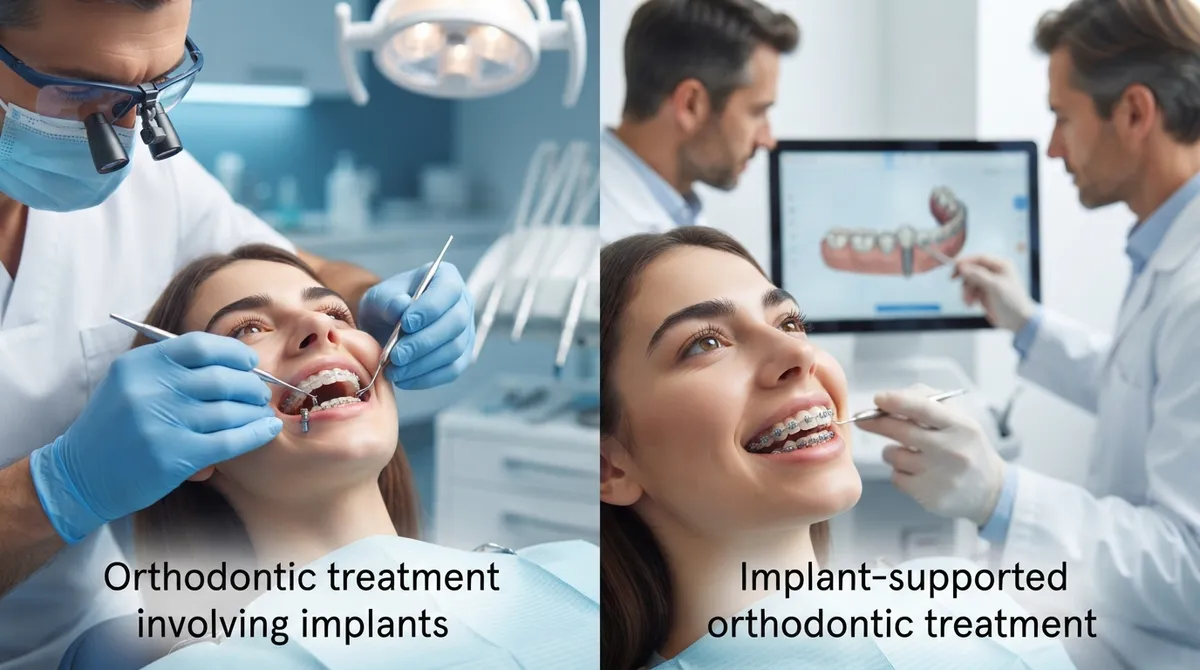
The word “implant” is used in two different ways in orthodontics. They look somewhat alike on an X-ray, but they do very different jobs.
| Feature | Permanent Dental Implant | Orthodontic Mini-Implant (TAD) |
|---|---|---|
| Main purpose | Replaces a missing tooth | Provides temporary anchorage for tooth movement |
| How long it stays | Permanent | Temporary; removed after use |
| Bond with bone | Fuses with the jawbone (osseointegration) | Held by mechanical grip, not fused |
| Can it be moved? | Generally no | Not applicable; it is the anchor |
| Who places it | Oral surgeon, periodontist, or restorative dentist | Orthodontist or oral surgeon |
Keeping these two straight is the first step. Once you know which one applies to you, the rest of the plan makes a lot more sense.
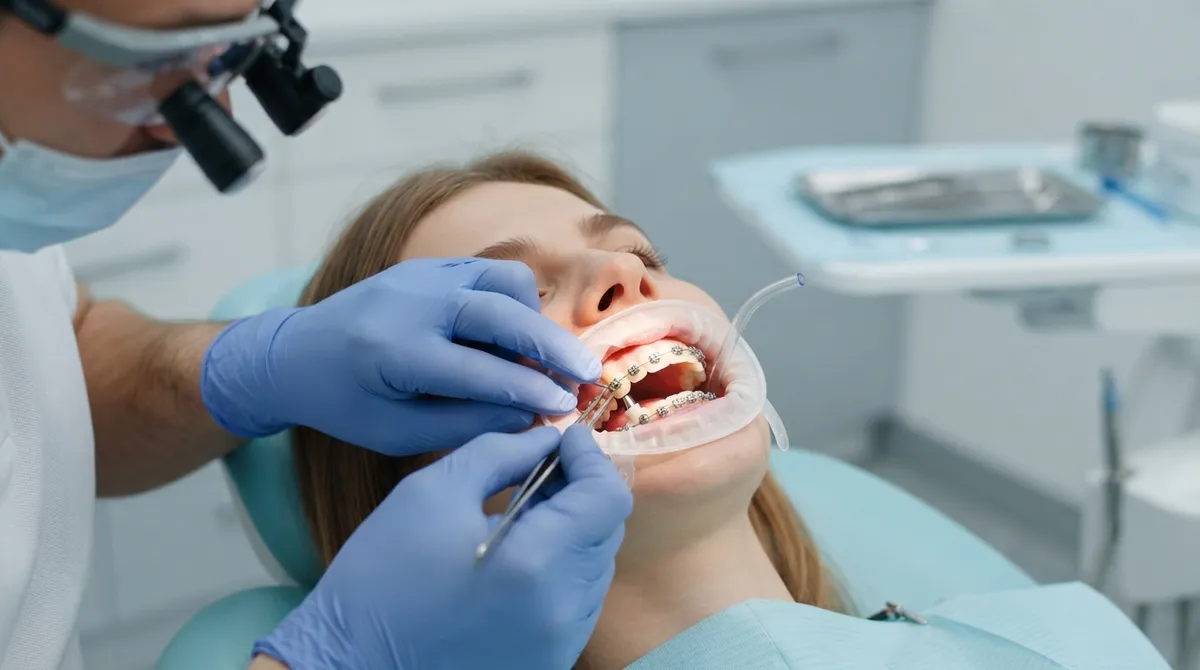
Getting Braces or Aligners When You Already Have a Dental Implant
Good news: having a dental implant usually does not mean you’re out of the running for orthodontic treatment. An orthodontist can often move the natural teeth around the implant. But there is one big thing to remember.
Why Implants Don’t Move Like Natural Teeth
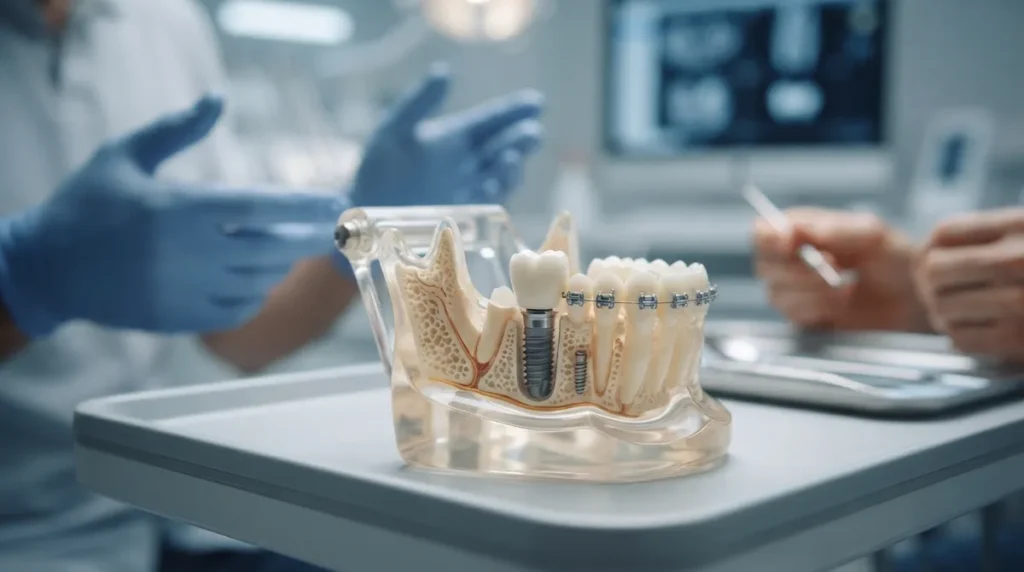
A natural tooth sits in a small ligament that lets it shift slowly when gentle pressure is applied. A dental implant is different. It fuses directly with the jawbone, so it generally can’t be moved with braces or aligners.
That means the implant becomes a fixed point in your smile. Your orthodontist must plan tooth movement around it. In some cases, the implant’s position can limit the final arrangement of teeth, your bite, or your restorative plan.
Should Implants Come Before or After Braces?
When possible, tooth movement usually comes first, and the implant is placed afterward. Why? Because straightening teeth can create the right amount of space, in the right spot, for the future implant crown. Placing the implant too early can lock in a position that doesn’t match your final bite.
Of course, every mouth is different. Sometimes an implant is already in place before a patient ever visits an orthodontist. In that case, careful planning helps the team work with what’s there. If you’re curious about how adult care works in general, our Adult Orthodontics page is a great place to start.
How Orthodontic Mini-Implants (TADs) Work
Now let’s talk about the second meaning. Orthodontic mini-implants, also called TADs or miniscrews, are small, temporary screws placed in the bone. They act like a steady “anchor” that the orthodontist can pull against.
What They Help Do
Normally, braces use some teeth as anchors to move other teeth. A TAD gives the orthodontist an extra, stable point to work from. This can help with:
- Intrusion: gently moving a tooth up into the bone
- Retraction: pulling front teeth back to close gaps
- Difficult movements: shifts that would otherwise strain nearby teeth
- Space management: guiding teeth into better positions
TADs are not tooth replacements. Once their job is finished, they are removed. The process is usually quick, and many patients tolerate it well.
Why They Are Not “Permanent Implants”
Unlike a permanent dental implant, a TAD does not fuse with the bone. Its stability depends on how firmly it grips the bone, along with factors like placement site, soft-tissue health, and the forces applied. Because of this, a TAD can sometimes loosen and may need to be replaced or repositioned.
How Reliable Are Orthodontic Mini-Implants?
It’s smart to ask about success rates. Research shows that TADs work well for many patients, but results vary based on the device, the site, and the study.
- A systematic review of orthodontic anchorage devices reported pooled failure rates of about 16.4% for miniscrews, 10.5% for palatal implants, and 7.3% for miniplates. The studies and follow-up times varied.
- A 2022 scoping review found that 47.6% of included studies reporting success had overall success rates of at least 90%.
- A 2018 meta-analysis of mini-implants used for front-teeth retraction found failure rates of 9.9% with direct anchorage and 8.6% with indirect anchorage.
- A 2020 review noted lower failure rates for upper-jaw placement than lower-jaw placement in its analysis.
The takeaway? Most TADs do their job, but a small share may loosen. If that happens, your orthodontist can often replace the device or adjust the plan. It’s one reason regular follow-up visits matter so much.
What Your Treatment Plan Should Consider
Good ortho care with implants is never one-size-fits-all. Your orthodontist looks at the whole picture before recommending anything.
- Age and growth: Skeletal maturity affects when and how implants or TADs can be used.
- Missing or damaged teeth: This helps decide if a permanent implant is needed and where space should be created.
- Gum and bone health: Healthy support tissue is key for both implants and TADs.
- Implant location: An existing implant limits how teeth can be arranged around it.
- Desired tooth movement: Some goals call for extra anchorage, others do not.
- Timing of the final restoration: The crown or bridge should match your finished bite.
This is why a clear, step-by-step plan matters. Wondering what a first appointment looks like? Our orthodontic evaluation guide walks you through it.
Building Your Care Team
When implants are involved, teamwork is everything. Several professionals may help you reach a great result:
- Orthodontist: plans and guides tooth movement
- Oral surgeon or periodontist: places implants and checks gum and bone health
- Restorative dentist: creates the final crown or bridge
- General dentist: handles cleanings and everyday oral health
Clear communication between these providers keeps everyone on the same page. If you’re wondering who does what, see General Dentist vs. Orthodontist: Which One Should You Choose? At Segovia Orthodontics, Dr. Flor Segovia is a board-certified orthodontist who values this kind of coordination.
Braces vs. Clear Aligners When Implants Are Involved
Many patients ask which option works best. The answer depends on your goals, your bite, and your lifestyle. Both can work around an existing implant when planned carefully.
| Option | Best For | Things to Keep in Mind |
|---|---|---|
| Traditional or clear braces | Complex movements, precise control | Fixed in place; good for detailed work around an implant |
| Clear aligners | Discreet treatment, mild to moderate cases | Removable; requires steady daily wear |
| Braces with TAD support | Cases needing extra anchorage | TAD is temporary and removed afterward |
Want to explore options? Check out our types of braces, our clear aligners, or the digital precision of LightForce braces. Our braces vs. clear aligners guide can help you compare, too.
Who Benefits Most From Ortho Care With Implants?
Different people come to us with different needs. Here are a few common situations:
- Adult relapse patients: If your teeth shifted after past treatment, an implant nearby doesn’t have to stop you from fixing it.
- Busy professionals: Discreet options and efficient plans help treatment fit a demanding schedule.
- Teens and young adults: Preparing for graduation or a wedding? Smart timing makes a big difference.
- Parents of growing kids: Early planning helps decide the right time for any implant-related steps. See early orthodontic treatment for more.
Caring for Your Smile During Treatment
Whether you have a permanent implant, a TAD, or both, daily care keeps everything healthy. Here are simple habits to follow:
- Brush carefully around braces, aligners, TADs, and implant crowns.
- Floss or use interdental tools to keep gums healthy.
- Keep every follow-up visit so your team can check progress.
- Don’t touch or adjust devices yourself. Never try to tighten, loosen, or remove a TAD at home.
- Wear your retainer after treatment to protect your results. Our orthodontic retainers page explains your options.
Call your care team if you notice swelling, pain, a loose device, or redness around a TAD or implant. Inflammation or mobility should always be checked by the treating clinician. If something feels urgent, see our orthodontic emergency guidance.
What to Expect at Segovia Orthodontics
At Segovia Orthodontics at Lakewood Ranch, we focus on a comfortable, supportive experience for patients of all ages. Dr. Segovia uses advanced orthodontic technology to build thoughtful, personalized plans. We offer care in English and Spanish, along with flexible orthodontic financing to help treatment fit your budget.
Want to hear from real patients? You can visit our Segovia Orthodontics location on Google, and you’ll also find us on our Facebook page and our Instagram page. To learn more about what board certification means, visit the American Board of Orthodontics.
Ready to Start Your Smile Journey?
Ortho care with implants may sound complicated, but with the right team and a clear plan, it’s very doable. Whether you already have a dental implant or may need a temporary mini-implant to guide your teeth, the key is careful planning and good communication.
If you’re in Lakewood Ranch or nearby, we’d love to meet you. Request an appointment today, contact us with your questions, or call us at 941-557-1333. Your best smile is closer than you think!
FAQs
Q: Can you get braces or clear aligners if you already have dental implants?
A: Yes, in most cases you can! An orthodontist can usually move the natural teeth around your implant. Because the implant is fixed in the bone, your plan will be built around its position, so teamwork with your restorative dentist is important.
Q: Can orthodontists move a dental implant?
A: Generally, no. A permanent dental implant fuses with the jawbone, so it doesn’t shift like a natural tooth. That’s why many plans move the natural teeth first and place the implant afterward when possible.
Q: What is the difference between a dental implant and an orthodontic mini-implant?
A: A dental implant is a permanent tooth replacement that fuses with the bone. An orthodontic mini-implant, or TAD, is a small temporary anchor that helps guide tooth movement and is removed once its job is done.
Q: What are the risks of orthodontic mini-implants?
A: The main risk is that a mini-implant can loosen or fail, and research shows failure rates vary by device and site. If that happens, your orthodontist can often replace it or adjust your plan. Gum inflammation around the device should also be checked right away.
Q: Which specialists should coordinate orthodontic care and dental implants?
A: Your orthodontist typically leads tooth movement, while an oral surgeon or periodontist may place the implant and a restorative dentist creates the final crown. Good communication among these providers helps your results line up with your bite and smile goals.
Our Service Area