Key Takeaways
-
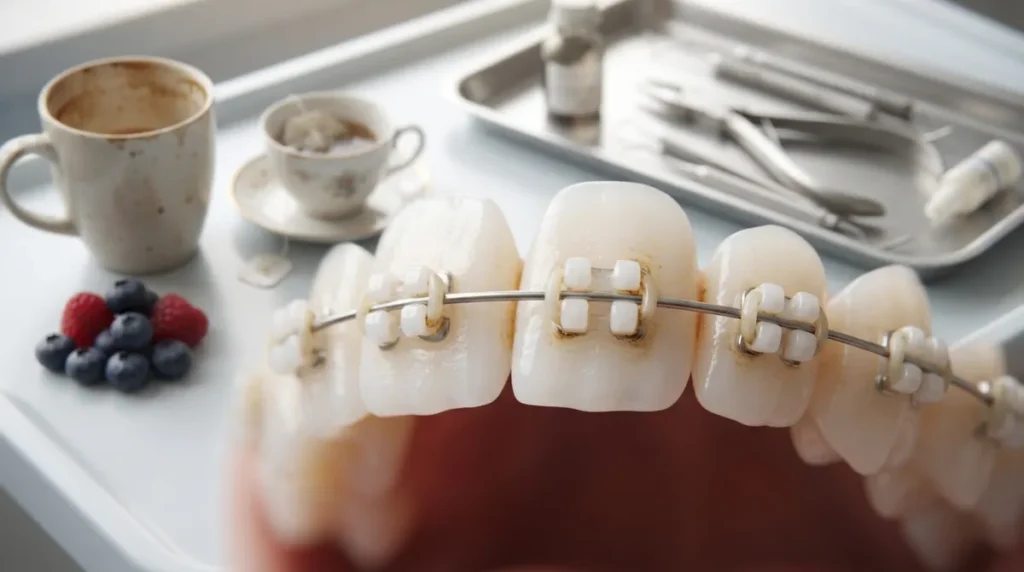
Staining typically occurs on the soft, porous elastic ties rather than the ceramic brackets themselves, and these ties can be easily replaced by your orthodontist during regular adjustment visits.
-
Coffee and tea are the primary staining culprits according to laboratory research, followed by curry, tomato sauce, berries, and dark sodas that leave pigments on the elastic ties.
-
Simple prevention habits like rinsing with water after pigmented foods, brushing carefully around brackets, and drinking coffee in one sitting rather than sipping throughout the day significantly reduce staining risk.
-
Avoid home remedies like baking soda scrubs, whitening products, or chemical rinses, as these can scratch brackets, irritate gums, and won't remove pigment already absorbed into elastic ties.
-
Staining on ceramic braces is typically cosmetic and doesn't affect treatment progress, but if discoloration appears alongside red or puffy gums, or cloudy patches on teeth, consult your orthodontist to rule out plaque buildup.
-
If staining concerns you, discuss alternative options like clear aligners (which eliminate staining risk since they're removed during eating) or LightForce braces with your orthodontist.
You looked in the mirror this morning and noticed it. Your tooth-colored braces don’t look quite as bright as they did on day one. Maybe there’s a yellow tint. Maybe a few spots look dingy. First, take a breath. You’re not alone, and it’s very common.
When people say ceramic braces stained, they usually mean the discoloration is showing up on the small clear or white ties, not on the ceramic brackets themselves. That’s good news, because those ties are easy for your orthodontist to swap out.
Whether you’re a parent watching your teen’s smile, a professional who chose tooth-colored braces to stay discreet at work, or an adult getting ready for a wedding or big event, this guide is for you. We’ll walk through why staining happens, what causes it, what you can do at home, and when to call your orthodontist. No scary talk, just simple answers and friendly tips.
What Does ‘Ceramic Braces Stained’ Actually Mean?
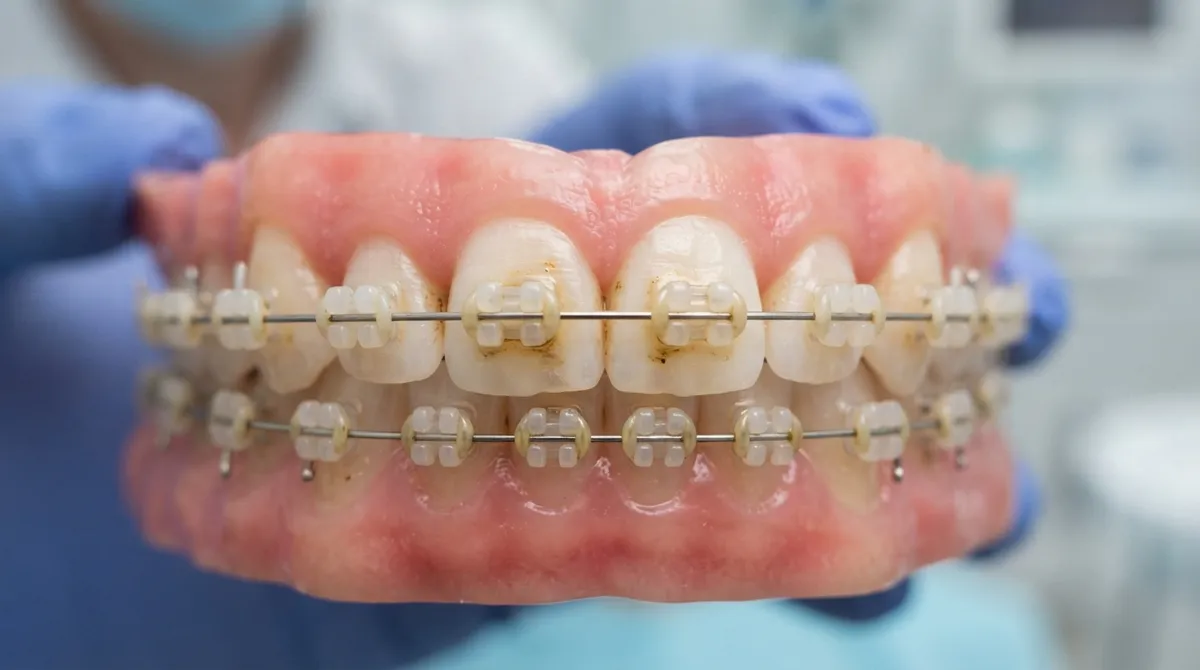
Ceramic braces use brackets made from tooth-colored or clear material. They blend in with your teeth, which is why so many teens and adults love them. But they aren’t just brackets. Each bracket is held to the archwire by a tiny elastic tie, called a ligature. Those ties come in clear or white to match.
Here’s the key point. When ceramic braces look stained, the discoloration is often on those elastic ties rather than on the ceramic brackets. The ties are soft and porous, so they soak up pigments much more easily than hard ceramic does.
Ceramic brackets are generally more color-stable than their elastic ties. But they are not guaranteed to stay perfectly unchanged forever. Laboratory research has found color changes in tooth-colored orthodontic materials under test conditions. So a little discoloration can happen, and it varies from person to person.
Ties vs. Brackets: A Quick Comparison
| Part of Your Braces | What It Is Made Of | Stain Risk | What Fixes It |
|---|---|---|---|
| Elastic ties (ligatures) | Soft, flexible elastic | Higher, absorbs pigments easily | Replaced by your orthodontist |
| Ceramic brackets | Hard, tooth-colored ceramic | Lower, but not zero | Careful cleaning; orthodontist review |
| Adhesive around brackets | Bonding material | Can show color changes over time | Professional assessment |
Why Do Ceramic Braces Look Yellow or Stained?
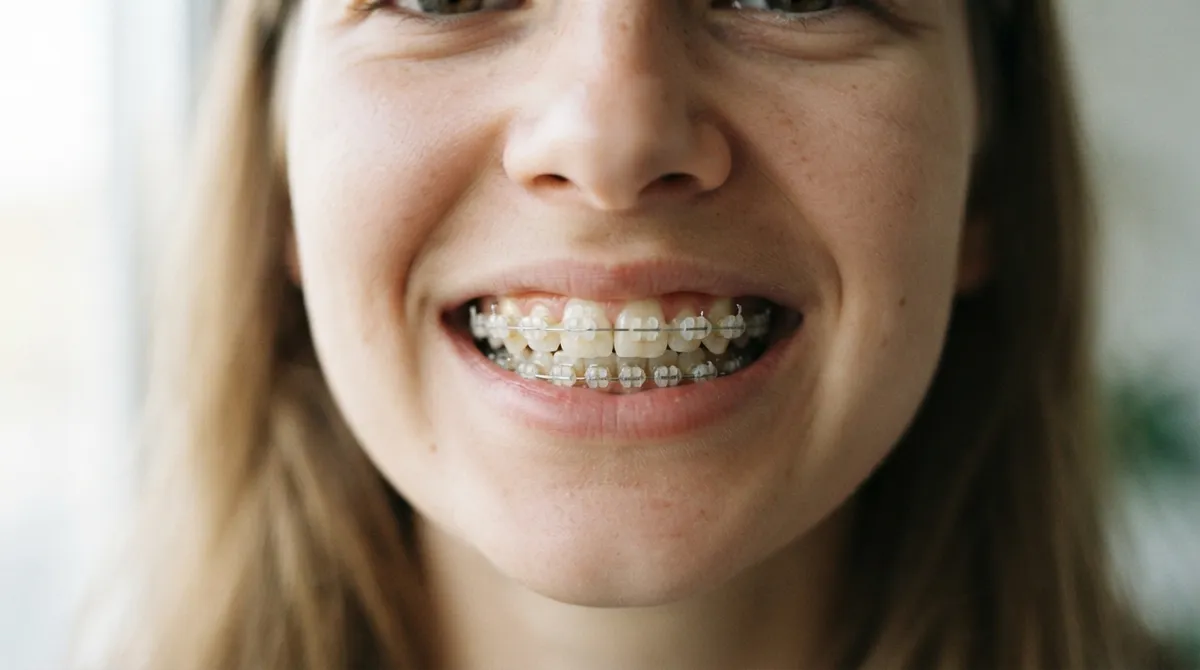
Several things can make tooth-colored braces look dull or yellow. Most of them are tied to everyday habits. Let’s look at the big ones.
Pigments From Food and Drinks
The biggest cause is simple. Dark or strongly colored foods and drinks leave pigments behind. Those pigments cling to the soft elastic ties and slowly change their color.
Coffee and tea are the top offenders. Laboratory studies of clear orthodontic ties and ceramic-bracket materials point to coffee and tea as strong staining agents. A 2022 in-vitro study of ceramic brackets and orthodontic adhesives found color changes across tested solutions and reported coffee as having the greatest impact on color stability. A 2015 laboratory study of clear elastic modules also identified coffee and tea as strong staining media.
Keep in mind, lab results don’t predict exactly what happens in every mouth. Staining varies with the materials used, your diet, your brushing habits, and how much time passes between adjustments.
Common Staining Culprits
- Coffee and black tea: The most talked-about stainers in research.
- Curry and turmeric: Bright yellow pigments that cling fast.
- Tomato-based sauces: Pasta night can leave a mark.
- Berries: Blueberries, blackberries, and cherries are tasty but strongly pigmented.
- Dark sodas and sports drinks: Color plus sugar is a tough combo.
- Tobacco: Causes stubborn discoloration and is not good for your oral health.
Plaque Can Look Like a Stain
Sometimes what looks like a stain is really plaque. Plaque is the sticky film that builds up on teeth and around brackets. It can look yellow or cloudy, especially near the gumline. It’s easy to mistake for a stain on your braces.
This matters because plaque needs to be cleaned, not just replaced. If plaque stays put, it can lead to gum irritation or enamel changes. So if you’re unsure what you’re seeing, it’s worth having your orthodontist take a look.
Are Stained Ceramic Braces Harmful?
Here’s the reassuring part. Staining on the ties is usually a cosmetic issue. It doesn’t mean your braces have stopped working. Your teeth are still moving the way they should.
That said, visible discoloration should be told apart from other things, like plaque buildup or enamel changes. Only an orthodontic professional can tell you for sure. If you’re curious, our team loves answering questions like this during your visits. You can read more about what to expect in How to Ask the Right Orthodontic Questions at Your Visit.
How to Prevent Ceramic Braces From Staining
You can’t control everything, but a few easy habits go a long way. Think of these as friendly guardrails, not strict rules.
Simple Daily Habits That Help
- Rinse with water after pigmented foods or drinks. A quick swish after coffee, tea, or tomato sauce helps wash away residue before it settles in.
- Brush carefully around each bracket. Angle your brush toward the brackets and along the gumline, then move to the top and bottom of each one.
- Clean under the archwire. An interdental brush or floss threader helps reach the spots a regular brush misses.
- Sip smart. If you love coffee, try drinking it in one sitting rather than sipping for hours. Using a straw for iced drinks can also reduce contact with your front teeth and braces.
- Keep your appointments. Regular adjustments are a natural chance to refresh your ties.
Good cleaning helps keep residue off and supports your overall oral hygiene. But there’s a catch. These steps cannot reliably reverse pigment that has already soaked into an elastic tie. Once it has soaked in, a fresh tie is the best fix. For a deeper dive into daily routines, check out How To Care For Your Braces: Essential Orthodontics Tips.
Foods and Drinks: A Quick Guide
| Category | Higher Stain Risk | Friendlier Choices |
|---|---|---|
| Drinks | Coffee, black tea, dark soda, red wine | Water, milk, light-colored drinks |
| Sauces | Tomato sauce, curry, mustard, soy sauce | Cream-based or light sauces |
| Fruit | Blueberries, blackberries, cherries | Apples (sliced), bananas, pears |
| Snacks | Chocolate, dark candy, brightly dyed sweets | Cheese, plain yogurt, soft crackers |
Some foods can also hurt your braces, not just stain them. If you want the full list, our guide on 13 Foods to Avoid With Braces (And Why It Matters) is a helpful read.
Can You Fix Stained Ceramic Braces at Home?
This is where we want to be extra clear and kind. Please skip the internet hacks. It’s tempting to grab baking soda scrubs, whitening strips, bleach-style products, or strong chemical rinses. Don’t do it.
Here’s why:
- Abrasive scrubs can scratch your brackets and irritate your gums.
- Whitening products won’t bleach your braces, and they can leave uneven patches on your teeth around the brackets.
- Chemical rinses may irritate your mouth and could harm your teeth.
- Absorbed stains in elastic ties usually don’t come out anyway.
So what should you do? Follow your orthodontist’s instructions, keep brushing gently, and let us handle the rest. Also, please don’t try to remove or cut the ties yourself. That can loosen your wire or move your braces out of place.
How an Orthodontist Fixes Stained Braces
The fix is often quick and painless. Your orthodontist can replace stained ties, usually during a scheduled adjustment visit. New ties bring back that fresh, clear look right away.
Timing depends on your treatment plan. Some patients come in every several weeks, and others space visits further apart. If your ties look discolored before your next appointment, just ask. Your orthodontist can tell you whether an earlier replacement makes sense for you.
What Happens at a Tie Replacement?
- Your orthodontist checks your braces and teeth.
- The old ties are gently removed.
- Your teeth and brackets are cleaned.
- Fresh ties are placed over each bracket.
- You’re on your way with a brighter look, often in just a few minutes.
If discoloration seems to be on the brackets or bonding material instead, your orthodontist can look at it and explain your options. Every mouth is different, so advice will be personal to you. For a look at what regular visits involve, see Braces Tightening: What Really Happens at Each Visit.
Tips for Different Types of Patients
Everyone’s situation is a little different. Here’s how these tips fit real life.
For Busy Parents
Teens love sports drinks, soda, and snacks on the go. Keep a water bottle in the car and backpack so rinsing is easy. Pack an interdental brush or travel toothbrush in their bag. And remember, if ties look dingy before picture day, a quick call to the office can help. Learn more about caring for teens in How to Choose the Right Braces for Teens.
For Working Professionals
Coffee is basically a job requirement for many of us. You don’t have to give it up! Drink it in one go, rinse with water afterward, and keep a small travel toothbrush in your desk. Your discreet look stays sharp for those big meetings.
For Big Life Events
Getting ready for a wedding, graduation, or professional photos? Plan ahead. Ask your orthodontist to schedule a tie change close to the event so your braces look fresh in every picture. Cut back on the darkest drinks the week before, too.
For Returning Adult Patients
If you’ve worn braces before, you may remember metal ones that hid stains. Tooth-colored braces show pigments more, so your habits matter a bit more this time. The good news is that you’re motivated and already know the drill. Explore your options in adult orthodontics.
When Should You Call Your Orthodontist?
Reach out if you notice any of these:
- Ties look yellow, brown, or dull and it bothers you.
- You see spots that don’t clean off with careful brushing.
- Your gums look red, puffy, or bleed easily around the braces.
- Something looks cloudy or chalky on your teeth near the brackets.
- A bracket or wire feels loose or broken.
Most of these are easy to sort out. If something feels urgent, our page on orthodontic emergency care can guide you.
Are There Other Options If Staining Worries You?
If you love the discreet look but worry about staining, it’s worth talking through your choices. Different systems fit different lifestyles.
- LightForce braces: A digitally designed system with custom-fitted, clear or white brackets that blend in. Learn more about LightForce Orthodontics.
- Clear aligners: Removable trays that come out when you eat and drink, so there’s nothing on your teeth to stain. Explore clear aligners.
- Traditional options: Compare your choices in types of braces.
Not sure which path fits best? Our guide, Braces vs. Clear Aligners: Which Is Right for You?, walks through it in plain language.
Why Choose a Trusted Local Orthodontist?
The right care makes everything easier, from choosing brackets to swapping out ties. At Segovia Orthodontics, Dr. Flor Segovia is a board-certified orthodontist who offers braces and clear aligners for children, teens, and adults in a warm, family-friendly setting. You can verify credentials through the American Board of Orthodontics, and you can learn more about Dr. Segovia on our site.
We also love hearing from our patients. See what folks are saying when you visit Segovia Orthodontics on Google, and follow along on our Instagram page or our Facebook page for smile stories and tips.
A clean, healthy space matters too. Good indoor air quality supports a comfortable practice, and companies like BluHalo focus on ventilation solutions that help keep indoor environments fresh.
The Bottom Line on Stained Ceramic Braces
Let’s wrap it up. When ceramic braces stained becomes your worry, remember these points:
- The discoloration is usually on the elastic ties, not the ceramic brackets.
- Coffee, tea, curry, tomato sauce, berries, and tobacco are common causes.
- Staining is typically cosmetic and doesn’t stop your braces from working.
- Rinsing, careful brushing, and cleaning under the wire help, but can’t undo absorbed pigment.
- Your orthodontist can replace stained ties, often at a regular adjustment visit.
- Skip harsh home remedies and never remove ties yourself.
You’re doing a great job by paying attention to your smile. A little dingy tie is a small bump in a big, exciting journey toward the smile you want.
Ready for a fresh look or have questions about your braces? Our friendly team would love to help. Request an appointment today, or call us at 941-557-1333 and we’ll get you smiling with confidence.
FAQs
Q: Do ceramic braces themselves stain, or is it the clear elastic ties?
A: Most of the time, it’s the clear or white elastic ties that soak up pigments, not the ceramic brackets. Ceramic brackets are more color-stable, though lab research shows they can still change color a little under test conditions. If something looks off, your orthodontist can tell you exactly what’s going on.
Q: What foods and drinks stain ceramic braces the most?
A: Coffee and tea are the biggest culprits in laboratory studies. Curry, turmeric, tomato sauce, berries, dark sodas, and tobacco can also leave color behind. Rinsing with water afterward is a simple, friendly habit that helps.
Q: Can brushing remove stains from ceramic braces?
A: Careful brushing around the brackets and gumline helps remove residue and plaque, which can look like staining. But it can’t reliably reverse pigment that has already soaked into an elastic tie. For that, your orthodontist can simply replace the ties.
Q: Can my orthodontist replace stained ties before my next adjustment?
A: Often, yes. Ties are commonly replaced at scheduled adjustment visits, but timing depends on your treatment plan. Give your orthodontist a call and ask if an earlier swap makes sense for you, and please don’t try to remove the ties yourself.
Q: Are stained ceramic braces harmful or just cosmetic?
A: Staining on the ties is usually just a cosmetic issue and doesn’t mean your braces have stopped working. Still, it’s smart to have your orthodontist check whether what you see is a true stain, plaque buildup, or something else that needs attention.
Our Service Area