Key Takeaways
-
Braces do not whiten teeth and can actually make teeth look less white if not brushed carefully, as food particles and plaque buildup around brackets can cause white spot lesions or staining.
-
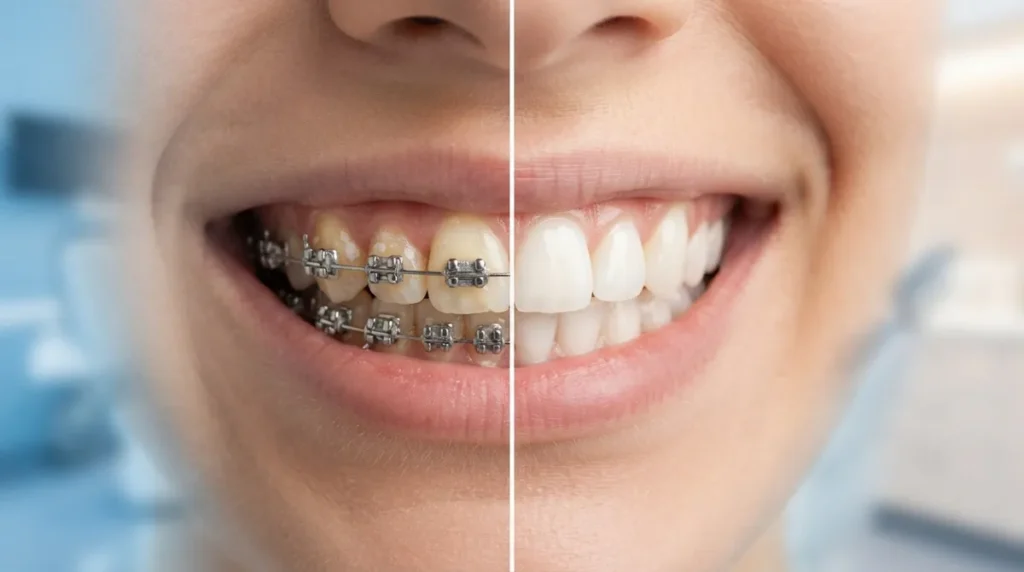
Whitening during traditional braces creates uneven results because gel cannot reach tooth surfaces covered by brackets, leaving light squares where brackets were once removed braces come off.
-
Wait 4 to 8 weeks after braces are removed before whitening to allow enamel to remineralize and strengthen, ensuring even, uniform results across your entire smile.
-
Clear aligners offer a significant advantage over traditional braces because they are removable, allowing whitening gel to reach all tooth surfaces evenly during treatment.
-
Whitening strips should be avoided during traditional braces treatment as they cannot mold properly around brackets and may loosen bonding material, potentially delaying your orthodontic timeline.
-
Lingual braces (attached to the back of teeth) and in-office professional bleaching with supervision are exceptions where whitening during treatment is possible, though most orthodontists still recommend waiting until after treatment completes.
If you’re getting braces or thinking about clear aligners, you’ve probably wondered: do braces whiten teeth? It’s a great question, and one we hear all the time at our Lakewood Ranch office. Parents want their kids to have bright, healthy smiles. Young professionals want their teeth to look their best for that big presentation or first date. And adults getting a second round of treatment want to know their investment will pay off in every way possible.
Here’s the short answer: braces do not whiten teeth. In fact, braces can make whitening trickier if you’re not careful. But don’t worry! We’re here to break down exactly what braces do, what they don’t do, and how you can get that dazzling smile you’re dreaming of. Let’s dig into five important facts about braces and teeth whitening, so you know exactly what to expect during your orthodontic journey.

1. Braces Do Not Whiten Teeth (Here’s Why)
Let’s clear up the biggest myth first. Braces are designed to move your teeth into better positions. They are not designed to change the color of your teeth at all. Braces brackets and wires do one job really well: straightening your smile. Whitening is a completely separate process that involves special gels or treatments.
In fact, braces can sometimes make your teeth look less white if you’re not brushing carefully. Food particles and plaque can build up around brackets. Over time, this can cause white spot lesions or staining, especially near the edges of each bracket. This is why good oral hygiene is so important during treatment. We always tell our patients at Segovia Orthodontics that a great smile starts with great habits, not shortcuts.
What Actually Happens to Your Teeth With Braces
- Brackets and wires gently shift teeth into straighter positions over time
- Braces do not contain any whitening agents or bleach
- Poor brushing around brackets can lead to visible white spots or discoloration
- Your natural tooth color stays the same throughout treatment unless staining occurs
- Removing braces reveals your teeth’s true, natural shade
Want to learn more about keeping your smile healthy during treatment? Check out our guide on essential orthodontic care tips for simple ways to protect your smile every day.

2. Why Whitening Products Don’t Work Well With Traditional Braces
Here’s the tricky part. Whitening gels need to touch your entire tooth surface to work evenly. But when you have metal or ceramic brackets covering part of each tooth, the whitening gel can’t reach those covered spots. This creates an uneven whitening result once your braces come off.
Picture this: you whiten your teeth while wearing braces, feeling excited about your bright new smile. Then your braces come off, and you notice light squares where your brackets used to be, surrounded by darker enamel. That’s because the whitening agent only reached the exposed parts of your teeth. This uneven look is actually a common complaint we hear about, and it’s completely avoidable with the right timing.
Common Whitening Mistakes to Avoid During Treatment
- Using whitening strips over traditional metal or ceramic braces
- Trying at-home whitening kits without talking to your orthodontist first
- Skipping proper brushing techniques around brackets and wires
- Ignoring early signs of white spot lesions near brackets
- Assuming whitening toothpaste will fix uneven coloring caused by braces
Whitening strips simply cannot mold around brackets properly. They may also loosen bonding material, which could delay your treatment timeline. If you’re unsure about any product, it’s always smart to contact us before trying anything new.
3. The Best Time to Whiten Your Teeth Is After Braces Come Off
So when should you actually whiten your teeth? Most orthodontists agree that waiting until after your braces are removed is the smartest choice. This gives you an even, uniform result across your entire smile.
Experts generally recommend waiting about 4 to 8 weeks after your braces come off before starting any whitening treatment. This waiting period allows your enamel to remineralize and strengthen after months of wearing brackets. Jumping into whitening too soon could increase tooth sensitivity or cause uneven results if your enamel hasn’t fully recovered.
Simple Timeline for Whitening After Braces
- Complete your full orthodontic treatment with braces
- Wait 4 to 8 weeks to allow enamel to strengthen
- Schedule a dental cleaning to remove any buildup
- Talk to your dentist or orthodontist about safe whitening options
- Begin your whitening treatment for even, beautiful results
This is actually such an important topic that we wrote an entire article about it. Check out Teeth Whitening vs. Orthodontics: Which Comes First? for a deeper dive into planning your smile makeover the right way.
4. Clear Aligners Make Whitening Much Easier
Here’s some good news if you’re considering clear aligners instead of traditional braces. Since aligners are removable, you actually can whiten your teeth during treatment in many cases. Because there are no brackets covering your teeth, whitening gel can reach every surface evenly.
This is one of the many reasons busy professionals and image-conscious young adults love aligner treatment. You get the straightening benefits without the whitening restrictions that come with metal brackets. Many patients even use their clear aligner trays as makeshift whitening trays, adding whitening gel for short periods when approved by their orthodontist.
Benefits of Whitening With Removable Aligners
- Full tooth surface access means even whitening results
- No brackets blocking gel from reaching enamel
- Aligner trays can sometimes double as whitening trays
- Faster path to a straight AND bright smile
- Great option for weddings, graduations, or big career milestones
If you’re curious whether clear aligners fit your lifestyle, take a look at our clear aligners page. We also offer Angel Aligners, which use a smart 7+3 wear schedule to speed up treatment while keeping costs friendly for your budget.
5. Special Cases: Lingual Braces and In-Office Whitening During Treatment
There are a few exceptions worth knowing about. Lingual braces, which attach to the back of your teeth, leave the front tooth surface completely open. This means whitening treatments can work normally during treatment since nothing is blocking the front of your teeth.
Clinical studies have also looked at in-office bleaching during traditional treatment with braces still on. Some research shows that two to three 40-minute sessions using 35% hydrogen peroxide can be effective, even with brackets present. However, this approach requires careful professional supervision and isn’t something to try at home. Most orthodontists, including our team at Segovia Orthodontics, still recommend waiting until after treatment for the most predictable, even results.
Whitening Options Compared
| Treatment Type | Can You Whiten During Treatment? | Why or Why Not |
|---|---|---|
| Traditional Metal Braces | Not Recommended | Brackets block gel, causing uneven color |
| Ceramic or Clear Braces | Not Recommended | Same bracket coverage issue as metal braces |
| Lingual Braces | Yes, Generally Safe | Front tooth surface is fully exposed |
| Clear Aligners (Angel Aligners) | Yes, With Guidance | Removable trays allow full surface access |
| In-Office Bleaching With Braces On | Possible, With Supervision | Clinical studies show success with careful monitoring |
Want to explore all your bracket options? Our types of braces page covers everything from WildSmiles Braces for kids to LightForce Braces for a more discreet, custom-fit option.
How Segovia Orthodontics Helps You Get a Straight AND Bright Smile
At Segovia Orthodontics, Dr. Flor Segovia and our team believe your smile journey should feel exciting, not confusing. We walk every patient through what to expect at each stage of treatment, including how whitening fits into the bigger picture. Whether your child is getting fun WildSmiles brackets or you’re exploring LightForce Braces for a faster, more comfortable experience, we make sure you understand every step.
We also love helping busy parents, professionals, and adults returning for a smile refresh find the right treatment for their lifestyle. Our bilingual, board-certified care means you always get answers in a way that makes sense to you. Curious what real patients think? You can visit our Facebook page or check out our Instagram page to see smile transformations and behind-the-scenes moments from our Lakewood Ranch office.
Why Timing Matters for Your Best Smile
- Straight teeth show off whitening results much better than crooked ones
- Even coloring across your smile creates a more polished, professional look
- Planning ahead saves you money by avoiding repeat whitening treatments
- Working with your orthodontist prevents sensitivity or enamel damage
- A coordinated plan means you’re ready for big life events, like graduations or weddings
If you’re weighing your options between metal braces, clear aligners, or something in between, take a look at our comparison guide on braces vs. clear aligners to help you decide what fits your goals best.
Your Next Steps Toward a Straighter, Brighter Smile
So, do braces whiten teeth? Now you know the honest answer: they don’t, but that’s okay! With the right timing and a little patience, you can absolutely achieve a straight smile and a bright one too. The key is working with an experienced orthodontic team who can guide you through the process step by step.
Whether you’re a parent looking into early treatment for your child, a young professional considering discreet aligners, or an adult ready to fix relapse from years ago, we’re here for you at every stage. According to the American Board of Orthodontics, working with a board-certified specialist ensures you get the highest standard of care throughout your treatment.
Ready to start your journey toward a straighter, healthier, and eventually brighter smile? See what our patients have to say when you visit us on Google — Segovia Orthodontics, and when you’re ready to take the next step, request an appointment with our friendly Lakewood Ranch team. You can also call us at 941-557-1333 to ask any questions about braces, whitening timing, or which treatment option fits your smile goals. We can’t wait to help you shine!
FAQs
Q: Can you whiten your teeth while wearing traditional braces?
A: It’s not recommended! Whitening gel can’t reach the parts of your teeth covered by brackets, so you’ll end up with uneven color once your braces come off. It’s best to be patient and wait until after treatment for a smooth, even result.
Q: Why do my teeth look spotty after getting my braces off?
A: Those little light or dark spots usually happen from whitening attempts during treatment or from plaque buildup around brackets. The good news is a professional cleaning and proper whitening after braces can usually even everything out beautifully.
Q: How long should I wait after braces before whitening my teeth?
A: Most orthodontists suggest waiting 4 to 8 weeks after your braces come off. This gives your enamel time to strengthen and recover, so your whitening results turn out even and long-lasting.
Q: Is it safe to whiten my teeth with clear aligners like Invisalign or Angel Aligners?
A: Yes, in many cases! Since aligners are removable and don’t cover your teeth like brackets do, whitening treatments can work evenly across your whole smile. Just check with your orthodontist first to make sure it fits your specific treatment plan.
Q: Can I use whitening strips while wearing braces?
A: We’d recommend holding off on whitening strips until your braces are removed. They can’t mold around brackets properly, which leads to uneven whitening and could even loosen your bonding material.
Our Service Area