Key Takeaways
-
Ceramic top and metal bottom braces cost $1,000-$2,000 less than full ceramic while providing a less noticeable upper smile, making them ideal for budget-conscious patients who want discretion where it shows most.
-
Your bite type determines if this mixed setup is safe for you; ceramic brackets on lower teeth risk enamel wear or chipping if your upper teeth bite down on them, so a personal orthodontist exam is essential before choosing.
-
Ceramic brackets resist staining, but the clear or tooth-colored elastic ties holding the wire can discolor between appointments; regular rinsing after dark foods and keeping scheduled visits prevents visible staining.
-
Treatment typically takes 12-24 months with mixed braces, requiring appointments every 6-10 weeks; ceramic brackets need gentler care—avoid hard/sticky foods and use a mouthguard for sports to prevent costly breakage.
-
This setup works best for teens, professionals, and adults preparing for major events who want a polished upper smile appearance without the highest price tag of full ceramic braces.
-
Clear aligners offer an alternative invisible option but require 22+ daily wear hours and may not work for all bite issues, while mixed braces provide fixed, reliable correction for complex cases.
Picture this: you want braces, but you do not love the idea of a shiny metal smile in every photo. At the same time, you do not want to pay top dollar for clear braces on every single tooth. Sound familiar? You are not alone, and there is a friendly middle ground worth knowing about.
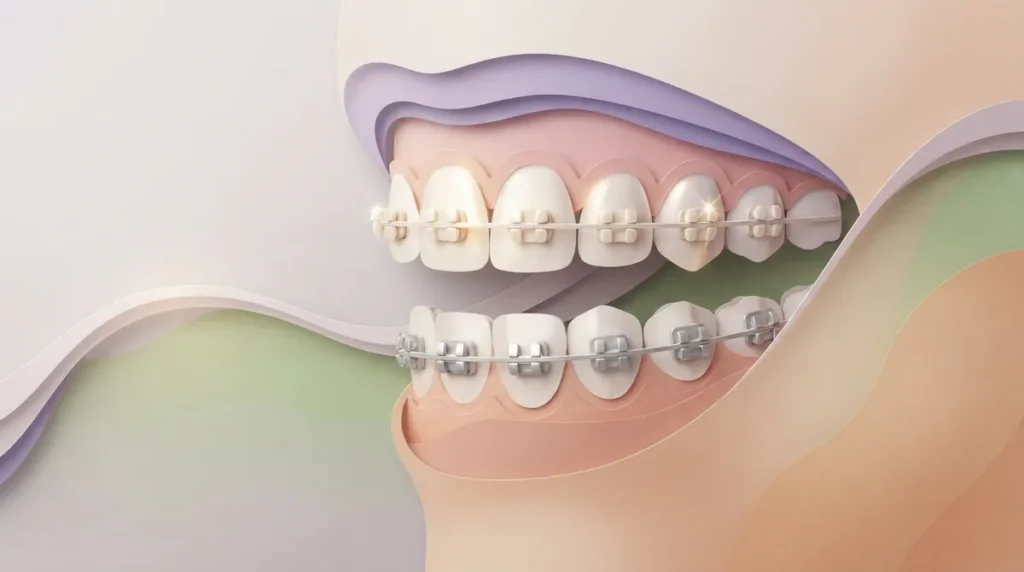
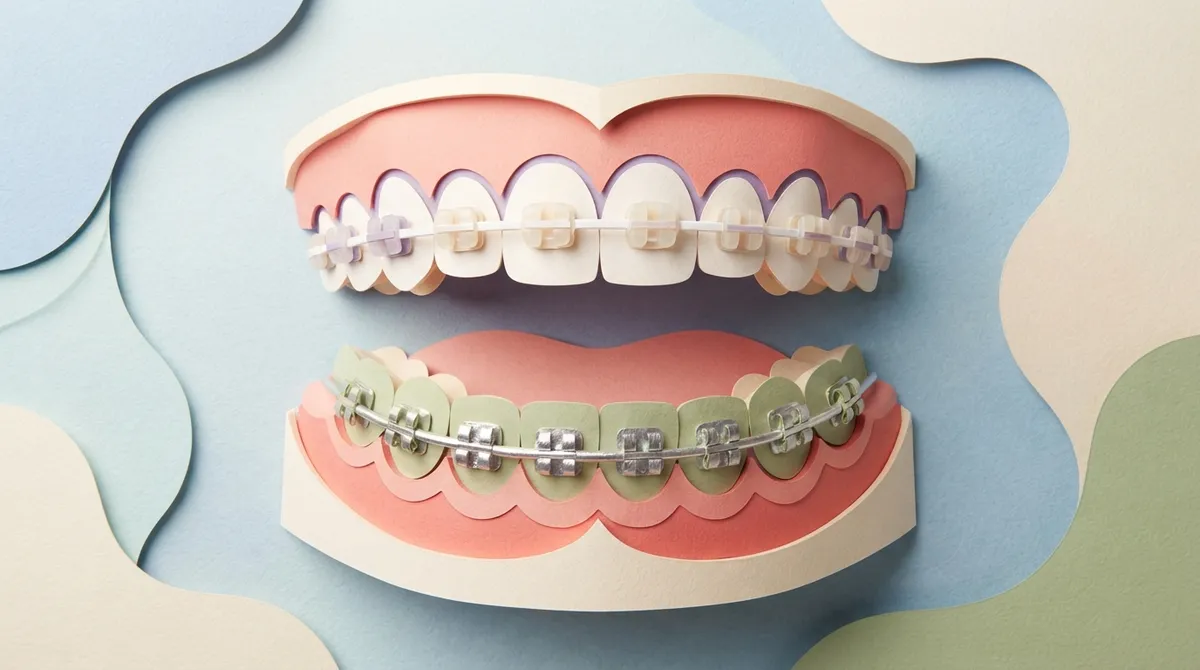
Braces with ceramic on top and metal on the bottom are a popular mixed setup. The less-visible ceramic brackets go on the upper teeth, which show more when you smile. Durable metal brackets go on the lower teeth. It is a smart blend of looks, strength, and cost for many patients.
In this guide, we will walk through what this combo is, who it suits, and what to ask your orthodontist. Whether you are a parent planning for your teen, a professional who wants a polished look, or someone getting ready for a big life event, this article will help you decide with confidence.
What Are Ceramic Top and Metal Bottom Braces?
Braces ceramic top metal bottom is not a brand-new treatment. It is simply a mixed-braces setup. Your orthodontist places tooth-colored or clear ceramic brackets on your upper teeth and traditional metal brackets on your lower teeth.
Both types work the same way. Brackets are attached to your teeth, and an archwire connects them. Gentle, steady pressure from the wire guides your teeth into better positions over time. If you want a refresher on the basics, our guide to all about braces explains how it all works.
The main difference is looks and materials. Ceramic blends in with your enamel. Metal is strong, smaller, and very reliable. A mixed setup lets you enjoy a bit of both.
Why Do People Choose Ceramic on Top and Metal on the Bottom?
Think about how people see your smile. When you grin or talk, your upper teeth are usually on display. Your lower teeth show less. That is why many patients put the “pretty” brackets up top and the “practical” ones below.
Here are the most common reasons people pick this combo:
- Better looks where it counts: Ceramic brackets on the upper teeth are less noticeable in photos and conversations.
- Lower cost than full ceramic: Metal brackets on the bottom often keep the total price friendlier.
- Strength where you need it: Metal is tough and less likely to chip on the lower teeth.
- A comfortable compromise: You get a more discreet look without going all in on the priciest option.
This setup is a favorite for teens who want a lower-profile smile, and for adults who want a professional look at work. If you are comparing every style out there, our article on 7 types of braces and which one is right for you is a great place to start.
Ceramic vs. Metal Brackets at a Glance
Seeing the two side by side makes the choice much easier. Here is a quick comparison of how each bracket type typically behaves.
| Feature | Ceramic Brackets | Metal Brackets |
|---|---|---|
| Visibility | Less noticeable, tooth-colored or clear | More visible, silver look |
| Strength | Strong, but more brittle | Very durable |
| Chipping risk | Higher than metal | Lower |
| Staining | Bracket resists stains; elastic ties can discolor | Not an issue |
| Typical cost | Usually higher | Usually lower |
| Best for | Visible upper teeth | Lower teeth and heavy-wear areas |
Keep in mind that these are general trends. Your own treatment plan depends on your bite, your goals, and your orthodontist’s exam.
The Bite Factor: When Mixed Braces May Not Work
Here is something many people do not hear until the consultation. Your bite matters a lot when choosing ceramic or metal.
Ceramic is a hard material. If your upper teeth bite down onto your lower brackets, as can happen with a deep bite, ceramic on the lower teeth could wear down enamel or chip. That is one big reason orthodontists often choose metal for the bottom row.
On the flip side, if your bite brings your lower teeth into contact with your upper brackets, your orthodontist may adjust the plan. This is why a personal exam is so important. Not every mixed setup fits every smile, and your orthodontist will tell you what is safe and effective for you.
If you are unsure what kind of bite you have, our overview of common orthodontic problems can help you learn the lingo before your visit.
Pros and Cons of the Mixed Braces Setup
No treatment is perfect for everyone. Let us look at the good and the not-so-good so you can weigh it honestly.
The Upsides
- A more discreet look on your upper smile line
- Often more budget-friendly than ceramic on both arches
- Sturdy metal on the lower teeth for everyday wear and tear
- Works with the same wires and methods as other fixed braces
The Downsides
- The lower teeth still show metal, which some people dislike
- Ceramic brackets can chip or break more easily than metal
- Clear or tooth-colored elastic ties may pick up stains between visits
- Not every bite is a good match for ceramic on one arch
If metal’s classic strength sounds appealing, you might enjoy reading 7 reasons traditional metal braces are still a top choice.
Do Ceramic Braces Stain?
This question comes up all the time, and the answer has a little nuance. The ceramic bracket itself is typically quite resistant to staining. The small elastic ties that hold the wire in place are the real culprits. Those clear or tooth-colored ties can pick up color from foods and drinks between appointments.
Good news: your orthodontist swaps the ties at regular visits, so any discoloration does not stick around for long. Still, a few habits help keep things looking fresh:
- Rinse with water after coffee, tea, red wine, or dark sodas.
- Brush after meals whenever you can.
- Limit very dark or heavily pigmented foods like curry and berry sauces.
- Keep up with every adjustment visit so ties get replaced on schedule.
Want a full list of what to skip while you are in treatment? Check out our guide to 13 foods to avoid with braces.
How Long Does Treatment Take?
Everyone’s smile is different, so timelines vary. According to the American Association of Orthodontists, most people wear braces for about 12 to 24 months, though some cases run shorter or longer depending on the problem being corrected.
Other consumer health sources give broader ranges for ceramic braces, sometimes citing around 18 to 36 months. These numbers are general estimates, not a promise for your own mixed setup. Your orthodontist will give you a timeline after looking at your teeth, bite, and goals.
You can also expect regular checkups, often every six to ten weeks. These visits keep your treatment on track. Missing them can slow your progress, so mark them on your calendar. For a peek at what these visits involve, see braces tightening: what really happens at each visit.
What Does Ceramic Top and Metal Bottom Cost?
Let us talk money, because it matters. The mixed option generally costs more than all-metal braces but less than ceramic on both arches. One consumer overview suggests ceramic treatment can run roughly $1,000 to $2,000 more than metal braces. That is a broad estimate for ceramic overall, not a quote for a mixed setup.
The truth is that no reliable national price exists for this exact combination. Your final fee depends on:
- Where your orthodontist practices
- How complex your case is
- Which appliances you choose
- What the treatment fee includes, such as retainers and repairs
The best move is to ask for a written estimate. Also ask about insurance, repair charges, and payment options. Our team shares helpful tips in 9 smart ways to make orthodontic financing work for you, and you can learn more about orthodontic financing options too.
Taking Care of Mixed Braces
Ceramic brackets are a little more delicate than metal, so a little extra care goes a long way. Good habits protect your investment and keep your treatment moving.
- Brush gently but thoroughly around every bracket after meals.
- Floss daily with a floss threader or water flosser.
- Skip hard and sticky foods like ice, hard candy, caramel, and popcorn kernels.
- Avoid biting into hard foods such as whole apples or corn on the cob. Cut them up instead.
- Wear a mouthguard if you play sports.
- Follow your orthodontist’s care sheet for any special instructions.
If a bracket pops off or a wire pokes you, do not panic. Call your orthodontist right away. Learning common emergency situations with braces ahead of time will help you stay calm if something happens.
Who Is This Setup Best For?
This combo can be a great fit for many people. Here are a few examples of who often considers it:
- Parents of teens: Your child gets a less noticeable upper smile without the highest price tag.
- Busy professionals: You want a polished look at meetings and on video calls without going fully invisible.
- People preparing for a milestone: Graduations, weddings, and big events are easier when the front of your smile looks more natural.
- Adults returning for treatment: If your teeth shifted after earlier braces, a mixed setup can be a practical way to get back on track. Our page on adult orthodontics shares more.
Parents of younger patients may also like our overview of teen orthodontic treatment.
What About Other Options Like Clear Aligners?
Mixed braces are not the only way to get a discreet smile. Some patients prefer removable trays that are nearly invisible. Clear aligners can work well for certain alignment problems, and they let you take the trays out to eat and brush.
The trade-off is that they require you to wear them most of the day, and they are not ideal for every bite issue. If you are weighing both paths, read braces vs. clear aligners: which is right for you, or explore our clear aligners page.
At Segovia Orthodontics, we also offer custom options like LightForce braces and WildSmiles braces, so there is a style for just about every personality. Dr. Flor Segovia is a board-certified orthodontist who will walk you through every choice so you feel comfortable with your plan. You can verify orthodontic credentials through the American Board of Orthodontics.
Questions to Ask at Your Consultation
Going in prepared makes your visit smoother. Here are smart questions to bring along:
- Is a ceramic top, metal bottom setup safe for my bite?
- How long do you expect my treatment to take?
- What is the total cost, and what does it include?
- What happens if a ceramic bracket chips or breaks?
- How often will I need appointments?
- Do you offer payment plans or help with insurance?
Not sure what to expect at that first visit? Our guide to your first orthodontic visit covers it step by step.
Ready to Find Your Perfect Fit?
Ceramic top and metal bottom braces can be a wonderful blend of looks, durability, and value. The key is making sure your bite and goals match the plan. Only an orthodontist can tell you that after a proper exam.
We would love to meet you and help you explore your options in a warm, relaxed setting. You can request an appointment online, call us at 941-557-1333, or contact us with any questions. See what our Segovia Orthodontics patients say by visiting Visit us on Google — Segovia Orthodontics, and follow along with smile stories on our Instagram page and our Facebook page.
Your best smile is closer than you think. Let us help you get there, one friendly step at a time.
FAQs
Q: What are ceramic top and metal bottom braces?
A: It is a mixed-braces setup with less-visible ceramic brackets on your upper teeth and durable metal brackets on your lower teeth. Both use brackets and archwires to move your teeth, so it is a style choice rather than a separate treatment method.
Q: Are ceramic top and metal bottom braces cheaper than full ceramic braces?
A: Usually, yes. This mixed option often costs more than all-metal braces but less than ceramic on both arches. Exact fees vary by practice and case, so ask for a written estimate and check what is included.
Q: Can ceramic braces damage or chip teeth if I have a deep bite?
A: They can pose a risk in some cases. Ceramic is hard, so if your upper teeth strike lower brackets, there is a chance of enamel wear or chipping. That is why orthodontists often choose metal for the lower teeth when the bite calls for it.
Q: Do ceramic braces or their elastic ties stain?
A: The ceramic bracket itself typically resists stains well. The clear or tooth-colored elastic ties can discolor between visits, but they are replaced at your regular adjustments, so a little extra rinsing and brushing keeps things fresh.
Q: How long does treatment take with mixed ceramic and metal braces?
A: Most people wear braces for about 12 to 24 months, according to the American Association of Orthodontists, though some need more or less time. Your orthodontist will give you a personal timeline after your exam.
Our Service Area