Key Takeaways
-
The first orthodontist visit is typically an assessment and consultation, not a braces fitting appointment. Expect a friendly examination of your teeth, bite, and jaws to determine if treatment is needed and what options are available.
-
Bring insurance information, dental/medical history, previous dental records, a photo ID, and a written list of your top concerns and questions to maximize the value of your consultation.
-
The visit usually includes paperwork, a clinical exam, photos or X-rays, and a clear explanation of findings with three possible outcomes: start treatment, monitor progress, or no treatment needed.
-
First visits typically last 20 minutes to 3 hours depending on the office and case complexity. Ask your orthodontist's office how long to plan for when booking to avoid scheduling conflicts.
-
If treatment is recommended, discuss expected duration, potential extractions, costs, payment plans, and retention options. Ask for a written estimate and confirm insurance coverage directly with your insurer.
-
The American Association of Orthodontists recommends an initial check-up by age 7 for children, though early screening doesn't guarantee immediate treatment and allows for monitoring growth patterns.
Walking into an orthodontist’s office for the first time can feel a little like stepping into the unknown. Will they put braces on right away? Will it hurt? How long will it take? If you’re asking these questions, you’re in good company. Whether you’re a parent booking a visit for your child, a young professional curious about clear aligners, or an adult who had braces years ago and wants to fix a shifted smile, knowing what to expect at the orthodontist makes everything easier.
Here’s the good news: your first visit is usually relaxed and informative. It’s a conversation, a check-up, and a planning session all rolled into one. Nobody is going to rush you into anything. In this friendly guide, we’ll walk you through each step, explain what to bring, and share simple tips so you can walk in feeling confident and walk out with a clear plan for your best smile.
Why Your First Orthodontic Visit Is Mostly About Answers
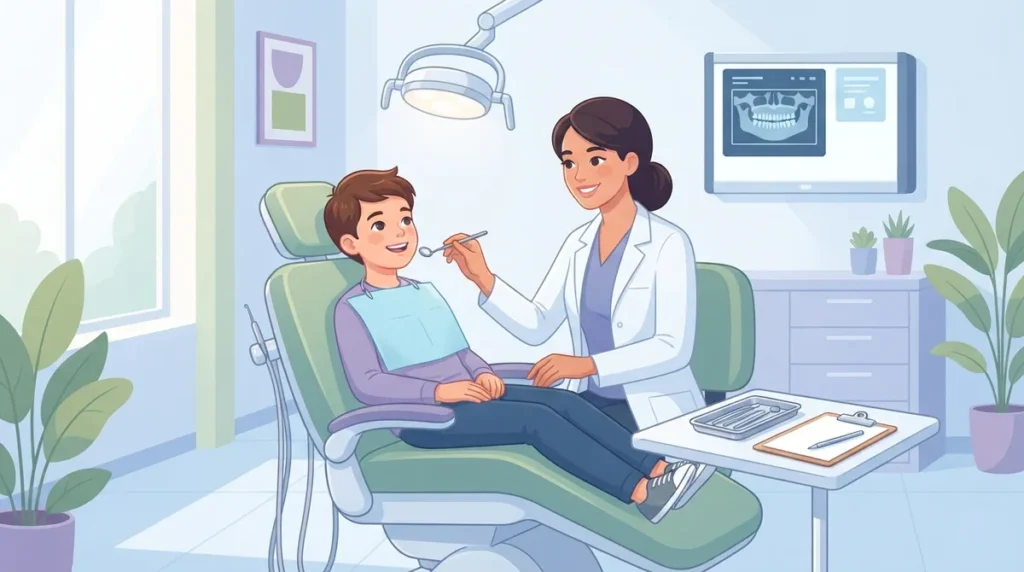
Many people picture braces being fitted on day one. In reality, a first orthodontic appointment is usually an assessment and consultation. The orthodontist looks at your teeth, bite, and jaws to decide whether treatment is needed and what your options might be.
Think of it like a first meeting with a trusted advisor. You share your goals, the orthodontist shares what they see, and together you decide on the next steps. According to guidance from the British Orthodontic Society, it is very unlikely that braces will be fitted at the first appointment. Some offices may schedule records, treatment planning, or appliance fitting for later visits.
If you’d like a deeper look at this topic, our guide on what to expect at your first orthodontist visit covers more of the details.

How to Prepare Before You Go
A little preparation goes a long way. Spending ten minutes getting ready can make your visit smoother and help you get more value from your time with the orthodontist.
What to Bring to Your Appointment
- Insurance information: Bring your card and any benefit details so the office can help estimate coverage.
- Dental and medical history: Note any health conditions, allergies, and medications you or your child take.
- Previous dental records: If you had braces before or recent X-rays, bring them or ask your dentist to send them.
- A list of questions: It’s easy to forget things in the moment, so write them down ahead of time.
- Your goals: Think about what bothers you most, such as crowding, gaps, or a bite that feels off.
For more help getting ready, check out how to prepare for your orthodontic consultation.
Quick Prep Checklist
- Brush and floss before you arrive so your teeth are fresh for the exam.
- Gather insurance cards and a photo ID.
- Write down your top three concerns or goals.
- Jot down questions about timing, cost, and treatment options.
- Plan a little extra time in case X-rays or scans are needed.
Step by Step: What Happens at Your First Visit
While every office has its own rhythm, most first visits follow a similar flow. Here is what you can generally expect.
Step 1: A Friendly Welcome and Paperwork
You’ll check in, fill out forms, and share your health history. The team may ask about your goals, medications, past dental care, and any concerns. This is a great time to mention if you feel nervous. Orthodontic teams hear it all the time, and a good one will go out of their way to help you feel at ease.
Step 2: The Clinical Exam
Next, the orthodontist examines your teeth, bite, jaws, and facial profile. They are looking for things like:
- Crowding or spacing between teeth
- Overbite, underbite, or crossbite
- Delayed tooth eruption in children
- Jaw growth concerns
- Signs of teeth grinding or jaw discomfort
You can learn more about these issues in our overview of common orthodontic problems.
Step 3: Photos, X-Rays, and Digital Scans
Depending on your case, the orthodontist may take dental or facial photographs, X-rays, and a digital scan or traditional impressions. These records help show tooth roots, jaw position, and teeth that haven’t come in yet. Not everyone needs every record, so the exact list depends on you.
Many modern offices use advanced orthodontic technology such as digital scanners, which can make this step quicker and more comfortable than messy impressions.
Step 4: A Clear Explanation of What They Found
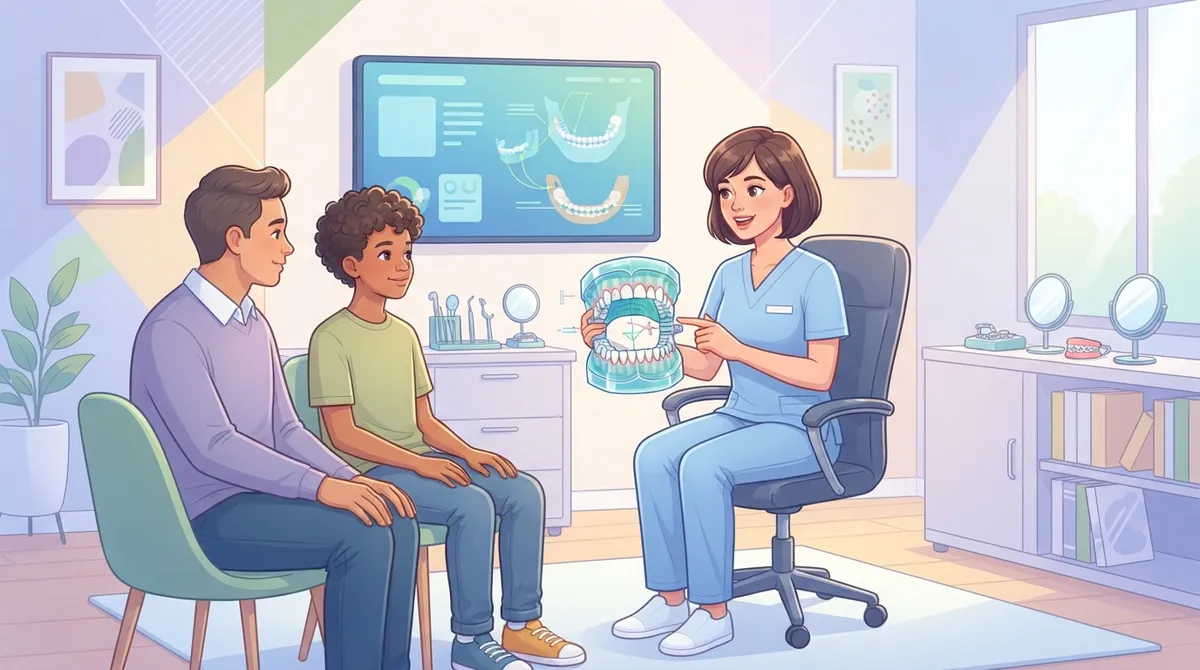
After the exam, the orthodontist explains their findings in plain language. They may recommend one of three paths:
- Start treatment with braces or clear aligners.
- Monitor your growth or tooth movement and review again later.
- No treatment if your smile is healthy and functioning well.
All three are perfectly normal outcomes. Honest advice is the goal, not a sales pitch.
Understanding Your Treatment Options
If treatment is recommended, your orthodontist will walk you through the choices that fit your needs, lifestyle, and budget. The conversation often covers expected duration, possible extractions or other procedures, risks and benefits, and retention after treatment.
| Option | Best For | Key Feature |
|---|---|---|
| Traditional metal braces | Complex bite or crowding cases | Reliable and effective for many smiles |
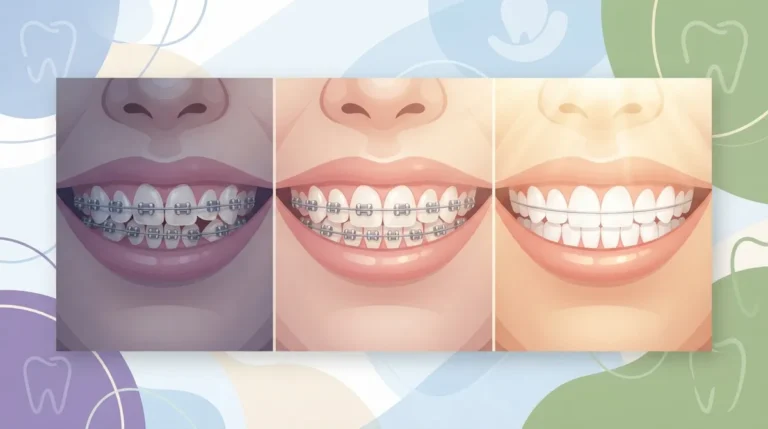
| Clear braces | Teens and adults wanting a subtle look | Brackets blend with natural teeth |
| Clear aligners | Busy professionals and adults | Removable, discreet trays |
| Custom digital braces | Patients wanting faster, precise treatment | Brackets designed for your teeth |
Want to explore these in more depth? Visit our pages on types of braces and clear aligners. Kids who love a little fun may enjoy WildSmiles braces, while patients who want a fully digital system may be interested in LightForce orthodontics.
How Long Does a First Visit Take?
This varies by office and by case. One NHS hospital orthodontic service describes an initial assessment lasting around 20 minutes. Another NHS patient guide suggests allowing up to two or three hours when additional assessment or records are involved.
In a private practice, many first visits fall somewhere in between. If you’re juggling a busy schedule, just ask the office how long to plan for when you book. A little heads-up can save you stress, especially if you’re squeezing the appointment in around work or school.
Talking About Cost, Insurance, and Payment
Let’s be honest: cost is one of the biggest questions on people’s minds. The office will usually talk about fees, insurance coverage, payment plans, and scheduling during or right after your consultation. Costs and coverage vary by practice, treatment type, and insurance plan.
Here are a few smart tips:
- Ask for a written estimate so you can review it at home.
- Confirm your benefits directly with your insurance company.
- Ask about monthly payment options if you’d like to spread out costs.
You can learn about flexible options on our orthodontic financing page, or read how orthodontics payment plans actually work to feel more prepared.
Good Questions to Ask Your Orthodontist
Don’t be shy. A great orthodontist welcomes questions. Here are some to consider bringing along:
- What do you see in my smile, and what are my treatment options?
- How long is treatment likely to take?
- Will I need extractions or any extra procedures?
- How often will I need appointments?
- What will the total cost be, and what payment options are available?
- How will I keep my results after treatment ends?
For more ideas, see how to ask the right orthodontic questions at your visit.
What to Expect Based on Who You Are
Every patient’s story is different. Here’s how the experience can feel for different people.
For Parents of Children and Teens
The American Association of Orthodontists recommends an initial orthodontic check-up by age 7. That doesn’t mean your child will need braces then. It simply means an orthodontist can spot growth patterns early and recommend monitoring if treatment isn’t needed yet. Learn more about early orthodontic treatment and teen orthodontic treatment.
Tip for busy parents: ask about flexible appointment times so visits fit around school and activities.
For Adults and Professionals
If you’re an adult, you’ll find the visit just as welcoming. Many adults are curious about discreet options that won’t affect their appearance at work or at big events like weddings. If you had braces before and your teeth have shifted, that’s very common, and relapse can often be corrected. Our page on adult orthodontics shares more.
Meet the Team at Segovia Orthodontics
At Segovia Orthodontics in Lakewood Ranch, we believe your first visit should feel warm and comfortable. Led by Dr. Flor Segovia, a board certified orthodontist, our team offers bilingual care in English and Spanish and personalized plans for every age. You can learn more about Dr. Flor Segovia and why families choose us.
You can also see what patients say by visiting Visit us on Google — Segovia Orthodontics, or follow along on our Instagram page and our Facebook page for smile stories and updates. To verify an orthodontist’s credentials anywhere, you can also check the American Board of Orthodontics.
After Your Visit: What Happens Next?
You’ll usually be given time to think things over. There’s no pressure to decide on the spot. If you move forward, the next steps may include a records appointment, treatment planning, and then an appliance fitting visit. Our guide on what happens at the braces start appointment explains that stage in detail.
If you decide to wait, that’s okay too. Many patients return for a periodic review so the orthodontist can track changes over time.
Final Thoughts: Walk In Curious, Walk Out Confident
Knowing what to expect at the orthodontist takes away most of the worry. Your first visit is a friendly, no-pressure chance to learn about your smile, ask questions, and explore options that fit your life. Bring your goals, your questions, and your curiosity, and let the team handle the rest.
Ready to take the first step? Request an appointment today, or call us at 941-557-1333 and our welcoming team will be happy to help you get started on the path to a smile you love.
FAQs
Q: What happens at your first orthodontist appointment?
A: Your first visit is usually a friendly consultation. The orthodontist reviews your health history, examines your teeth, bite, and jaws, may take photos, X-rays, or a digital scan, and then explains your options. You’ll leave with a clear idea of what comes next.
Q: Do they put braces on at the first orthodontist visit?
A: Usually not. The first appointment is typically for assessment and planning, so braces or aligners are not automatically fitted that day. Some offices schedule records, treatment planning, or fitting for later visits.
Q: What should I bring to an orthodontist consultation?
A: Bring your insurance details, a list of medications and health conditions, any previous dental records or X-rays, and a list of questions. It also helps to jot down your smile goals so nothing gets forgotten.
Q: At what age should a child first see an orthodontist?
A: The American Association of Orthodontists recommends a first check-up by age 7. This doesn’t mean your child will need treatment right away. The orthodontist may simply monitor growth and let you know when the best time to start would be.
Q: How much does an orthodontist consultation cost, and does insurance cover it?
A: Costs and coverage vary by practice, treatment, and insurance plan. Ask the office for a written estimate and confirm your benefits directly with your insurer so there are no surprises.
Our Service Area