Key Takeaways
-
Metal braces cost $3,000-$6,000 in Bradenton while ceramic braces range $4,000-$7,000, with ceramic typically costing $1,000-$2,000 more due to materials and lab work.
-
Metal braces are stronger and recommended for complex cases and active patients, while ceramic braces are more prone to chipping and require careful diet management during treatment.
-
Ceramic braces typically take 18-36 months versus metal's 18-24 months due to increased friction, but individual treatment length depends more on bite severity and patient compliance than bracket type.
-
Ask your orthodontist which bracket type they recommend for your specific case rather than relying on general statistics, as failure rates vary significantly by bracket design and tooth location.
-
Ceramic braces offer a discreet appearance ideal for job interviews and events, but their clear elastic ties stain easily from coffee, tea, and tobacco—requiring frequent changing to maintain brightness.
-
Many insurance plans cover both metal and ceramic braces equally, but some reimburse only up to metal brace costs, so contact your provider directly to confirm coverage before choosing.
Trying to pick between metal and ceramic braces? You’re not alone. This is one of the most common questions Bradenton families ask before starting orthodontic treatment. Both options can give you a beautiful, straight smile, but they work a little differently, cost different amounts, and look different on your teeth. Let’s break it all down together, so you can walk into your consultation feeling confident and ready.
Whether you’re a mom booking braces for your teenager, a busy professional wanting a quick fix before a big career move, or an adult finally correcting that old orthodontic relapse, this guide covers what really matters. We’ll look at cost, comfort, durability, and how long each option might take. By the end, you’ll have a clear picture of which braces fit your life and your smile goals.
What Are Metal and Ceramic Braces?
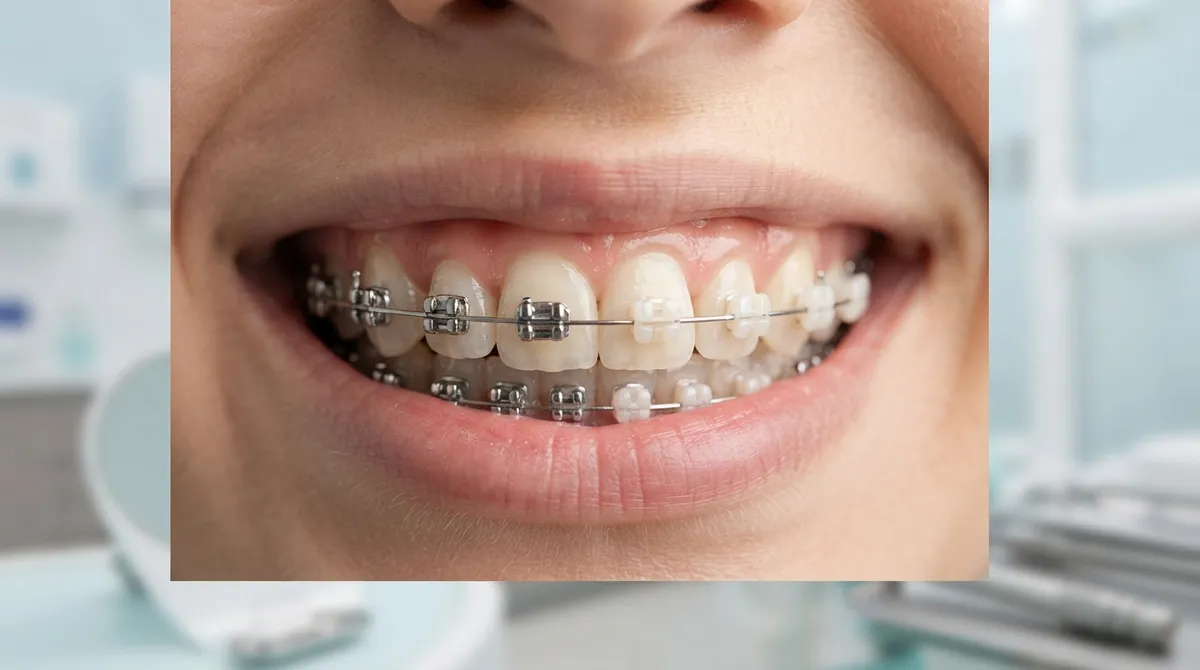
Both metal and ceramic braces use small brackets glued to your teeth, connected by a wire. The wire gently guides your teeth into place over time. Your orthodontist adjusts that wire during regular visits. This basic setup fixes many issues, like crowded teeth, gaps, overbites, underbites, and crossbites.
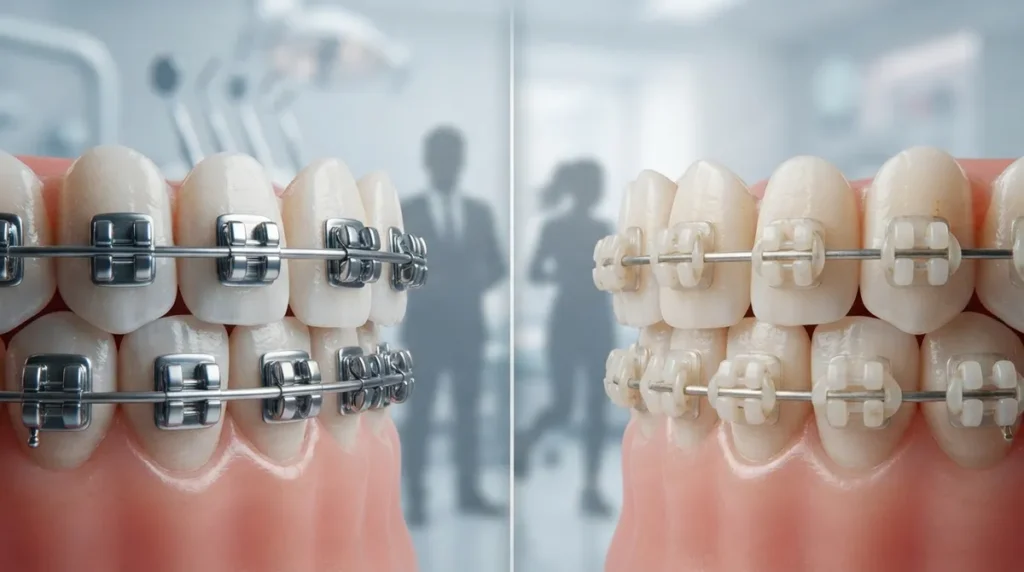
The big difference is what the brackets are made from. Metal braces use stainless steel. Ceramic braces use tooth-colored or clear material that blends in with your teeth. Beyond that, they work in pretty similar ways to move your teeth into a healthier, straighter position.
Metal Braces: The Tried-and-True Option
Metal braces have been around for decades, and for good reason. They’re strong, reliable, and often the most budget-friendly choice. Many orthodontists still recommend them for complex cases because the brackets can handle a lot of pressure without breaking.
If you have an active kid who plays sports or just wants durable braces that can take a beating, metal is often the safer bet. Modern metal braces are also smaller and more comfortable than they used to be, so they’re not as bulky as some people remember from the past.
Ceramic Braces: The Discreet Alternative
Ceramic braces use brackets that match your natural tooth color. This makes them much less noticeable than metal braces, which is a big deal for image-conscious teens and adults. If you’re heading into a job interview season or prepping for your wedding photos, ceramic braces might feel like a better fit.
However, ceramic brackets are more brittle than metal ones. They can crack or chip more easily, especially if you bite down on something hard. This doesn’t mean they’re a bad choice, but it does mean you’ll want to be extra careful with your diet during treatment.
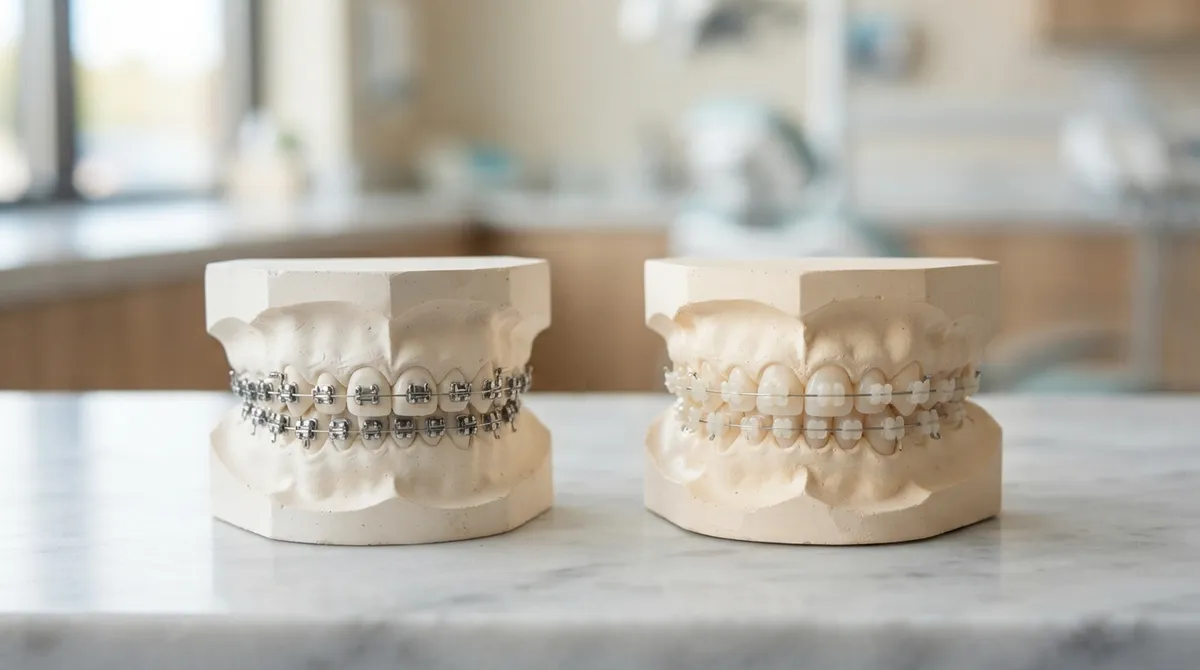
Metal vs Ceramic Braces Bradenton: Key Differences at a Glance
Here’s a simple table to help you compare the two options side by side.
| Feature | Metal Braces | Ceramic Braces |
|---|---|---|
| Visibility | Very noticeable | Blends with teeth |
| Average Cost (Bradenton) | $3,000-$6,000 | $4,000-$7,000 |
| Durability | Very strong, low failure rate | More prone to chipping or cracking |
| Typical Treatment Time | 18-24 months | 18-36 months |
| Best For | Complex cases, active patients, budget-conscious families | Image-conscious teens and adults, milder cases |
| Staining Risk | Brackets don’t stain | Elastic ties can stain from coffee, tea, tobacco |
Keep in mind these numbers are general ranges. Your exact cost depends on how complex your case is, whether you need retainers afterward, and your insurance coverage. A personal consultation is really the only way to get an accurate quote.
How Much Do Braces Cost in Bradenton, Florida?
Cost is often the deciding factor for many families. Nationally, metal braces typically run between $3,000 and $7,000, while ceramic braces tend to fall between $4,000 and $8,000. Locally in Bradenton, estimates are similar, with metal braces often coming in around $3,000 to $6,000 and ceramic options landing between $4,000 and $7,000.
Ceramic braces usually cost about $1,000 to $2,000 more than metal braces for comparable treatment. That price gap comes from the material itself and the extra lab work needed to create tooth-colored brackets. Here are a few things that can affect your final price:
- How complex your bite or spacing issue is
- Whether you need diagnostic records like X-rays or 3D scans
- The number of adjustment visits required
- Whether retainers are included in your treatment package
- Your insurance benefits and deductible
- Available financing or payment plan options
If cost is a concern, ask about orthodontic financing options. Many practices, including ours, offer flexible payment plans to make treatment more manageable for families and working adults alike.
Does Ceramic Take Longer Than Metal?
This is a fair question, and the honest answer is: it depends. Ceramic brackets sometimes create more friction against the wire, which can slow down tooth movement in certain cases. Ceramic treatment is often estimated at 18 to 36 months, while metal treatment tends to run 18 to 24 months.
But treatment time isn’t only about the bracket material. Several other factors play a bigger role:
- How severe your bite or alignment problem is at the start
- Your age and how your jaw is still growing (especially for kids and teens)
- How well you follow your orthodontist’s instructions
- Your oral hygiene habits throughout treatment
- Whether you miss appointments or break brackets along the way
So while ceramic braces can sometimes take a bit longer, a well-planned metal brace treatment for a complex case might still take just as long, or longer, than a simple ceramic case. It really comes down to your individual situation.
Which Braces Are More Durable?
Durability is where metal braces really shine. Metal brackets are tough and rarely break under normal daily use. Ceramic brackets, while much improved over the years, are still more fragile by nature.
Research backs this up, though results vary depending on the study. One 2020 clinical comparison found that metal brackets failed about 7.2% of the time over 12 months, compared to just 1.1% for ceramic brackets in that same study. However, a separate 2024 study found the opposite pattern, with higher ceramic bracket failure rates, especially on the lower teeth and back teeth. This tells us that failure rates depend heavily on the specific bracket design, bonding technique, and even where in your mouth the bracket sits.
The takeaway? Don’t rely on general statistics alone. Ask your Bradenton orthodontist which system they recommend for your specific bite and lifestyle. If you’re curious about newer bracket technology, you might also want to learn about LightForce Orthodontics, a fully digital, custom-fitted bracket system that’s designed for both comfort and efficiency.
Which Braces Fit Your Lifestyle?
Choosing between metal and ceramic isn’t just about looks or cost. It’s about what fits your daily life. Here’s how different situations might steer your decision:
- Busy parents: Metal braces are often more forgiving for active kids and require fewer emergency repair visits.
- Young professionals: Ceramic braces offer a more subtle look for job interviews, client meetings, and networking events.
- Career-focused adults: If treatment speed matters most, ask about faster options like clear aligners or advanced bracket systems that reduce total treatment time.
- Brides, grads, and milestone planners: Ceramic braces can help you feel more confident in photos leading up to a big event.
- Adults fixing old relapse: Since you already know what to expect from orthodontic treatment, either option can work well, especially if your case is milder this time around.
For kids who need a little extra motivation to enjoy the process, fun options like WildSmiles Braces add a playful twist with custom bracket shapes and Disney-themed elastics. When treatment feels exciting instead of stressful, kids tend to stick with good brushing and flossing habits too.
Caring for Your Braces: Metal or Ceramic
No matter which type you choose, daily care matters. Good habits protect your braces and help your treatment stay on schedule. Here’s a simple care checklist:
- Brush after every meal, focusing around each bracket and wire
- Floss daily using floss threaders or an interdental brush
- Avoid hard foods like ice, nuts, and hard candy
- Skip sticky or chewy foods like caramel and gum
- Wear a mouthguard during sports to protect your brackets
- Keep every adjustment appointment, even when life gets busy
If you have ceramic braces, pay extra attention to what you eat and drink. The clear elastic ties used with ceramic brackets can pick up stains from coffee, tea, red wine, and tobacco. The ceramic brackets themselves usually resist staining, but the ties need regular changing to stay bright.
Does Insurance Cover Ceramic Braces?
Many dental insurance plans cover orthodontic treatment up to a certain amount, regardless of whether you choose metal or ceramic. However, some plans only cover the cost equivalent to standard metal braces, meaning you’d pay the difference out of pocket for ceramic.
It’s smart to call your insurance provider directly and ask these questions:
- Does my plan cover orthodontic treatment for adults, teens, or both?
- Is there a lifetime maximum benefit for orthodontics?
- Does coverage apply equally to metal and ceramic braces?
- Are retainers included after treatment finishes?
Our team can help you understand your benefits and explore financing options during your visit. Feel free to contact us with any billing or insurance questions before you commit to a treatment plan.
Questions to Ask Your Bradenton Orthodontist
Before you choose metal or ceramic, come prepared with good questions. Here’s a helpful list to bring to your consultation:
- Which bracket type do you recommend for my specific bite issue?
- How long do you expect my treatment to take?
- What is the total estimated cost, including retainers?
- What happens if a bracket breaks or falls off?
- Can ceramic brackets be used on all my teeth, or just the front ones?
- What financing or payment plans do you offer?
A good orthodontist will walk you through each answer patiently and help you feel confident in your decision. According to the American Board of Orthodontics, choosing a board-certified specialist ensures you’re getting care from someone who has met rigorous training and testing standards.
Why Local Expertise Matters
Every mouth is different, which is why online research can only take you so far. A real, in-person exam lets your orthodontist check your bite, your enamel, your gum health, and your overall treatment goals. This is the only way to get an accurate answer about which braces will work best for you.
At Segovia Orthodontics, Dr. Flor Segovia provides bilingual, family-friendly care for patients of all ages in the Lakewood Ranch and greater Bradenton area. Whether you’re exploring traditional metal braces, ceramic options, or even clear aligners, our team takes time to explain your options clearly and warmly. You can also check out why families choose us for their orthodontic care.
Curious what other patients think? You can visit us on Google — Segovia Orthodontics to read real reviews from families just like yours. We also love connecting with our community on our Facebook page and sharing smile transformations on our Instagram page.
Making Your Final Decision
Here’s a quick recap to help you decide between metal and ceramic braces in Bradenton:
- Choose metal braces if you want the strongest, most budget-friendly option
- Choose ceramic braces if a discreet appearance is your top priority
- Consider your daily habits, like sports or eating certain foods
- Factor in your timeline for big events like graduations or weddings
- Always confirm your final cost and treatment time with a personal consultation
There’s no universally “better” option here. Both metal and ceramic braces can give you the smile you want. It just depends on what matters most to you: cost, appearance, durability, or a mix of all three. If you’re also curious about clear aligners or newer bracket technology, our types of braces page breaks down every option available at our practice.
Ready to Start Your Smile Journey?
Choosing between metal and ceramic braces doesn’t have to feel overwhelming. With the right orthodontist by your side, you’ll get clear answers, honest pricing, and a treatment plan built around your life. Our friendly team is here to guide you every step of the way, from your very first visit to the day your braces come off.
Ready to find out which option is right for you? Request an appointment today, or call us at 941-557-1333 to speak with our friendly Bradenton-area team. We can’t wait to help you love your smile!
FAQs
Q: Are ceramic braces better than metal braces for patients in Bradenton?
A: It really depends on what you value most! Ceramic braces blend in nicely with your teeth, which many teens and adults love. Metal braces tend to be stronger and more budget-friendly, so they’re often a great pick for active kids or bigger orthodontic cases. Neither one is truly “better” overall, it’s about what fits your life best.
Q: How much do metal and ceramic braces cost in Bradenton, Florida?
A: In the Bradenton area, metal braces typically range from about $3,000 to $6,000, while ceramic braces run a bit higher, around $4,000 to $7,000. Your exact price depends on how complex your case is, whether retainers are included, and your insurance coverage. A quick consultation will give you the clearest picture.
Q: Do ceramic braces take longer than traditional metal braces?
A: Sometimes, yes! Ceramic treatment is often estimated between 18 and 36 months, while metal treatment usually falls between 18 and 24 months. That said, your treatment length really depends on your bite severity, your habits, and how consistently you attend your appointments.
Q: Which type of braces is better for severe crowding or bite problems?
A: Many orthodontists lean toward metal braces for more complex cases because the brackets are stronger and better at handling tricky tooth movements. That said, ceramic braces can still work well for moderate crowding, so it’s worth discussing your specific case with your orthodontist.
Q: Does dental insurance cover ceramic braces or only metal braces?
A: Many insurance plans cover both, but some only reimburse up to the cost of standard metal braces, leaving you to cover the extra cost of ceramic out of pocket. It’s a good idea to call your insurance provider directly, or ask our friendly front desk team to help you sort out the details.
Our Service Area