Key Takeaways
-
Two-phase orthodontics is a selective plan, not a rule for every child: Phase One targets one specific early concern, followed by a monitoring break and a later Phase Two if needed.
-
The American Association of Orthodontists recommends a first orthodontic checkup by age 7, which is a screening visit rather than a signal that treatment must start immediately.
-
Common reasons for Phase One include crossbite, a narrow upper jaw, severe crowding or eruption problems, prominent front teeth, certain jaw growth differences, and habits like thumb sucking.
-
Early treatment does not guarantee that later braces will be avoided; Phase Two often still finishes alignment and bite once all permanent teeth have come in.
-
Research summarized in the article found no clear long-term advantage of two-step early Class II treatment over one-step treatment in the teen years overall, though early care may lower front-tooth injury risk in selected cases.
-
Ask your orthodontist what specific problem Phase One would treat, what happens if you wait for one-phase treatment, and what the total time and cost across both phases will be.
If your child’s dentist or a friend just mentioned “two phase orthodontics,” you may be wondering what it means and whether your family needs it. You are not alone. Many Bradenton parents hear about early treatment and feel a little pulled in two directions. Should you start early? Or should you wait and do one round of braces later?
Here is the good news: you do not have to guess. Two phase orthodontics in Bradenton is a selective plan, not a rule for every child. Some kids benefit from a short, focused first step. Many others do just fine with a single course of treatment during the teen years.
In this guide, we compare the two paths side by side. We explain what each one involves, who tends to be a good fit, and what questions to ask. Think of it as a friendly chat to help you feel calm and confident before your child’s visit.
What Is Two-Phase Orthodontic Treatment?
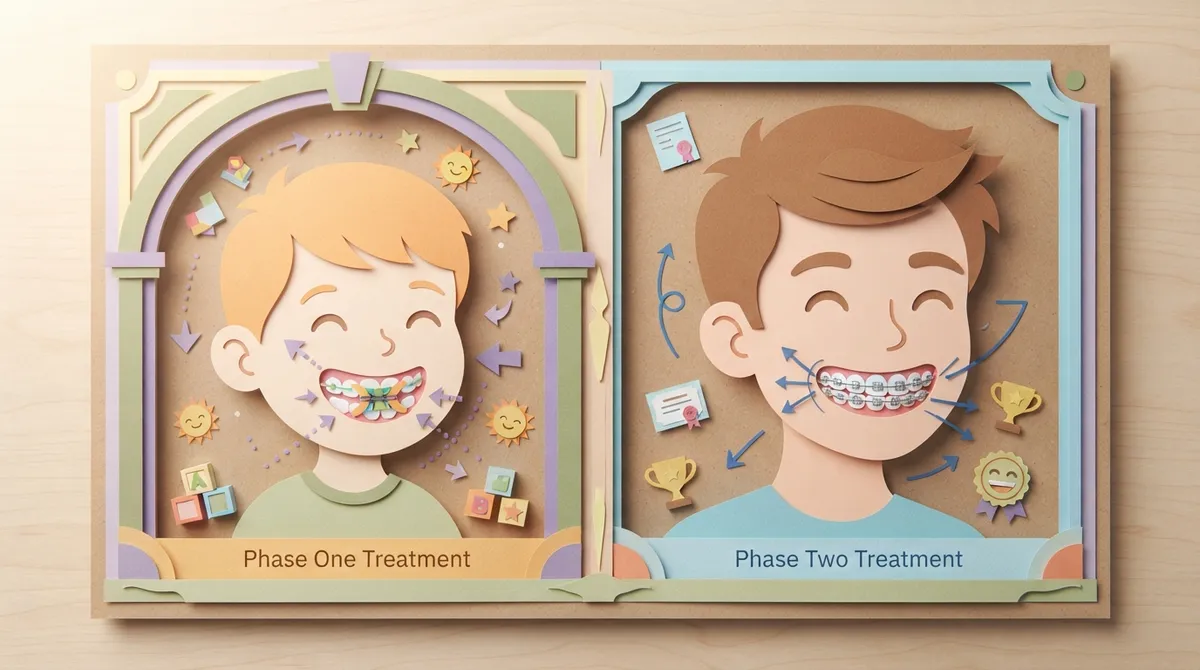
Two-phase treatment is a child-focused plan with three parts: a short, targeted Phase One, a resting period, and a later full treatment called Phase Two. Phase One is not just an early start to full braces. It aims at one specific growth, bite, or tooth-eruption concern.
Here is how it usually unfolds:
- Phase One (early): Your child still has a mix of baby and adult teeth. The orthodontist treats a particular problem, such as a narrow upper jaw or a crossbite.
- The pause: Treatment stops while the rest of the permanent teeth come in. Your child is monitored with regular checkups.
- Phase Two (later): Once enough adult teeth are present, comprehensive treatment fine-tunes the alignment and the bite.
You can learn more about how early care works on our early orthodontic treatment page, or read our friendly explainer, What Is Two-Phase Treatment and Does Your Child Need It?
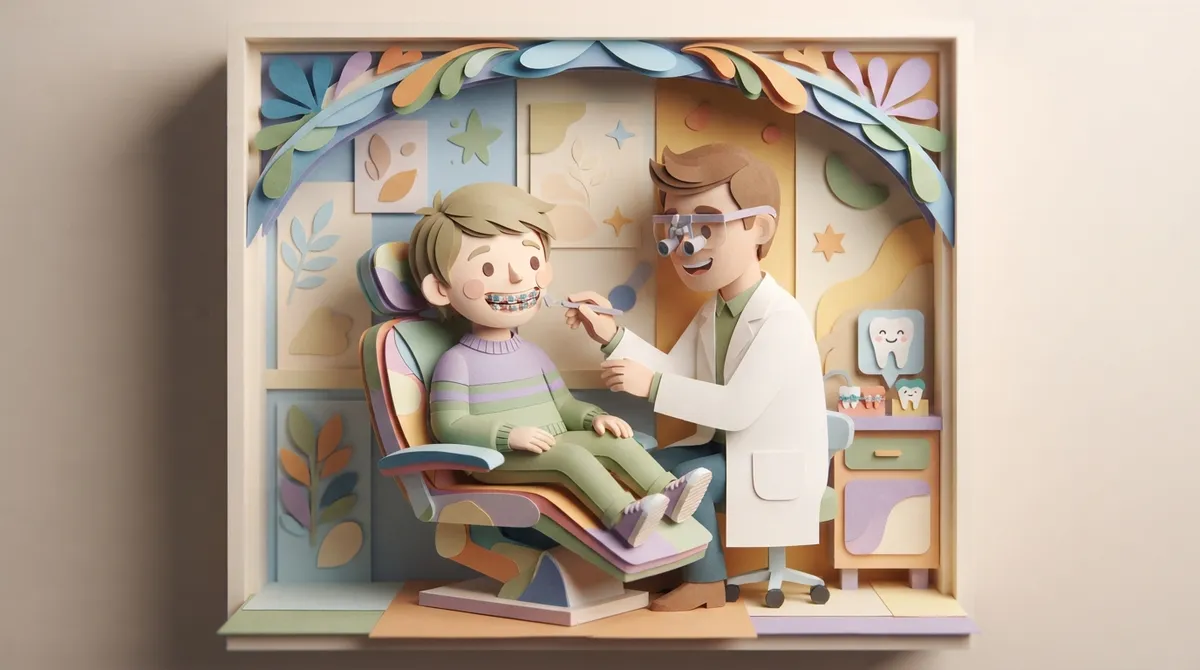
What Is One-Phase Treatment?
One-phase treatment is exactly what it sounds like. Your child waits until most or all of the permanent teeth have come in, usually in the early teen years. Then they have one comprehensive course of braces or aligners to straighten the teeth and correct the bite.
For many children, this is the simplest and most efficient path. There is one start date and one finish date. Many common concerns, like mild crowding or gaps, can be handled well this way.
If your child is closer to the teen years, our teen orthodontic treatment page shows what that single course can look like.
Two-Phase vs. One-Phase: Side-by-Side Comparison
Seeing the two paths next to each other makes the choice much clearer. Here is a simple overview:
| Feature | Two-Phase Treatment | One-Phase Treatment |
|---|---|---|
| Typical start | Mixed dentition (baby and adult teeth together) | Most permanent teeth in, often early teens |
| Goal | Address a specific early problem, then finish later | Correct alignment and bite in one course |
| Appliances | Expander, partial braces, space maintainer, or habit device | Full braces or clear aligners |
| Number of treatment courses | Two, with a monitoring break | One |
| Best for | Selected jaw, bite, or eruption concerns | Many common alignment and bite concerns |
| Needs later braces? | Often yes, Phase Two may still be needed | This is the main course |
Neither path is better for everyone. The right one depends on your child’s mouth, growth, and goals.
When Early Treatment May Make Sense
The American Association of Orthodontists recommends a first checkup by age 7. That is a screening visit, not a signal that treatment must begin right then. At that age, an orthodontist can spot growth patterns that are easier to guide early.
Phase One may be considered for specific concerns, such as:
- Crossbite: Upper teeth bite inside the lower teeth, which can affect jaw growth.
- Narrow upper jaw: There is not enough room for adult teeth to come in.
- Severe crowding or eruption problems: Teeth are blocked or coming in out of place.
- Prominent front teeth: Teeth that stick out may be at higher risk of injury during play or sports.
- Certain jaw growth differences: The upper and lower jaws are growing at different rates.
- Habits: Thumb sucking or tongue thrusting that affects the bite.
If you are curious about what to watch for at home, our guide on the 6 signs your child should see an orthodontist now is a helpful read.
What Appliances Are Used in Phase One?
Phase One is usually shorter and more focused than full braces. The tool depends on the problem being treated. Common options include:
- Palatal expander: Gently widens the upper jaw to create room and fix a crossbite.
- Partial braces: Braces on just a few teeth, often the front ones, to guide them into place.
- Space maintainer: Holds space open so an adult tooth has room to come in.
- Habit-correcting device: Helps children stop habits like thumb sucking.
The timing depends on your child’s development. Your orthodontist will explain why one tool fits better than another.
What Happens During the Break Between Phases?
After Phase One, your child gets a rest from active treatment. This is not a gap in care. It is a planned monitoring period while the permanent teeth erupt.
During this time, your child usually comes in for periodic checkups. The orthodontist watches how the teeth and jaws are developing. Some children wear a retainer during the pause to hold the progress.
Phase Two generally begins when enough permanent teeth are in place to align the smile and refine the bite. The age range varies from child to child, so think of it as approximate rather than a fixed date.
What Does the Research Say?
It helps to look at the evidence with an open and honest mind. Early treatment is helpful in some cases, but it is not a cure-all.
- A 2026 review summary found that studies of early, two-step Class II treatment showed no clear long-term advantage over one-step treatment in the teen years overall. Early care may lower the risk of front-tooth injury in selected cases.
- A 2025 survey of 228 responding AAO members found that 60.1% supported two-phase treatment. The response rate was only 5.12%, so this should not be read as the view of all orthodontists.
- The same survey found respondents commonly treated posterior crossbite (51.3%) and increased overjet (41.7%) during the mixed dentition stage. These figures describe reported practice, not how common each problem is in children.
The takeaway? Two phase orthodontics in Bradenton can be a smart choice for the right child and the right problem. It should never be a one-size-fits-all plan.
Pros and Cons at a Glance
| Path | Possible Benefits | Possible Trade-Offs |
|---|---|---|
| Two-Phase | Guides jaw growth, creates room for teeth, may reduce injury risk to front teeth, builds early confidence | Longer overall timeline, more visits, Phase Two braces may still be needed |
| One-Phase | One treatment course, shorter total time in braces, fewer appointments overall | Some early problems are addressed later, so not ideal for every concern |
A good orthodontist will talk through both columns with you and not push you toward one option.
Will My Child Still Need Braces After Phase One?
This is one of the most common questions parents ask, and the honest answer is: often, yes. Early treatment does not guarantee that later braces will be skipped.
Phase One focuses on one concern. Phase Two takes care of the finishing touches once all the adult teeth are in. If you hear a promise that early treatment means no braces later, that is a good moment to ask more questions.
When you are ready for the later stage, you can explore your options on our types of braces page, including fun choices for kids like WildSmiles braces, which come in playful shapes that help children enjoy their treatment.
Questions to Ask Your Orthodontist
You are your child’s best advocate, and a good visit goes both ways. Here are some questions to bring along:
- What specific problem would Phase One treat?
- What happens if we wait and treat in one phase instead?
- What appliance would you use, and how long would Phase One take?
- How will you monitor my child during the break?
- What is the expected total treatment time and cost across both phases?
Our guide on how to ask the right orthodontic questions at your visit offers even more ideas. And if you want to know what to expect at that first appointment, see our first orthodontic visit page.
How to Choose an Orthodontist in Bradenton
Local office websites often mention two-phase care and early evaluations. That is a good start, but marketing should never replace a real exam. Look for an orthodontist who takes time to explain the diagnosis, shares alternatives, and answers your questions kindly.
Check credentials too. Dr. Flor Segovia is a board-certified orthodontist, and you can learn more about board certification through the American Board of Orthodontics.
At Segovia Orthodontics in Lakewood Ranch, just a short drive from Bradenton, we start with a careful evaluation. Our team uses advanced orthodontic technology and offers bilingual care in English and Spanish. We recommend treatment only when it truly helps your child. If you want to hear from other families, visit us on Google — Segovia Orthodontics to read reviews.
You can also follow along with smiles and practice news on our Facebook page and our Instagram page.
Which Path Is Right for Your Family?
Here is a simple way to think about it. Two phase orthodontics in Bradenton tends to fit children who have a clear early concern that is worth guiding while they are still growing. One-phase treatment tends to fit children whose concerns can be handled well once the permanent teeth are in.
Many children land in a third group: watch and wait. That is perfectly fine. Regular checkups let the orthodontist choose the best moment, and sometimes the best moment is later.
No matter which path you choose, cost and scheduling matter to busy families. Learn about our flexible options on our orthodontic financing page.
Ready to Find the Right Path for Your Child?
You do not need to decide today whether your child needs one phase, two phases, or simply a little time. What you need is a clear, caring evaluation from someone who will explain every option honestly. That is what we love to do at Segovia Orthodontics.
If you are a Bradenton or Lakewood Ranch parent with questions about two phase orthodontics, request an appointment and meet our team. You can also call us at 941-557-1333 or contact us with any questions. We would be happy to help your child smile with confidence.
FAQs
Q: What is two-phase orthodontic treatment?
A: Two-phase treatment is a plan for children that starts with a short, focused Phase One to address a specific bite, jaw, or eruption concern. After a monitoring break while adult teeth come in, a later Phase Two completes the alignment if it is still needed.
Q: At what age should my child see an orthodontist in Bradenton?
A: The American Association of Orthodontists recommends a first checkup by age 7. This visit is a screening, not a promise that treatment will start. Many kids are simply monitored until the best time to begin, if they need treatment at all.
Q: Does every child need Phase One orthodontic treatment?
A: No, not at all. Many children do well with monitoring or a single comprehensive course of treatment during the teen years. Phase One is usually reserved for specific concerns like crossbite, severe crowding, or certain jaw growth differences.
Q: Will my child still need braces after Phase One?
A: Often, yes. Phase One treats one early concern, and Phase Two usually finishes the alignment and bite once the permanent teeth are in. Early treatment does not guarantee that later braces will be avoided, so ask your orthodontist what to expect.
Q: How do I choose an orthodontist for my child in Bradenton?
A: Look for a board-certified orthodontist who explains the diagnosis, shares alternatives, and answers your questions kindly. Ask what problem Phase One would treat, how progress will be tracked, and what the total treatment time may be.
Our Service Area