Key Takeaways
-
True braces emergencies are rare; most scary moments like poking wires or loose brackets can be managed at home and don’t require ER visits.
-
Go to the ER immediately only for severe unmanageable pain, facial trauma, swelling with fever, heavy bleeding, difficulty breathing/swallowing, or swallowed bracket pieces.
-
Fix a poking wire by gently pushing it flat with a pencil eraser and covering sharp ends with orthodontic wax, then call your orthodontist within 24-48 hours.
-
Build an orthodontic emergency kit at home with orthodontic wax, clean tweezers, salt, pain relievers, a mirror, and your orthodontist’s contact info for quick problem-solving.
-
Prevent most braces emergencies by avoiding hard/sticky foods, wearing a mouthguard during sports, attending regular appointments, and maintaining good oral hygiene.
-
Choose an orthodontist offering same-day/next-day appointments for urgent issues and clear phone guidance, ensuring you have reliable support when emergencies occur.
Picture this: it’s 9 p.m., your child bites into a caramel apple, and suddenly a wire is poking their cheek. Or maybe you’re an adult patient, rushing between meetings, and a bracket pops loose right before an important presentation. Your heart races, and your mind jumps straight to “emergency.” But is it really? Understanding what counts as a true braces emergency can save you a late-night trip to the ER and a whole lot of unnecessary worry.
Here’s the good news: genuine orthodontic emergencies are rare. Most of the scary moments that feel urgent can actually wait until your orthodontist’s office opens, or they can be managed at home with a few simple tricks. Knowing the difference between “this needs immediate care” and “this can wait until tomorrow” gives you peace of mind and helps you handle the situation calmly. At Segovia Orthodontics in Lakewood Ranch, Dr. Flor Segovia and her team want every patient and parent to feel confident about what to do when braces trouble strikes.
Let’s break down exactly what counts as a true emergency, what’s just an annoying (but manageable) hiccup, and how you can be prepared no matter what happens.
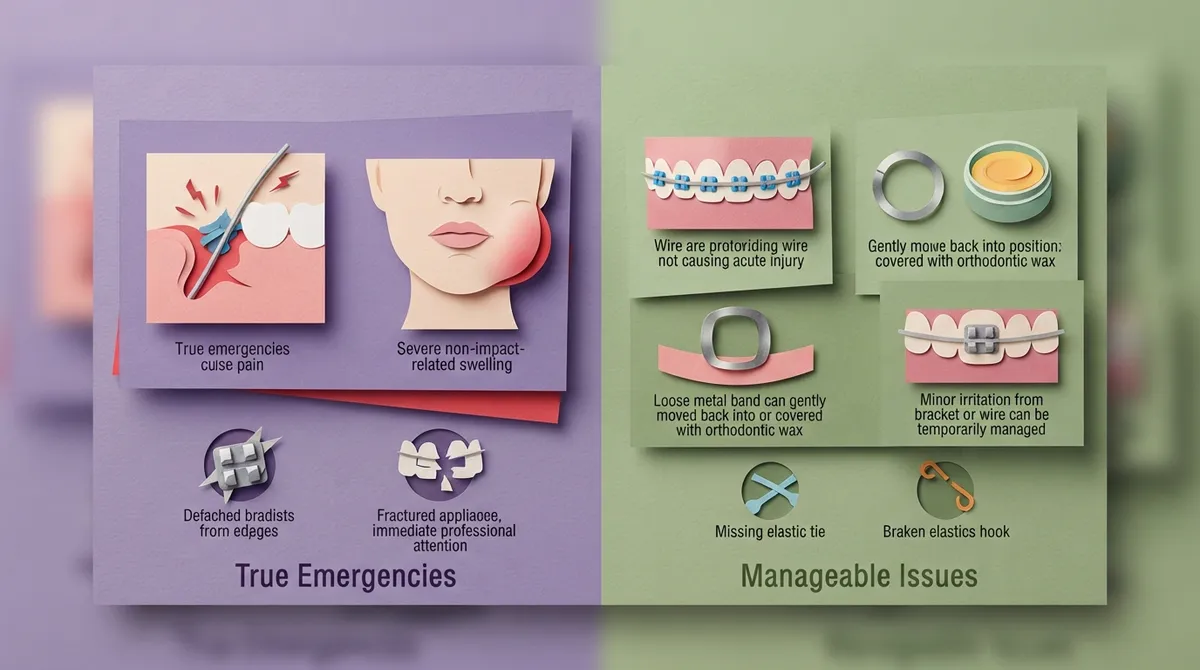
True Braces Emergencies vs. Urgent but Manageable Issues
Not every braces problem is created equal. Some situations truly need emergency medical attention, while others are simply urgent enough to call your orthodontist’s office for a quick fix. Learning this difference is one of the best things you can do as a patient or parent.
Signs of a True Medical Emergency
These situations require immediate action, sometimes even a trip to the emergency room or a call to 911. They involve serious health risks beyond just orthodontic discomfort.
- Severe, unmanageable pain that doesn’t improve with over-the-counter medication
- Facial trauma from an accident, sports injury, or fall
- Swelling accompanied by fever, which could signal infection
- Heavy, continuous bleeding that won’t stop
- Difficulty breathing, swallowing, or opening your mouth wide
- Swallowing or inhaling a piece of a bracket or appliance
If you or your child experience any of these, don’t wait. Head to the emergency room or call 911 right away. These are rare, but they’re serious enough that hesitation isn’t worth the risk.
Urgent (But Not Life-Threatening) Orthodontic Issues
These are the situations most patients actually run into. They’re uncomfortable and need attention soon, but they typically don’t require an ER visit.
- A loose or broken bracket
- A wire poking your cheek or gum
- A lost spacer or separator
- A cracked or ill-fitting clear aligner
- General soreness after a routine adjustment
These situations are annoying, sure, but they’re manageable. Most can be handled with a little at-home care until you can get in for a proper repair. Learning more about common emergency situations with braces can help you feel ready for whatever comes up.

How to Handle Common Braces Problems at Home
Most orthodontic hiccups can be soothed with a few household items and a calm approach. Here’s a simple step-by-step guide for the most frequent issues.
Fixing a Poking Wire
- Wash your hands thoroughly before touching your mouth
- Use the eraser end of a clean pencil to gently push the wire flat against the tooth
- If it still pokes, cover the sharp end with a small piece of orthodontic wax
- Rinse with warm salt water to soothe any irritation
- Call your orthodontist’s office to schedule a repair appointment
This simple fix can take the pain away almost instantly. It’s one of the most common issues our patients experience, and it’s rarely a true emergency.
Dealing with a Loose or Broken Bracket
- Check if the bracket is still attached to the wire, even if it’s loose
- If it’s just wiggling but connected, cover it with orthodontic wax to prevent irritation
- Avoid sticky or hard foods until it’s repaired
- Contact your orthodontist to book an appointment as soon as possible
A loose bracket won’t usually derail your treatment plan if it’s fixed promptly. But waiting too long can slow down your progress, so don’t put off that call.
Managing General Soreness
Feeling some soreness after an adjustment is completely normal. It usually means your treatment is working! Try softer foods for a day or two, and rinse with warm salt water to ease discomfort. Over-the-counter pain relievers like Advil or Tylenol can also help take the edge off.
Building Your Orthodontic Emergency Kit
Just like a first aid kit for cuts and scrapes, an orthodontic emergency kit is a smart thing to keep at home. It’s especially helpful for busy parents managing kids’ braces or professionals who don’t have time for surprise dental drama.
What to Include
- Orthodontic wax to cover sharp brackets or wires
- Clean tweezers for handling small pieces safely
- Salt for warm water rinses
- Over-the-counter pain relievers (Advil or Tylenol)
- A small mirror to check problem areas
- Your orthodontist’s contact information, saved and easy to find
Having these items on hand means you won’t be scrambling at 10 p.m. trying to figure out what to do. It’s a small investment that pays off big when something unexpected happens.
When to Call the Office vs. When to Wait
One of the most common questions patients ask is simple: does this need attention right now, or can it wait? Here’s a quick comparison to help you decide.
| Situation | Action Needed | Timing |
|---|---|---|
| Severe facial swelling with fever | Go to the ER | Immediately |
| Swallowed bracket piece | Seek medical attention | Immediately |
| Poking wire causing irritation | Use wax, then call office | Within 24-48 hours |
| Loose bracket, still attached | Cover with wax, call office | Within a few days |
| General soreness after adjustment | Soft foods, salt water rinse | No appointment needed |
| Lost spacer | Call office for guidance | Within a few days |
This table gives you a quick reference for future situations. Print it out, save it on your phone, or just remember the basics: severe symptoms mean urgent care, while minor discomfort usually means a scheduled visit will do.
Why Choosing the Right Orthodontic Practice Matters
Not all orthodontic offices handle emergencies the same way. Some make you wait days for a callback, while others prioritize getting you seen quickly. This is one reason why choosing a practice that values responsive, compassionate care truly matters.
At Segovia Orthodontics, patients across Lakewood Ranch appreciate having a team that understands life happens fast, especially for busy parents and working professionals. Whether your child has a WildSmiles braces bracket come loose or you’re managing your own treatment with LightForce Orthodontics, having a reliable team on your side makes all the difference. Learn more about how our practice handles orthodontic emergencies so you know exactly what to expect.
What Sets a Great Emergency Response Apart
- Same-day or next-day appointment availability for urgent issues
- Clear phone guidance for at-home management
- Bilingual support for English and Spanish-speaking families
- A comfortable, judgment-free environment for kids and adults alike
These qualities matter whether you’re a concerned parent juggling school schedules or a career-focused adult who can’t afford treatment delays. Dr. Flor Segovia, a board certified orthodontist, and her team pride themselves on making emergency situations feel manageable rather than overwhelming.
Preventing Braces Emergencies Before They Start
While you can’t prevent every mishap, there are smart habits that lower your risk of running into trouble in the first place.
- Avoid hard, sticky, or chewy foods that can damage brackets and wires
- Wear a mouthguard during sports to protect your braces from impact
- Keep up with regular adjustment appointments to catch small issues early
- Practice good oral hygiene to prevent gum irritation and swelling
- Ask your orthodontist about proper care for your specific type of braces or aligners
Small, consistent habits go a long way toward keeping your treatment on track and minimizing surprises. If you’re curious about which treatment fits your lifestyle best, our guide on braces vs. clear aligners can help you weigh your options.
For families exploring more discreet or flexible options, clear aligners like Angel Aligners can also reduce certain risks associated with metal brackets and wires, since there’s nothing to poke or break in the same way.
Trust and Community: Why Patients Choose Segovia Orthodontics
Word of mouth matters in orthodontic care, especially when it comes to trusting someone with your family’s smiles. Many patients find comfort in reading real experiences from others in the community. You can visit us on Google to see reviews from Segovia Orthodontics patients and get a feel for what to expect. You can also follow along and see smile transformations on our Facebook page or check out day-to-day moments on our Instagram page.
It’s also worth noting that choosing an orthodontist certified by the American Board of Orthodontics ensures you’re working with someone who has met rigorous standards of training and expertise. That level of trust matters most during stressful moments, like handling a braces emergency.
Your Next Steps After a Braces Emergency
Once the immediate issue is handled, whether at home or with a professional’s help, it’s important to follow up properly. Here’s what that usually looks like.
- Schedule a follow-up appointment if any hardware was damaged or repaired
- Ask about any adjustments to your treatment timeline
- Update your emergency kit if you used up any supplies
- Review food and habit guidelines to prevent a repeat incident
- Keep your orthodontist’s contact info handy for next time
Being proactive after an emergency helps you get back on track quickly and keeps your treatment moving forward smoothly. Every hiccup is temporary, and most patients look back on these moments as minor bumps in their smile journey.
Ready for Peace of Mind? We’re Here to Help
Braces emergencies can feel stressful in the moment, but with the right knowledge and a trusted orthodontic team, they’re almost always manageable. Whether you’re a parent managing your child’s first set of braces, a busy professional with clear aligners, or an adult revisiting orthodontic care, knowing what to do makes all the difference.
If you’re dealing with a braces concern right now or just want to be prepared for the future, don’t hesitate to request an appointment with our friendly team. You can also reach out to our office with any questions, or simply call us at 941-557-1333 for quick guidance. At Segovia Orthodontics in Lakewood Ranch, we’re always ready to help you handle whatever comes your way, one smile at a time.
FAQs
Q: What is considered a true braces emergency versus a minor issue?
A: A true emergency involves severe pain, facial trauma, infection with swelling and fever, or heavy bleeding that needs immediate medical care. Minor issues, like a poking wire or loose bracket, are urgent but can usually wait for a prompt office visit.
Q: How do I fix a poking wire from my braces at home?
A: Gently push the wire flat using the eraser end of a clean pencil, then cover any sharp spots with orthodontic wax. Rinse with warm salt water for extra comfort, and call your orthodontist to schedule a repair soon.
Q: What should I do if I swallow a piece of my bracket?
A: This is considered a true emergency because of choking or breathing risks, so seek medical attention right away. Once you’re safe, contact your orthodontist’s office to arrange a repair appointment.
Q: When should I go to the emergency room for braces pain?
A: Head to the ER if your pain is severe and unmanageable, or if you notice swelling that affects breathing, swallowing, or vision. These signs suggest something more serious than typical braces soreness.
Q: Can I wait until my next appointment for a loose bracket?
A: If the bracket is still attached to the wire and not causing irritation, you can often use orthodontic wax and wait a few days. However, it’s still smart to call your orthodontist so treatment stays on track.
Our Service Area