

Key Takeaways
-
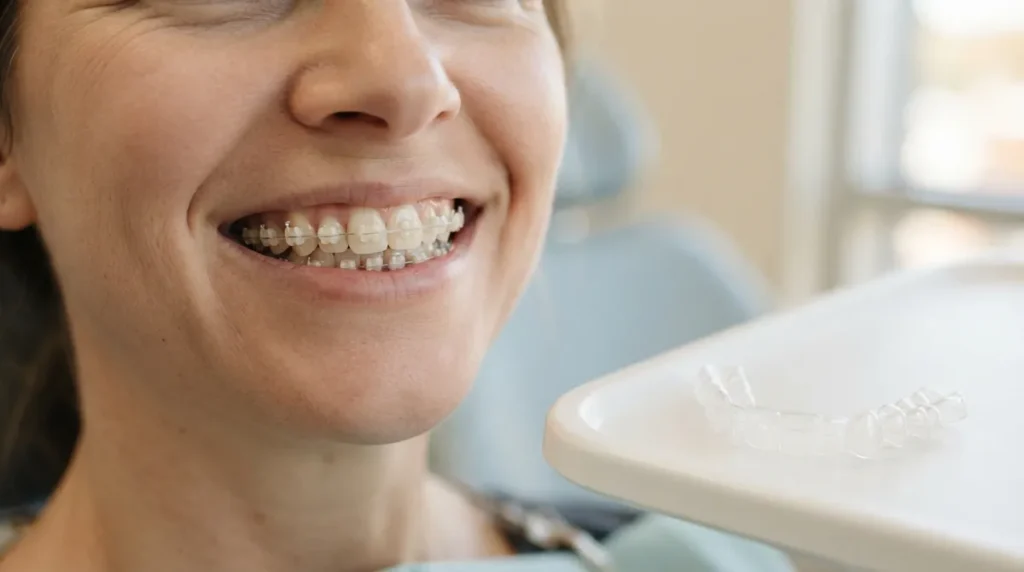
Transparent braces" is an umbrella term covering three options: tooth-colored ceramic braces, removable clear aligners, and lingual braces placed behind the teeth.
-
Clear aligners must be worn at least 22 hours a day, removed only for meals, non-water drinks, and brushing, so teeth move on schedule.
-
Ceramic braces are less noticeable than metal but not invisible, since the archwire and rubber bands can still show up close.
-
Aligners are not suited to every bite: a 2024 review estimated tooth-movement accuracy at roughly 55% to 82%, with limits for large rotations and some bite corrections.
-
Typical braces treatment runs about 12 to 24 months, though aligner trays may change every one to three weeks depending on your plan.
-
Retainers are needed after active treatment, since teeth naturally drift back, and a professional exam is the best way to choose the right option.
If you have ever searched for “transparent braces for teeth,” you are not alone. Lots of people want a straighter smile without feeling self-conscious in every photo, meeting, or family gathering. The good news? You have more choices today than ever before.
Here is the thing that surprises many people: “transparent braces” is not one single product. It is a friendly, everyday phrase that can point to a few different orthodontic options. Some are tooth-colored ceramic braces. Others are clear, removable aligners. A few are even placed behind the teeth.
Whether you are a parent planning for your teen, a busy professional who wants a discreet fix, or an adult whose smile shifted after old braces, this guide is for you. We will walk through 10 honest truths so you can talk to your orthodontist with confidence. Think of it as a chat over coffee with someone who wants you to feel informed and relaxed. Let’s dive in!
1. “Transparent Braces” Is a Nickname, Not One Product
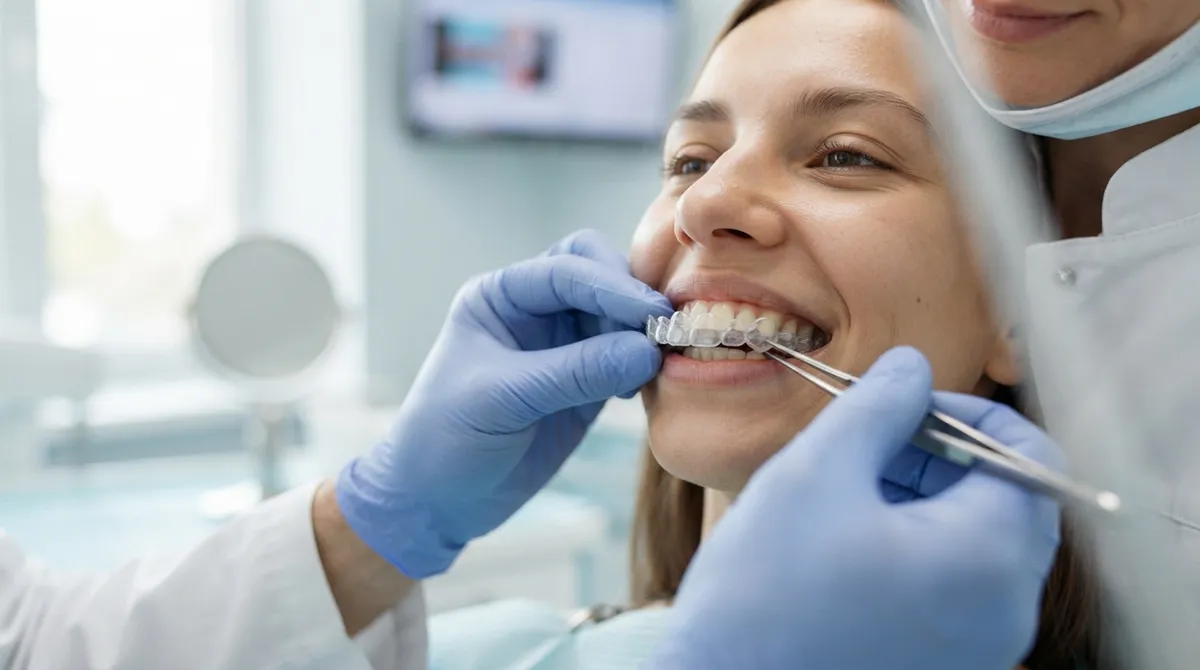
When people say transparent braces for teeth, they usually mean one of three things. Each one works differently, so it helps to know the difference before you pick a favorite.
- Ceramic braces: Fixed brackets in a clear or tooth-colored material, joined by an archwire.
- Clear aligners: Custom plastic trays you can take out, swapped in stages.
- Lingual braces: Brackets placed on the back of the teeth, out of sight.
None of these is automatically “better.” The right choice depends on your bite, your goals, and your daily habits. To see how the main styles compare, you can browse our guide to types of braces.
2. Ceramic Braces Blend In, But They Are Not Invisible
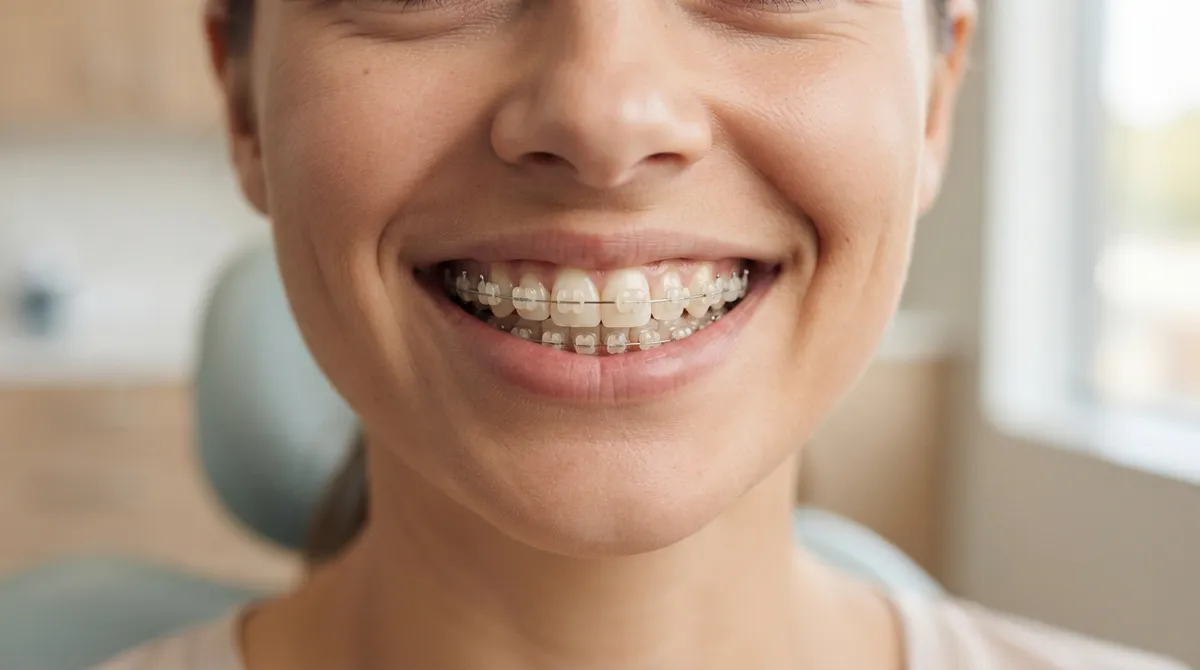
Ceramic braces use brackets bonded to each tooth, plus an archwire that gently guides teeth into place. The brackets are clear or tooth-colored, so they are far less noticeable than metal ones.
That said, the wire and small rubber bands can still be seen up close. Think “subtle,” not “magic.” Many patients love that ceramic braces keep working around the clock, with no trays to remember. If you are curious about the details, our article on things to know about clear braces is a great next read.
3. Clear Aligners Are the Most Discreet Choice for Many Smiles
Clear aligners are custom-made plastic trays that move your teeth in small steps. You switch to a new set on the schedule your orthodontist gives you. Most people find them comfortable and easy to hide in plain sight.
Aligners can treat many cases, especially mild to moderate ones. They may be less predictable for some tricky tooth movements, which is why a real exam matters. Learn more about our clear aligners and what treatment looks like.
A Quick Look at Angel Aligners
At our office, we offer Angel Aligners, a clear aligner system with a frosted finish that reduces shine. They use a “7+3” wear schedule, which means 7 days in a more flexible tray and 3 days in a firmer one. Some designs also include built-in anchors for rubber bands, which can mean fewer extra pieces bonded to your teeth.
4. Which Option Fits You? A Side-by-Side Look
Sometimes a simple chart says it all. Here is how the most common transparent options stack up.
| Feature | Ceramic Braces | Clear Aligners | Lingual Braces |
|---|---|---|---|
| Visibility | Low (wire still shows) | Very low | Hidden from view |
| Removable? | No | Yes | No |
| Best for | A wide range of bite problems | Many mild-to-moderate cases | Patients wanting hidden braces |
| Your effort | Careful cleaning and food choices | Wear trays as prescribed | Careful cleaning, adjustment period |
| Eating | Avoid hard or sticky foods | Remove trays for meals | Avoid hard or sticky foods |
If you are weighing the two most popular paths, our post on braces vs. clear aligners can help you decide.
5. Aligners Only Work If You Wear Them
This one is a gentle reminder, not a scolding. Clear aligners are typically worn at least 22 hours a day, according to the American Association of Orthodontists (AAO). You take them out for meals, drinks other than water, and brushing and flossing.
If trays spend too much time in the case, teeth may not move as planned. Here is a simple routine that helps most patients stay on track:
- Put your aligners in right after you finish eating and brushing.
- Set a phone reminder to check your wear time each evening.
- Keep your case in your bag, desk, and car so trays never end up in a napkin.
- Switch trays exactly as your orthodontist instructs.
Busy professionals often tell us this habit becomes second nature within a couple of weeks. Avoiding common slip-ups also helps, so take a peek at these clear aligner mistakes before you start.
6. Not Every Bite Problem Is a Good Fit for Aligners
Here is where honest guidance matters. Braces can treat a broad range of orthodontic problems. Aligners can handle many cases, but a 2024 umbrella review estimated tooth-movement accuracy at roughly 55% to 82%, depending on the movement. The same review noted limits for large rotations and some bite corrections.
A 2025 expert-consensus review also found 91% agreement that aligners can match fixed braces in selected non-extraction cases with mild-to-moderate crowding. Those are helpful numbers, but they are not a promise for any one person. Your orthodontist looks at your unique bite, then recommends the best path.
Common issues we help with include crowding, gaps, overbites, underbites, and crossbites. You can read more about common orthodontic problems to see what applies to you.
7. Treatment Time Depends on Your Case
Everybody asks, “How long will this take?” The AAO says many braces treatments run about 12 to 24 months, but your timeline depends on your own teeth and goals.
With aligners, you may change trays every one to three weeks, depending on your plan. Sometimes a case needs extra steps, such as small attachments, rubber bands, or a new set of trays called a refinement. Occasionally, a patient switches to fixed braces to finish the job well. That is normal, and it is all about getting you a result you love.
If speed is a big priority, our LightForce braces use 3D-printed, custom-fit brackets that can shorten treatment time for many patients. They come in clear or white options that blend in nicely.
8. Daily Care Is Easier Than You Think
Both braces and aligners need good oral hygiene. The routines are just a little different.
For Ceramic or Lingual Braces
- Brush carefully around every bracket and along the gumline.
- Use floss threaders or a water flosser to clean under the wire.
- Skip hard, sticky, or chewy foods that can break brackets.
For Clear Aligners
- Brush and floss before putting trays back in.
- Rinse trays and clean them gently every day.
- Drink only water while wearing them to protect against stains.
Need ideas for what to skip? Our list of foods to avoid with braces keeps it simple.
9. Retainers Are Part of the Plan, Always
Here is a truth many people forget: finishing treatment is not the final step. After active treatment, retainers are generally needed to help hold your new smile in place, no matter which appliance you used.
Teeth have a natural habit of drifting back. Wearing your retainer as directed is the easiest way to protect the time and effort you invested. If you want to understand your options, explore our page on orthodontic retainers. This is especially important for adults who had braces years ago and noticed their teeth shifting. If that sounds like you, read about adult orthodontics to see how a fresh start can work.
10. A Real Exam Beats Guesswork Every Time
The most important truth saves for last. The best way to choose among transparent braces for teeth is a clinical exam with an orthodontist. Online quizzes and social media photos cannot show how your teeth, jaws, and bite fit together.
At your visit, you can expect to:
- Talk about your goals, lifestyle, and any upcoming events.
- Have your teeth and bite carefully examined.
- Learn which options are realistic for your smile.
- Review timing, cost, and payment choices.
Dr. Flor Segovia is a board-certified orthodontist who offers bilingual care in English and Spanish. You can verify specialist credentials through the American Board of Orthodontics. Not sure what the first appointment involves? See what happens at your first orthodontic visit.
What About Cost and Insurance?
Cost varies by case, appliance, and treatment length, so we cannot give one number that fits everyone. Many families find that flexible payment plans make treatment feel manageable. Some dental plans also help with orthodontic care, though coverage differs from plan to plan. Our orthodontic financing page explains how payment options can work for you.
Who Is This Smile Journey For?
Transparent options are popular across many life stages. Here are a few real-world examples we hear often:
- Parents of teens: You want a comfortable option that fits school, sports, and photos. Learn more about teen orthodontic treatment.
- Young professionals: You want something discreet that does not distract in meetings.
- Event planners: A wedding or graduation is on the calendar, and you want to feel your best.
- Relapse patients: Your old braces did great, but your smile drifted, and you are ready to fix it.
Wherever you are on the journey, there is a plan that can fit. We love seeing the moment a patient realizes how much they enjoy smiling again.
Ready to Explore Your Options?
Transparent braces for teeth can be a wonderful way to straighten your smile while staying confident every day. The key is matching the right option to your bite and your lifestyle, and that starts with a friendly conversation with an expert.
At Segovia Orthodontics, we offer personalized care for kids, teens, and adults in a warm, supportive space. You can request an appointment online, or simply call us at 941-557-1333 to chat with our team. Want to see what other families say? Visit us on Google — Segovia Orthodontics to read real reviews, and follow along on our Instagram page for smile stories and fun updates. We cannot wait to meet you and help you love your smile!
FAQs
Q: What are transparent braces for teeth?
A: “Transparent braces” is an everyday phrase, not one specific appliance. It usually means tooth-colored ceramic braces, clear removable aligners, or sometimes braces placed behind the teeth. Your orthodontist can help you figure out which one suits your smile.
Q: Are clear braces the same as clear aligners?
A: Not quite! Clear or ceramic braces are fixed brackets bonded to your teeth, while clear aligners are removable plastic trays. Both can straighten teeth, but they work differently and fit different cases and lifestyles.
Q: How many hours a day do clear aligners need to be worn?
A: Clear aligners are typically worn at least 22 hours a day, and you remove them for meals, drinks other than water, and brushing and flossing. Always follow the exact schedule your orthodontist gives you, since their instructions come first.
Q: How long does treatment with clear or ceramic braces take?
A: The American Association of Orthodontists says many braces treatments take about 12 to 24 months, though every smile is different. Your own timeline depends on your bite, the movements needed, and how well you follow your care plan.
Q: Can transparent braces fix an overbite, underbite, or crowded teeth?
A: Often, yes! Braces can treat a broad range of bite problems, and aligners can handle many mild-to-moderate cases. A quick exam will show which option is the best match for your specific needs.
Our Service Area

