Key Takeaways
-
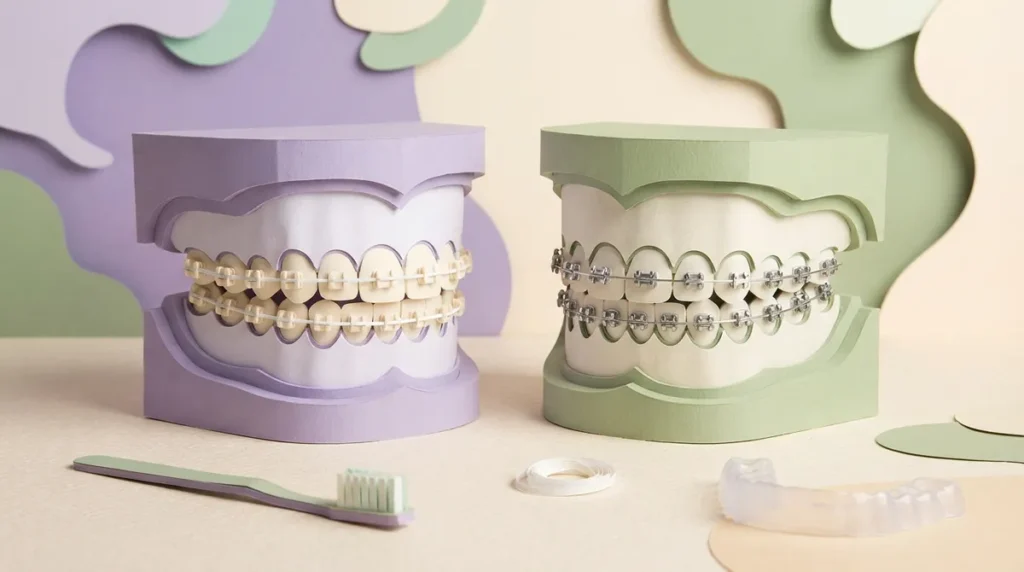
LightForce braces use custom 3D-printed, tooth-colored ceramic brackets designed from your digital treatment plan, while traditional metal braces use standard-size stainless-steel brackets.
-
Early retrospective studies report LightForce treatment averaging 15-17 months versus about 24 months for conventional braces, but these were not randomized trials, so ask your orthodontist for a personal estimate.
-
Metal braces typically cost $3,000-$6,000 versus $4,000-$8,000 for ceramic options, so ask for the total fee and what is included, such as retainers and follow-up visits.
-
Daily care is nearly identical for both types: brush and floss carefully around brackets, avoid hard or sticky foods, and wear retainers after treatment to prevent cavities and white spots.
Choosing braces can feel like a big decision, and we get it. Maybe you’re a parent weighing options for your 12-year-old. Maybe you’re a busy professional who wants a straighter smile without a lot of fuss. Or maybe you had braces years ago and want to fix some shifting. Whatever brings you here, you probably want a clear, honest way to compare LightForce braces and traditional metal braces.
Here’s the good news: both are fixed braces that use brackets and wires to move teeth. Both can create beautiful, healthy smiles. The real differences come down to how the brackets are made, how they look, how long treatment may take, and what fits your life best.
In this friendly guide, we’ll walk through five simple ways to compare these two options. We’ll also share what the research says (and what it does not say), so you can talk with your orthodontist feeling confident and informed.
1. Compare How the Brackets Are Made
The biggest difference starts with the bracket itself. That’s the small piece bonded to each tooth.
Traditional Metal Braces
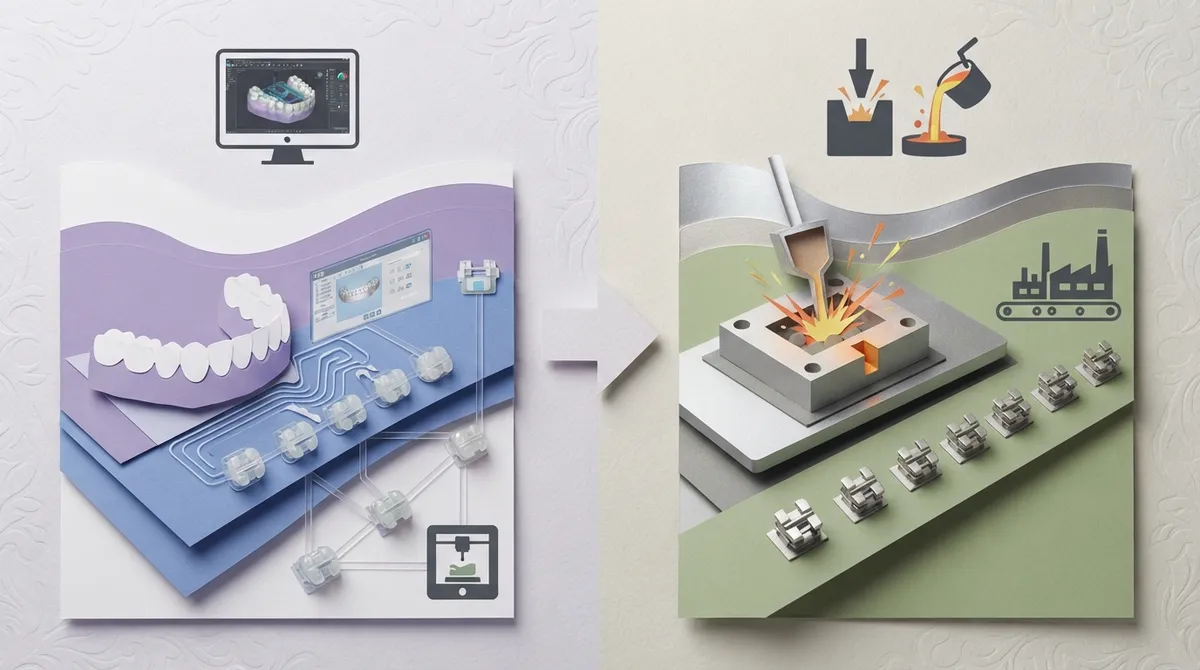
Traditional braces use prefabricated stainless-steel brackets. They come in standard sizes, and your orthodontist picks the closest fit for each tooth. This approach has been used for decades. It is well known, trusted, and widely taught. If you’d like a deeper look at why they remain popular, check out 7 Reasons Traditional Metal Braces Are Still a Top Choice.
LightForce Braces
LightForce Orthodontics is a digital system. Each bracket is custom designed for a specific tooth from your 3D treatment plan. The brackets are then 3D printed from tooth-colored ceramic. Think of it like a tailored suit versus an off-the-rack one.
One important note: custom brackets do not promise a certain result or a shorter timeline. Your orthodontist’s diagnosis, skill, and your own biology still matter most.
2. Compare Looks and Discretion
For many teens and adults, appearance is a top concern. This is especially true for professionals and anyone with a big event coming up, like a wedding or graduation.
| Feature | LightForce Braces | Traditional Metal Braces |
|---|---|---|
| Bracket material | Tooth-colored ceramic | Stainless steel |
| Visibility | Less noticeable | More noticeable |
| Bracket design | Custom for each tooth | Standard sizes |
| Planning | Fully digital 3D plan | Traditional planning methods |
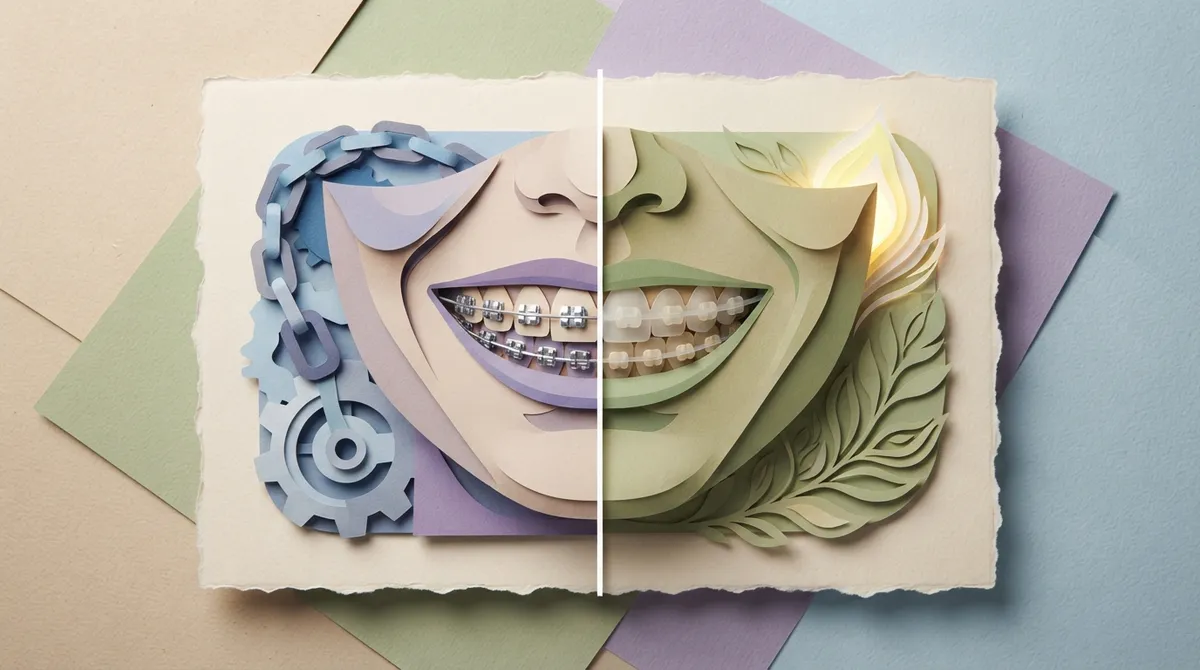
LightForce brackets blend in with your teeth, so they are less visible. They are not invisible, though. Metal braces stand out more, but many kids and teens love them. Some even pick fun colored bands to show off their style.
If you want a discreet option, you might also like our guide on 14 Things to Know About Clear Braces Before You Start.
3. Compare Treatment Time and Visits
This is where many people get curious. Everyone wants to know, “Which one is faster?” Let’s look at the numbers, and then talk about what they really mean.
A 2024 retrospective study across four private practices reported the following:
- LightForce: about 15 to 17 months of treatment on average
- Conventional brackets: about 24 months on average
- Visits: roughly 8 to 11 for LightForce versus 12 to 15 for conventional brackets
A 2023 single-practice study also found shorter treatment and fewer visits with LightForce. LightForce’s own patient materials share similar averages, citing about 16.4 months and 9.6 visits compared with about 24.8 months and 14.2 visits.
A Friendly Reality Check
These results sound exciting, but please keep a few things in mind:
- The studies were retrospective, not randomized trials. That means researchers looked back at past cases.
- The 2024 study was supported by LightForce, so independent research would add more confidence.
- Averages do not predict your personal timeline. Your bite, your age, and how well you follow instructions all play a role.
For comparison, metal braces generally take about one to three years, depending on the case. The best move is to ask your orthodontist for an honest estimate based on your own teeth. If your schedule is packed, you may also enjoy reading about accelerated braces and getting a straighter smile faster in 2026.
4. Compare Cost and Value
Let’s talk money, because it matters. Costs vary by practice, location, case difficulty, and insurance, so treat these numbers as broad estimates.
| Braces Type | Typical U.S. Price Range |
|---|---|
| Traditional metal braces | $3,000 to $6,000 |
| Ceramic braces | $4,000 to $8,000 |
These ranges come from general national estimates reported in 2026. They are not a LightForce-specific fee schedule. Metal braces often cost less. LightForce may cost more upfront because of the custom design and ceramic materials. Still, fewer visits can mean less time off work or school, which has real value for busy families.
When you compare, ask for the total fee, not just the monthly payment. Also ask what is included, such as retainers and follow-up visits. Many practices offer flexible plans, and you can learn more in 9 Smart Ways to Make Orthodontic Financing Work for You or on our orthodontic financing page.
5. Compare Comfort, Care, and Daily Life
Here’s something reassuring: living with either type of braces is very similar day to day. Both need good habits.
What Stays the Same
- Careful brushing and flossing around brackets and wires
- Regular visits with your orthodontist
- Avoiding hard or sticky foods that can damage braces
- Wearing retainers after active treatment ends
Poor hygiene can lead to cavities or white spots on teeth, no matter which bracket you choose. So a good routine is key. Need ideas? Take a peek at 13 Foods to Avoid With Braces (And Why It Matters).
What May Feel Different
LightForce brackets are custom shaped to fit each tooth. Many patients find this design comfortable, though comfort is personal and varies from person to person. Metal braces may feel a bit bulkier at first, but most people adjust within a couple of weeks. If you ever have a poking wire or loose bracket, see our guide on what to do in an orthodontic emergency.
Who Is Each Option Best For?
Every smile is different, so there is no one-size-fits-all answer. Still, here are some general ideas to get you thinking.
- Concerned moms: Metal braces are a time-tested, budget-friendly choice for kids and teens. LightForce may appeal if fewer visits would help your family’s busy schedule.
- Young adults and career-focused professionals: LightForce’s tooth-colored brackets and possible fewer visits may fit a demanding calendar and a polished look.
- Life event planners: If a wedding or graduation is coming, talk with your orthodontist early about realistic timelines.
- Adult relapse patients: Both can correct shifting. Your orthodontist will recommend what suits your bite best. Our adult orthodontics page has more details.
Remember, some people prefer removable trays instead of fixed braces. If that sounds like you, learn about clear aligners or see Braces vs. Clear Aligners: Which Is Right for You?
Questions to Ask Your Orthodontist
A great consultation is a two-way conversation. Here are some smart questions to bring along:
- Based on my diagnosis, how long do you expect my treatment to take?
- How many visits should I plan for?
- What is the total fee, and what does it include?
- Which option do you recommend for my bite, and why?
- What will my retainer plan look like afterward?
Not sure how to prepare? Our tips on how to ask the right orthodontic questions at your visit can help.
Why Experience Matters More Than the Bracket
Here’s a truth we love to share: the bracket is only a tool. The person guiding your treatment matters most. A skilled orthodontist can create wonderful results with either system. You can verify credentials through the American Board of Orthodontics.
At Segovia Orthodontics, Dr. Flor Segovia is a board-certified orthodontist who offers both LightForce braces and traditional options, along with fun WildSmiles braces and clear aligners. The team cares about making every visit comfortable and welcoming for kids, teens, and adults. You can meet Dr. Flor Segovia and see what patients say by visiting Segovia Orthodontics on Google. You can also follow along with smile stories on our Instagram page and our Facebook page.
Final Thoughts: Which One Wins?
Honestly, neither wins for everyone. When you compare LightForce braces and traditional metal braces, you will find two solid options with different strengths:
- Metal braces: long-established, widely used, and often lower in cost
- LightForce braces: custom, tooth-colored, and linked in early studies to shorter treatment and fewer visits
The best choice depends on your bite, your goals, your budget, and your schedule. The easiest way to find your answer is a one-on-one conversation with an expert who looks at your actual teeth.
Ready to take the next step? Request an appointment today, or call us at 941-557-1333. We would love to help you find the braces that fit your smile and your life.
FAQs
Q: What is the difference between LightForce braces and traditional metal braces?
A: Both are fixed braces that use brackets and wires. LightForce uses custom, 3D-printed, tooth-colored ceramic brackets designed from a digital plan, while metal braces use standard-size stainless-steel brackets. The right pick depends on your needs and your orthodontist’s advice.
Q: Are LightForce braces faster than metal braces?
A: Some retrospective studies report shorter treatment and fewer visits with LightForce, with averages around 15 to 17 months versus about 24 months. But those studies were not randomized, so your own timeline may differ. Your orthodontist can give you a realistic estimate.
Q: How much do LightForce braces cost compared with metal braces?
A: Metal braces generally run about $3,000 to $6,000, and ceramic options about $4,000 to $8,000 in broad U.S. estimates. LightForce pricing depends on the practice and your case, so ask for a full fee quote and payment options.
Q: Are LightForce braces noticeable?
A: They are less noticeable than metal braces because the brackets are tooth-colored. They are not invisible, though, so you may still see them up close.
Q: Who is a good candidate for LightForce braces?
A: Many kids, teens, and adults may qualify, especially people who want a more discreet look. Your orthodontist will check your bite and goals during a consultation to see if it is right for you.
Our Service Area