
Key Takeaways
-
Traditional metal braces are fixed in place, so they work around the clock without relying on you to remember trays, which is a major advantage for busy kids, teens, and adults.
-
Most patients wear braces about 12 to 24 months according to the AAO, though local practices cite one to three years; your orthodontist can give a personal timeline after an exam.
-
Local Lakewood Ranch practices advertise traditional braces at roughly $3,000 to $8,000, but these are estimates; ask whether retainers and follow-up visits are included in the fee.
-
Braces can correct crowding, gaps, overbites, underbites, crossbites, and open bites, but the right appliance requires a full orthodontic evaluation rather than choosing by looks alone.
-
Avoid sticky, hard, and chewy foods, wear elastics as directed, and use a mouthguard for sports to prevent broken wires and loose brackets that can slow treatment.
-
Retainers are generally needed after active treatment because teeth naturally drift back, so confirm retainer and follow-up care before you start treatment.
If you have ever looked at your child’s crooked teeth, or your own, and wondered whether braces are the right move, you are in good company. Families across Lakewood Ranch ask this question every day. The good news is that traditional braces in Lakewood Ranch have come a long way. They are smaller, more comfortable, and more precise than the braces your parents wore.
Traditional metal braces use small brackets and gentle wires to guide teeth into place. They have been trusted for decades because they work well on everything from mild crowding to complex bite problems. They also work around the clock, so there are no trays to remember.
In this guide, we will walk through how braces work, what they can fix, how long treatment takes, what they cost, and how to care for them. Whether you are a busy mom planning for your teen, a professional thinking about your own smile, or an adult whose teeth have shifted since your first round of treatment, this article is for you.
What Are Traditional Braces?
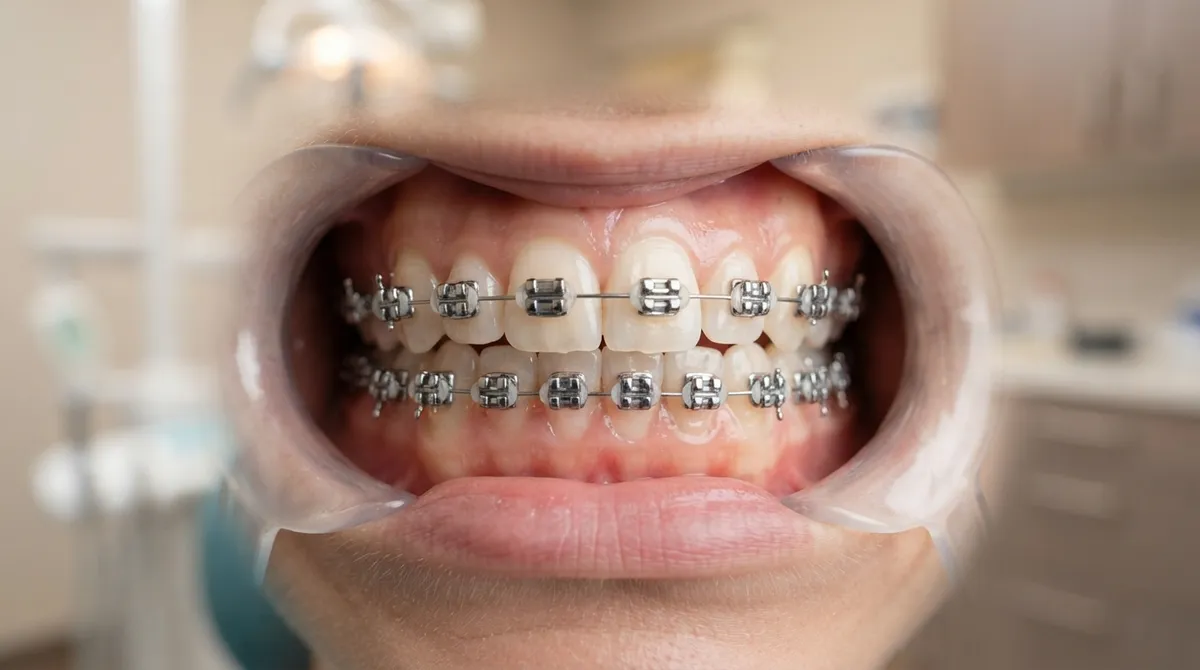
Traditional braces are fixed orthodontic appliances. A small bracket is bonded to each tooth. A thin archwire runs through the brackets and applies steady, gentle pressure. Over time, that pressure moves teeth into a healthier position.
Small rubber bands, called elastics, may be added. They help correct how the upper and lower teeth meet. Your orthodontist decides if and when you need them.
Because the braces stay on your teeth the whole time, they work without any help from you. That is a big plus for busy kids, teens, and adults. You can read more in our overview of all about braces.
The Main Parts of Metal Braces
- Brackets: Small anchors bonded to the front of each tooth.
- Archwire: A thin wire that connects the brackets and guides tooth movement.
- Ligatures or bands: Small ties that hold the wire in place. Many patients enjoy picking colors.
- Elastics (if needed): Rubber bands that help adjust the bite.
What Can Traditional Braces Fix?
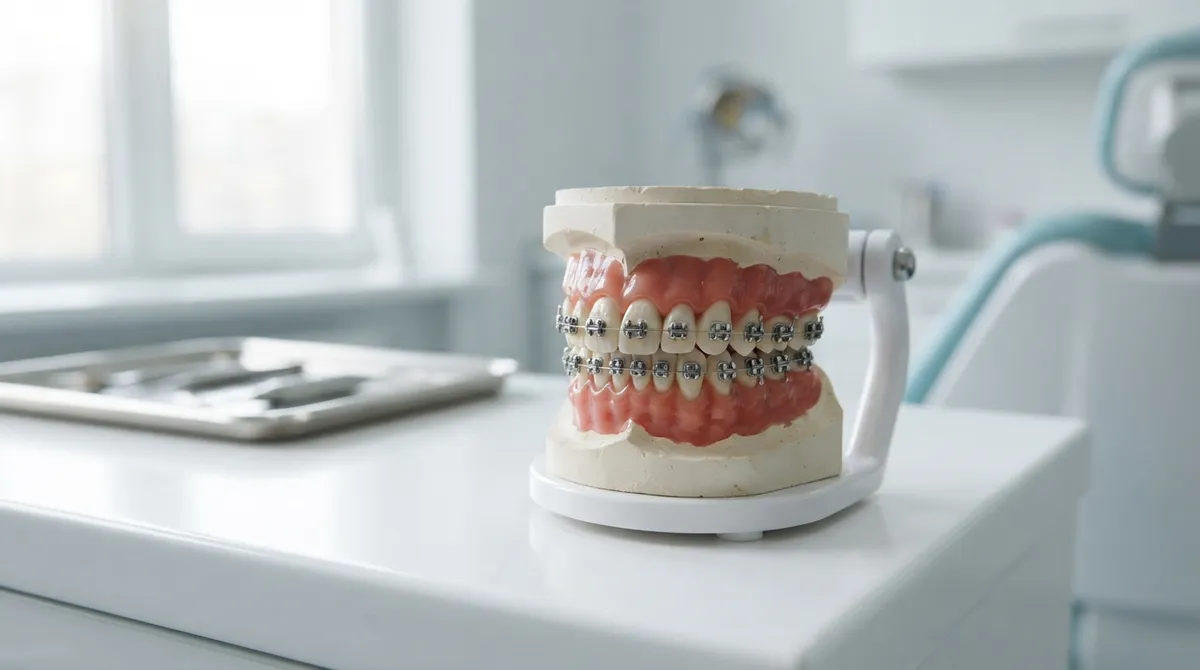
Braces are a true all-rounder. According to the American Association of Orthodontists (AAO), braces can address crowding, spacing, crooked teeth, and many bite problems. The right appliance depends on a full evaluation by an orthodontist, not on looks alone.
Here are common issues braces can help with:
- Crowded teeth that overlap or twist
- Gaps between teeth
- Overbites and underbites
- Crossbites, where upper teeth sit inside the lower teeth
- Open bites, where front teeth do not meet
Straight teeth are not just about looks. They are often easier to clean, which supports long-term oral health. If you want to learn more, see our page on common orthodontic problems.
Traditional Braces vs. Clear Aligners
Many people ask which option is better. The honest answer is that it depends on your teeth, your bite, and your lifestyle. Here is a simple side-by-side look.
| Feature | Traditional Metal Braces | Clear Aligners |
|---|---|---|
| How they work | Fixed brackets and wires | Removable clear trays |
| Visibility | Visible | Very discreet |
| Patient effort | Fixed in place, so they work all day | Must be worn most of the day |
| Complex bite problems | Often a strong choice | Depends on the case |
| Eating | Some food limits | Remove trays to eat |
| Cleaning | Brush and floss around hardware | Clean teeth and trays separately |
Because metal braces are fixed, they do not depend on you remembering to wear trays. For teens with busy schedules, that can be a real relief. For a deeper comparison, check out metal braces vs. clear aligners in 34202.
Braces Options at Segovia Orthodontics
At Segovia Orthodontics, we offer more than one way to enjoy a fixed-brace experience. Led by board-certified orthodontist Dr. Flor Segovia, our team creates plans that fit each patient.
WildSmiles Braces for Kids and Teens
WildSmiles makes treatment fun. Instead of standard brackets, patients can choose playful shapes such as stars, hearts, flowers, and footballs. Kids are often more excited to brush and floss when their braces feel like their own. Learn more about WildSmiles braces.
LightForce Braces for Precision
LightForce is a digital system that uses 3D printing to make brackets custom-fit to each tooth. Clear or white brackets blend in better, and the plan can be adjusted on a digital model. Many patients like the more tailored feel. Explore LightForce orthodontics to see if it is a fit.
Not sure which path is right? Our guide to the types of braces can help you compare options before your visit.
How Long Do Traditional Braces Take?
Treatment time depends on how complex your case is and how well you follow your care plan. The AAO notes that many patients wear braces for about 12 to 24 months. Some local practices describe a wider range of roughly one to three years.
These numbers are estimates only. Your orthodontist can give you a personal timeline after an exam. A few things shape the length of treatment:
- Case complexity: More crowding or a tougher bite takes longer to correct.
- Age and growth: Growing patients may respond differently than adults.
- Cooperation: Wearing elastics as directed and keeping appointments helps a lot.
- Oral hygiene: Healthy gums and teeth keep treatment on track.
How Often Are Braces Appointments?
Adjustment visits are usually scheduled every 4 to 12 weeks, depending on your treatment stage and your orthodontist’s plan. Some local practices commonly see patients every 4 to 6 weeks.
At each visit, your orthodontist checks progress, changes wires or bands if needed, and answers your questions. Visits are often short, which makes them easier to fit around school and work. If you are curious about the very beginning, read what happens at the braces start appointment.
How Much Do Traditional Braces Cost in Lakewood Ranch?
Cost is one of the first things families ask about. Local Lakewood Ranch practices have advertised estimates for traditional metal braces in roughly the $3,000 to $8,000 range. Please treat those numbers as marketing estimates, not guaranteed quotes. Your actual fee depends on your case and treatment length.
When you get a quote, ask these questions:
- Does the fee include retainers after treatment?
- Are follow-up visits and emergency care included?
- What payment plans or financing are offered?
- Does my dental insurance cover any part of treatment?
We believe a great smile should be within reach. Our team offers flexible options, and you can learn more on our orthodontic financing page.
Who Can Get Braces? Kids, Teens, and Adults
Braces are not just for teenagers. The AAO recommends a first orthodontic check-up around age 7. That does not mean your child will get braces then. It simply lets the orthodontist spot problems early and plan the best timing.
Children and Teens
For busy parents, braces can be a smart, simple choice. Fixed braces work around the clock, which means fewer worries about lost trays. Our team offers early orthodontic treatment and teen orthodontic treatment with schedules designed for active families.
Adults and Relapse Patients
It is never too late for a straighter smile. Many adults get braces for the first time, and many others return after teeth have drifted since their last treatment. If you skipped your retainer years ago, you are not alone. Our adult orthodontics care is built for busy professionals who want results without the stress.
Planning for a wedding, graduation, or big career moment? Talk with us early. A clear timeline helps you plan, and we will tell you honestly what is realistic.
Caring for Your Braces
A little daily care goes a long way. Healthy habits protect your teeth and keep treatment on schedule.
- Brush after meals. Take extra time around brackets and the gumline.
- Floss daily. Floss threaders or water flossers can make this easier.
- Wear elastics as directed. Skipping them can slow progress.
- Keep every appointment. Regular visits keep your plan moving.
- Use a mouthguard for sports. It protects your teeth and your braces.
Food matters, too. Sticky, hard, and chewy snacks can bend wires or pop brackets off. Take a look at our list of 13 foods to avoid with braces and our tips for caring for braces.
What If Something Breaks?
A poking wire or loose bracket can happen to anyone. Do not panic. Call your orthodontist, and read our guide on common emergency situations with braces. We also have information on orthodontic emergency care.
Why Retainers Matter After Braces
Your braces come off, and your smile looks amazing. Now comes the most important part: keeping it that way. Teeth naturally want to drift back, so retainers are generally needed after active treatment.
Your orthodontist will tell you how long and how often to wear yours. Ask whether retainers and follow-up care are included in your treatment fee. Learn more about orthodontic retainers and what to expect.
How to Choose an Orthodontist in Lakewood Ranch
The person guiding your treatment matters as much as the braces themselves. Here is a quick checklist to use when comparing practices:
- Confirm the treating clinician is a true orthodontist.
- Check for board certification through the American Board of Orthodontics.
- Ask about the proposed plan, timeline, and total fee.
- Ask how emergencies are handled.
- Look for flexible scheduling that fits your family.
At Segovia Orthodontics, our care is bilingual in English and Spanish, and our space is warm and welcoming. See why choose us to learn what sets our practice apart, and read what neighbors say when you visit our Segovia Orthodontics location on Google. You can also follow along with us on our Instagram page and our Facebook page.
What to Expect at Your First Visit
Your first consultation is a friendly conversation, not a sales pitch. Here is a simple picture of how it usually goes:
- You meet the team and share your goals or concerns.
- The orthodontist examines your teeth and bite, often with digital imaging.
- You talk through treatment options, including braces and clear aligners.
- You review estimated timing, cost, and payment choices.
- You leave with a clear next step and plenty of answers.
Want a full walkthrough? Read about your first orthodontic visit. Come with questions. There are no silly ones.
Ready to Start Your Smile Journey?
Traditional braces remain a dependable, proven way to straighten teeth and correct bites for kids, teens, and adults. With the right orthodontist and a plan built around you, the journey can be smooth and even fun.
If you are ready to take the next step, request an appointment today, or call us at 941-557-1333. We cannot wait to meet you and help you smile with confidence in 2026 and beyond.
FAQs
Q: How much do traditional braces cost in Lakewood Ranch, Florida?
A: Local practices have advertised traditional metal braces in roughly the $3,000 to $8,000 range, but these are estimates, not guaranteed quotes. Your real cost depends on your case and treatment length. Ask what the fee includes, like retainers and follow-up visits, and request an individual estimate at your consultation.
Q: How long does treatment with metal braces usually take?
A: The AAO says many patients wear braces for about 12 to 24 months, while some local practices describe one to three years. Your timeline depends on how complex your case is and how closely you follow your plan. Your orthodontist can give you a personal estimate after an exam.
Q: Are traditional braces better than clear aligners for complex bite problems?
A: Traditional braces are often a strong choice for complex bite problems because they are fixed in place and work around the clock. That said, the best option depends on your teeth and goals. An orthodontic evaluation is the best way to know which treatment fits you.
Q: How often do I need braces appointments?
A: Most patients visit every 4 to 12 weeks, depending on their treatment stage and the orthodontist’s plan. Some practices see patients every 4 to 6 weeks. Your care team will set a schedule that fits your progress and your life.
Q: Will I need a retainer after my braces come off?
A: Yes, retainers are generally needed after active treatment to help keep your teeth in their new positions. Your orthodontist will explain how long and how often to wear them. Be sure to ask whether retainers and follow-up care are included in your treatment fee.
Our Service Area