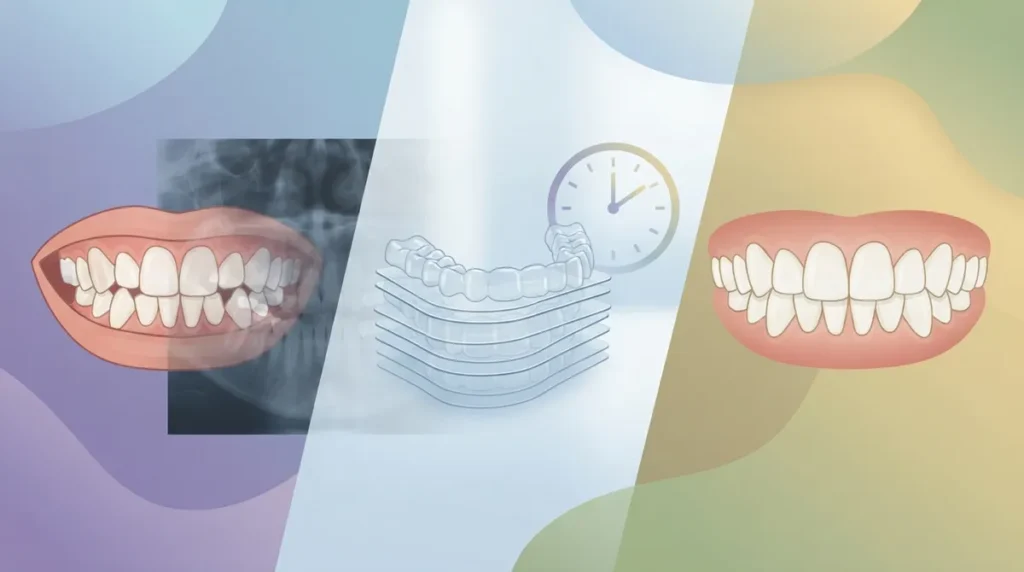
Key Takeaways
-
Professional orthodontic evaluation is essential before starting treatment, as it identifies hidden issues like bone loss and impacted teeth while confirming whether braces, aligners, or both are the right fit for your specific case.
-
Clear aligners aren't suitable for all cases; research shows accuracy ranges from 55-82% depending on tooth movement type, with severe rotations and deep-bite corrections being less predictable than traditional braces.
-
Clear aligners require 20-22 hours daily wear to work effectively; skipping wear time can delay progress by months, cause trays to no longer fit, and result in outcomes that don't match your original digital preview.
-
Post-treatment retainer wear is critical and non-negotiable, as teeth naturally shift back toward their original position; skipping retainers can undo months or years of orthodontic work.
-
Children should receive their first orthodontic evaluation by age 7 to catch issues early while jaw growth can still be guided, and adults should not delay treatment as waiting often complicates cases unnecessarily.
-
Maintaining excellent oral hygiene during treatment by brushing after meals, using floss threaders, and scheduling regular dental cleanings alongside orthodontic visits prevents cavities and gum irritation.
Thinking about fixing that crooked smile you’ve been hiding in photos? You’re definitely not alone. So many of our neighbors here in Lakewood Ranch come to us feeling nervous, unsure where to start, or worried they’ve already made a mistake somewhere along the way. Here’s the good news: crooked teeth correction is one of the most rewarding things orthodontic care can offer, and most bumps in the road are completely avoidable once you know what to watch for.
Whether you’re a mom scheduling your child’s first checkup, a young professional eyeing clear aligners before a big event, or an adult whose teeth have shifted since your last round of braces, this guide is for you. We’re breaking down the six most common mistakes people make during crooked teeth correction, so you can skip the frustration and get straight to your best smile. Let’s dig in!
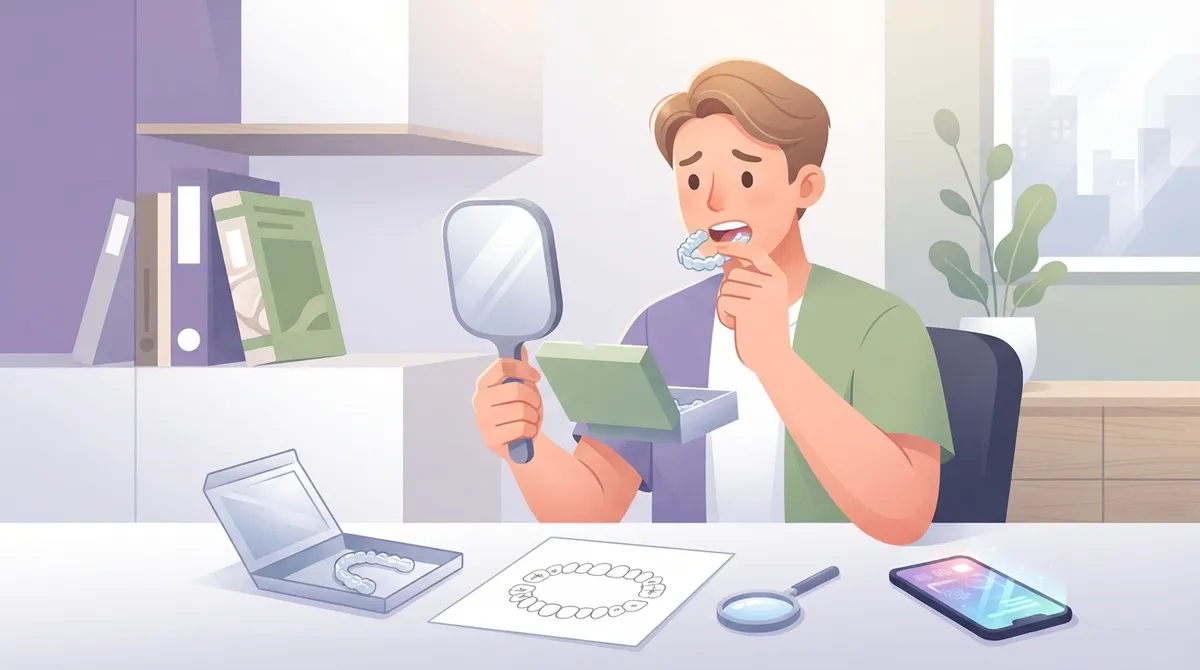
Mistake 1: Skipping the Professional Evaluation
One of the biggest missteps is trying to guess your own treatment path instead of getting a real, in-person evaluation. Crooked teeth correction isn’t one-size-fits-all, and what works for your coworker or your sister might not work for you at all.
A proper orthodontic exam usually includes photos, digital scans, a bite check, and sometimes X-rays. This helps your orthodontist look at more than just crowded or crooked teeth. They’re also checking your gum health, jaw alignment, and whether any teeth are impacted or missing.
At Segovia Orthodontics, Dr. Flor Segovia takes time during your first orthodontic visit to really understand your goals and your mouth’s unique needs. Skipping this step and jumping straight to a mail-order aligner kit can lead to disappointing results, or worse, damage that takes even longer to fix.
Why This Step Matters So Much
Think of it like getting directions before a road trip. Without a clear starting point, you can’t plan the best route. The same goes for your smile.
- Identifies hidden issues like bone loss or impacted teeth
- Confirms whether braces, aligners, or both are the right fit
- Sets realistic expectations for timing and cost
- Reduces the risk of needing redo treatment later
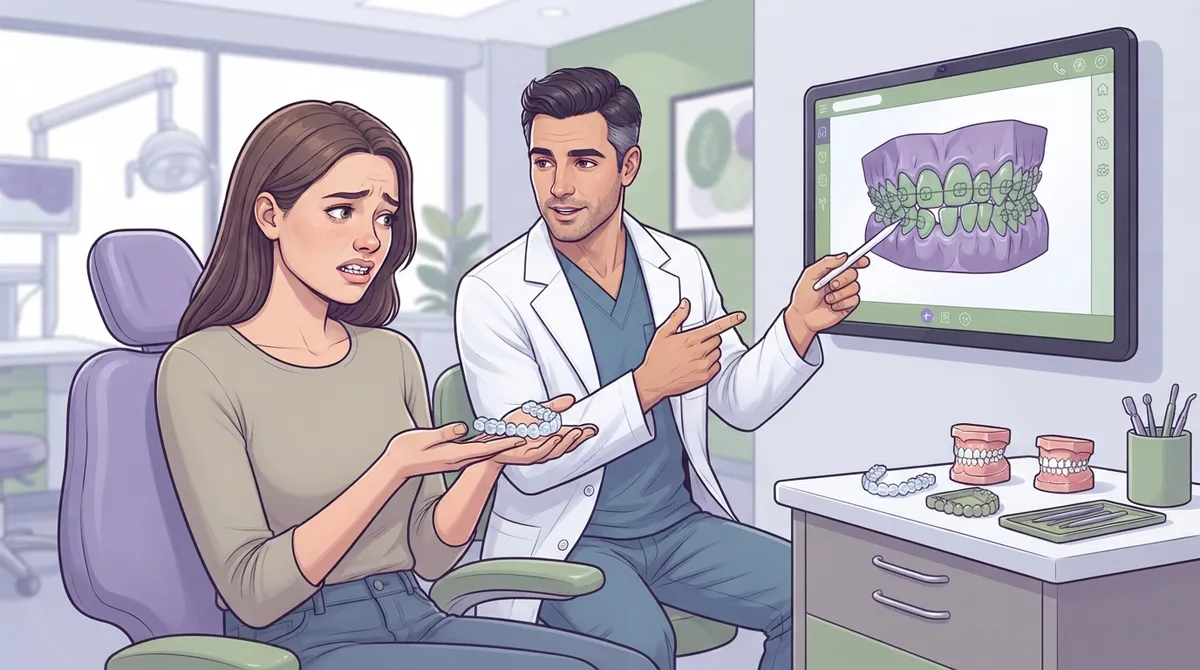
Mistake 2: Assuming Clear Aligners Work for Every Case
Clear aligners have become incredibly popular, and for good reason. They’re discreet, comfortable, and fit busy lifestyles beautifully. But here’s the honest truth: they aren’t magic for every situation.
A 2024 umbrella review in the Journal of Orthodontic Research found that clear aligner accuracy ranges from about 55% to 82%, depending on the type of tooth movement needed. Rotations greater than 15 degrees, some deep-bite corrections, and larger molar movements tend to be less predictable with aligners alone.
A 2025 systematic review looking at 21 randomized trials with 970 participants found no major difference between aligners and fixed braces for simple malocclusion cases. However, the same review noted aligners often come with less plaque buildup and better comfort scores. So aligners genuinely shine for many patients, just maybe not for your specific bite pattern.
| Treatment Type | Best For | Considerations |
|---|---|---|
| Traditional Braces | Complex crowding, severe rotations, bite issues | More visible, highly versatile |
| LightForce Custom Braces | Precision cases wanting faster results | Digitally designed, up to 45% faster treatment |
| Clear Aligners | Mild-to-moderate crowding, spacing | Requires strong daily discipline |
| Angel Aligners | Discreet correction with flexible scheduling | Uses a 7+3 wear schedule for faster movement |
Curious about which option truly fits your bite? Our clear aligners page breaks down what to expect, and our team can walk you through braces vs. clear aligners options during your visit.
Mistake 3: Not Wearing Aligners as Directed
If you choose clear aligners, consistency is everything. These trays need to be worn about 20 to 22 hours a day to work as planned. Skipping wear time, even by a little, can slow your progress or throw off your entire treatment schedule.
Here’s what tends to happen when patients get a little too relaxed with their aligners:
- Teeth don’t move as planned, requiring refinement trays
- Treatment timeline stretches out, sometimes by months
- Trays no longer fit properly and need reprinting
- Frustration builds, and motivation drops
- Final results may not match the original digital preview
Published studies on clear aligner treatment commonly report timelines of about 6 to 18 months for selected cases, but that number depends heavily on your commitment. Angel Aligners’ unique 7+3 wear schedule, alternating a flexible tray for seven days with a firmer one for three, was actually designed to help patients stay on track while accelerating movement. It’s one reason our patients appreciate this option so much.
Mistake 4: Ignoring Oral Hygiene During Treatment
Crooked teeth correction, whether with braces or aligners, adds a few extra steps to your dental routine. Some patients underestimate this and end up dealing with cavities or gum irritation mid-treatment.
Braces can trap food particles around brackets and wires, so brushing and flossing take a bit more effort. Aligners, on the other hand, are removable, which makes cleaning easier, but only if you take them out before eating or drinking anything besides water.
Simple Habits That Make a Big Difference
- Brush after every meal, especially with braces
- Never eat or drink (except water) while wearing aligners
- Use a floss threader or water flosser for hard-to-reach spots
- Rinse aligner trays daily, not just occasionally
- Schedule regular dental cleanings alongside orthodontic visits
WildSmiles brackets actually make this easier for younger patients. Their unique shapes help kids and parents visually check if brushing is thorough, turning oral hygiene into something almost fun. Check out our WildSmiles braces page to see the fun shapes available, from Super-Stars to Mickey Mouse brackets.
Mistake 5: Forgetting About Retention After Treatment
You did it. Your braces are off or your last aligner tray is finished. But here’s a mistake we see constantly: patients think the work is done. It isn’t quite yet.
Teeth naturally want to shift back toward their original position because the bone and gum tissue around them need time to settle. That’s why orthodontic retainers are such a critical final step.
Skipping retainer wear, even for a few weeks, can undo months or years of hard work. This is especially common among adults who had braces as teenagers and stopped wearing retainers once life got busy. If your smile has shifted since your teenage treatment, you’re not alone, and it’s absolutely fixable.
- Wear your retainer exactly as instructed, especially in the first year
- Replace lost or cracked retainers right away
- Bring your retainer to checkups so it can be checked for fit
- Never assume “it’s fine” if teeth start feeling different
Mistake 6: Waiting Too Long to Start Treatment
Whether it’s a parent putting off their child’s first checkup or an adult who’s been “meaning to fix it for years,” delaying treatment often makes things more complicated.
The American Board of Orthodontics and the American Association of Orthodontists recommend children get their first evaluation by age 7. This doesn’t mean treatment starts right away, but early evaluation catches issues while there’s still room to guide jaw growth. Learn more from the American Board of Orthodontics about why timing matters.
For adults, there’s really no expiration date on getting a straighter smile, as long as your teeth and gums are healthy. Many of our adult patients are surprised how smoothly treatment goes once they finally commit. If you had braces relapse, or you’re just starting fresh, our adult orthodontics options are designed with your schedule and comfort in mind.
Signs You Shouldn’t Wait Any Longer
- Noticeable crowding or overlapping teeth
- Difficulty cleaning between certain teeth
- Jaw discomfort or clicking when chewing
- Teeth that have visibly shifted since your last treatment
- Feeling self-conscious about smiling in photos
How Segovia Orthodontics Helps You Avoid These Mistakes
We know orthodontic care can feel overwhelming, especially with so many treatment options out there. That’s exactly why Dr. Flor Segovia and our team focus on personalized plans built around your life, not a generic template. From early orthodontic treatment for kids to teen orthodontic treatment designed around school and sports schedules, we’ve built our practice around real family needs here in Lakewood Ranch.
Our advanced orthodontic technology, including LightForce’s fully digital braces system, means more precise treatment and often faster results. Because everything is custom 3D printed for your teeth specifically, you’re not stuck with a generic bracket that doesn’t quite fit right.
We also know life gets busy, which is why we offer flexible financing and scheduling. Curious about the investment? Our orthodontic financing page walks through your options clearly, no surprises.
Want to see real results from real patients? Check out our Facebook page and our Instagram page for smile transformations and behind-the-scenes moments from our office. You can also visit us on Google — Segovia Orthodontics to see what our Lakewood Ranch patients and families have to say.
Your Next Step Toward a Straighter Smile
Crooked teeth correction doesn’t have to be confusing or stressful. By avoiding these six common mistakes, skipping evaluations, misjudging aligner suitability, inconsistent wear, poor hygiene, forgetting retainers, and waiting too long, you’ll set yourself up for a smoother journey and a smile you’ll actually love showing off.
Ready to get started or just have questions? We’d love to chat. Feel free to contact us anytime, or go ahead and request an appointment that fits your schedule. You can also simply call us at 941-557-1333 and our friendly team will help you find the right first step. Your best smile is closer than you think, and we can’t wait to help you get there.
FAQs
Q: What is the best treatment for crooked teeth?
A: It really depends on your specific bite and how crowded your teeth are! Traditional braces handle complex cases beautifully, while clear aligners like Angel Aligners work great for mild-to-moderate crowding. The best way to know for sure is a friendly evaluation with Dr. Segovia.
Q: Can clear aligners fix severely crooked or crowded teeth?
A: Sometimes, but not always. Research shows aligners are most predictable for mild-to-moderate movements, while severe rotations or complex bites often do better with traditional braces. We’ll help you figure out exactly what your smile needs.
Q: How long does it take to straighten crooked teeth?
A: Treatment time varies quite a bit based on your case, but many patients see results within 6 to 18 months. LightForce’s digital braces system can even speed things up by around 45% for certain cases, which is pretty exciting!
Q: Will my teeth become crooked again after treatment?
A: They can shift if you skip wearing your retainer, since teeth naturally want to move back over time. That’s why we always emphasize consistent retainer use, it’s the easiest way to protect all your hard work.
Q: Can adults get crooked teeth corrected even after having braces before?
A: Absolutely, and we see this all the time! Adult relapse is very common, especially if retainers weren’t worn consistently after teenage treatment. The good news is adult orthodontic patients tend to be wonderfully consistent and see great results.
Our Service Area