Key Takeaways
-
Aligners require 20-22 hours of daily wear to be effective, making them unsuitable for patients with unpredictable schedules, while braces work 24/7 without requiring patient compliance.
-
Braces handle complex cases and severe crowding reliably, while aligners work best for mild to moderate issues with compliant patients; an orthodontic evaluation is essential to determine which suits your specific case.
-
Treatment time between braces and aligners is similar for mild to moderate crowding cases according to 2024 research, so choosing based on speed assumptions alone is misleading.
-
Aligners offer better oral hygiene maintenance and fewer white-spot lesions since they're removable, but personal hygiene habits remain critical regardless of treatment type chosen.
-
Eating with aligners is restriction-free since you remove them before meals, while braces require avoiding sticky, hard, and crunchy foods that could damage brackets and wires.
-
Retention after treatment completion is as important as treatment itself; skipping retainer wear causes relapse, which is why many adults return for treatment years later after abandoning their retainers.
Choosing between braces and aligners can feel like a big decision. Maybe you’re a mom trying to figure out what’s best for your teenager. Maybe you’re an adult who wants a straighter smile before a big wedding or job interview. Wherever you’re starting from, you’re not alone, and you’re in the right place. Let’s break down everything you need to know about braces and aligners so you can walk into your next appointment feeling confident and informed.
At Segovia Orthodontics in Lakewood Ranch, we see patients of every age walk through our doors with the same question: braces or aligners? The truth is, there’s no one-size-fits-all answer. Both options can give you a smile you’ll love, but they work in different ways and fit different lifestyles. Grab a cup of coffee, and let’s go through the 9 facts that matter most when comparing braces vs. clear aligners.
1. Braces and Aligners Both Move Teeth, But They Work Differently
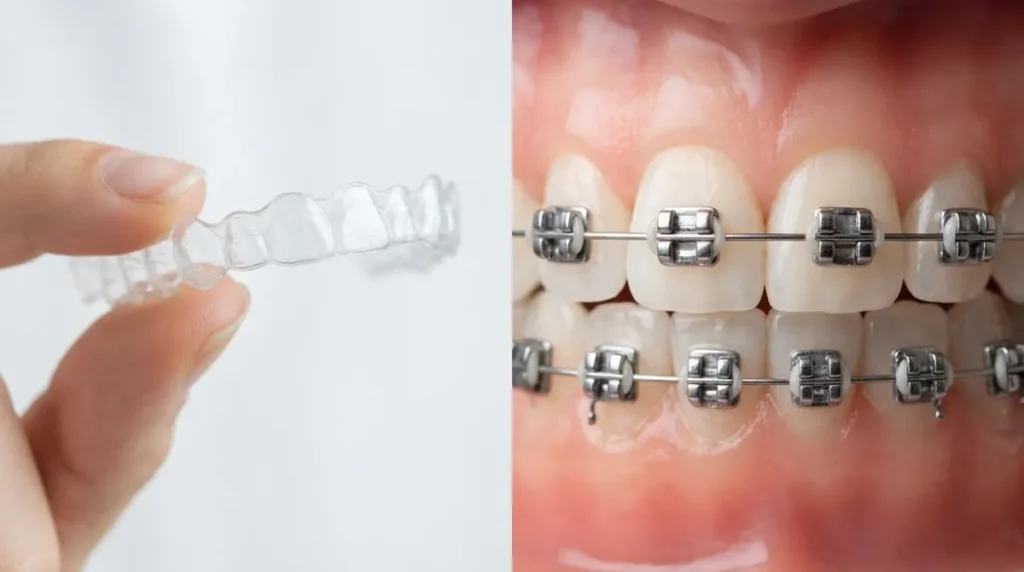
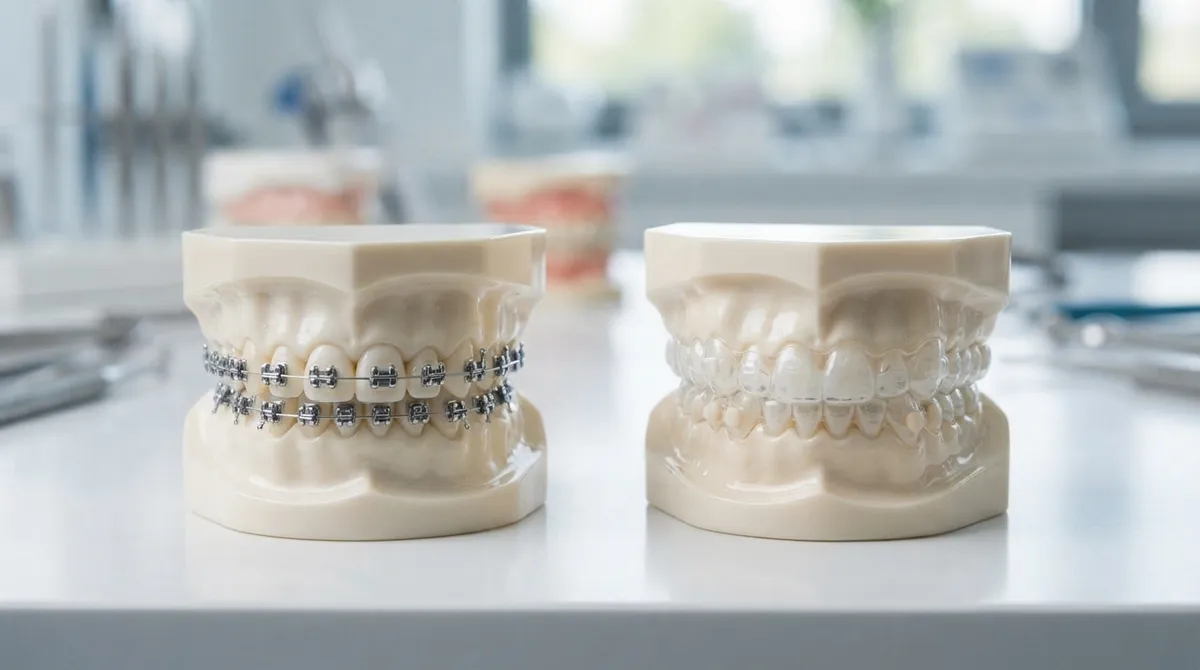
Braces use small brackets glued to each tooth, connected by a wire. That wire applies steady pressure, slowly guiding teeth into place. Clear aligners, on the other hand, are custom trays you switch out every week or two. Each new tray nudges your teeth a tiny bit closer to their final position.
Both are real orthodontic treatments, not just cosmetic quick fixes. They’re designed to fix bite problems, crowding, and spacing issues, not just make your smile look nice. To learn more about how each option works, check out our guide on all about braces.
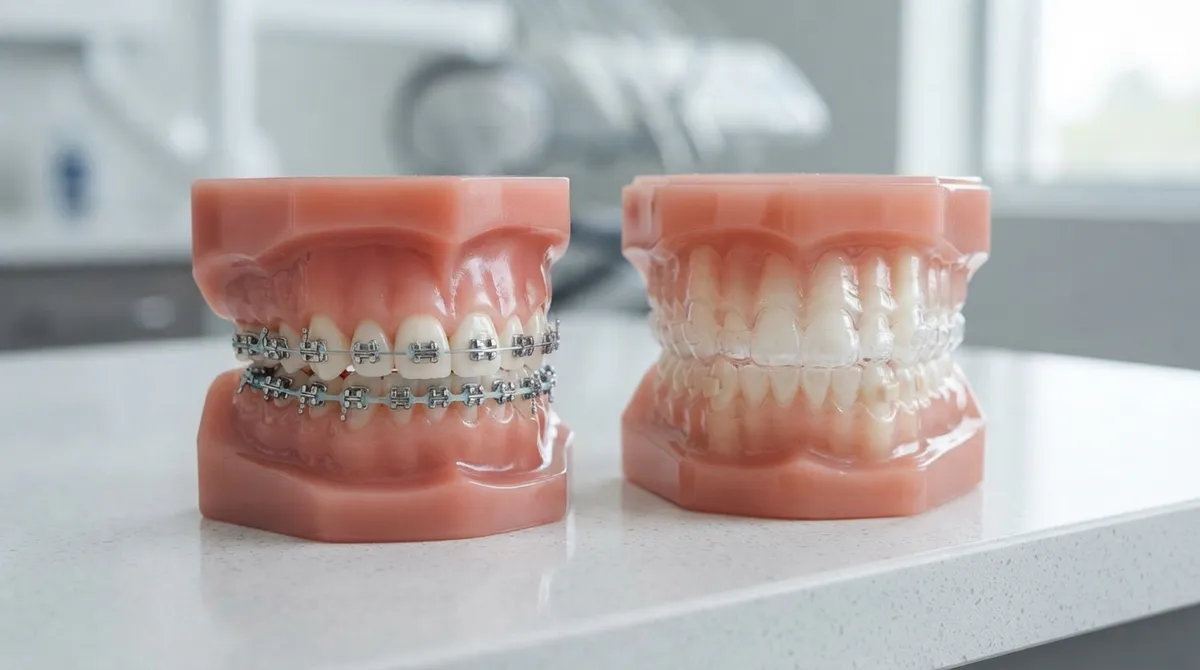
2. Braces Can Handle Almost Any Case, Aligners Work Best for Mild to Moderate Issues
Here’s something worth knowing before you decide: braces don’t depend on you remembering to wear them. They’re fixed to your teeth, so they’re always working. This makes them a dependable choice for complex bite issues, severe crowding, or cases needing precise tooth movement.
Clear aligners can be very effective too, especially for mild to moderate crowding or spacing. A 2025 expert-consensus review found that aligners work well for patients with Class I malocclusion (a fairly common bite pattern) and mild to moderate crowding, especially when patients wear them consistently. But some more complicated cases may need braces or a mix of both treatments. This is exactly why an orthodontic evaluation matters so much before starting treatment. Dr. Flor Segovia can help you figure out which path fits your specific smile. Learn more about her approach on the Orthodontist Flor Segovia page.
Common Orthodontic Problems Each Treatment Can Address
| Orthodontic Issue | Braces | Clear Aligners |
|---|---|---|
| Mild crowding | Yes | Yes |
| Severe crowding | Yes | Sometimes, case-dependent |
| Overbite/Underbite | Yes | Sometimes, case-dependent |
| Crossbite | Yes | Sometimes, case-dependent |
| Gaps between teeth | Yes | Yes |
| Complex tooth rotations | Yes | Limited |
For a deeper look at specific concerns, our page on common orthodontic problems breaks down each issue in detail.
3. Aligners Require Serious Daily Commitment
This one surprises a lot of people. Clear aligners need to be worn about 20 to 22 hours every single day. The American Association of Orthodontists says a typical minimum is 22 hours daily. That leaves only a couple hours for eating and cleaning your teeth.
If you skip wear time too often, your treatment can stall or even move backward. This is a big responsibility, and it’s one reason some career-focused adults with unpredictable schedules actually do better with braces. Braces don’t ask you to remember anything. They’re just there, working around the clock.
4. Eating and Cleaning Look Very Different With Each Option
Here’s where lifestyle really comes into play. With aligners, you simply pop your trays out before meals. Eat whatever you want, then brush, floss, and put your trays back in. No food restrictions, no awkward moments at dinner parties.
Braces are a different story. You’ll need to steer clear of sticky, hard, or crunchy foods that could bend wires or pop off brackets. Cleaning also takes more care since food can get stuck around brackets and wires. Check out our list of foods to avoid with braces to make life easier during treatment.
That said, removability is a double-edged sword. It’s convenient, but it also means the responsibility falls on you. Forgetting your trays at a restaurant or losing them can slow down your whole treatment timeline.
5. Both Treatments Come With Some Discomfort (But It’s Temporary)
Nobody loves talking about discomfort, but it’s real and worth mentioning. Braces can sometimes irritate your cheeks or lips, especially in the first week or two. Aligners can cause pressure and soreness as teeth shift, and some people notice a temporary lisp when they first start wearing them.
The good news? This discomfort almost always fades quickly. Your mouth adjusts, and most patients say it becomes a total non-issue after the first couple weeks. If you’re nervous about pain, our article on how painful are braces walks through what to really expect.
6. Treatment Time Might Be More Similar Than You Think
A lot of people assume aligners work faster than braces, or vice versa. Here’s what the research actually shows: a 2024 systematic review looked at 10 studies, including six randomized controlled trials, comparing treatment duration for aligners and fixed braces in mild to moderate crowding.
The finding? Low-certainty evidence suggests treatment time is similar between the two options for these cases. Nine of the ten studies focused on non-extraction treatment, so these results don’t tell us much about more complex cases needing extractions. The bottom line: don’t assume one option is automatically faster. Your specific case determines your timeline, not the appliance type alone.
7. Clear Aligners May Support Better Oral Hygiene, But Don’t Eliminate All Risk
Because you can remove aligners to brush and floss normally, many patients find it easier to maintain good oral hygiene. Reviews and expert consensus suggest aligners are associated with less plaque buildup and fewer white-spot lesions (those chalky spots that can appear on teeth) compared to fixed braces.
But here’s the catch: aligners don’t make you immune to cavities or gum problems. Your personal hygiene habits still matter most. Whether you choose braces or aligners, brushing after meals and flossing daily are non-negotiable. We cover this topic in our guide on braces and oral hygiene habits.
- Brush for two full minutes, morning and night
- Floss daily, using threaders or floss picks if you have braces
- Rinse aligners with lukewarm water, never hot
- Avoid sugary drinks that can sit against your teeth
- Keep up with regular cleanings and orthodontic checkups
8. A 2025 Review Shows High Satisfaction Rates for Aligners in Teens
If you’re a parent wondering whether aligners could work for your teenager, here’s some encouraging news. A 2025 review of clear aligners in adolescent treatment reported patient and parent satisfaction rates between 85% and 92%. These results focused on selected adolescent cases, so they shouldn’t be treated as a universal comparison to braces, but they do show aligners can be a strong option for many teens.
For families exploring options, our WildSmiles Braces line offers a fun twist on traditional treatment. Kids and teens can choose from playful bracket shapes like Super-Star, Flower-Power, and even Mickey Mouse designs. When treatment feels fun, patients are more likely to stick with good habits like brushing and avoiding problem foods. Learn more on our WildSmiles Braces page.
For adults and teens who want a nearly invisible option, we also offer Angel Aligners, which use a smart “7+3” wear schedule and built-in attachments to help speed up treatment while keeping costs manageable.
Quick Comparison: Braces vs. Aligners at a Glance
| Feature | Braces | Clear Aligners |
|---|---|---|
| Visibility | Visible (unless clear/ceramic) | Nearly invisible |
| Removable | No | Yes |
| Daily wear required | 24/7, no effort needed | 20-22 hours daily |
| Eating restrictions | Yes, several foods to avoid | None, just remove trays |
| Best for | Complex cases, all ages | Mild to moderate cases, compliant patients |
| Compliance dependent | Low | High |
9. Retention After Treatment Is Just as Important as the Treatment Itself
Here’s something people sometimes forget: finishing braces or aligners isn’t the end of the story. Your orthodontist will recommend a retainer to help your teeth stay in their new position. Skipping retainer wear is one of the most common reasons teeth shift back, something we call relapse.
If you’re an adult who had braces years ago and you’re noticing your teeth shifting again, you’re not alone. Many adults come back for treatment simply because they stopped wearing their retainer. This is actually one of the most motivated and reliable patient groups we see, because once bitten, twice shy. Explore your options on our orthodontic retainers page, or read about common mistakes to avoid on our orthodontic retainer mistakes guide.
How Dr. Flor Segovia Helps You Choose the Right Path
Every smile is different, and that’s exactly why a personalized evaluation matters so much. Dr. Flor Segovia is a board-certified orthodontist who combines advanced technology with a warm, family-friendly approach. She offers bilingual care in English and Spanish, making sure every patient and parent feels heard and understood.
Our practice uses advanced orthodontic technology, including LightForce Orthodontics, the first fully digital braces system. LightForce brackets are custom 3D-printed to match your unique tooth structure, which can reduce treatment time by up to 45% compared to traditional one-size-fits-all brackets. Learn more about this innovative option on our Lightforce Orthodontics page.
Whether you’re a busy parent juggling school schedules, a young professional wanting discreet treatment, or someone preparing for a big life event like a wedding or graduation, we tailor every treatment plan to fit your life. Learn more about why families across the area trust our team on our Why Choose Us page.
Curious what other patients are saying? You can visit us on Google — Segovia Orthodontics to read real reviews from families right here in Lakewood Ranch. You can also connect with us on our Facebook page or follow along on our Instagram page for smile transformations and tips. For more background on orthodontic credentials, the American Board of Orthodontics offers helpful resources on what board certification actually means.
Making Your Final Decision
So, braces or aligners? Here’s a simple way to think about it:
- If you have a complex bite issue or severe crowding, braces may give you the most predictable results.
- If you have mild to moderate crowding and can commit to wearing trays 20-22 hours daily, aligners might be a great fit.
- If you want a nearly invisible option for work or social events, aligners are worth discussing.
- If you want fun, expressive treatment for a child or teen, WildSmiles Braces add personality to the process.
- If you’re an adult returning after previous treatment, you’ll want to discuss retainer habits and relapse prevention.
No matter which path feels right, the most important step is getting a real evaluation from a trusted orthodontist. Guessing on your own can lead to wasted time and money. To learn about our types of treatment options in more detail, visit our Types Of Braces page.
Ready to Start Your Smile Journey?
You deserve a smile that makes you feel confident every single day. Whether you’re exploring options for your child, yourself, or a family member, our team at Segovia Orthodontics is here to guide you every step of the way. We’ll walk you through your options, answer every question, and build a treatment plan that actually fits your life.
Ready to take the next step? Request an appointment today, or feel free to contact us with any questions. You can also call us at 941-557-1333 to speak with our friendly team directly. We can’t wait to help you find the smile you’ve been dreaming of.
Our Service Area