Key Takeaways
-
"Clear braces" is an umbrella term for three distinct options: ceramic braces, clear aligners, and lingual braces, each differing in visibility, removability, and the problems they can treat.
-
Clear aligners are the most discreet choice but are typically worn at least 22 hours a day, so they only work well if you can reliably keep them in.
-
Aligners aren't suitable for every case; complex tooth movements may need fixed braces, so an orthodontic exam is essential before choosing.
-
Get a dental health check first and ask about total cost, realistic timeline, and the retainer plan, since retainers are needed to keep results after treatment.
Let’s be honest: most of us picture a teenager with a mouth full of metal when we hear the word “braces.” But in 2026, that picture is outdated. The American Association of Orthodontists (AAO) estimates that roughly 1.91 million adults were in active treatment with AAO member practices in 2024, up from about 1.64 million in 2022. If you’ve been wishing you could straighten your smile without everyone at the office noticing, you’re in very good company.
The good news? Many adults want to find clear braces for adults who want a subtle look, and there are more discreet options than ever. The tricky part is that “clear braces” can mean several different things. This friendly guide walks you through nine practical steps to find the right subtle option, ask the right questions, and feel confident at your first visit.
Whether you’re prepping for a wedding, a big career move, or finally fixing teeth that shifted after old braces, you deserve a smile you love. Let’s dive in.

1. Understand What “Clear Braces” Actually Means
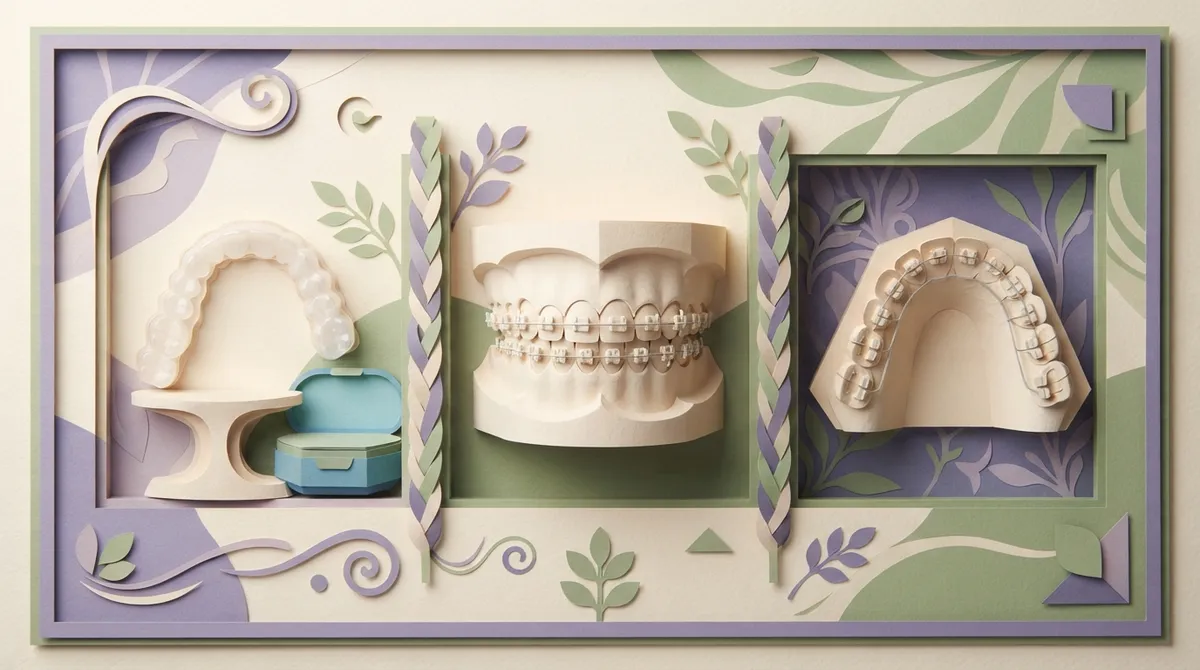
Here’s something that surprises a lot of people: the phrase “clear braces” is not one single treatment. It’s a catch-all term for three different discreet options. Knowing the difference up front saves you time and confusion.
- Ceramic braces: Fixed braces with clear or tooth-colored brackets, usually paired with a wire.
- Clear aligners: Custom-made, removable trays that are nearly invisible.
- Lingual braces: Fixed braces attached to the back (tongue side) of your teeth.
Each one differs in how visible it is, whether you can take it out, and which tooth and bite problems it can treat. So when you search for clear braces, you’re really choosing among these paths. For a deeper look at the full menu, check out our guide on types of braces.
2. Compare Your Three Subtle Options Side by Side
Seeing the options together makes the choice much easier. Here’s a quick comparison to help you picture how each one fits into daily life.
| Option | How Visible? | Removable? | Good to Know |
|---|---|---|---|
| Ceramic braces | Less noticeable than metal, but visible up close | No (fixed) | Brackets can be more fragile and need careful cleaning |
| Clear aligners | Nearly invisible | Yes | Worn about 22 hours a day; not right for every case |
| Lingual braces | Very hard to see from the front | No (fixed) | Comfort, cleaning, and cost need a careful discussion |
No single option wins for everyone. The best pick depends on your bite, the tooth movements you need, your oral health, and your lifestyle. That’s exactly what an orthodontic exam is for.
3. Get Real About Ceramic Braces
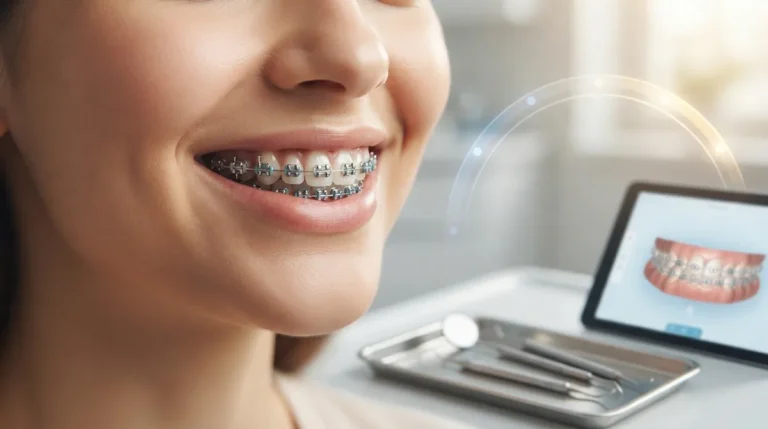
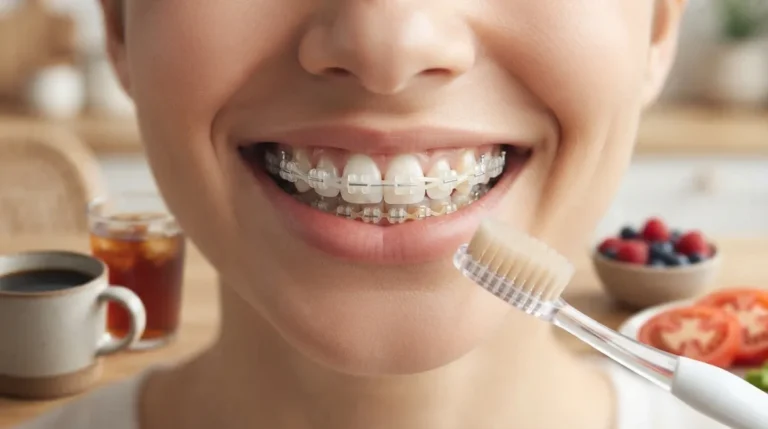
Ceramic braces work just like traditional braces, but the brackets blend in with your natural tooth color. They’re a popular choice for adults who want a fixed treatment that’s less obvious than metal.
A few friendly tips if you’re leaning this way:
- Ask whether the wire and ties are also designed to blend in. Not every component is clear.
- Expect to be extra careful with cleaning, since brackets can be more fragile.
- Remember they’re still visible at close range, so “subtle” is not the same as “invisible.”
Want to explore this style further? Our post on what makes clear braces worth the investment covers the details.
4. Consider Clear Aligners for the Most Discreet Look
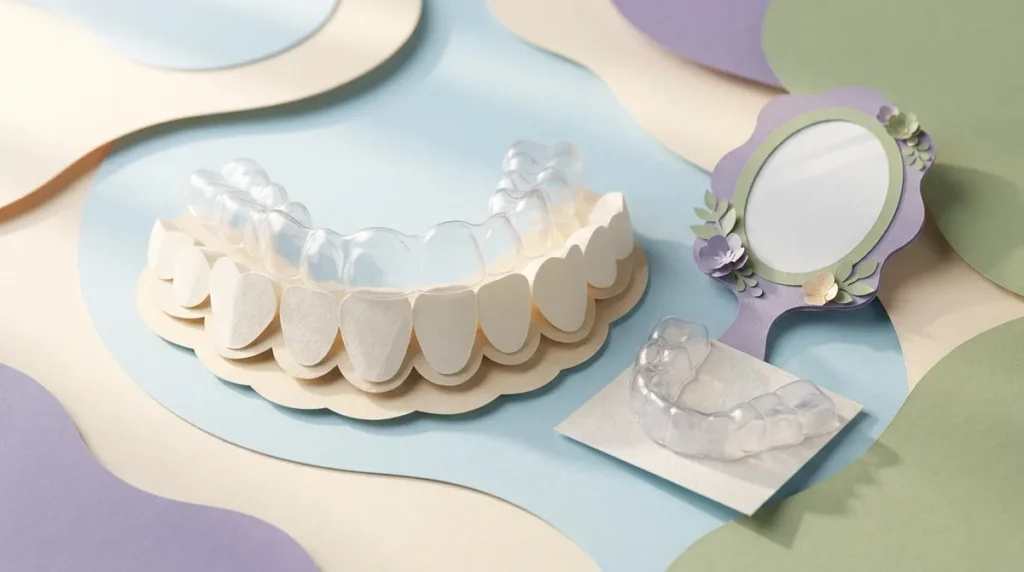
If your top priority is a barely-there look, clear aligners are often the first thing adults ask about. These custom trays slip over your teeth, and most coworkers won’t even notice them. You can remove them to eat, brush, and floss, which many adults love.
According to the AAO, aligners are typically worn at least 22 hours a day. You take them out for meals and drinks other than water, and you switch to a new set on a schedule your orthodontist sets. Consistent wear is what keeps your treatment on track.
At Segovia Orthodontics, we offer clear aligners, including Angel Aligners. They use a frosted finish designed to minimize shine and a flexible material that can feel gentler on your gums and cheeks. If you’re curious about the bigger picture, our article on braces vs. clear aligners is a great next read.
5. Ask Whether Aligners Fit Your Specific Case
Here’s where honesty matters. Aligners can treat many alignment and bite concerns, but they are not suitable for every case. Some complex tooth movements may be more predictable with fixed braces. In some situations, an orthodontist may even combine aligners with braces or other appliances.
That’s not bad news. It simply means your plan should be built around your teeth, not a trend. Common concerns people ask about include:
- Crowded teeth
- Gaps between teeth
- Overbites and underbites
- Crossbites and other bite issues
An orthodontic exam is the only way to know which approach is right. Our guide on common orthodontic problems can help you recognize what you’re dealing with before your visit.
6. Don’t Rule Out Lingual Braces
Lingual braces sit on the tongue-facing side of your teeth, so they’re very difficult to see from the front. For adults in highly visible roles, that can be a big draw.
That said, they’re a separate discreet option with their own trade-offs. Comfort, cleaning, and cost should all be discussed with your orthodontist before you decide. Some people also need a little time to adjust to how they feel against the tongue.
If you’re torn between fixed and removable styles, it helps to talk through your daily routine out loud with a professional. Ask yourself:
- How often do I speak in front of groups?
- Will I reliably wear removable trays all day?
- Do I want something I never have to think about taking in and out?
Your honest answers will point you toward the right path.
7. Get a Dental Health Check First
Adults can have orthodontic treatment at many ages, as long as teeth and gums are healthy. If you have existing dental or gum problems, those may need attention before treatment begins. A dentist or orthodontist can assess your oral health and coordinate care.
Think of it like prepping a wall before painting. A little groundwork up front helps your results last. If you’re unsure who to see first, our post on orthodontist vs. dentist can point you in the right direction.
It also helps to know that adult orthodontics is more common than ever. You are not too late, and you are not alone.
8. Ask the Right Questions at Your Consultation
A good consultation should feel like a conversation, not a sales pitch. Come prepared with questions so you leave feeling informed. An orthodontist can compare likely visibility, treatment limits, care requirements, duration, cost, and retention needs for your individual case.
Here are questions worth bringing along:
- Which discreet option fits my bite and goals?
- How noticeable will it be day to day?
- What is my realistic timeline?
- What does care and cleaning involve?
- What is the total cost, and what payment options exist?
- What is the retainer plan after treatment?
About timelines: the AAO describes 12 to 24 months as common for braces overall, but your own timeline may be shorter or longer. Nobody can promise an exact duration before an exam, so be a little wary of anyone who does. For more prep ideas, see how to ask the right orthodontic questions.
9. Plan for Retainers and Long-Term Success
Here’s the part many adults forget: finishing treatment is not the finish line. All orthodontic treatment requires follow-up and retention. Retainers help keep your teeth in their corrected positions after braces or aligners come off.
Your orthodontist should explain the retainer plan before treatment even begins. This matters even more if you’ve had braces before and noticed your teeth drifting back. Learn more about your options in our guide to orthodontic retainers.
A few simple habits protect your investment:
- Wear your retainer exactly as instructed.
- Keep it clean and stored safely.
- Attend every follow-up visit.
Finding the Right Practice for You
The best way to find clear braces for adults who want a subtle look is to meet with an orthodontist who offers more than one option. That way, your plan is built around your teeth and your life, not the other way around.
At Segovia Orthodontics in Lakewood Ranch, Dr. Flor Segovia provides personalized care for patients of all ages, with bilingual service in English and Spanish. Our office offers discreet choices, including LightForce braces with clear or white brackets that blend in naturally, plus Angel Aligners. You can learn more about Dr. Segovia and see why she’s a board-certified orthodontist. You can also verify credentials through the American Board of Orthodontics.
Curious about us? Follow along on our Facebook page or our Instagram page, and visit our Segovia Orthodontics location on Google to see what neighbors in Lakewood Ranch say. If cost is on your mind, explore orthodontic financing to see how flexible plans can help.
Ready to Start Your Subtle Smile Journey?
A straighter smile doesn’t have to announce itself. With the right plan, you can move through your workday, your wedding photos, and your weekends feeling like yourself, only more confident. If you’re ready to explore your options, request an appointment today, contact us with any questions, or call us at 941-557-1333. We can’t wait to meet you!
FAQs
Q: What are the least noticeable braces for adults?
A: Clear aligners and lingual braces are generally the least noticeable, since aligners are nearly invisible and lingual braces sit behind the teeth. Ceramic braces are less obvious than metal but still visible up close. An orthodontist can help you choose based on your bite and goals.
Q: Are clear braces the same as clear aligners?
A: Not quite! “Clear braces” is a broad term that can mean ceramic braces, clear aligners, or lingual braces. Ceramic and lingual braces are fixed, while clear aligners are removable trays.
Q: How many hours a day do I need to wear clear aligners?
A: The American Association of Orthodontists says aligners are typically worn at least 22 hours a day, removed only for meals, drinks other than water, and cleaning. Always follow your orthodontist’s specific instructions for your system.
Q: How long does adult treatment with clear braces take?
A: It depends on your individual diagnosis and planned tooth movements. The AAO describes 12 to 24 months as common for braces overall, but your timeline could be shorter or longer, so an exam is the best way to get a realistic estimate.
Q: Can clear aligners fix an overbite, crowding, or gaps?
A: Aligners can treat many alignment and bite concerns, including crowding and gaps, but they are not right for every case. Some complex movements may work better with fixed braces, so an orthodontic exam is needed to confirm if you’re a good candidate.
Our Service Area