Key Takeaways
-
Clear aligners suit busy adults only when an orthodontist confirms they can treat the specific case and the patient can commit to wearing them about 22 hours a day.
-
Aligners work only when worn: remove them just for eating, drinking anything other than water, and brushing, and keep a case with you at all times.
-
Clean your teeth before reinserting aligners to avoid trapping food and drinks that can cause cavities and gum problems.
-
Mild-to-moderate crowding and spacing are often good fits for aligners, while significant rotations, severe bite problems, or large gaps may be less predictable and may need braces.
-
Aligners do not guarantee fewer office visits or faster treatment; regular check-ups are still necessary for monitoring and professional diagnosis.
-
Retainers are needed after treatment to keep teeth from drifting back, so plan for them from the start.
Let’s be honest: your calendar is already packed. Meetings, deadlines, family dinners, workouts, maybe a few video calls squeezed in between. So when someone says “you should straighten your teeth,” the first thing you probably think is, “Where would I find the time?”
Here’s the good news. For the right person, clear aligners can fit a busy adult’s life quite well. They’re nearly invisible, removable for meals, and easy to keep clean. But there’s an important catch. Aligners only work when you wear them, and they only work for the right type of case.
So, can we recommend clear aligners for a busy adult? Yes, with a few honest conditions. In this friendly guide, we’ll walk through who benefits most, what daily life looks like, where aligners fall short, and how to decide if they’re right for you. Think of it as a chat with a friend who happens to know a lot about smiles.

Why Do Busy Adults Love Clear Aligners?
Clear aligners are custom-made, removable trays that move your teeth in small steps. Each tray is slightly different from the last. Over time, your teeth shift into the planned position.
Busy professionals often like them for a few simple reasons:
- They’re discreet. Most coworkers and clients won’t notice them during a presentation or a networking dinner.
- They come out for meals. You can enjoy lunch with colleagues without worrying about food getting stuck in brackets.
- Cleaning feels familiar. You remove them to brush and floss like normal.
- No wires to poke. That means fewer rough spots to deal with on a work trip.
If you want a closer look at the basics, our clear aligners page explains how the treatment works from start to finish.

The Big Rule: Wear Time Matters
This is the part we want every busy adult to hear loud and clear. According to the American Association of Orthodontists, aligners are typically worn at least 22 hours a day. Your orthodontist will give you the exact schedule for your plan.
That means you take them out for eating, drinking anything other than water, and brushing. The rest of the time, they stay in. Yes, even while you’re answering emails. Yes, even during your commute.
The same feature that makes aligners convenient is also what makes them tricky. Because you can remove them, you are in charge of wearing them. Forget them in a pocket all day, and your treatment can slow down, run longer, or end with less-than-ideal results.
A Quick Gut Check
Ask yourself these questions honestly:
- Can I wear my aligners almost all day, every day?
- Can I remember to put them back in after meals and coffee breaks?
- Will I brush my teeth before putting them back in?
- Can I keep a case with me at all times so they never end up wrapped in a napkin?
- Can I attend check-up visits, even if they’re brief?
If you answered yes to most of these, you’re likely a strong candidate for the lifestyle side of aligner treatment.
What a Typical Day Looks Like With Aligners
Picture a normal Tuesday. You pop your aligners out before breakfast, eat, then brush and put them back in. At work, you wear them through meetings and calls. When lunch comes, you take them out, store them in their case, enjoy your meal, and clean your teeth before reinserting them.
It’s a simple routine once it becomes a habit. Most people say the first week or two feels the strangest, with a bit of lisping and some pressure. After that, it tends to fade into the background.
A few handy tips for busy folks:
- Keep a travel toothbrush and small case in your bag or desk drawer.
- Set phone reminders to put your aligners back in after meals.
- Stick with water while wearing them. Coffee, tea, and sugary drinks can stain them or trap liquid against your teeth.
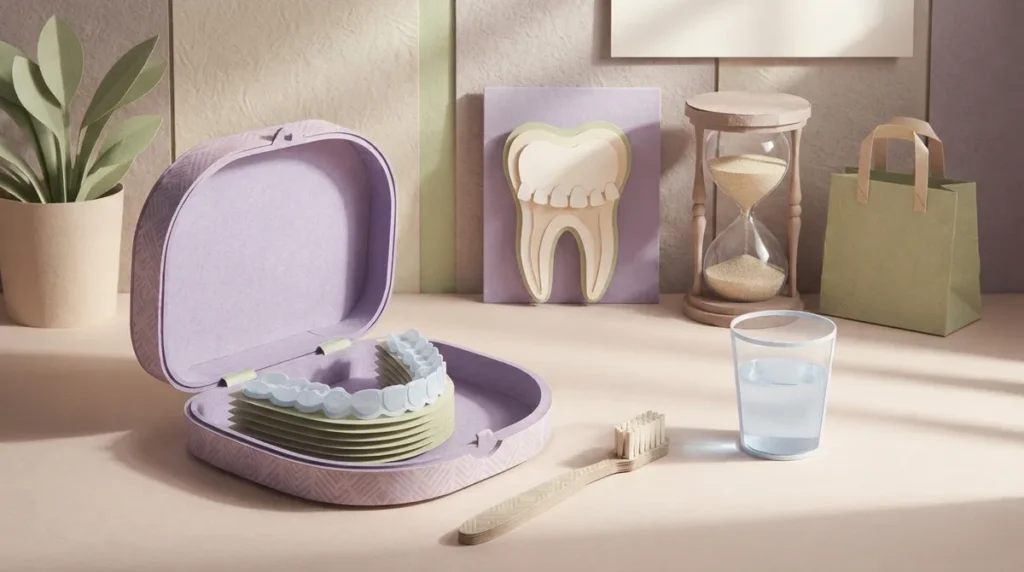
- Store them in the case every time, never in a napkin or on a tray.
Why Clean Teeth Matter Before You Pop Them Back In
Trapped food and drinks can contribute to cavities and gum trouble. That’s why orthodontists recommend cleaning your teeth before reinserting your aligners. It sounds like a hassle, but it takes about two minutes and protects your smile for the long run.
If brushing at the office feels awkward, even a quick rinse with water is better than nothing in a pinch. Still, follow your orthodontist’s specific guidance on daily care. For more on mistakes that can slow your progress, check out our guide on 7 clear aligner mistakes that can ruin your smile results.
Do Aligners Really Mean Fewer Appointments?
This is a common question, and it deserves a careful answer. Some people assume aligners mean almost no office visits. That’s not quite the full story.
Treatment length and visit frequency depend on your case and your orthodontist’s plan. Research on whether aligners are faster than braces is mixed, so it’s best not to expect a shortcut. What you can expect is a plan built around your teeth, with regular check-ups to make sure everything is moving the way it should.
Those visits matter. Your orthodontist looks at your bite, your teeth, your roots, and your gum health. Scans and photos alone can’t show every underlying issue. A busy schedule doesn’t remove the need for professional diagnosis and monitoring. It just means finding a practice that works with your calendar. If you’re curious what that first step looks like, read what happens at your clear aligner start appointment.
Which Smile Problems Can Aligners Handle?
Clear aligners are often a good fit for mild-to-moderate crowding and some spacing issues. A 2025 expert consensus review found 91% agreement that aligners can achieve results comparable to fixed braces for non-extraction Class I cases with mild-to-moderate crowding. That’s a helpful finding, but it describes a specific type of case, not a promise for every individual.
Other situations can be trickier. Severe bite problems, large gaps, and certain tooth rotations may be less predictable with aligners. One 2025 review of rotational movement reported accuracy ranging from 36% to 85%, averaging about 65%, depending on the tooth and the study. In plain terms, some movements are simply harder for aligners to achieve.
Here’s a quick comparison to help you picture where each option tends to shine:
| Situation | Clear Aligners | Braces or Combined Approach |
|---|---|---|
| Mild crowding | Often a good fit | Also effective |
| Mild-to-moderate spacing | Often a good fit | Also effective |
| Significant rotations | May be less predictable | Often more control |
| Severe bite problems | Case-dependent | Often recommended |
| Large gaps | Case-dependent | May be preferred |
| Need for a discreet look | Strong advantage | Clear or ceramic options exist |
The takeaway? Only an exam can tell you which path suits your teeth. Our article on braces vs. clear aligners goes deeper on this choice.
How Do Angel Aligners Fit Into the Picture?
At Segovia Orthodontics, we offer Angel Aligners, a clear aligner system that uses custom-made, removable trays to gently move teeth. Some patients appreciate its frosted finish that minimizes shine, the flexible materials that can feel gentle on gums and cheeks, and the budget-friendly pricing compared with some other systems.
Angel Aligners also use a “7+3” wear schedule, which is seven days with a flexible tray followed by three days with a firmer one. Whether this approach is right for you depends on your plan, and your orthodontist will explain your exact schedule. Every smile is different, so we never assume one system fits everyone.
What If Aligners Aren’t the Best Fit?
Sometimes the honest answer is “not for you, and that’s okay.” If your case needs more control, or if you know you’d struggle with the daily wear commitment, fixed braces may be the smarter choice. Fixed braces work around the clock, so there’s no wear time to remember.
There are also discreet fixed options. Clear or white brackets blend in with your teeth, and some digital systems are designed to be efficient and comfortable. You can learn about one of them on our LightForce Orthodontics page, or compare choices in types of braces.
The best treatment is the one you can actually stick with and that your orthodontist believes will give a healthy, lasting result.
Questions to Ask Before You Start
Walking into a consultation with a few smart questions can make you feel more confident. Here are some worth bringing along:
- Can aligners address my specific bite and tooth movements?
- How many hours a day should I wear them?
- How often will I need check-ups?
- What happens if I need refinements or extra trays?
- Are there alternatives if aligners aren’t ideal?
- What kind of retainer will I need afterward?
For more ideas, our guide on how to ask the right orthodontic questions at your visit is a handy companion.
Don’t Skip the Retainer
Here’s a point many adults overlook. Once your teeth are in their new spots, they can drift back if you don’t protect the results. Retainers help hold your smile in place, and your orthodontist will recommend a plan that fits your case.
Think of it like locking your front door after a great vacation. You worked hard to get here, so keep it safe. You can learn about options on our orthodontic retainers page.
Cost and Flexibility Matter, Too
Busy adults also tend to be budget-minded adults. The good news is that orthodontic care doesn’t have to feel out of reach. Flexible payment options can spread the cost into manageable pieces. Take a peek at our orthodontic financing information to see how it can work with your budget.
Who Is the Ideal Busy Adult for Aligners?
Here’s a simple profile. Clear aligners tend to work best for adults who:
- Have mild-to-moderate alignment concerns confirmed by an orthodontist
- Can wear trays about 22 hours a day
- Want a discreet look for client-facing or public roles
- Are comfortable keeping up with daily cleaning routines
- Can attend regular monitoring visits
- Feel motivated, whether that’s for a wedding, a big career move, or simply wanting to smile more freely
If that sounds like you, you may be an excellent match. Adults who had braces years ago and want to fix some shifting often do well, too, because they already understand the value of staying consistent. Our adult orthodontics page covers more about care for grown-up smiles.
Our Honest Recommendation
So here’s where we land. We can happily recommend clear aligners for a busy adult when three things line up: your orthodontist confirms aligners can fix your specific concern, you can wear them consistently, and you’re willing to keep up with check-ups and good hygiene.
If any of those pieces feels shaky, that doesn’t mean you can’t have a beautiful smile. It just means a different option might serve you better. Our goal at Segovia Orthodontics is a comfortable, supportive experience, with Dr. Flor Segovia guiding you toward the plan that fits both your teeth and your life. As a board-certified orthodontist, she keeps your health and your results front and center. Bilingual care in English and Spanish is available, too.
You can also see what patients say by visiting Segovia Orthodontics on Google, and learn more about board certification through the American Board of Orthodontics. Want to peek at our day-to-day? Follow our Instagram page or say hi on our Facebook page.
Ready to Find Out If Aligners Fit Your Life?
The best way to know is to have a professional take a look. If you’re in the Lakewood Ranch area and your schedule feels packed, we’ll work with you to find a plan that makes sense. Request an appointment today, contact us with your questions, or call us at 941-557-1333. Your future smile is closer than you think, and we’d love to help you get there.
FAQs
Q: Are clear aligners a good option for busy adults?
A: They can be a great fit if your orthodontist confirms they can treat your specific concerns and you can wear them consistently. They’re discreet and removable, which many busy professionals love. Just remember they rely on your daily commitment.
Q: How many hours a day do I need to wear clear aligners?
A: The American Association of Orthodontics says aligners are typically worn at least 22 hours a day. Your orthodontist will give you the exact schedule for your plan, so be sure to follow it closely.
Q: Can I eat or drink with clear aligners in?
A: It’s best to take them out for meals and for any drink other than water. Then clean your teeth before putting them back in. This helps keep food and liquids from sitting against your teeth and causing cavities or gum problems.
Q: Are clear aligners faster than braces for adults?
A: Not necessarily. Research on treatment time is mixed, and the length depends on your case and your orthodontist’s plan. It’s wise to expect regular check-ups rather than a shortcut.
Q: Do adults need retainers after clear aligner treatment?
A: Yes, retainers are generally recommended to help keep your teeth in their new positions. Your orthodontist will suggest the right type and wear schedule for your smile.
Our Service Area