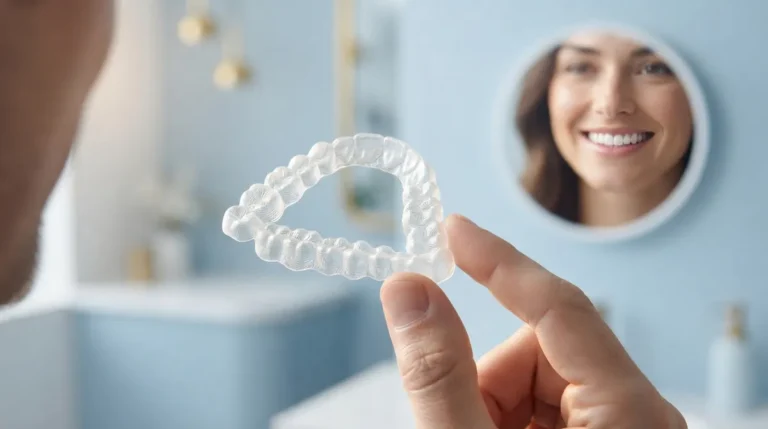
Key Takeaways
-
Brush after every meal with a soft-bristled toothbrush at a 45-degree angle for at least two minutes, and use fluoride toothpaste to prevent white spot lesions and cavities during treatment.
-
Floss daily using floss threaders, water flossers, or orthodontic picks to remove plaque between teeth where toothbrushes cannot reach, which is essential for long-term dental health.
-
Avoid hard foods like candy, ice, and popcorn, plus sticky foods like caramels and gum that can break brackets or get trapped in wires and delay treatment progress.
-
Wear an orthodontic mouthguard during every sports practice and game to protect both teeth and braces hardware from impact damage.
-
Keep all scheduled orthodontist appointments every 6-10 weeks for adjustments and progress checks, as missing appointments extends overall treatment time.
-
Wear your retainer exactly as prescribed after braces are removed to prevent teeth from shifting back and undoing all treatment progress.
Getting braces is an exciting step toward a healthier, more beautiful smile. But once those brackets are on, many Bradenton families ask the same question: Now what? Caring for braces doesn’t have to feel overwhelming. With the right habits and a little guidance, your child — or you — can sail through treatment with great results and minimal hiccups along the way.
Whether your family is just starting orthodontic treatment or you’re a few months in, these practical tips will help you protect your investment and keep smiles on track. From brushing routines to foods to avoid, we’ve got everything you need to make braces care feel easy and natural. Let’s dive in!

Why Proper Braces Care Matters So Much
Braces are a big commitment — in time, energy, and finances. Taking good care of them protects that investment. Poor hygiene during treatment can lead to white spots, cavities, and gum problems that affect your smile long after the braces come off.
Broken brackets and loose wires can also slow down your treatment timeline. Every repair visit adds time to your overall treatment. Staying on top of braces care means fewer surprises and faster results. If you’re curious about what the process involves from the start, check out this helpful guide on what happens at the braces start appointment.

Daily Brushing Habits for Braces Wearers
Brushing with braces takes a bit more effort than regular brushing. But once you get the hang of it, it becomes second nature. Here’s how to brush effectively with braces:
- Brush after every meal — Food gets trapped in brackets easily. Aim to brush after breakfast, lunch, and dinner.
- Use a soft-bristled toothbrush — Soft bristles are gentler on brackets and wires while still cleaning effectively.
- Angle your brush at 45 degrees — Brush along the gumline and then angle downward to clean above and below each bracket.
- Spend at least two minutes brushing — Take your time. Rush brushing misses the spots that matter most.
- Use fluoride toothpaste — Fluoride strengthens enamel and helps prevent white spot lesions around brackets.
For kids and teens, making brushing fun helps! Try a two-minute timer, a fun playlist, or a brushing chart with stickers. Teen orthodontic treatment goes smoothly when good hygiene habits are locked in early.
Flossing With Braces: Yes, It’s Possible
Flossing with braces feels tricky at first, but it’s absolutely essential. Skipping floss means plaque builds up between teeth where your toothbrush can’t reach.
- Floss threaders make it easy to thread floss under the wire
- Orthodontic floss picks are pre-threaded and super convenient for kids
- Water flossers use a stream of water to flush out food and plaque between teeth
- Interdental brushes are small brushes that fit between brackets and wires
Floss at least once a day, ideally before bed. It only takes a few extra minutes, and your teeth will thank you when braces come off. Want to understand more about keeping your teeth healthy during treatment? Read through our all about braces guide for helpful details.
Foods to Avoid With Braces
This is the section kids sometimes dread — but it doesn’t have to be! Avoiding certain foods protects brackets from bending or breaking. Think of it as a temporary trade-off for a permanent, gorgeous smile.
Foods That Can Break Brackets
- Hard candies and lollipops
- Ice (yes, chewing ice is a big no!)
- Popcorn and hard pretzels
- Whole apples and raw carrots (cut them into small pieces instead)
- Nuts and seeds
- Hard pizza crust and bagels
Foods That Get Stuck in Braces
- Sticky candies like caramels and taffy
- Chewing gum
- Gummy bears and fruit snacks
- Sticky peanut butter eaten in large amounts
Plenty of delicious foods are still totally fine with braces — soft fruits, dairy, cooked vegetables, pasta, eggs, and more. Check out our resource on common orthodontic problems to see how diet impacts treatment.
Braces Care Comparison: Good vs. Poor Habits
| Habit | Good Practice | What to Avoid |
|---|---|---|
| Brushing | Brush after every meal with fluoride toothpaste | Brushing only once a day or skipping meals |
| Flossing | Floss daily using a threader or water flosser | Skipping flossing entirely |
| Diet | Soft foods, cut-up fruits and veggies | Hard, sticky, or chewy foods |
| Orthodontic Visits | Keep all scheduled appointments | Missing or frequently rescheduling appointments |
| Emergency Care | Contact your orthodontist promptly for issues | Ignoring loose wires or broken brackets |
Handling Orthodontic Emergencies at Home
Sometimes things happen — a bracket pops off, a wire pokes your cheek, or something just feels off. Don’t panic! Most minor issues can be managed at home until you get to your orthodontist’s office.
- Poking wire? Use a clean pencil eraser or a cotton swab to gently tuck the wire against your tooth. Orthodontic wax over the sharp end provides quick relief.
- Loose bracket? Keep it in place with wax and call your orthodontist to schedule a repair.
- Lost bracket or band? Save the piece and bring it to your appointment.
- Soreness after adjustments? Over-the-counter pain relievers and soft foods help greatly.
- Swollen or irritated gums? Rinse with warm salt water to soothe inflammation.
For anything more serious, don’t wait. Our orthodontic emergency page outlines when to call right away. You can also learn more about common emergency situations with braces so you feel prepared.
Protecting Your Braces During Sports
Bradenton families love staying active — youth sports, recreation leagues, and school athletics are a huge part of life here. Braces and sports can absolutely coexist, as long as you take one simple precaution: wear a mouthguard.
- Use an orthodontic mouthguard designed to fit over braces
- Wear it during every practice and game, not just competitions
- Replace your mouthguard as your teeth shift and braces adjust
- Ask your orthodontist about the best fit for your current stage of treatment
A mouthguard protects both your teeth and your braces hardware from impact. It’s a small investment that prevents big problems. Learn more about protecting your treatment on the orthodontic emergencies mistakes page.
Keeping Up With Orthodontic Appointments
Regular checkups are the engine that keeps your treatment moving forward. Skipping or delaying appointments can extend your overall treatment time. Most patients visit their orthodontist every 6 to 10 weeks for adjustments.
What happens at these visits? Your orthodontist checks your progress, tightens wires, and makes any necessary adjustments to keep teeth moving in the right direction. These appointments are usually quick — about 20 to 45 minutes — but they are absolutely essential. To know what to expect, read about your orthodontics appointment before you go.
At Segovia Orthodontics, our team works hard to keep appointments efficient and family-friendly. Dr. Flor Segovia is a board-certified orthodontist committed to delivering top-notch care in a warm, welcoming environment. You can check our credentials and affiliation through the American Board of Orthodontics, which sets the gold standard for orthodontic certification.
Tips for Parents: Supporting Your Child Through Treatment
As a parent, you play a huge role in your child’s braces journey. Here are some ways to make things easier for your whole family:
- Build a routine together — Brush and floss with your child at night to make it a family habit.
- Keep soft snacks on hand — After adjustment appointments, mouths get sore. Yogurt, smoothies, and mashed potatoes are lifesavers.
- Pack a braces kit for school — A small bag with a toothbrush, toothpaste, orthodontic wax, and floss picks helps kids care for braces on the go.
- Celebrate milestones — Every adjustment is a step closer to their dream smile. A small reward goes a long way!
- Stay positive and encouraging — Kids take their cues from you. A calm, upbeat attitude makes braces feel like a normal part of life.
For parents of younger children, early orthodontic treatment can often prevent more complex issues later. Starting at the right age makes a big difference in outcomes. Wondering when to bring your child in? Check out 6 signs your child should see an orthodontist now.
Braces Care for Teens and Adults in Bradenton
Braces aren’t just for kids! In 2026, more teens and adults in the Bradenton area are choosing braces as a reliable, effective path to a straighter smile. Whether you’re a busy professional or a teenager navigating school life, caring for braces looks similar — but the motivation and lifestyle factors differ.
Teens benefit from options like WildSmiles Braces, which offer fun customizable bracket shapes that make braces feel less like a burden. Adults who want a more discreet option may prefer clear aligners or tooth-colored clear braces. Either way, the care basics remain the same: brush well, floss daily, watch your diet, and keep your appointments. For a deeper look at adult options, explore adult orthodontics to see what’s available.
Stay connected with our community on our Facebook page and our Instagram page for tips, updates, and smile transformations from our Bradenton and Lakewood Ranch patients.
Life After Braces: Retainers Are a Must
Once your braces come off, the celebration begins — but the work isn’t quite over. Retainers are what keep your newly straightened teeth in place. Without them, teeth can shift back over time, undoing all that hard work.
- Wear your retainer exactly as your orthodontist prescribes
- Clean your retainer daily with a soft toothbrush
- Store it in its case when not in use — never wrap in a napkin
- Replace your retainer if it cracks, warps, or no longer fits properly
Most patients wear retainers full-time for a few months, then switch to nighttime wear. Learn everything you need to know on the orthodontic retainers page.
Your Caring-for-Braces Checklist
| Task | Frequency | Tool Needed |
|---|---|---|
| Brush teeth | After every meal (3x daily) | Soft-bristled toothbrush + fluoride toothpaste |
| Floss between teeth | Once daily | Floss threader, water flosser, or ortho floss picks |
| Rinse with mouthwash | Once daily | Fluoride or antiseptic mouthwash |
| Check for loose brackets | Daily | Mirror |
| Use orthodontic wax | As needed | Dental wax (keep in braces kit) |
| Orthodontist appointment | Every 6–10 weeks | Scheduled appointment |
Ready to Start or Continue Your Braces Journey?
Caring for braces is all about building small, consistent habits that add up to big, beautiful results. Bradenton families have everything they need to make braces treatment a smooth and rewarding experience — and we’re here to help every step of the way.
If you’re looking for a trusted orthodontic team that truly cares about your family, we’d love to meet you. Visit us on Google — Segovia Orthodontics to read reviews from real patients in our community. We’re proud to serve families throughout Bradenton, Lakewood Ranch, and the surrounding areas with personalized, compassionate care.
Ready to take the next step toward your best smile? Schedule your appointment with our team today — we can’t wait to welcome your family into the Segovia Orthodontics family!
FAQs
Q: How often should my child brush their teeth with braces?
A: Great question! Kids with braces should brush after every meal — that’s at least three times a day. Food loves to hide in brackets and wires, so a quick post-meal brush makes a huge difference in keeping teeth healthy throughout treatment.
Q: What should I do if a bracket breaks or falls off?
A: Don’t worry — it happens! If a bracket comes loose, apply orthodontic wax to keep it comfortable and call your orthodontist’s office as soon as possible to schedule a repair. Try to save any pieces that fall off and bring them to your appointment.
Q: Can my child still play sports with braces?
A: Absolutely! Sports and braces are a great team — as long as your child wears an orthodontic mouthguard during every practice and game. It protects both the teeth and the braces hardware from impact, keeping treatment right on schedule.
Q: How long does caring for braces take each day?
A: Once you build the routine, braces care takes about 10 to 15 extra minutes per day. Brushing after meals adds a few minutes each time, and flossing once before bed takes about 3 to 5 minutes. It’s a small daily habit for a lifetime of smile benefits!
Q: Do I still need a retainer after braces come off?
A: Yes, and this part is super important! Retainers hold your teeth in their new positions after braces are removed. Without wearing your retainer as directed, teeth can slowly shift back — so it’s the key to protecting all your hard work during treatment.