Key Takeaways
-
Ceramic brackets are tooth-colored or translucent, so they are less noticeable than metal, but they do the same job and can treat many of the same alignment and bite problems.
-
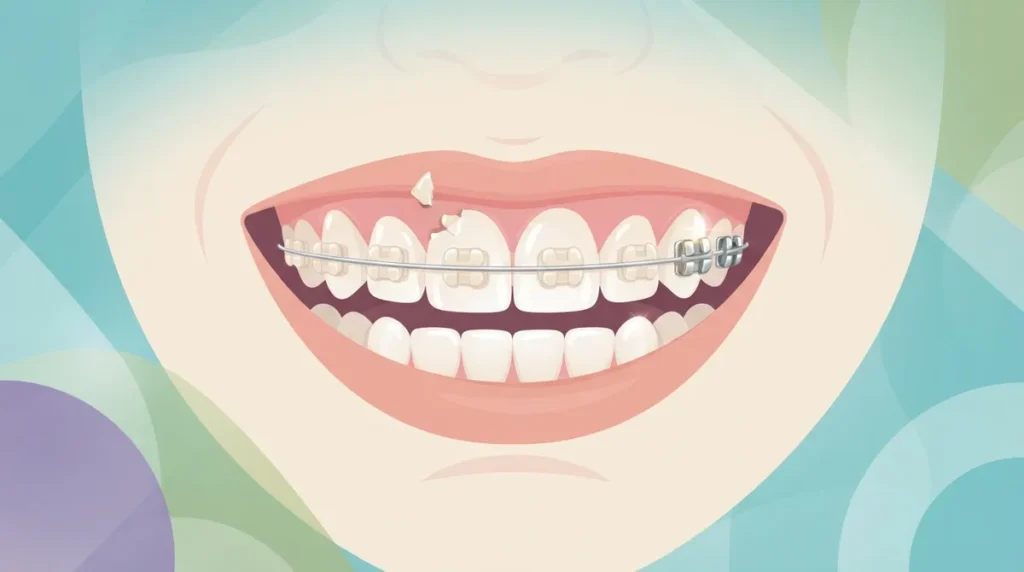
Ceramic is more brittle than metal, so brackets may chip or break more readily; avoid hard, sticky, and crunchy foods and contact your orthodontist right away if one breaks.
-
A 2024 systematic review found no significant difference in canine movement rate between ceramic and metal brackets, though the evidence was limited and of moderate quality.
-
Lab tests show higher friction with some ceramic systems, but this in-vitro result does not prove treatment will take longer; real outcomes depend on the system, mechanics, and your case.
-
Ceramic brackets can fracture during removal, so debonding should always be done by a dental professional; bracket design and removal technique both affect enamel risk.
-
Ask your orthodontist for the full treatment fee, including adjustments, repairs, retainers, and records, since there is no universal price gap between ceramic and metal braces.
Let’s be honest: most of us have a picture in our heads of what braces look like. Shiny metal, lots of wire, and a smile that feels a little too “loud.” If that picture makes you hesitate, you’re not alone. Many parents, teens, and busy adults ask the same thing: is there a way to straighten my teeth without everyone noticing?
That’s where ceramic orthodontic brackets come in. They are tooth-colored or clear attachments that blend in with your smile. Metal brackets, on the other hand, are the classic, time-tested choice. Both work well. Both have trade-offs. And the right pick depends on your goals, your lifestyle, and your bite.
In this friendly guide, we’ll compare ceramic and metal brackets side by side. You’ll learn how each works, what the research says, and what questions to ask your orthodontist. Whether you’re planning for a wedding, a big presentation, or your teen’s first day of high school, you’ll leave with a clearer picture of your options.
What Are Ceramic Orthodontic Brackets?
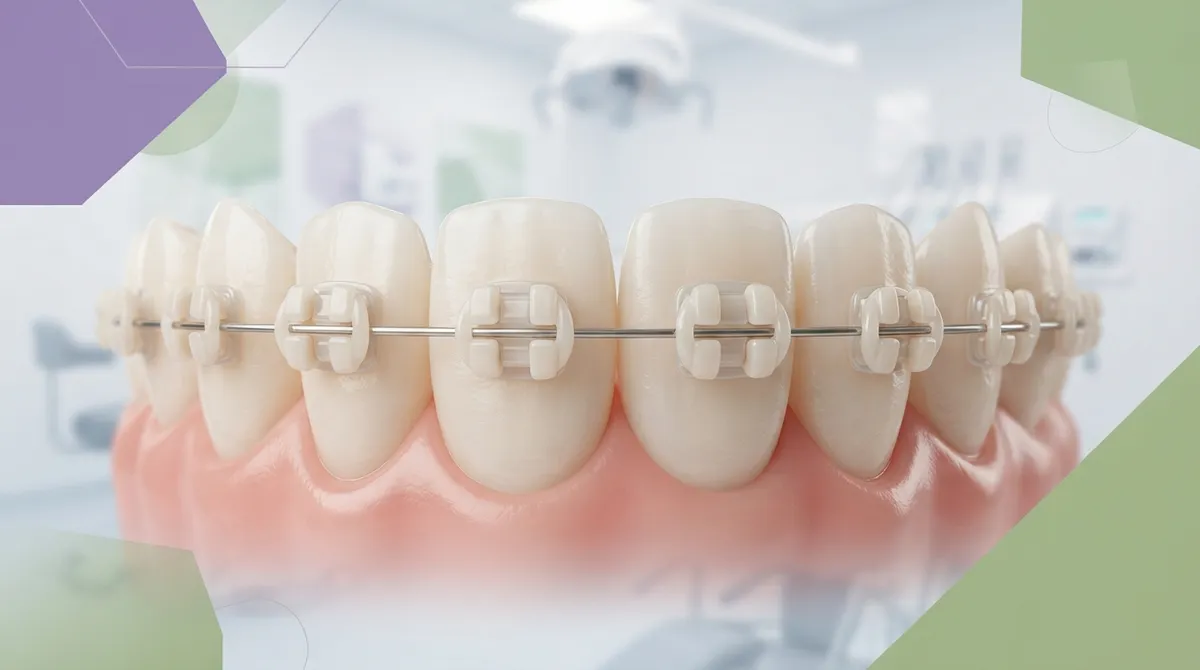
Ceramic orthodontic brackets are small attachments bonded to your teeth as part of fixed braces. An archwire runs through them and gently guides your teeth into place. They’re made from tooth-colored or translucent material, so they are designed to be less noticeable than stainless-steel brackets.
Think of them as the “blend-in” version of braces. They do the same job as metal brackets. They just do it with a lower profile when you smile.
Ceramic brackets can treat many of the same alignment and bite problems as metal braces. Whether they’re a good fit depends on your individual case, the bracket system used, and your orthodontist’s treatment plan.
Ceramic vs. Metal Brackets: Quick Comparison
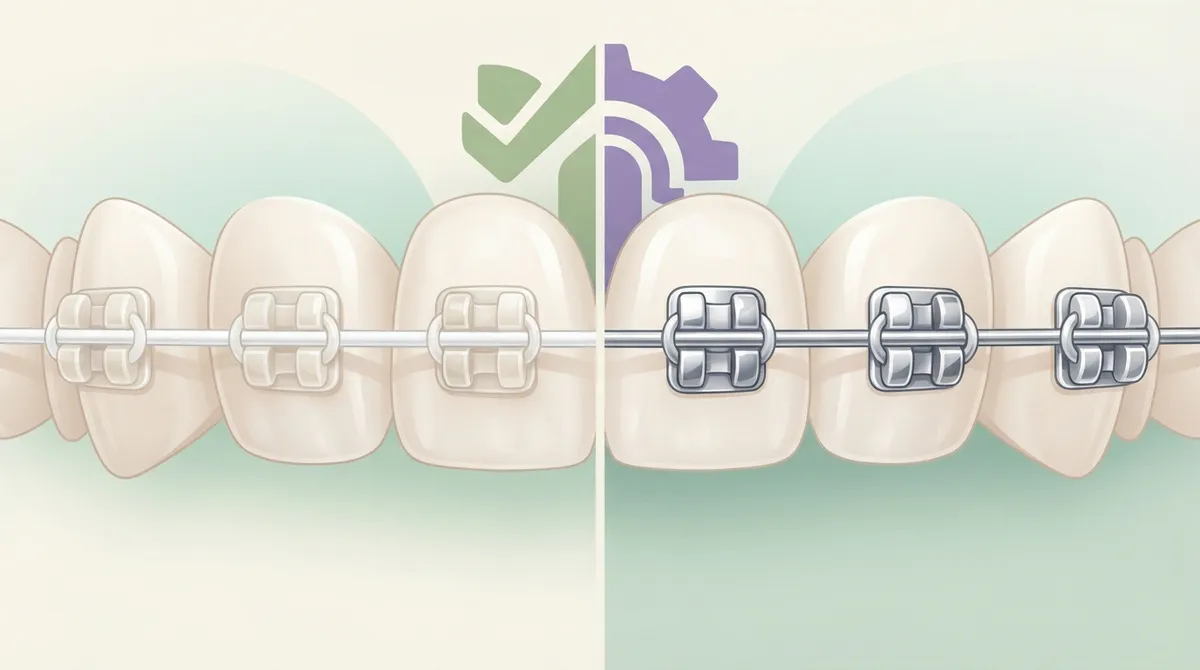
Here’s a simple side-by-side look at how the two options stack up.
| Feature | Ceramic Brackets | Metal Brackets |
|---|---|---|
| Appearance | Tooth-colored or translucent; less noticeable | Silver; more visible |
| Strength | More brittle; may chip or break more readily | Very durable |
| Friction with wire | Can be higher with some systems | Generally lower |
| Staining | Bracket resists discoloration; ties and elastics can stain | Not a staining concern for the bracket itself |
| Removal | Needs extra care to avoid fracture | Typically simpler |
| Cost | Often higher; compare full treatment fee | Often more budget-friendly |
No single column “wins” every time. Your orthodontist can help you weigh each row against what matters most to you.
The Case for Ceramic Brackets
They Blend In
This is the big one. Because ceramic brackets match the color of your teeth, they’re a favorite for people who want a more discreet look. The British Orthodontic Society describes ceramic brackets as less conspicuous than metal, which is exactly why so many adults and teens ask about them.
They Work for Many Smiles
Ceramic brackets are fixed braces, so they stay on your teeth around the clock. That means no trays to remember and no hours to track. For people who like a “set it and forget it” approach, that can be a real comfort.
They Can Move Teeth Effectively
Here’s some good news. A 2024 systematic review of canine distal movement found no significant difference in movement rate between conventional ceramic and metal brackets. The authors noted that the available evidence was limited and of moderate quality. Still, it’s a helpful reminder that choosing ceramic doesn’t automatically mean slower progress.
The Case for Metal Brackets
Metal brackets have earned their reputation for good reasons. They are strong, reliable, and often easier on the budget. If you want to dig into why, our guide on 7 reasons traditional metal braces are still a top choice covers it well.
Metal braces are also a great match for active kids and teens. They handle the everyday wear and tear of busy lives, and they can be made more fun. Our WildSmiles braces let younger patients choose playful bracket shapes like stars, hearts, and flowers. For many kids, that turns braces from something to dread into something to show off.
What to Know About Ceramic Brackets Before You Decide
Ceramic brackets are a fantastic option for many people. But a few honest trade-offs are worth knowing up front.
Brittleness and Breakage
Ceramic is generally more brittle than metal. That means ceramic brackets may chip or break more readily. Their hardness can also be a concern if they touch teeth in the opposite jaw. Your orthodontist will check your bite to plan around this.
If a bracket does break or a wire pokes you, don’t panic. Our page on orthodontic emergencies walks you through what to do.
Friction Between Bracket and Wire
Some ceramic systems create more friction between the bracket slot and the archwire. A 2025 laboratory study reported mean static friction of 428.7 ± 87.3 gf for the tested ceramic brackets versus 267.5 ± 54.2 gf for tested conventional metal brackets, about 60% higher.
Before you worry, here’s the important part: this was an in-vitro (lab) result. It should not be read as a direct estimate of how long your treatment will take. Real-world results depend on the appliance, the mechanics used, and your specific case. So the evidence does not support assuming that ceramic brackets always lengthen treatment.
Removal Requires Care
When it’s time for your braces to come off, ceramic brackets need extra attention. They may fracture during removal, and research describes possible enamel cracks or damage. One 2024 study reported ceramic-bracket enamel fractures in 13.3% of debonded samples under its study conditions. That’s a study-specific finding, not a general risk estimate for every patient.
Bracket design and removal technique both influence risk. That’s why removal should always be done by a dental professional, never at home.
Staining and Appearance
The ceramic bracket itself is usually resistant to discoloration. But the small elastic ties and other components can stain. Your daily habits matter too. Coffee, tea, red wine, and sugary drinks can all affect how your braces look over time, and so can how well you clean your teeth. If you want a refresher, check out our list of foods to avoid with braces.
How Much Do Ceramic Braces Cost?
Ceramic braces may cost more than metal braces. But there’s no universal price gap, so it’s smart not to assume. The best move is to ask your orthodontist for the full treatment fee. That should include:
- Regular adjustment visits
- Repairs for broken or loose brackets
- Retainers after treatment
- Any records, X-rays, or follow-up care
Comparing the whole picture keeps surprises off the table. If budget is a concern, we’ve written about it in 9 smart ways to make orthodontic financing work for you, and you can learn more about orthodontic financing options too.
Which Option Fits Your Life?
Different people have different priorities. Here’s how the choice might look for a few common situations.
For Busy Parents of Kids and Teens
If you’re juggling school, sports, and carpools, you want something durable and simple. Metal brackets are often a strong pick for younger kids who may be tough on their braces. For older teens who care about looks, ceramic may be worth a conversation. Our guide on how to choose the right braces for teens can help you think it through. And if you’re wondering about timing, see teen orthodontic treatment.
For Young Professionals and Career-Focused Adults
If you’re in client meetings or on video calls all day, you may want a lower-profile look. Ceramic brackets can be a good middle ground. They stay on your teeth full time, and they’re less noticeable than metal. Some adults also explore clear aligners for an even more discreet route. Our comparison of braces vs. clear aligners is a great place to start.
For Life Event Planners
Got a graduation, wedding, or big photo day coming up? Talk timing with your orthodontist early. Ceramic brackets can help your smile look polished during treatment. Just keep in mind that your plan, not the bracket color, mostly decides how long treatment takes.
For Adults Returning After Relapse
If your teeth have shifted since your first round of braces, you’re in good company. Many adults come back to fix relapse. Ceramic brackets can feel like a more comfortable choice for adult life. Learn more about adult orthodontics and how we keep results in place with orthodontic retainers.
Other Discreet Options Worth a Look
Ceramic brackets aren’t the only way to get a less visible smile. Here are a few more things to explore with your orthodontist:
- LightForce braces: A digital, 3D-printed system with custom-fitted brackets and clear or white options. Learn more about LightForce orthodontics.
- Angel Aligners: Clear, removable trays that gently straighten teeth with a discreet look.
- Traditional metal braces: Proven, durable, and often more budget-friendly.
You can see the full range in our overview of types of braces or read 7 types of braces: which one is right for you?
How to Care for Ceramic Braces
Good habits help your braces look and work their best. Here’s a simple routine to follow:
- Brush after every meal. Take a few extra seconds around each bracket to clear away food and plaque.
- Floss daily. A floss threader or water flosser can make this easier.
- Limit staining drinks. Coffee, tea, red wine, and dark sodas can discolor elastic ties.
- Skip hard and sticky foods. These can chip or loosen brackets.
- Keep every appointment. Regular adjustments keep your treatment on track.
Prefer to get ahead of problems? Our tips on caring for braces are a handy reference for the whole family.
Questions to Ask Your Orthodontist
Walking into a consultation with a few good questions makes a big difference. Try asking:
- Is my bite a good match for ceramic brackets?
- Which bracket system do you recommend, and why?
- How will you protect my enamel when the braces come off?
- What does the full treatment fee include?
- How do I handle a broken bracket?
Not sure what to expect at the visit? Our guide to your first orthodontic visit can help you feel ready. It also helps to choose a specialist you trust. Dr. Flor Segovia is a board-certified orthodontist, and you can learn more about board certification through the American Board of Orthodontics.
The Bottom Line
Ceramic and metal brackets both straighten teeth well. Ceramic is the discreet choice and can be a lovely fit if looks matter to you. Metal is the sturdy, budget-friendly workhorse. The right answer is the one that fits your smile, your lifestyle, and your comfort level.
At Segovia Orthodontics, we love helping families and adults find the plan that feels right. Our team takes the time to explain every option so you can decide with confidence. You can follow along with smile stories on our Instagram page and our Facebook page, or visit us on Google — Segovia Orthodontics to see what our Lakewood Ranch patients say.
Ready to find your best fit? Request an appointment today, or call us at 941-557-1333. We can’t wait to meet you and talk about your smile goals.
FAQs
Q: Are ceramic braces as effective as metal braces?
A: For many people, yes! Ceramic brackets can treat many of the same alignment and bite problems as metal braces. A 2024 review found no significant difference in canine movement rate between ceramic and metal brackets, though the evidence was limited. Your orthodontist will tell you if they’re a good match for your case.
Q: Do ceramic brackets take longer to straighten teeth?
A: Not necessarily. Lab tests show higher friction with some ceramic systems, but that doesn’t prove your treatment will be slower. Real results depend on the bracket system, the mechanics used, and your unique case.
Q: Do ceramic braces stain or turn yellow?
A: The ceramic bracket itself usually resists staining. The little elastic ties and other parts can pick up color from coffee, tea, and other dark foods or drinks. Good brushing and smart snack choices help keep your braces looking fresh.
Q: Are ceramic brackets more likely to break?
A: Ceramic is generally more brittle than metal, so brackets may chip or break more readily. Avoiding hard, sticky, and crunchy foods can help. If something does break, reach out to your orthodontist right away.
Q: Can ceramic braces damage enamel when they are removed?
A: Removal takes extra care because ceramic can fracture, and research describes possible enamel cracks. Bracket design and removal technique both affect risk. That’s why only a dental professional should remove them.
Our Service Area