Key Takeaways
-
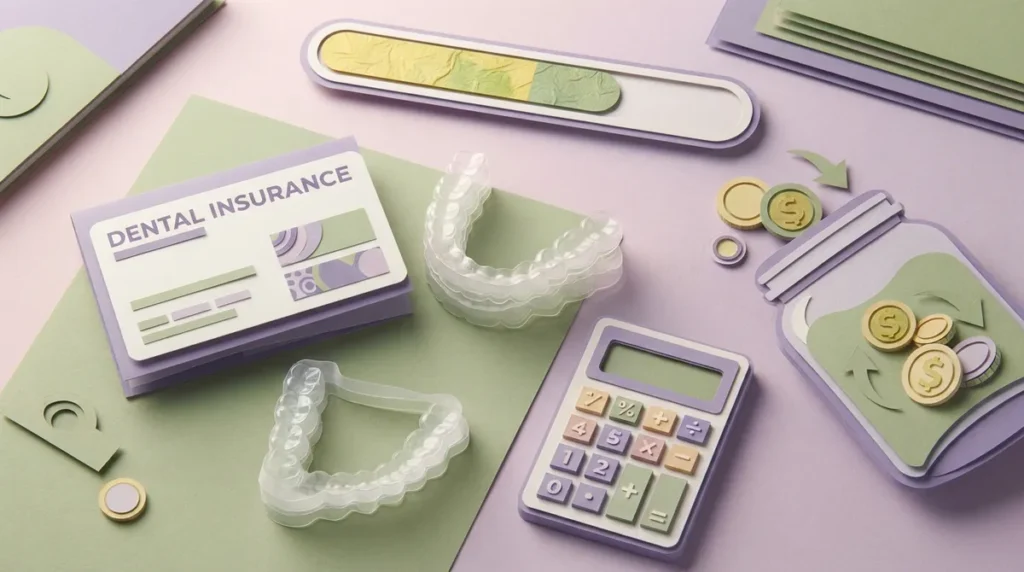
Dental insurance can cover clear aligners only if your plan includes orthodontic benefits; coverage is not automatic just because cleanings and fillings are covered.
-
Check age limits, waiting periods, and the orthodontic lifetime maximum, since these often determine how much your plan actually pays.
-
A '50% coverage' plan does not mean half your bill is paid; payments stop once the lifetime orthodontic maximum (often around $1,000 to $3,000) is reached.
-
Adult orthodontic coverage is less common than child and teen coverage, so adults should verify benefits carefully before starting treatment.
-
Get a written benefit estimate or pre-treatment determination from your insurer before starting aligners to avoid unexpected out-of-pocket costs.
-
FSA or HSA funds can often be used for eligible orthodontic expenses, and flexible payment plans or financing can cover the remaining balance.
You have decided you want a straighter smile without a mouthful of metal. Great news! Now comes the big question that almost every patient asks: does insurance cover clear aligners? If you are a busy parent, a young professional, or an adult returning to treatment after a retainer slipped away years ago, the answer matters for your budget.
Here is the short version. Dental insurance can cover clear aligners, but only when your plan includes orthodontic benefits. Coverage is not automatic just because your plan pays for cleanings and fillings. Age limits, waiting periods, and lifetime maximums all play a part.
The good news is that you do not have to guess. In this guide, we walk through how coverage works, what to ask your insurer, and smart ways to pay for treatment in 2026. We keep it simple and friendly, so you can plan with confidence.

Does Insurance Cover Clear Aligners?
Sometimes, yes. Many dental plans that include orthodontic benefits treat clear aligners as an orthodontic appliance. That means the plan often applies the same rules it uses for traditional braces.
But there is a catch. Every plan is different. Some plans have no orthodontic coverage at all. For example, Aflac states that its individual and family network dental plans do not cover orthodontics. That is a good reminder that coverage depends on your specific policy, not on the type of treatment alone.
Here is what usually decides whether your aligners are covered:
- Orthodontic benefits: Your plan must include them, either built in or added as a rider.
- Age eligibility: Many plans limit coverage to children and teens.
- Waiting periods: Some plans make you wait before orthodontic benefits begin.
- Lifetime maximum: Orthodontic coverage often has a separate cap per person.
- Plan wording: Some policies exclude certain appliances or treatment types.
Because of all these moving parts, the smartest first step is to read your plan documents or call your insurer. We will show you exactly how below.

How Dental Insurance Treats Clear Aligners vs. Braces
Most plans do not care whether the straightening tool is a metal bracket or a clear tray. They care about the word orthodontic. If your plan covers orthodontics, clear aligners often qualify the same way braces do.
Still, always confirm the details. A plan may exclude a specific appliance, require an in-network provider, or limit how it pays out. If you are comparing treatment styles, our guide on braces vs. clear aligners can help you weigh comfort, looks, and cost.
Coverage at a Glance
| Insurance Factor | What It Means for You | What to Ask |
|---|---|---|
| Orthodontic benefit | Required before aligners can be covered | Does my plan include orthodontics? |
| Appliance type | Aligners are often treated like braces | Are clear aligners listed or excluded? |
| Age limit | Child and teen coverage is more common | What is the age cutoff? |
| Waiting period | Benefits may start months after enrollment | How long until I can use ortho benefits? |
| Lifetime maximum | A cap on what the plan will ever pay | What is my orthodontic maximum? |
| Payment method | May pay over time, not all at once | How are benefits paid out? |
Notice how many questions you can answer in a single phone call. That is the power of asking early.
Understanding Lifetime Maximums and Coinsurance
This is where many patients get surprised, so let us slow down.
Orthodontic benefits usually come with a lifetime maximum. That is the most your plan will pay toward orthodontics for each covered person, ever. Market examples often fall somewhere around $1,000 to $3,000, with some plans paying about 50% of treatment costs. These are examples, not promises, so check your own plan.
Here is the part people miss. A plan that says “50% coverage” does not always pay half of your total bill. The insurer’s payment is also limited by:
- The plan’s lifetime orthodontic maximum.
- The plan’s allowed fee for the treatment.
- Any waiting periods or deductibles that apply.
Let us use a simple, made-up example. Say your plan pays 50% up to a $2,000 lifetime maximum. If your treatment costs more than $4,000, the plan still stops paying at $2,000. You would cover the rest. Knowing this ahead of time keeps your budget honest.
Want to see typical price ranges before you do the math? Take a look at how much clear aligners really cost in 2026.
Does Insurance Cover Clear Aligners for Adults?
This question comes up a lot, especially from young professionals and career-focused adults who want discreet treatment. The honest answer is that adult orthodontic coverage is less common than coverage for kids and teens.
Many plans set an age limit, often tied to dependents. Some do offer adult orthodontic benefits, but the details vary by policy. If you are an adult relapse patient who wore braces years ago, you may find that your plan treats you like any other adult patient, with the same limits and waiting periods.
Do not let that discourage you. Plenty of adults get beautiful results and manage costs with flexible payment options. If you are curious about starting later in life, read about adult orthodontics and what treatment looks like at every age.
What About Kids and Teens?
Parents, you often have an easier path. Child and teen orthodontic coverage is more commonly available. If you are planning ahead for a growing smile, our pages on early orthodontic treatment and teen orthodontic treatment explain when to start and what to expect.
Waiting Periods and Treatment Already in Progress
Timing matters with insurance. Some plans make you wait before orthodontic benefits kick in. Others require treatment to begin after your coverage becomes effective.
A few other timing rules to watch for:
- Payment over time: Some plans pay benefits across the course of treatment instead of as one lump sum.
- Already-started treatment: If you began aligners before your coverage started, special rules may apply, or benefits may be limited.
- Plan changes: Switching jobs or insurers can reset waiting periods.
If you are planning around a big event, like a wedding or graduation, build in extra time. Checking coverage early gives you room to adjust the schedule instead of rushing.
What About Medical Insurance?
Medical insurance generally does not cover routine orthodontic treatment, including clear aligners for cosmetic straightening. In unusual cases tied to a qualifying medical condition, medical coverage may be considered. Eligibility depends on your medical policy and the documentation you provide.
If you think your situation might qualify, talk with your orthodontist and your insurer. They can tell you what paperwork is needed. Otherwise, your dental plan is the place to look first.
How to Check Your Coverage: A Simple Step-by-Step
You do not need to be an insurance expert. Follow these steps and you will have a clear answer.
- Find your plan documents. Look for a section on orthodontic benefits, or search your member portal.
- Call your insurance company. Ask whether clear aligners are covered under your orthodontic benefit.
- Ask the key questions. Cover age limits, waiting periods, lifetime maximum, coinsurance, and in-network rules.
- Request a written estimate. Ask for a benefit estimate or pre-treatment determination before you start care.
- Talk with your orthodontic office. Our team can help you understand what your plan may pay and what your out-of-pocket share could be.
Getting the answer in writing is the real secret. A verbal “yes” is nice, but a written estimate protects you from surprises later.
You can also learn more about how coverage works in practice with our post on how to use orthodontics insurance to save on your smile.
Other Ways to Pay for Clear Aligners
Even if insurance covers only part of the cost, or none of it, you still have options. Many of our patients combine a few of these to make treatment fit their budget.
- FSA or HSA funds: These accounts can generally be used for eligible orthodontic expenses, including your out-of-pocket share. Rules vary, so check with your plan administrator or a tax professional.
- Flexible payment plans: Spreading the cost over monthly payments can make treatment feel much lighter.
- Orthodontic financing: Explore our orthodontic financing options to find a plan that fits your life.
If you want more ideas, our article on 9 smart ways to make orthodontic financing work for you is a great next read.
Clear Aligner Options at Segovia Orthodontics
At Segovia Orthodontics in Lakewood Ranch, Dr. Flor Segovia is a board-certified orthodontist who offers personalized care for children, teens, and adults. Our friendly, bilingual team works in English and Spanish, and we love helping families feel comfortable from the first visit.
For clear aligner treatment, we offer Angel Aligners. These custom, removable trays gently straighten teeth with a discreet look. Angel Aligners use a frosted finish that reduces shine, and they follow a flexible “7+3” wear schedule, which means seven days with one tray and three days with a firmer one. Some designs even include built-in buttons for rubber bands, so extra attachments may not be needed.
Not sure aligners are the right fit? We also offer LightForce braces, which use 3D printing for custom-fit brackets, and WildSmiles braces, a fun, shape-based option that kids love. You can explore all of our clear aligner information to learn how treatment works from start to finish.
Curious about our credentials and care style? Meet Dr. Flor Segovia, and you can verify board certification through the American Board of Orthodontics. We also love sharing smiles and updates on our Instagram page and our Facebook page. You can also visit Segovia Orthodontics on Google to see what our Lakewood Ranch patients say.
Common Mistakes to Avoid
A little planning saves a lot of frustration. Watch out for these common slip-ups:
- Assuming routine dental coverage includes orthodontics.
- Starting treatment before getting a written benefit estimate.
- Forgetting that lifetime maximums are separate and limited.
- Missing age limits or waiting periods hidden in the fine print.
- Not asking whether an in-network provider is required.
Avoiding these takes just a few minutes of homework. Your future self, and your wallet, will say thank you.
Take the Next Step Toward Your Smile
So, does insurance cover clear aligners? It might, but it depends on your plan’s orthodontic benefits, age rules, waiting periods, and lifetime maximum. The best move is to verify your coverage in writing and then build a payment plan that feels comfortable.
You do not have to figure it out alone. Our team is happy to help you understand your options and map out a smile plan that fits your budget and your schedule. Ready to get started? Request an appointment today, or call us at 941-557-1333 to talk with our friendly team. We cannot wait to meet you!
FAQs
Q: Does dental insurance cover clear aligners like Angel Aligners?
A: It can, but only if your plan includes orthodontic benefits. Many plans treat clear aligners like braces, yet some exclude certain appliances or orthodontics entirely, so it is always smart to confirm with your insurer first.
Q: How much will my insurance pay for clear aligners?
A: It depends on your plan. Orthodontic benefits usually have a separate lifetime maximum, and your coinsurance percentage does not guarantee that exact amount will be paid. Ask your insurer for a written benefit estimate so you know your real numbers.
Q: Does insurance cover clear aligners if my treatment has already started?
A: Maybe, but special rules often apply. Some plans require treatment to begin after your coverage starts, so check your policy and talk with your insurer before assuming benefits will apply.
Q: Can I use an FSA or HSA to pay for clear aligners?
A: In general, yes. FSA and HSA funds can often be used for eligible orthodontic expenses, including your out-of-pocket share. Rules vary, so check with your plan administrator or a tax professional about your specific expense.
Q: How can I check if my insurance covers clear aligners before treatment?
A: Call your insurance company, ask about orthodontic benefits, age limits, waiting periods, and your lifetime maximum, and request a written estimate. Our team at Segovia Orthodontics is also happy to help you understand what to expect.
Our Service Area