Key Takeaways
-
Debonded brackets account for 60.6% of orthodontic emergencies and can be managed by leaving the bracket on the wire, covering it with wax, and avoiding hard foods until your orthodontist can rebond it.
-
True medical emergencies like heavy bleeding, difficulty breathing, knocked-out teeth, or severe facial trauma require immediate ER or urgent care visits—skip calling your orthodontist and go straight to emergency services.
-
Most common orthodontic problems (poking wires, loose brackets, cracked aligners) can be temporarily managed at home using orthodontic wax, warm salt-water rinses, and a clean cotton swab before contacting your orthodontist's office.
-
Keep a portable emergency kit with orthodontic wax, cotton swabs, pain relievers, and your orthodontist's phone number saved; aligner wearers should always travel with their previous tray as a backup.
-
Orthodontic emergencies are rare—only 0.2% of emergency dental visits are orthodontic-related—and most issues are uncomfortable rather than dangerous when you know how to identify and handle them properly.
-
Prevent emergencies by avoiding sticky and hard foods, wearing mouthguards during sports, attending all scheduled appointments, and storing aligners in their case to reduce the need for urgent care visits.
A wire poking your cheek at 9 p.m. A bracket that just popped off during dinner. A cracked aligner the night before a big presentation. If you’ve ever felt that jolt of panic wondering whether you need an emergency orthodontist, you’re in good company. These moments happen to families, busy professionals, and anyone wearing braces or aligners, and they almost always feel scarier than they actually are.
The good news? Most orthodontic emergencies are uncomfortable, not dangerous, and there are simple steps you can take right at home while you wait to reach your orthodontic office. In this guide, we’ll walk through how to tell a true emergency from a routine hiccup, what first-aid steps actually help, and when it’s time to head somewhere other than your orthodontist’s chair. Whether you’re a parent managing your teen’s braces or an adult juggling clear aligners around a demanding career, this is your friendly, no-panic roadmap.
What Counts as an Emergency Orthodontist Situation?
An emergency orthodontist addresses unexpected problems with braces, clear aligners, retainers, expanders, or other appliances that need attention before your next scheduled visit. According to the American Association of Orthodontists (AAO), many of these issues are urgent rather than life-threatening, and they can often be managed temporarily at home once you’ve talked to your orthodontic office.
It helps to think of orthodontic problems in two categories: things that can wait for a same-day or next-business-day appointment, and things that need medical attention right away. Knowing the difference saves you stress, time, and sometimes an unnecessary trip to the emergency room.
Common Orthodontic Problems That Feel Urgent
Most calls to an orthodontic office fall into this category. Research published in the Journal of Global Medical and Dental Sciences reviewed 175 patients with orthodontic emergencies and found some clear patterns worth knowing:
- Debonded (loose) brackets made up 60.6% of all emergency cases
- Decemented molar bands accounted for 20.0%
- Broken or poking wires and other auxiliary problems made up 8.6%
- Dislodged ties or separators accounted for 7.4%
Beyond that study, other frequent issues include a lost ligature, a loose expander, a cracked or misplaced aligner tray, and sores or irritation on the cheeks, lips, or tongue from rubbing appliances. These are frustrating, but they are rarely dangerous.

True Medical Emergencies: When to Skip the Orthodontist
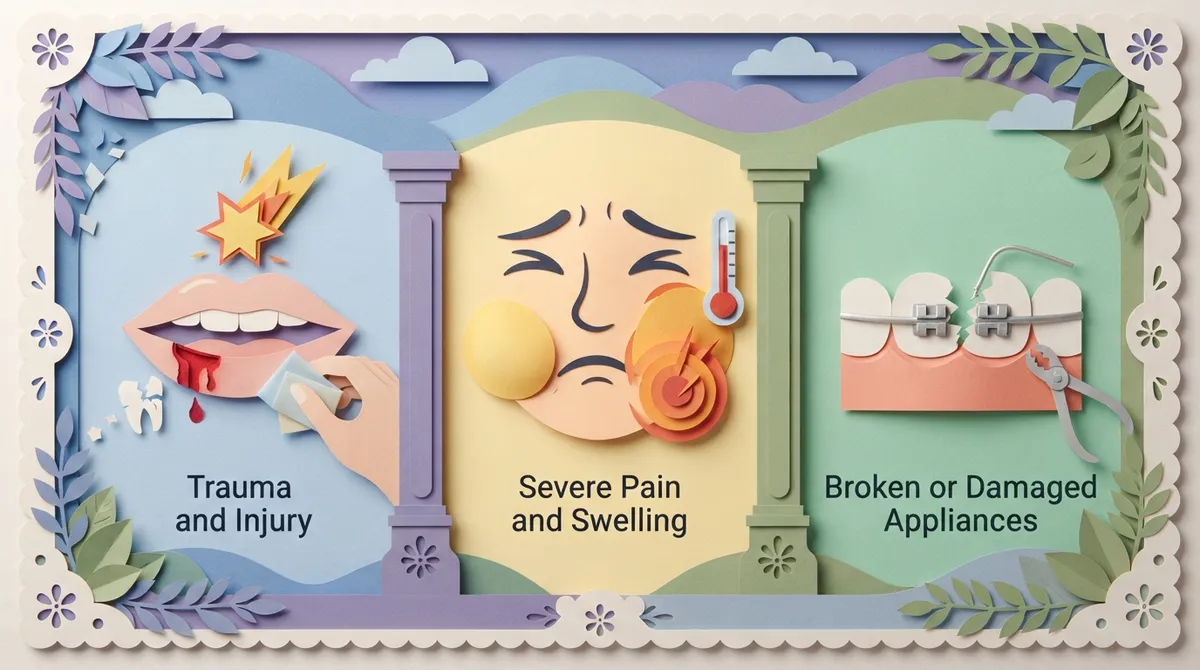
Some situations need immediate medical or dental care instead of a call to your orthodontist. The AAO is clear about this list, and it’s worth memorizing if you or your child wears braces.
- Heavy or uncontrolled bleeding from the mouth
- Difficulty breathing or swallowing
- Suspected jaw fracture or major facial trauma
- A permanent tooth that has been knocked out or badly displaced
- Severe pain paired with facial swelling, fever, or signs of infection
If any of these happen, go straight to an emergency room, urgent care clinic, or call 911. Don’t wait for a callback from your orthodontic office. For a knocked-out permanent tooth specifically, the American Association of Oral and Maxillofacial Surgeons advises handling the tooth only by the crown (never the root), keeping it moist, and getting help quickly. Replantation works best within minutes, and generally within about an hour when possible.
Step-by-Step: Handling Common Braces and Aligner Problems
Once you’ve ruled out a true medical emergency, here’s how to manage the most common issues safely at home. These steps buy you comfort and time until your orthodontic team can take a look.
1. A Poking or Broken Wire
- Wash your hands thoroughly before touching anything in your mouth.
- Using a clean cotton swab or pencil eraser, gently push the wire so it points toward the tooth instead of poking soft tissue.
- If it won’t move, cover the sharp end with orthodontic wax to shield your cheek or gum.
- Call your orthodontic office to report the issue and schedule a repair.
- Never attempt to cut the wire yourself with household scissors or clippers.
2. A Loose or Debonded Bracket
Since debonded brackets are the single most common orthodontic emergency, it helps to know exactly what to do. Leave the bracket attached to the wire if possible. Don’t pull it off completely. Place a small piece of wax over it to reduce irritation, and avoid chewy or hard foods until your orthodontist can rebond it.
3. A Cracked or Lost Aligner
Never force a warped or painful aligner back into place. If you have a previous tray that still fits comfortably, you can sometimes wear it temporarily, but only if your orthodontist recommends it. Otherwise, contact your provider promptly so they can get you back on track without derailing your treatment timeline. Our clear aligners patients are encouraged to keep their previous tray until the new one is confirmed to fit well.
4. Irritation from Appliances
Warm salt-water rinses, orthodontic wax, and soft foods can ease discomfort from rubbing brackets or wires. Over-the-counter pain relief, used exactly as the label directs, can also help while you wait for your appointment.
Temporary Comfort Measures That Actually Work
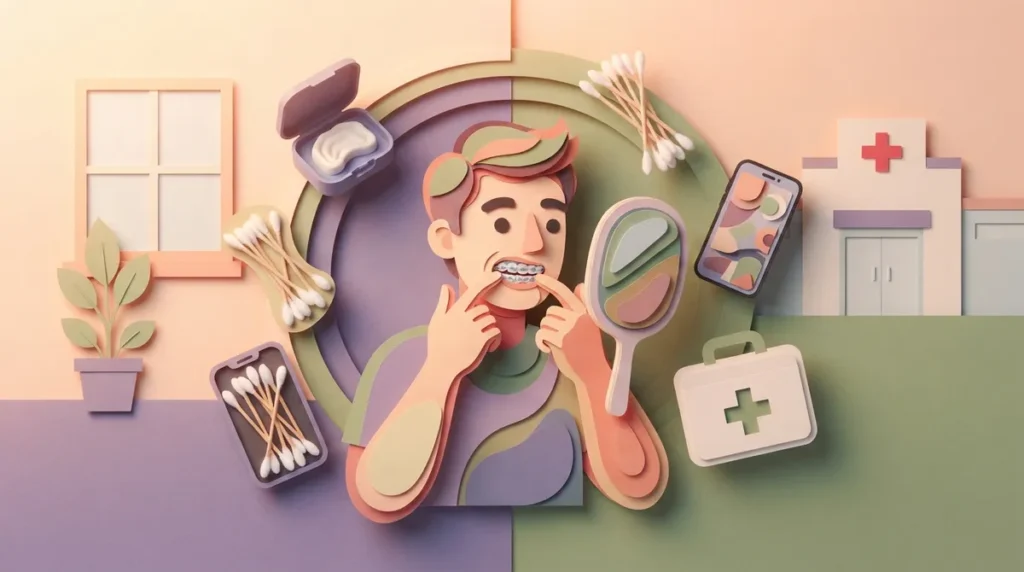
These simple tools are your best friends during any orthodontic hiccup. Keep a small emergency kit at home and in your bag if you or your child wears braces or aligners.
- Orthodontic wax to cover sharp or poking areas
- Cotton swabs or a clean pencil eraser for gently repositioning wires
- Warm salt-water rinses to soothe irritated gums or cheeks
- Soft foods like yogurt, mashed potatoes, and smoothies to reduce chewing strain
- Over-the-counter pain relievers, used according to package instructions
- Your orthodontist’s phone number saved and easy to find
What you should avoid doing is just as important. Don’t force a distorted retainer or aligner into place. Don’t keep wearing an appliance that’s actively cutting your mouth. And don’t attempt major adjustments yourself, even if you’ve watched a video online. These moves can extend your treatment time or cause more damage.
What Happens When You Call an Orthodontic Office
Wondering what to expect once you pick up the phone? Most practices, including ours, follow a similar process designed to get you relief quickly.
| Step | What Happens |
|---|---|
| 1. Phone Triage | A team member asks about your symptoms to determine urgency |
| 2. Home Care Advice | You’ll receive guidance on wax, rinses, or temporary fixes |
| 3. Appointment Scheduling | A same-day or next-business-day visit is arranged if needed |
| 4. Referral if Necessary | You may be directed to a dentist, oral surgeon, or ER for trauma or infection |
This is exactly the kind of support you’ll find when you reach out about an orthodontic emergency at our Lakewood Ranch office. We know life doesn’t pause for a loose bracket, so we aim to make the process as smooth as possible for busy parents, professionals, and teens alike.
How Often Do Orthodontic Emergencies Actually Happen?
It’s natural to worry, but the numbers are reassuring. A seven-year review tracked 3,638 emergency dental attendances, and only 9 patients, or 0.2%, had an orthodontic-related problem. Among those, 77% were female, 56% were children, and 22% showed up outside normal office hours. In other words, true orthodontic emergencies are rare, and most issues that do come up are manageable with a quick call and some simple home care.
Tips for Different Types of Patients
Every patient’s life looks different, so here’s how to think about emergency preparedness based on your situation.
- Parents of kids and teens: Keep a wax kit in your child’s backpack and make sure they know how to reach the orthodontic office directly.
- Busy professionals: Ask about after-hours contact options so a wire issue doesn’t derail an important meeting or event.
- Adults returning to treatment: If you’re correcting relapse from years ago, don’t panic over minor soreness. It’s a normal part of readjusting to an appliance.
- Aligner wearers: Always travel with your previous tray as a backup in case your current one cracks or gets lost.
- Anyone prepping for a big event: Schedule a check-up a few weeks before graduations, weddings, or interviews so small issues get caught early.
Choosing appliances designed for comfort and durability also reduces emergency calls in the first place. Options like LightForce Orthodontics, which uses custom 3D-printed brackets designed to fit your teeth precisely, can mean fewer irritations and looser components compared to one-size-fits-all brackets. For younger patients, WildSmiles Braces combine fun bracket shapes with a design that actually helps kids brush more thoroughly, since the visible shape shows them exactly where to clean.
Preventing Orthodontic Emergencies Before They Start
While you can’t prevent every mishap, a few habits go a long way toward reducing your risk of an urgent call.
- Avoid sticky, hard, or chewy foods that can bend wires or pop brackets loose.
- Wear a mouthguard during sports, even with clear aligners or retainers in place.
- Attend every scheduled adjustment appointment so small issues get caught early.
- Store aligners in their case, never in a napkin or pocket where they can crack.
- Follow your orthodontist’s care instructions closely, especially in the first weeks of treatment.
Learning more about common orthodontic problems before they happen can also help you feel more confident handling a surprise. And if you’re still deciding between treatment options, comparing braces vs. clear aligners ahead of time can help you pick the option that fits your lifestyle and reduces emergency risk.
Why Choosing the Right Orthodontic Team Matters
An emergency is much less stressful when you already trust the team on the other end of the phone. Dr. Flor Segovia is a board-certified orthodontist credentialed through the American Board of Orthodontics, and she brings bilingual, family-focused care to patients throughout Lakewood Ranch. Her office uses advanced orthodontic technology to plan treatment precisely, which helps reduce the everyday wear and tear that leads to emergencies in the first place.
Curious what other families think? You can check out our Facebook page or follow along on our Instagram page for real patient stories and smile transformations. You can also visit us on Google — Segovia Orthodontics to see what our Lakewood Ranch patients say about their experience, including how our team handles urgent situations with care and speed.
Your Emergency Action Plan
Let’s bring it all together with a simple checklist you can save for later.
- Assess the situation: is this a true medical emergency or a manageable orthodontic issue?
- If it’s severe bleeding, trauma, or a knocked-out tooth, go to urgent care or the ER immediately.
- For everyday issues, apply wax, rinse with warm salt water, or gently reposition a wire.
- Call your orthodontic office to report the problem and get next steps.
- Avoid DIY fixes beyond basic first aid, and don’t skip your follow-up appointment.
Orthodontic emergencies are rarely as scary as they feel in the moment. With a little know-how and the right team on your side, you can handle most bumps in the road with confidence.
We’re Here When You Need Us
Nobody plans for a broken wire or a lost aligner, but you don’t have to handle it alone. If you’re dealing with an orthodontic issue right now, don’t wait it out in discomfort. Contact us to describe what’s going on, or go ahead and request an appointment so we can get you sorted quickly. Prefer to talk it through? You can always call us at 941-557-1333 and our team will walk you through exactly what to do next. Your smile journey matters to us, bumps and all, and we’re honored to be part of your family’s orthodontic care right here in Lakewood Ranch.
FAQs
Q: What is considered an orthodontic emergency?
A: An orthodontic emergency usually means a broken wire, loose bracket, cracked aligner, or lost retainer that needs attention before your next visit. True medical emergencies, like heavy bleeding or a knocked-out tooth, need immediate care at an ER or urgent care clinic instead.
Q: Should I go to an emergency orthodontist for a poking wire?
A: Not usually! Try gently pushing the wire with a clean cotton swab and covering it with orthodontic wax first. Then give your orthodontic office a call so they can schedule a repair, but this rarely requires an ER visit.
Q: What should I do if my braces bracket comes loose?
A: Leave the bracket attached to the wire if you can, and cover it with wax to protect your cheek. Loose brackets are actually the most common orthodontic emergency, so your orthodontist has seen this a thousand times and can fix it quickly.
Q: Can I sleep with a broken or poking braces wire?
A: You can get through the night safely by covering the wire with orthodontic wax before bed. Just be sure to call your orthodontic office first thing the next day so it gets properly fixed.
Q: What should I do if I lose or crack my clear aligner?
A: Avoid forcing a cracked tray back in, and try wearing your previous aligner temporarily if it still fits comfortably. Reach out to your orthodontist right away so they can get you a replacement and keep your treatment on schedule.
Our Service Area