Key Takeaways
-
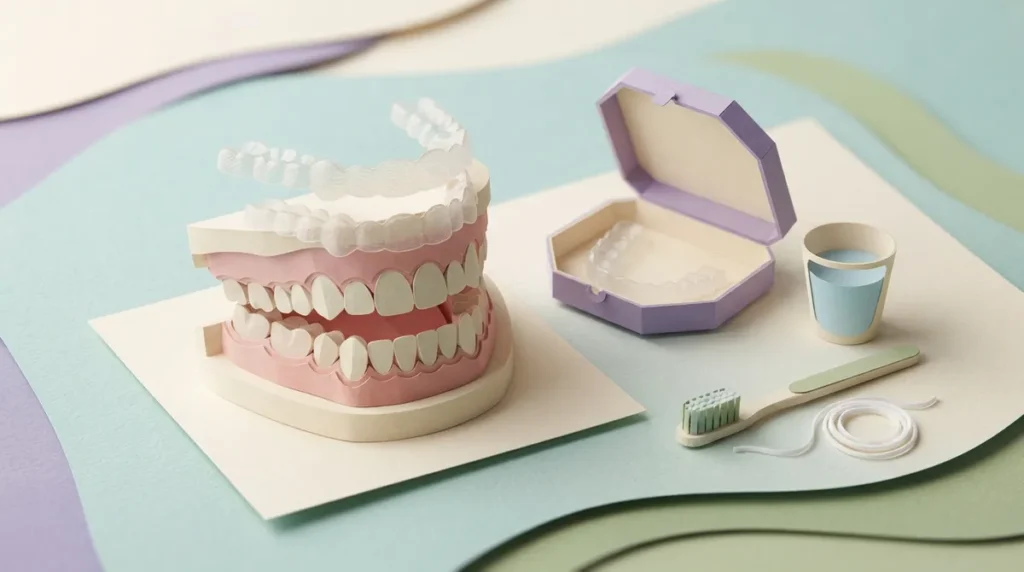
Invisible aligners are clear, removable trays, but they are discreet rather than truly invisible, and they suit selected mild-to-moderate cases best, so a proper orthodontic exam is essential.
-
Most orthodontists recommend wearing aligners about 20 to 22 hours a day, removing them only to eat, drink anything besides water, and clean teeth, since teeth move only when trays are in.
-
Aligners are typically switched every 7 to 14 days, and the digital treatment preview is an estimate, so extra refinement trays may be needed to finish the result.
-
Brush before reinserting trays, drink only water while wearing them, and store trays in a case rather than a napkin to protect against cavities, staining, and accidental loss.
-
Braces may offer more control for complex movements like certain rotations or root positioning, while aligners generally make brushing and flossing easier.
-
Retainers are essential after treatment because teeth tend to drift back toward their original positions, especially for adults who previously wore braces.
Picture this: you are about to walk into a big meeting, a wedding, or a graduation photo, and you want a straighter smile without a mouth full of metal. That is exactly why so many people ask about invisible teeth aligners. They sound almost magical, right? Slip in a clear tray, go about your day, and nobody notices.
Here is the friendly truth. Invisible teeth aligners are real, and they can work beautifully for the right smile. But they are not literally invisible, and they are not right for every case. Results depend on a proper exam, a smart plan, and wearing your trays as directed.
Whether you are a busy professional, a parent weighing options for your teen, or an adult whose teeth shifted after braces years ago, this guide is for you. We will walk through how aligners work, who they suit best, what to expect, and how to make the most of treatment. Let us get started!
What Are Invisible Teeth Aligners?
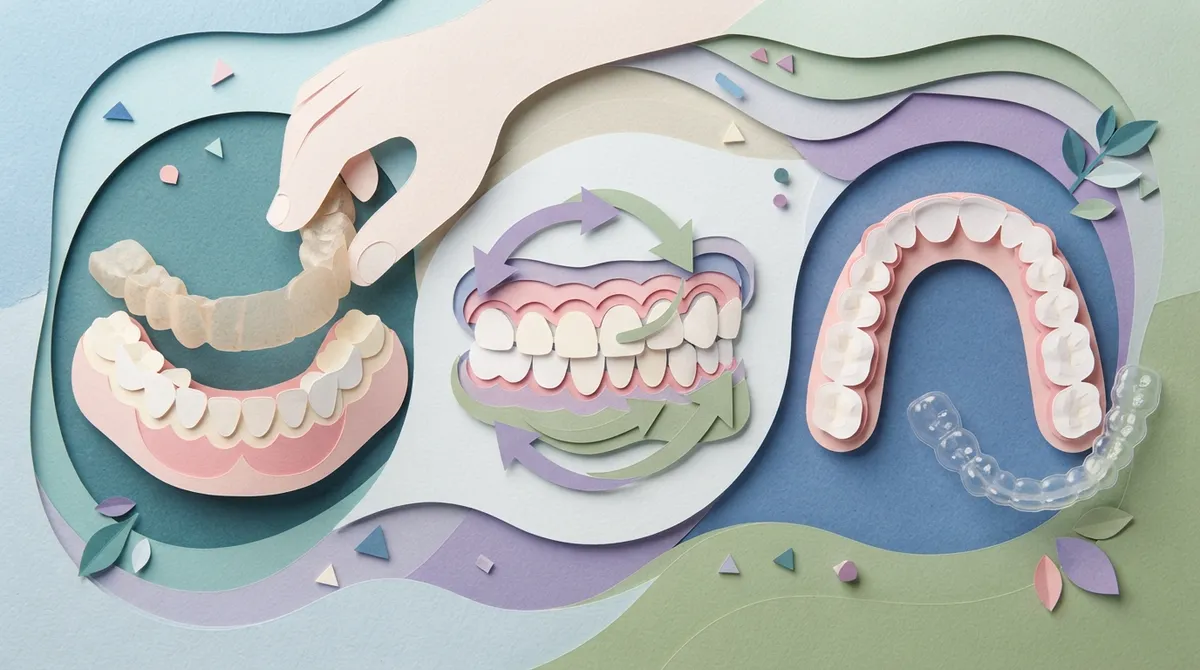
Invisible teeth aligners are clear, removable plastic trays that move your teeth a little at a time. People also call them clear aligners. Each tray is custom made from a scan or impression of your mouth. You wear one set, then switch to the next, and your teeth follow the planned path.
Why the word “invisible”? Because the trays are clear and fit snugly, most people will not notice them. That said, they are discreet, not truly invisible. You may see a slight shine on your teeth. Some plans also use small tooth-colored bumps called attachments, or tiny rubber bands, to help guide certain movements.
If you want a deeper look at the options we offer, you can explore our clear aligners page.
How Do Invisible Teeth Aligners Work?
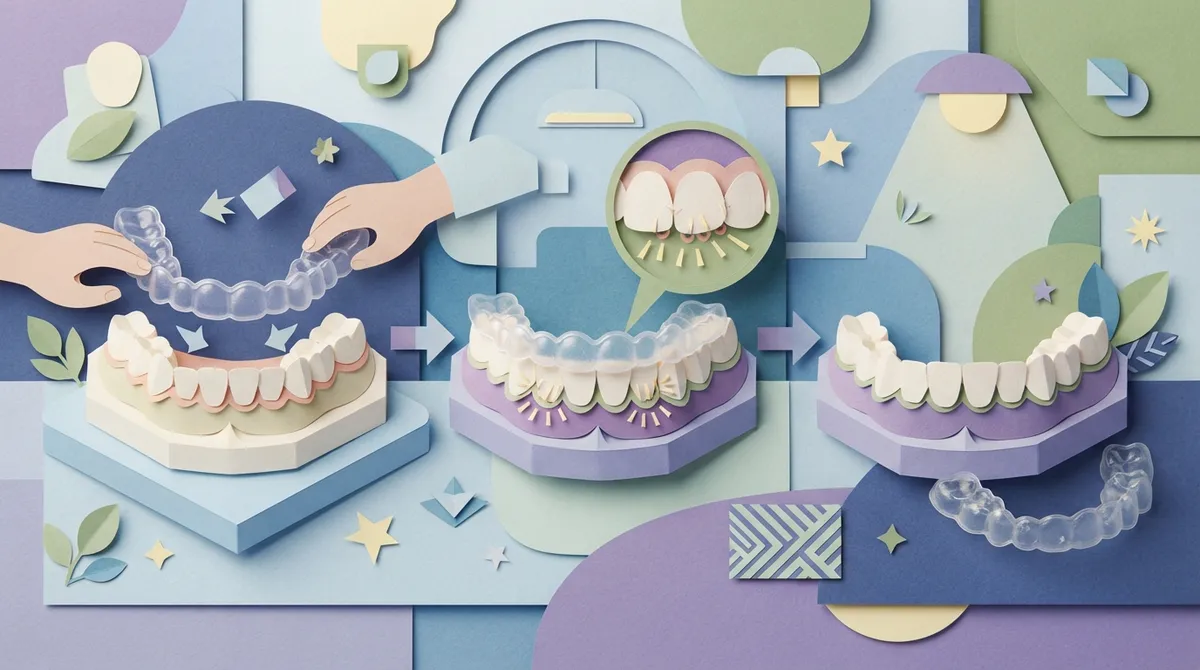
The idea is simple. Gentle, steady pressure moves teeth into better positions. Each tray in your series is shaped just slightly differently from the last. That tiny change nudges your teeth along. Over many weeks, those small steps add up to a big difference.
The Basic Process, Step by Step
- Exam and records. Your orthodontist checks your teeth, gums, and bite. X-rays or photos may be taken.
- Digital scan or impression. A scan of your teeth is used to build your plan.
- Treatment plan. A digital preview maps how your teeth are expected to move.
- Custom trays. Your series of aligners is made to match that plan.
- Wear and switch. You wear each tray as directed, then move to the next.
- Check-ins. Your orthodontist tracks progress and adjusts the plan if needed.
- Retainers. After treatment, you wear retainers to hold your new smile.
One important note: that digital preview is an estimate, not a promise. Teeth do not always move exactly as predicted, so small adjustments along the way are normal.
Who Is a Good Candidate for Invisible Teeth Aligners?
Clear aligners are a well-supported choice for selected mild-to-moderate cases. In a 2025 expert-consensus review, 91% of the panel agreed that clear aligners are an effective alternative to fixed braces for non-extraction cases with mild-to-moderate crowding. That is expert opinion, not a guaranteed success rate, but it shows where aligners tend to shine.
You may be a good fit if:
- You have mild-to-moderate crowding or spacing
- Your gums and teeth are healthy, or any problems are treated first
- You can wear your trays most of the day, every day
- You want a discreet option for work or social events
- You had braces before and your teeth have shifted (relapse)
On the other hand, some bites need more control than trays can offer. Complex movements may call for braces, or a mix of tools. That is why the first visit matters so much. Our first orthodontic visit page explains what to expect.
Invisible Aligners vs. Braces: How Do They Compare?
This is the big question for many families. The honest answer is that both can work well, and the best choice depends on your smile. A 2024 umbrella review reported overall clear-aligner accuracy of about 55 to 82 percent across the evidence it looked at, with limits for more complex movements. It also found advantages for oral hygiene and some root-resorption measures. It did not show that aligners are better for every outcome.
| Feature | Invisible Teeth Aligners | Traditional Braces |
|---|---|---|
| Look | Clear and discreet | Metal or ceramic brackets |
| Removable | Yes, for eating and cleaning | No, fixed to teeth |
| Brushing and flossing | Generally easier | Takes more effort |
| Best for | Selected mild-to-moderate cases | Simple to complex cases |
| Depends on you | Yes, wear time is key | Less, since braces stay on |
| Complex movements | Can be less predictable | Often more control |
Want a closer comparison? Check out Braces vs. Clear Aligners: Which Is Right for You? for more detail.
How Many Hours a Day Do You Wear Invisible Aligners?
Most orthodontists ask for roughly 20 to 22 hours a day. That means the trays stay in nearly all day and night. You take them out to eat, drink anything besides water, and clean your teeth. Then they go right back in.
Why so strict? Teeth only move when the trays are on them. If trays sit in a case, treatment slows down. Think of it like a gentle workout plan. Showing up consistently is what gets results.
Your orthodontist will tell you how often to switch trays. In the same 2025 consensus review, 87% of panelists agreed that aligners may be changed every 7 to 14 days, depending on things like compliance, gum health, planned movement, and material. Your own schedule should come from your treating clinician.
Everyday Tips for Wearing Aligners
Good habits make treatment smoother. Here are some simple ones to try.
- Keep a case handy. Never wrap trays in a napkin. That is how they end up in the trash!
- Brush before putting trays back in. This helps protect against cavities.
- Drink only water with trays in. Coffee, juice, and soda can stain trays and trap sugar against teeth.
- Rinse and clean trays daily. Follow your orthodontist’s cleaning advice.
- Set phone reminders. They help you switch trays on time.
Slip-ups happen to everyone, so do not stress. If you want to avoid the big ones, read 7 Clear Aligner Mistakes That Can Ruin Your Smile Results.
How Long Does Treatment Take?
This varies from person to person. Treatment time depends on how complex your case is, how your body responds, and how closely you follow the plan. Some mild cases finish in several months. Others take longer.
Here is the key point: the timeline on your digital preview is an estimate. Teeth may not track exactly as planned. Extra trays, called refinements, may be needed to fine-tune the final result. That is a normal part of care, not a failure.
Can Invisible Aligners Fix Overbites, Underbites, and Crowding?
They can help with several common issues, especially when the case is not too complex.
- Crowded teeth: Often a strong match, especially mild-to-moderate crowding.
- Gaps and spacing: Aligners can close spaces and refine the smile.
- Overbite or underbite: Some cases can improve, sometimes with elastics or other tools. Bigger jaw issues may need a different approach.
Some movements are harder for trays to control. These include certain tooth rotations, moving teeth up or down, and moving a tooth’s root. That is why a thorough exam is so important. Our team can also help with crowded teeth and many other bite concerns.
Possible Downsides and Side Effects
Aligners are comfortable for many people, but no treatment is perfect. Here is what to know so there are no surprises.
- Pressure or soreness: Common for a day or two after a new tray.
- Speech changes: A slight lisp can show up at first but usually fades.
- Irritation: Edges can rub your cheeks or gums now and then.
- Cavities or gum trouble: These can happen if brushing and flossing slip.
- Relapse: Teeth can drift back if you skip your retainers.
If you have active cavities or gum disease, those need care before or during treatment. Healthy gums and teeth make for a healthier result.
Why Retainers Matter After Treatment
Finishing aligners is a big win, but the journey is not over. Teeth love to drift back toward where they started. Retainers help hold your new smile in place. Your orthodontist will tell you how long and how often to wear them.
This is especially important for adults who have had braces before and saw their teeth shift. To learn more, visit our orthodontic retainers page.
A Clear Option With Angel Aligners
At Segovia Orthodontics, one of the clear aligner options we offer is Angel Aligners. They use custom, removable trays, plus AI-driven planning and a “7+3” wear schedule. That means seven days with a flexible tray, then three days with a firmer one. Some aligners can also include built-in anchors for rubber bands, which may reduce the need for extra attachments on your teeth.
They also have a frosted finish that cuts down on shine, and the flexible material can feel gentler on gums and cheeks. Your orthodontist will confirm whether this is the right fit for your smile. Dr. Flor Segovia is a board-certified orthodontist, and you can learn more about her on the Orthodontist Flor Segovia page. You can also verify board certification through the American Board of Orthodontics.
What About Cost and Payment?
Price depends on your case, your plan length, and your insurance. The good news is that flexible options can make treatment easier to manage. We offer flexible financing, so you can spread costs out in a way that fits your budget. Learn more on our orthodontic financing page.
Is It Right for Teens, Parents, and Busy Adults?
Great question! Here is how aligners fit different people.
- Busy professionals: Discreet trays fit meetings and client lunches with ease.
- Life event planners: Starting early gives you time to smile big for the wedding or graduation.
- Parents of teens: Aligners can work if your teen is responsible about wearing them. Braces may suit teens who need more built-in accountability.
- Adult relapse patients: Many adults who wore braces as kids choose aligners to fix shifting teeth.
Parents can learn more about timing on our teen orthodontic treatment page, and adults can visit adult orthodontics.
How to Get Started With Invisible Teeth Aligners
Ready to see if aligners are right for you? Start with a proper exam from a licensed orthodontist. A digital preview alone is not enough, because a real exam checks your teeth, gums, and bite. We would love to meet you at our Lakewood Ranch office, where we aim to make every visit comfortable and welcoming. You can also see what our patients say by visiting us on Google — Segovia Orthodontics, or follow along on our Instagram page for smile stories.
Invisible teeth aligners can be a wonderful way to get the smile you want, with less fuss and more confidence. Whether you are ready now or just curious, we are happy to help. Simply request an appointment or call us at 941-557-1333. Your best smile may be closer than you think!
FAQs
Q: Are invisible teeth aligners as effective as braces?
A: They can be a great option for selected mild-to-moderate cases, like crowding or spacing. Braces often give more control for complex movements, so the best choice depends on your smile. A quick exam with your orthodontist will tell you which path fits you best!
Q: How many hours a day do I need to wear invisible aligners?
A: Most orthodontists recommend about 20 to 22 hours a day. You only take them out to eat, drink anything besides water, and clean your teeth. Your orthodontist will give you the exact schedule that fits your plan.
Q: How long does invisible aligner treatment take?
A: It varies with how complex your case is, how your teeth respond, and how consistently you wear your trays. Your digital preview is an estimate, not a guarantee, so a few extra trays may be needed along the way. Your orthodontist will keep you posted at each check-in.
Q: Do I need a retainer after invisible aligners?
A: Yes, retainers are a must! Teeth naturally want to drift back, so a retainer helps keep your new smile in place. Your orthodontist will explain how long and how often to wear yours.
Q: What are the common side effects of invisible aligners?
A: Many people feel mild pressure or soreness for a day or two with each new tray, and some notice a slight lisp at first. Good brushing and flossing help prevent cavities and gum problems. These effects are usually temporary, and your team is always here to help.
Our Service Area